
Spironolactone and Progesterone: Combining Treatments Safely
If you're managing PCOS or hormonal imbalances, combining spironolactone and progesterone can help tackle symptoms like acne, irregular cycles, and excess hair growth. This pairing works by reducing androgens with spironolactone and regulating menstrual cycles with progesterone. While effective, it requires careful monitoring to avoid side effects like irregular bleeding, high potassium levels, or pregnancy risks.
Key Takeaways:
- Why Combine? Spironolactone addresses androgen-related symptoms; progesterone balances hormones and protects the uterine lining.
- Safety Tips: Regular blood tests for potassium and kidney function are essential. Use reliable contraception to avoid pregnancy risks.
- Side Effects: Watch for bleeding, dizziness, or mood changes. Adjustments may be needed based on your symptoms and lab results.
- Telehealth Options: Online platforms simplify access to medications and monitoring.
This treatment plan can be effective when tailored to your needs and closely supervised by your doctor. Regular check-ins and symptom tracking are critical to success.
How Spironolactone and Progesterone Work
Understanding how these medications function helps clarify why they are often used together.
Spironolactone: How It Works and What It Does
Spironolactone plays a key role in managing PCOS symptoms by addressing excess androgens and working alongside progesterone therapy. Originally developed as a diuretic, it has proven effective in blocking androgen receptors in the skin and hair follicles. This prevents dihydrotestosterone (DHT) from binding, reduces testosterone levels, and speeds up its clearance. These actions help decrease sebum production, which can improve acne symptoms.
"Spironolactone reduces your body's testosterone production, so it can be effective for treating acne... it reduces sebum production by blocking the binding of dihydrotestosterone to its androgen receptors." - Medical News Today
Improvements in hirsutism typically become noticeable within 2–6 months, while hair loss may take about 6 months to show progress. Dosages generally range from 50 mg to 200 mg daily.
However, spironolactone does come with potential side effects, including irregular menstrual cycles, breast tenderness, dizziness, and an increased risk of high potassium levels (hyperkalemia). Because of this, it's crucial to monitor potassium levels and kidney function within the first week of starting or adjusting the dose. For best results, take spironolactone consistently, with or without food, to maintain stable levels.
Progesterone: What It Does and How It’s Used
Progesterone plays a critical role in regulating the menstrual cycle and protecting the uterine lining. For individuals with PCOS, irregular or absent ovulation can lead to "unopposed estrogen", a condition where estrogen acts without the balancing effect of progesterone. This imbalance can increase the risk of endometrial hyperplasia, which, if untreated, may elevate the risk of uterine cancer.
Progesterone therapy generally falls into two categories: micronized progesterone (a natural form) and synthetic progestins. Micronized progesterone, taken at 300 mg/day, induces withdrawal bleeding in 90% of women with irregular cycles and tends to have fewer mood-related side effects compared to older synthetic options. It also has less impact on HDL cholesterol levels.
Synthetic progestins, such as medroxyprogesterone acetate (Provera), are often used to trigger withdrawal bleeding. For example, taking 5 mg twice daily for five days has been shown to induce withdrawal bleeding in 93% of women with amenorrhea. In PCOS, these progestins are typically prescribed for 7 to 12 days per cycle to prevent endometrial overgrowth.
Some newer progestins, like drospirenone, offer anti-androgenic benefits, which can help with acne and excess hair growth. However, drospirenone may increase potassium levels, so it requires careful monitoring when used alongside spironolactone.
Common side effects of progesterone therapy include unscheduled bleeding, bloating, mood changes, and fatigue. If you're using progestin-only pills, it's important to take them at the same time every day. Missing a dose by more than three hours means you'll need backup contraception for the next 48 hours.
Understanding how these medications work provides a foundation for managing potential challenges when they’re used together.
Problems That Can Occur When Using Both Medications
Spironolactone and progesterone can be effective in managing PCOS symptoms, but combining them isn't without challenges. Being aware of potential complications can help you and your healthcare provider navigate treatment more safely.
Irregular Bleeding and Hormonal Side Effects
Both spironolactone and progesterone can interfere with your menstrual cycle. Spironolactone often causes irregular periods or spotting, while progesterone therapy may lead to unexpected bleeding episodes . Birth control pills are sometimes added to help regulate these disruptions.
Aside from menstrual changes, both medications can trigger side effects like breast tenderness, headaches, nausea, mood swings, and fatigue . One notable side effect of spironolactone is gynecomastia - enlarged or painful breasts - which affects over 5% of users.
Pregnancy Risks and Birth Defects
One of the most critical concerns is the potential impact on pregnancy. Spironolactone, with its anti-androgenic properties, can interfere with testosterone and disrupt normal male fetal development:
"Use of spironolactone during pregnancy may affect the sex differentiation of a male fetus during embryogenesis." - Drugs.com
If you're using non-contraceptive progesterone (like micronized progesterone for cycle regulation), it won't protect against pregnancy. This increases the risk of an accidental pregnancy exposing the fetus to spironolactone. To minimize this risk, reliable contraception is crucial, and many doctors recommend using two forms of birth control. If you're planning to conceive, spironolactone should be stopped at least one month before trying to get pregnant.
Effects on Metabolism and Heart Health
Spironolactone is a potassium-sparing diuretic, meaning it can cause potassium levels to rise. This can lead to hyperkalemia, a condition that might cause symptoms like irregular heartbeat, muscle weakness, or tingling sensations .
"Hyperkalemia (high potassium in the blood) may occur while you are using this medicine. Check with your doctor right away if you have the following symptoms: stomach pain, confusion, difficulty with breathing, irregular heartbeat, nausea or vomiting." - Mayo Clinic
Progesterone, particularly in hormone replacement therapy, can increase the risk of blood clots, stroke, and heart disease. Both medications may lower blood pressure, potentially causing dizziness or fainting, and they can also affect blood sugar levels or reduce the effectiveness of diabetic treatments like insulin or metformin .
To manage these risks, regular blood tests are essential to monitor potassium levels and kidney function . It's also wise to limit foods high in potassium, such as bananas and orange juice, and avoid potassium-based salt substitutes . By staying vigilant and working closely with your healthcare provider, you can address these side effects effectively while continuing treatment.
How to Safely Combine Spironolactone and Progesterone
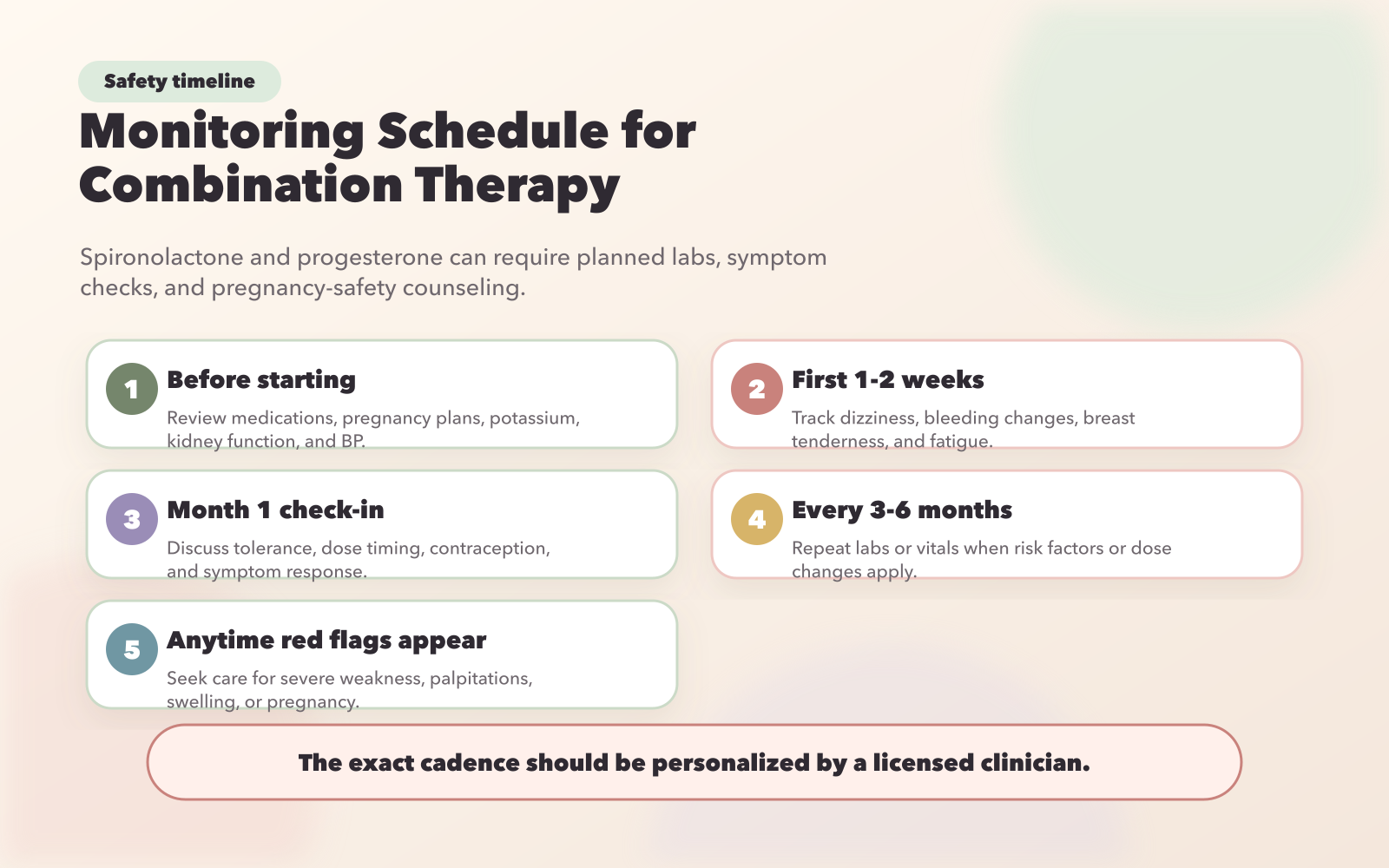
Safe Monitoring Schedule for Spironolactone and Progesterone Combination Therapy
Combining spironolactone and progesterone requires thoughtful planning and consistent monitoring. Your healthcare provider will tailor your treatment based on your specific health needs and goals.
Choosing the Appropriate Progesterone
Different progesterone formulations interact with spironolactone in unique ways. For instance, drospirenone - a fourth-generation progestin - has anti-androgenic properties and structural similarities to spironolactone. However, using these together can raise the risk of hyperkalemia because both have anti-mineralocorticoid effects. Your provider will consider factors like your potassium levels, kidney health, and contraception needs when selecting a progesterone. Micronized progesterone is often a preferred option. Since spironolactone blocks both androgen and progesterone receptors, the type of progesterone you use can significantly influence the success of your treatment.
The next step involves determining the right dosing and timing to maximize the benefits of the combination.
Dosing and Timing Guidelines
Starting with low doses and gradually increasing them is the safest approach. For conditions like acne and hirsutism, spironolactone typically begins at a low dose and can be increased up to 200 mg daily, depending on how the patient responds. Progesterone, on the other hand, can be taken cyclically (e.g., 200 mg daily for 12 days in a 28-day cycle) or continuously. Cyclical use often helps regulate the menstrual cycle and minimizes withdrawal bleeding. Since oral progesterone can cause dizziness or drowsiness, it’s best taken as a single dose at bedtime. Many patients notice improvements in hair loss or thinning within about six months of starting treatment.
Monitoring and Tracking for Safety
In addition to selecting the right medications and doses, regular monitoring is critical to ensure safety. Your provider will check baseline levels for serum creatinine, eGFR, and electrolytes like potassium before starting treatment. After beginning or adjusting spironolactone, blood tests are usually done within a week, then monthly for the first three months, and every 3–6 months once the treatment plan is stable.
| Monitoring Parameter | Initial Frequency | Stable Frequency | Threshold |
|---|---|---|---|
| Serum Potassium | 1 week after start/change | Every 3–6 months | Reduce dose if >5.5 mmol/L; stop if >6.0 mmol/L |
| eGFR / Creatinine | 1 week, then monthly for 3 months | Every 3–6 months | Reduce dose if eGFR <30 mL/min |
| Blood Pressure | Before and after dose changes | Monthly | Adjust based on target blood pressure |
Pay close attention to how you feel during treatment. Notify your provider immediately if you experience muscle weakness, an irregular heartbeat, or sudden vision changes. Severe diarrhea, vomiting, or fever with heavy sweating are also red flags - skip your spironolactone dose and contact your provider to avoid potential kidney injury. Women taking progesterone should adhere to guidelines for pelvic exams, breast exams, and mammograms. Regular check-ups and open communication with your healthcare provider are key to managing this combination therapy safely.
sbb-itb-6dba428
Telehealth Options for PCOS Treatment
Managing PCOS can feel overwhelming, especially when combination therapy is part of the plan. But telehealth has made it simpler than ever to access personalized care without the hassle of frequent in-person visits or pharmacy trips. These platforms have revolutionized how women approach hormonal health, offering customized treatment plans entirely online.
How Telehealth Supports Combination Therapy
Telehealth services connect you with board-certified providers who specialize in hormonal health and PCOS management - all from the comfort of your home. The process is straightforward: start by completing a quick, 5-minute online medical intake form, where you share your symptoms and medical history. Based on this information, licensed physicians can prescribe treatments tailored to your needs, such as spironolactone (oral or topical), progesterone, or other PCOS-related medications.
One major advantage of telehealth is ongoing monitoring. Since treatments like spironolactone and progesterone require careful tracking of potassium levels and kidney function, telehealth platforms handle lab work coordination, adjust dosages as needed, and even arrange automatic prescription refills so you’re never without your medication. Plus, medications are delivered straight to your door with free shipping.
This system also makes medication management more affordable. For example, Oana Health offers spironolactone starting at $14 per month, topical spironolactone at $43 per month, and a Metformin & Spironolactone combo pack for $32 per month. Notably, 81% of women report significant symptom improvement within a year.
Combining Hormonal Treatment with Other PCOS Care
Effective PCOS management often requires more than just hormonal medications. As Dr. Robert L. Barbieri, Editor in Chief of OBG Management, explains:
"The best approach to the long-term hormonal treatment of PCOS for many women is to prescribe a combination of 3 medicines: a combination estrogen-progestin oral contraceptive (COC), an insulin sensitizer, and an antiandrogen."
Telehealth platforms excel in supporting this comprehensive approach, coordinating hormonal treatments alongside metabolic support and lifestyle changes. For example, combining spironolactone with metformin can target both androgenic symptoms (like acne and excess hair growth) and the insulin resistance often associated with PCOS. Some patients may also benefit from GLP-1 therapy, with Oana Health offering an Oral GLP-1 & Metformin pack for $199 per month.
Beyond prescriptions, telehealth services emphasize lifestyle adjustments. Regular cardiovascular exercise, for instance, has been shown to improve insulin sensitivity and reduce androgen levels in as little as 12 weeks. Mental health is another critical piece of the puzzle, as PCOS can take a toll emotionally. To address this, platforms like Oana Health provide options like Bupropion XL for $25 per month, supporting mental well-being alongside physical symptom management. This well-rounded approach ensures that PCOS care addresses multiple aspects of health, leading to better overall outcomes and quality of life.
Conclusion
Combining spironolactone and progesterone offers a practical approach to managing PCOS symptoms when done under careful medical supervision. As Dr. Lee Radosh highlights, "Physicians must individualize treatment goals and target treatment to specific manifestations. Comorbidities... and the patient's desire for pregnancy must be considered when choosing a treatment regimen".
Regular monitoring is non-negotiable. Since spironolactone is a potassium-sparing diuretic, potassium levels need to be checked routinely. Additionally, kidney function tests and pregnancy screenings are crucial, as spironolactone poses serious risks to male fetal development.
The evidence backs this treatment strategy. A six-month clinical trial conducted at the University of British Columbia, completed in December 2024, involved 41 women with PCOS. Participants took 300 mg of cyclic oral micronized progesterone (14 days per month) along with 200 mg of daily spironolactone. The results showed significant improvements in quality of life and PCOS symptoms. Importantly, the cyclic progesterone effectively prevented the irregular bleeding often associated with high-dose spironolactone use.
To ensure the best outcomes, symptom tracking is key. Keep a menstrual diary, monitor changes in your skin or hair, and report any breakthrough bleeding or missed periods to your healthcare provider promptly. Taking oral micronized progesterone at bedtime can help reduce daytime drowsiness. If you have male partners, using reliable barrier contraception, like condoms with spermicide, is essential. Staying on top of these details reinforces a personalized and effective care plan.
Whether you're working with a local provider or using telehealth services like Oana Health, success hinges on staying actively involved, monitoring your progress consistently, and keeping open communication about how the treatment is working for you.
FAQs
What are the benefits of using spironolactone and progesterone together for managing PCOS?
Combining spironolactone and progesterone offers a well-rounded way to tackle PCOS symptoms by addressing hormonal imbalances and their effects. Spironolactone works as an anti-androgen, helping to reduce acne, control excess hair growth on the face or body, and lower sebum production. On the other hand, progesterone helps regulate the menstrual cycle, protects the uterine lining, and balances estrogen levels, reducing the risk of issues like endometrial hyperplasia.
Together, these medications can alleviate symptoms such as hirsutism, acne, and irregular periods while also improving fertility potential and lowering long-term health risks. Using both often allows for smaller doses of each, which can help reduce side effects like breast tenderness or elevated potassium levels. This combination creates a balanced approach to managing PCOS, addressing both cosmetic concerns and reproductive health.
What should I know about managing side effects when taking spironolactone and progesterone together?
Spironolactone and progesterone are generally safe to take together, as no direct interactions between the two have been identified. However, since both medications can influence fluid balance, blood pressure, and hormone levels, overlapping side effects may occur, particularly when starting treatment or adjusting doses. Paying attention to how your body reacts is essential.
Here are some tips to handle common side effects:
- Dizziness or low blood pressure: Rise slowly from sitting or lying down, and avoid sudden movements. Rest until the dizziness subsides.
- Nausea or stomach upset: Take your medications with food and stick to bland, low-fat meals to ease discomfort.
- Muscle cramps or fatigue: Keep hydrated and follow a potassium-balanced diet as recommended by your doctor.
- Breast tenderness or hormonal changes: Wear a supportive bra, reduce caffeine intake, and consider over-the-counter pain relief if needed.
Regular check-ins with your healthcare provider are essential to monitor blood pressure, potassium levels, and any new symptoms. If you experience severe side effects - like ongoing vomiting, swelling, or extreme fatigue - contact your doctor right away. For added convenience, telehealth platforms like Oana Health can simplify follow-ups and provide personalized care from home.
What should I know about taking spironolactone if I’m planning to get pregnant?
If you’re planning to have a baby, it’s crucial to avoid pregnancy while taking spironolactone. This medication can lead to hormonal issues in developing fetuses, especially in male babies. To minimize any risks, make sure to use reliable birth control and talk to your healthcare provider about discontinuing spironolactone at least one month before trying to conceive.
Your doctor might suggest alternative treatments that are safer for pregnancy. Be open about your family planning goals with a medical professional to ensure the best and safest path for both you and your future child.