
Ultimate Guide to Birth Control for PCOS Acne
Women with PCOS often deal with stubborn acne caused by hormonal imbalances, particularly elevated androgens like testosterone. Typical skincare products usually don’t work because they fail to address these root causes. Birth control pills, especially those containing estrogen and certain types of progestin, can help regulate hormones and reduce acne by:
- Lowering androgen levels: Pills increase SHBG, which binds to testosterone, reducing its activity.
- Reducing oil production: Less active androgens mean less sebum and fewer clogged pores.
- Improving skin over time: Consistent use for 3-6 months can significantly reduce breakouts.
FDA-approved options like Yaz, Ortho Tri-Cyclen, and Beyaz are commonly prescribed. However, side effects, such as nausea or a slightly increased risk of blood clots, should be considered. Always consult a doctor to find the pill that’s right for you, especially if you have specific health risks or concerns.
For those seeking a convenient solution, platforms like Oana Health offer telehealth consultations and personalized treatment plans, making it easier to manage PCOS acne effectively from home.
How Birth Control Pills Treat PCOS Acne
How Hormones Cause PCOS Acne
For those with PCOS, elevated levels of androgens - like testosterone and DHEA - are produced by the ovaries and adrenal glands. These hormones signal your sebaceous glands to produce more sebum while also slowing down your skin's natural turnover process. The result? Dead skin cells and excess oil clogging your pores, which leads to acne.
A particularly tricky aspect of PCOS acne lies in local skin activity. The enzyme 5α-reductase plays a role here by converting testosterone into dihydrotestosterone (DHT), a much stronger form of testosterone - up to 10 times more potent. Even when blood hormone levels appear normal, this local androgen activity can cause severe acne.
Skin-related symptoms, including acne, affect around 70% to 80% of women with PCOS. To address these issues, oral contraceptives work by tackling multiple hormonal pathways.
How Oral Contraceptives Work
Birth control pills address these hormonal imbalances in several ways. The estrogen component increases the liver's production of Sex Hormone Binding Globulin (SHBG). SHBG binds to free testosterone in your bloodstream, making it inactive and reducing oil production in the process.
Additionally, these pills regulate the pituitary gland through negative feedback, suppressing LH and FSH. This suppression prevents the ovaries from producing excessive testosterone. Estrogen and progestin also help lower adrenocorticotropic hormone (ACTH) levels, which reduces the adrenal glands' production of androgens.
Some newer progestins, like drospirenone, provide extra benefits. They block androgen receptors and inhibit 5α-reductase, stopping the conversion of testosterone into DHT.
Improvements in acne typically require consistent treatment for 3 to 6 months. Up next, we’ll explore how to choose the right pill for managing PCOS acne effectively.
Does Birth Control Help Acne? - Dermatologist Answers
Selecting the Right Birth Control Pill for PCOS Acne
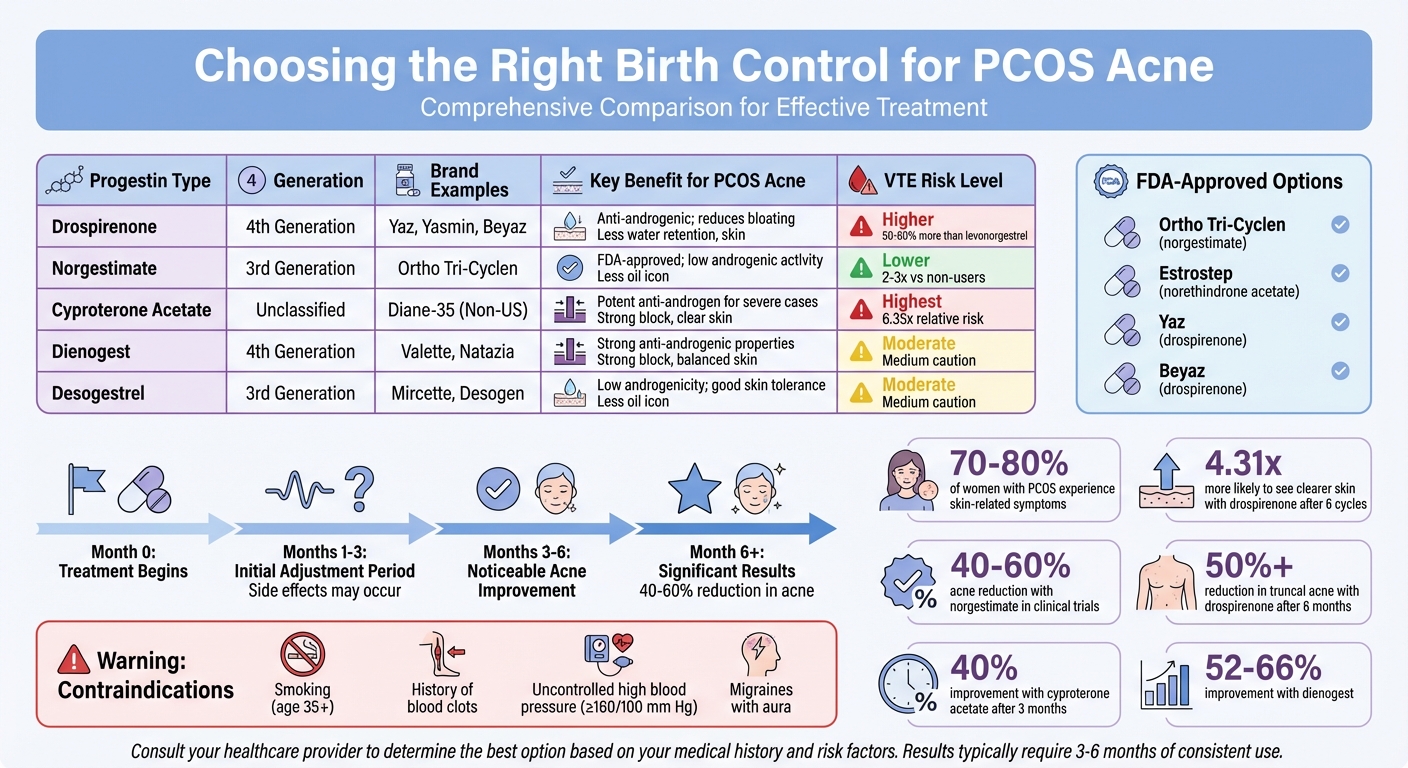
Birth Control Progestins for PCOS Acne: Types, Benefits, and Risk Comparison
When it comes to managing androgen-driven acne, not all birth control pills work the same. The type of progestin in the pill plays a big role. Older progestins like levonorgestrel and norethindrone tend to have higher androgen receptor activity, which can actually make acne worse. On the other hand, third-generation progestins like norgestimate and fourth-generation options like drospirenone are much better for treating acne because they have lower androgenic activity - or even anti-androgenic effects.
The FDA has approved four specific brands for acne treatment: Ortho Tri-Cyclen (norgestimate), Estrostep (norethindrone acetate), Yaz, and Beyaz (both drospirenone-based).
Monophasic pills, which provide the same hormone dose every day, are often preferred for acne management. These pills help minimize hormonal fluctuations that can trigger breakouts, especially around your period.
"I like monophasic pills for many people because it's the same amount of hormone every single day, every single week of the month. You don't get a rise and fall of hormones, which can... contribute to symptoms of PMS, including acne." – Erin Higgins, MD, Ob/Gyn
Here’s a closer look at some of the most commonly prescribed progestins and their effects on PCOS acne.
Drospirenone-Based Pills
Drospirenone, a fourth-generation progestin derived from spironolactone, stands out for its anti-androgenic and anti-mineralocorticoid properties. Clinical trials show that women taking drospirenone (3 mg DRSP/20 μg EE) were 4.31 times more likely to see clearer skin after six cycles compared to a placebo.
Popular brands include Yaz, Yasmin, and Beyaz, all FDA-approved for moderate acne in women who also need contraception. Drospirenone not only targets acne but also helps with bloating and water retention caused by estrogen.
Studies suggest that drospirenone may outperform norgestimate for acne relief. For instance, one study found that drospirenone (3 mg DRSP/0.02 mg EE) reduced truncal acne (back and chest) by more than 50% after six months.
Safety note: Drospirenone-containing pills carry a higher risk of venous thromboembolism (VTE) - 50–80% more than older pills with levonorgestrel. However, the absolute risk remains relatively low, at about 10 cases per 10,000 woman-years compared to 1–5 cases per 10,000 for non-users. Patients with kidney issues or those on potassium-sparing medications should monitor potassium levels.
Norgestimate-Based Pills
If you're looking for a low-androgenic option, norgestimate-based pills like Ortho Tri-Cyclen are a solid choice. This third-generation progestin has minimal androgenic effects, making it effective for managing PCOS acne. In fact, Ortho Tri-Cyclen was one of the first FDA-approved birth control pills for acne treatment in women aged 15 and older.
Norgestimate is often prescribed in triphasic formulations, where hormone levels vary throughout the cycle. Clinical trials show it reduces acne by 40–60% in most cases. It also has a lower risk of VTE, with a relative risk of 2–3 compared to non-users. For women who can’t take drospirenone due to VTE concerns, norgestimate-based pills are a reliable alternative.
Other Progestin Options
Some other progestins with anti-androgenic properties may also help, though availability can differ depending on location.
- Cyproterone Acetate (CPA): Known for its strong anti-androgenic effects, CPA is available outside the U.S. under brands like Diane-35 or Dianette. It’s highly effective, with 40% of users seeing acne improvement after three months. However, CPA has a higher thrombosis risk, with a relative risk of 6.35.
- Dienogest: Another fourth-generation progestin, dienogest has been shown to improve acne in 52–66% of patients. It’s available in brands like Valette and Natazia.
- Desogestrel: A third-generation progestin with low androgenicity, desogestrel is found in brands like Mircette and Desogen. It effectively suppresses ovulation and improves acne while maintaining good skin tolerance.
| Progestin Type | Generation | Brand Examples | Key Benefit for PCOS Acne |
|---|---|---|---|
| Drospirenone | 4th | Yaz, Yasmin, Beyaz | Anti-androgenic; reduces bloating |
| Norgestimate | 3rd | Ortho Tri-Cyclen | FDA-approved; low androgenic activity |
| Cyproterone Acetate | Unclassified | Diane-35 (Non-US) | Potent anti-androgen for severe cases |
| Dienogest | 4th | Valette, Natazia | Strong anti-androgenic properties |
| Desogestrel | 3rd | Mircette, Desogen | Low androgenicity; good skin tolerance |
Your healthcare provider can help you choose the best option based on your specific symptoms, medical history, and risk factors. If you don't have a local specialist, you can compare telehealth platforms for PCOS care to find a provider online. Keep in mind that most combined oral contraceptives require 3 to 6 months of consistent use to show noticeable acne improvement.
Benefits and Risks of Birth Control for PCOS Acne
Birth control pills can help manage PCOS-related acne by lowering androgen levels, regulating menstrual cycles, and even reducing certain cancer risks.
Main Benefits for PCOS Patients
Combined oral contraceptives (COCs) work by suppressing luteinizing hormone (LH), which reduces ovarian testosterone production. They also increase the liver's production of sex hormone-binding globulin (SHBG), which binds to free testosterone, making it less active. This process reduces sebum production, one of the key factors behind acne.
"Birth control can be thought of as more than something that prevents pregnancy. It really does so much more for a lot of people. We call those happy side effects the 'non-contraceptive benefits of hormonal contraception.' And clearing up acne is one of the big ones." – Dr. Erin Higgins, Ob/Gyn, Cleveland Clinic
Some progestins in birth control pills also block 5α-reductase, an enzyme that converts testosterone into the more potent dihydrotestosterone (DHT), further helping to minimize acne.
Beyond improving skin, birth control pills can regulate menstrual cycles, reduce heavy bleeding, and alleviate period pain. They also offer long-term health perks, such as a nearly 30% lower risk of endometrial and ovarian cancers compared to non-users. Many women notice improvements in other symptoms of excess androgens, like hirsutism (excess hair growth) and an oily scalp.
While these benefits are compelling, it’s important to weigh them against potential side effects and risks.
Potential Side Effects and Risks
Birth control pills are generally safe, but they can cause side effects like nausea, breast tenderness, headaches, bloating, and mood changes such as irritability. Spotting between periods (breakthrough bleeding) is also common, especially during the first few months. Fortunately, most of these symptoms tend to subside within three to five months of consistent use.
A more serious concern is venous thromboembolism (VTE), or blood clots. The risk of VTE is three times higher for oral contraceptive users compared to non-users, and women with PCOS already have a 1.5- to 2-fold higher baseline risk. This risk is especially pronounced during the first year of use.
Other rare but serious risks include arterial thrombosis (such as stroke or heart attack), hypertension, and gallbladder disease. For premenopausal women using COCs, the risk of arterial thrombosis is 1.6 times higher than for non-users.
Before starting birth control, you’ll need to be screened for contraindications. Absolute contraindications include smoking if you’re 35 or older, a history of blood clots, uncontrolled high blood pressure (≥160/100 mm Hg), and migraines with aura. Regular blood pressure monitoring and, in some cases, oral glucose tolerance tests may also be recommended, especially if you have other metabolic risk factors.
It’s worth noting that about 64.6% of women stop using oral contraceptives due to side effects. However, studies show that COCs generally don’t lead to significant weight gain, and large-scale research has found no strong link between COC use and depression in the general population.
For those considering birth control for acne, patience is key. It typically takes three to six months of consistent use to see noticeable improvements.
sbb-itb-6dba428
Starting and Tracking Birth Control for PCOS Acne
How to Start Oral Contraceptive Treatment
Before starting oral contraceptives, it's essential to consult with a healthcare provider during a telehealth visit. They’ll review your medical history, check your blood pressure, and screen for any risk factors like smoking if you're over 35, a history of blood clots, or migraines with aura. The good news? A pelvic exam or Pap smear isn’t required for this step.
Once prescribed, you can choose one of three start methods:
- First-Day Start: Begin on the first day of your period for immediate contraceptive protection.
- Quick Start: Start anytime, but you'll need seven days of backup contraception.
- Sunday Start: Similar to Quick Start, this method also requires seven days of backup contraception.
To reduce nausea, take your pill about 30 minutes after a meal or at bedtime. Staying consistent is key - set an alarm or keep your pill pack in a visible spot to help you remember. Be patient; acne improvement often takes three to six months of consistent use.
Once you’ve started, tracking your progress will help you stay on course and identify any adjustments needed.
Tracking Your Results
Begin by documenting your skin’s baseline condition. Note where breakouts occur - commonly on the chin, jawline, and lower cheeks - and the type of lesions you’re experiencing, whether cystic, papular, or inflamed. Taking monthly photos can help you track subtle changes over time.
As you continue treatment, monitor both improvements and potential side effects. Acne improvements from hormonal changes tend to happen gradually. You’ll likely notice lighter, more regular periods - sometimes reduced to just a light brown smudge due to a thinner uterine lining. Other PCOS symptoms, like excess body hair, might also diminish.
If your acne hasn’t improved after six months of consistent use, it’s time to consult your provider. They may recommend switching to a different formulation or adding complementary treatments.
Lastly, keep an eye out for any serious side effects using the acronym ACHES: severe Abdominal pain, Chest pain, severe Headaches, Eye problems (blurred vision), or Severe leg pain. If you experience any of these, seek medical attention immediately.
Using Oana Health for Your PCOS Acne Treatment
How Oana Health Helps with PCOS Acne
Managing hormonal imbalances is central to addressing PCOS-related acne, and Oana Health provides a modern telehealth solution to streamline this process. Forget the hassle of constant in-person visits - Oana Health connects you with licensed medical professionals through a user-friendly online platform.
It all starts with a quick, five-minute online consultation. You'll fill out an intake form outlining your medical history and specific concerns. From there, physicians craft a personalized treatment plan based on scientific research. This plan may include options like oral contraceptives or treatments such as spironolactone ($14/month) and topical spironolactone ($43/month). If six months of treatment show limited progress, adjustments can be made seamlessly.
Medications are delivered free of charge from FDA-regulated pharmacies, and automatic refills ensure you never miss a dose. Plus, you have access to continuous support via phone or online. This approach makes treatment more accessible while focusing on targeting hormonal imbalances effectively.
Personalized PCOS Treatment Plans from Oana Health
Oana Health doesn't just address surface-level acne - it tackles the root hormonal causes of PCOS acne. As part of their tailored approach, physicians might request specific hormonal tests, such as total testosterone, SHBG, and DHEAS, to fine-tune your treatment plan.
For instance, drospirenone-based birth control pills, known for their antiandrogenic properties, may be prescribed based on your hormone levels. If additional support is required, spironolactone might be added to the plan. This medication works by competing with dihydrotestosterone (DHT) at androgen receptors, helping to reduce sebum production and improve skin clarity.
Most patients begin seeing noticeable improvements within 8–12 weeks, with significant changes after six months.
"Thanks to Oana, my menstrual cycles are more regular, and my skin has never looked better! I also love the 24/7 accessibility and customer service that always goes the extra mile." – Margaret K.
To ensure safety, physicians carefully screen for contraindications, such as smoking (for those over 35), a history of blood clots, or migraines, before prescribing any medications. This ensures your treatment plan is not only effective but also safe for your individual health needs.
Conclusion
Oral contraceptives for PCOS are a proven way to manage acne by addressing the hormonal imbalances - like elevated androgens - that lead to excess oil production and clogged pores. By balancing these hormones, these treatments help reduce acne triggers at their source.
There are FDA-approved options specifically designed to tackle these hormonal issues. For individuals needing more support, combination treatments can complement oral contraceptives for better results.
"You may be told that acne, hair growth or other PCOS symptoms are just something you have to live with, but this isn't the case. Safe, effective therapies are available." - Dr. Jacqueline Zuponcic, Ob/Gyn, Cleveland Clinic
If you're looking for a tailored and convenient way to manage PCOS acne, check out Oana Health. They offer telehealth consultations starting at $14/month, free shipping, and ongoing support from licensed professionals. This approach puts you in control of your PCOS acne with treatments designed to regulate and target hormonal imbalances effectively.
FAQs
How do birth control pills help improve acne caused by PCOS?
Birth control pills can play a role in improving acne linked to PCOS by tackling the hormonal imbalances behind these breakouts. Specifically, they help lower androgen levels - like testosterone - which are often higher in individuals with PCOS. This reduction curbs excess oil production, reduces the size of sebaceous glands, and eases inflammation, gradually leading to clearer skin.
For many dealing with PCOS, oral contraceptives can be an effective part of managing acne and other related symptoms. That said, it’s essential to consult with a healthcare provider to decide if this approach suits your needs.
What side effects can birth control have when used to treat PCOS-related acne?
Using birth control to address PCOS-related acne can sometimes lead to side effects. Commonly reported issues include headaches, mood changes, mild weight gain, breast tenderness, and occasionally temporary acne flare-ups, which usually settle down after a few months of use.
Though uncommon, there are more serious risks to be aware of, such as blood clots, liver tumors, or other liver-related complications. To determine if birth control is a safe and suitable choice for you, it's essential to discuss your medical history and any concerns with your healthcare provider.
How long does it take for birth control to improve acne caused by PCOS?
Most individuals begin noticing improvements in PCOS-related acne after using birth control for 3 to 6 months, though some may experience changes earlier. The timeline often depends on factors like your unique hormone levels and the specific birth control method prescribed.
The most important part? Staying consistent. Taking your birth control exactly as directed and allowing your body time to adapt can make a big difference in achieving results. If you're worried about side effects or feel like progress is slower than expected, reach out to your healthcare provider for personalized advice.