
Brand-Name vs. Generic Hormonal Drugs: Cost vs. Safety
When deciding between brand-name and generic hormonal drugs, the choice often comes down to cost and safety. Here's what you need to know:
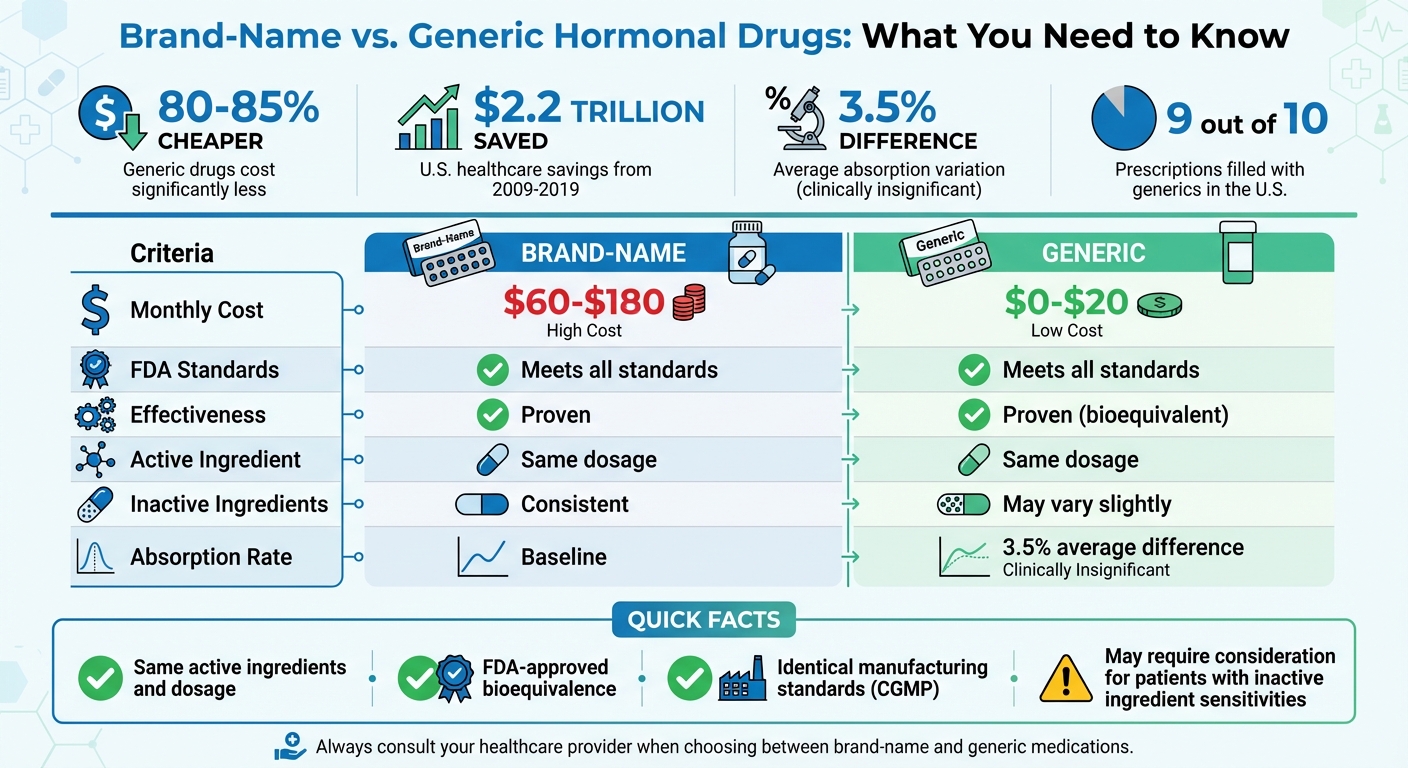
- Cost: Generic drugs are 80%-85% cheaper than brand-name options, saving the U.S. healthcare system $2.2 trillion between 2009 and 2019.
- Safety: Generics are FDA-approved, meeting the same standards for dosage, effectiveness, and quality as brand-name drugs.
- Effectiveness: Studies show minimal differences (about 3.5%) in absorption between generics and brand-name drugs, which do not affect clinical outcomes.
- Access: Lower costs make generics more accessible, especially for chronic conditions like PCOS and hypothyroidism.
Quick Comparison
| Criteria | Brand-Name Drugs | Generic Drugs |
|---|---|---|
| Cost | High ($60-$180/month) | Low ($0-$20/month) |
| FDA Standards | Meets all standards | Meets all standards |
| Effectiveness | Proven | Proven (bioequivalent) |
| Inactive Ingredients | Consistent | May vary slightly |
Generics are a safe, cost-effective choice for most patients but may require additional considerations for those with sensitivities to inactive ingredients or conditions needing precise dosing. Always consult your doctor or pharmacist to find the best option for your needs.
Brand-Name vs Generic Hormonal Drugs: Cost and Safety Comparison
Do generics work the same as brand-name medicines?
How Generic Drugs Are Regulated for Safety
Generic hormonal medications go through the same strict safety evaluations as their brand-name counterparts.
FDA Approval Requirements
Before a generic drug can hit the market, manufacturers must prove it’s pharmaceutically equivalent to the brand-name version. This means it must have the same active ingredient, strength, dosage form (like a tablet or injection), and method of administration.
One key test is bioequivalence, which ensures the generic delivers the active ingredient at the same rate and extent as the original drug. A comprehensive study of 12 years of bioequivalence data revealed that the average difference in absorption between generics and brand-name drugs is just 3.5% - a variation so small it doesn’t affect clinical outcomes.
There’s a persistent myth that generics can have up to 20% less active ingredient than brand-name drugs. This is incorrect. Generics must contain the exact same amount of active ingredient. Sarah Ibrahim, Ph.D., Associate Director of Global Generic Drug Affairs at the FDA, clarifies:
"The 80% to 125% criteria is part of a statistical tool when measuring drug concentration in the blood and drug exposure over time. It does not pertain to a range of allowable active ingredient in the generic."
Generic drug manufacturers also follow the same Current Good Manufacturing Practice (CGMP) standards as brand-name producers. The FDA conducts regular inspections to ensure consistent quality and purity. While inactive ingredients - like colors or flavorings - might differ, they must be proven safe and cannot interfere with the drug’s effectiveness.
Even after approval, these rigorous standards are maintained through ongoing oversight.
Ongoing Safety Monitoring
Approval is just the beginning. The FDA continuously monitors the safety of both generic and brand-name drugs through systems like the FDA Adverse Event Reporting System (FAERS) and the MedWatch program. These programs collect reports from healthcare professionals and patients about side effects or quality issues.
If a safety or quality concern arises, the FDA can require changes to manufacturing processes or usage guidelines. Generic drug manufacturers are also legally obligated to report serious health effects or product issues directly to the FDA.
This robust oversight ensures that whether you’re using a brand-name or generic hormonal medication, both meet the same high safety standards.
Price Differences Between Brand-Name and Generic Hormonal Drugs
Cost Comparison Examples
Generic hormonal drugs are significantly cheaper than their brand-name counterparts, typically costing 80% to 85% less. This price gap exists because generics skip the expensive clinical trials and large-scale marketing campaigns required for brand-name drugs.
Competition in the market also drives prices down. When a single generic alternative enters the market, it can reduce prices by about 30%. With more competitors, the price drop can reach up to 85%.
Take a look at this example for a commonly prescribed hormonal medication:
| Brand Name | Generic Name | Avg. Brand Price (Per Month) | Avg. Generic Price (Per Month) | Percentage Savings |
|---|---|---|---|---|
| Yaz | Loryna | $60.00 – $180.00 | $0.00 – $20.00 | 80% – 85% |
For instance, the generic alternative, Loryna, costs around $20 per month out-of-pocket. Even better, it may be free with qualifying insurance under the Affordable Care Act.
The impact of generics extends beyond individual savings. In 2022, FDA-approved generic drugs saved the U.S. healthcare system an estimated $408 billion. Between 2009 and 2019, these savings totaled $2.2 trillion. These cost reductions aren’t just numbers - they translate into better access to essential treatments for millions of people.
How Lower Costs Improve Access to Treatment
Affordable generics make a world of difference for patients managing chronic conditions. Lower prices mean more people can stick to their prescribed treatments, which is especially important for long-term conditions like PCOS or thyroid disorders. Consistent medication use leads to better health outcomes.
Generics now account for 9 out of 10 prescriptions filled in the U.S., yet they only represent 26% of total drug costs. This widespread adoption underscores their role in making healthcare more accessible.
For those without insurance or with high deductibles, the price gap between brand-name and generic drugs can determine whether treatment is even an option. If you're unsure whether a generic version is available for your medication, it’s worth asking your pharmacist, “Is there a generic version of this drug?” Doctors may not always have the latest information on generic availability or your specific out-of-pocket costs.
However, for medications with a narrow therapeutic index - like levothyroxine for thyroid conditions - switching between brand-name and generic versions might require additional blood tests to ensure the dosage is accurate. While generics reduce drug costs, these extra tests could add to overall expenses.
sbb-itb-6dba428
Are Generic Hormonal Drugs as Safe and Effective?
Research on Generic Drug Effectiveness
Generic drugs are required to prove their bioequivalence to brand-name medications, meaning they must deliver the same dose of the active ingredient at a similar rate. A 12-year study revealed that absorption differences between generics and brand-name drugs averaged about 3.5%. This variation is comparable to the natural differences found between batches of the same brand-name drug and supports the consistent performance of generics in clinical use.
Between June 2017 and June 2021, the Yale-Mayo Clinic CERSI conducted a study analyzing administrative claims data from 2007 to 2016. The research focused on comparing brand-name and generic levothyroxine. The findings showed that generic levothyroxine was just as effective as its brand-name counterpart in maintaining stable thyrotropin levels. Moreover, there were no notable differences in long-term cardiovascular health or risks of fractures and falls between the two options.
"Initiation of generic vs brand-name levothyroxine formulations was associated with similar rates of normal and stable thyrotropin levels."
– U.S. Food and Drug Administration
In April 2022, a study published in JAMA Internal Medicine by Dr. Juan Pablo Brito and his team further confirmed that switching between generic manufacturers of levothyroxine did not result in significant changes in thyroid hormone levels among U.S. adults.
How Inactive Ingredients May Affect Patients
While the active ingredients in generics are identical to those in brand-name drugs, differences in inactive ingredients - like binders, fillers, dyes, and flavorings - can sometimes affect individual experiences. These inactive components are what give medications their unique appearance and taste, and they vary between manufacturers.
The FDA carefully reviews all inactive ingredients to ensure they are safe and do not interfere with the drug's performance. For most people, these differences are negligible. However, if you have allergies or sensitivities to certain dyes or fillers, it's important to discuss this with your pharmacist. In cases where sensitivities are documented, your doctor can specify "Dispense as Written" (DAW) on your prescription, ensuring you receive the brand-name version to avoid potential issues.
The FDA also recognizes that some patients report unexpected side effects or believe their medication is less effective after switching from a brand-name drug to a generic - or between different generic versions. If you notice any unusual side effects or changes in how your medication works after a switch, reporting these concerns to the FDA's MedWatch program is recommended.
Brand-Name vs. Generic Drugs for PCOS Treatment
Common PCOS Medications Compared
Many medications prescribed for managing PCOS are used off-label. This means that while the FDA has approved these drugs for other conditions, they’ve also proven effective in treating PCOS symptoms. Examples include metformin for insulin resistance, spironolactone for unwanted hair growth, and various oral contraceptives for regulating menstrual cycles and addressing acne.
When it comes to generics, they deliver the same results as their brand-name counterparts. Take metformin, for instance. It’s one of the most widely used treatments for PCOS, boasting a user rating of 7.6 out of 10 from 276 reviews. It helps manage insulin resistance and supports weight control. Whether you opt for the generic version or the brand-name Glucophage, the active ingredient remains identical.
Another common choice is spironolactone (brand name: Aldactone), which tackles hirsutism and acne by blocking androgens. Generic spironolactone is affordable, costing about $14 per month through telehealth providers like Oana Health. Meanwhile, off-label oral contraceptives, such as drospirenone/ethinyl estradiol, are also effective, with a user rating of 7.2 out of 10. Studies even show that combining metformin with oral contraceptive pills delivers better results for hirsutism than using either medication alone.
For managing lipid profiles and testosterone levels, simvastatin, a generic statin listed on the WHO Essential Medicines List, is a cost-effective option. Rebecca N. Jerome from the Vanderbilt Institute for Clinical and Translational Research highlights its potential:
"Repurposing simvastatin offers an added strategy for PCOS management, especially in areas where medical care is limited".
These examples illustrate how both brand-name and generic medications play a role in addressing hormonal imbalances and alleviating PCOS symptoms.
Effects on Hormonal Balance and Symptom Relief
Now that we’ve compared common PCOS medications, let’s dive into their effects on hormonal balance and symptom relief. Clinical studies confirm that brand-name and generic drugs deliver similar outcomes. For instance, the FDA recognizes brand-name and generic oral contraceptives as "clinically equivalent and interchangeable" for PCOS treatment. Research also suggests that for women with a BMI between 25 and 30 kg/m², oral contraceptives may be more effective than metformin in treating hirsutism. That said, metformin remains the preferred option for improving insulin sensitivity and regulating menstrual cycles.
Emerging treatments like GLP-1 receptor agonists (e.g., semaglutide) are gaining popularity for addressing PCOS-related weight management and metabolic issues. Telehealth providers like Oana Health offer oral semaglutide starting at $199 per month, making these newer therapies more accessible. Whether you’re managing insulin resistance with metformin, reducing unwanted hair with spironolactone, or targeting weight concerns with GLP-1 treatments, both generic and brand-name options provide comparable benefits for hormonal balance and symptom relief.
How to Choose Between Brand-Name and Generic Drugs
Weighing Cost, Safety, and Your Health Needs
When deciding between brand-name and generic hormonal drugs, it's important to balance cost with safety. Generics must meet the same FDA standards for active ingredients, strength, and bioequivalence as their brand-name counterparts. This means they deliver the same therapeutic benefits but often at a much lower price.
If you have sensitivities to inactive ingredients, it’s worth discussing these with your healthcare provider. While these components don’t impact how the medication works, they can sometimes cause unwanted reactions. To ensure the generic option is equivalent to the brand-name drug, check if it’s listed as "A-rated" in the FDA’s Orange Book. This designation confirms therapeutic equivalence.
Both brand-name and generic drugs are held to identical FDA quality and manufacturing standards. Studies have found only a 3.5% difference in absorption rates between generics and brand-name drugs - a level of variation that can also occur between batches of the same brand-name medication. By considering both cost and potential sensitivities, you can find a treatment option that fits your health needs and budget.
Accessing Affordable Hormonal Care Through Telehealth
Telehealth has made it easier than ever to balance these factors while accessing affordable hormonal care. It streamlines the process of obtaining treatments by connecting you with licensed medical professionals and delivering medications directly to your home. For instance, Oana Health offers PCOS and hormonal treatments prescribed by qualified clinicians. They provide options like generic spironolactone for unwanted hair growth starting at $14 per month, or oral semaglutide for weight management at $199 per month, with free shipping included.
Telehealth providers adhere to strict regulatory standards, ensuring the safety and quality of your treatment. To ensure the best care, confirm that your telehealth provider uses FDA-regulated pharmacies and that licensed clinicians review your health history. Discuss any concerns about inactive ingredients with your provider to ensure your treatment is both safe and effective. With telehealth, you can enjoy the convenience of evidence-based care while keeping costs manageable.
FAQs
Are there any safety concerns when switching from brand-name to generic hormonal drugs?
Generic hormonal drugs approved by the FDA meet the same rigorous safety and quality standards as their brand-name counterparts. Although minor, natural variations can occur between batches, these are carefully regulated and have no meaningful impact on their clinical effectiveness.
For the majority of patients, generic medications offer a reliable and budget-friendly option without sacrificing treatment results. If you have any concerns or notice unusual side effects, it’s important to reach out to your healthcare provider for guidance.
Can the inactive ingredients in generic drugs cause issues for people with allergies?
While generic drugs must contain the same active ingredients as their brand-name versions, the inactive ingredients - like fillers, dyes, or preservatives - can differ. For most people, these variations are harmless. However, if you're sensitive to certain ingredients, they could trigger allergic reactions. If you have known allergies, take a moment to check the ingredient list or talk to your healthcare provider before starting a new medication.
What should I do if I notice side effects after switching to a generic hormonal drug?
If you notice side effects after switching to a generic hormonal drug, here’s what to do:
- Stop the medication if symptoms are severe. Serious reactions like difficulty breathing, chest pain, or a severe rash require immediate action. Discontinue the medication and seek emergency medical care right away.
- Contact your prescribing provider. Reach out to your Oana Health clinician or the healthcare professional who prescribed the medication. Share details about your symptoms, when they started, and your current dosage. They’ll help determine if the medication is the cause and guide you on the next steps.
- Document your symptoms. Keep track of what you’re experiencing, when it began, how long it lasted, and any other medications or supplements you’re taking. This information will help your provider better understand the situation.
Depending on your symptoms, your provider might adjust your dosage, switch you back to the brand-name drug, or try a different generic option. Always follow their recommendations and attend follow-up appointments to ensure your treatment stays safe and effective.