
Cardio for PCOS: Benefits and Best Practices
Cardio is one of the most effective ways to manage PCOS symptoms. It improves insulin sensitivity, balances hormones, supports weight management, and enhances mental health. Whether you're dealing with irregular periods, weight challenges, or insulin resistance, consistent aerobic exercise can help. Here's what you need to know:
- Insulin Sensitivity: Regular cardio can improve insulin sensitivity by up to 30% in just 12 weeks, helping manage one of PCOS's root causes.
- Hormonal Balance: Aerobic exercise reduces androgen levels and promotes regular menstrual cycles, with 70% of women reporting improved cycles after structured workouts.
- Weight and Fat Loss: Cardio reduces visceral fat, improves body composition, and helps with long-term weight management.
- Mental and Heart Health: It lowers blood pressure, enhances cardiorespiratory fitness, and alleviates anxiety and depression.
How to Start:
- Aim for 150–300 minutes of moderate-intensity cardio or 75–150 minutes of vigorous cardio weekly.
- Start with activities like walking, swimming, or cycling, and gradually build intensity.
- Incorporate options like low-impact or high-intensity workouts for sustained effort.
Consistency is key. Pair cardio with a balanced diet and medical guidance for the best results. Even small changes, like exercising three times a week, can make a big difference.
Benefits of Cardio for PCOS
Better Insulin Sensitivity
Cardio can play a big role in improving insulin sensitivity, a common challenge for women with PCOS. Research shows that 80% of obese women and 30% to 40% of lean women with PCOS struggle with insulin resistance. Aerobic exercise helps your muscles process glucose more efficiently, even without major weight loss. This happens because exercise enhances cellular insulin signaling, which reduces factors contributing to insulin resistance.
The results are impressive. Studies reveal that regular exercise can boost insulin sensitivity by up to 30% in just 12 weeks, and a 16-week treadmill program led to a 34% increase in glucose uptake. Even a single cardio session can provide short-term benefits, improving insulin sensitivity for 2 to 72 hours afterward.
To get the most out of cardio, aim for moderate-intensity exercise at 60–70% of your VO2max or high-intensity workouts above 80% of your max heart rate. Sessions should last at least 30 minutes, three to five days a week. These improvements in insulin sensitivity pave the way for better hormonal and metabolic health.
Hormone Balance and Regular Periods
Cardio also helps balance hormones by lowering elevated androgens like total testosterone and the free androgen index (FAI), key drivers of PCOS symptoms. It achieves this by increasing levels of Sex Hormone Binding Globulin (SHBG), a protein that binds to testosterone and reduces its activity.
The effects on menstrual cycles can be life-changing. Structured exercise programs have shown that 70% of women experienced more regular cycles, and 35% saw a return of ovulation.
"The reproductive functions of women with PCOS can be improved with physical activity and can also reduce infertility and social and psychological stress among these women." – BMC Public Health
Consistency is key for hormonal benefits. Aim for 30 to 45 minutes of moderate-intensity aerobic exercise at least three times a week. Improvements in testosterone and SHBG levels typically show up after 16 to 24 weeks of regular activity. These hormonal shifts also support healthier body composition, amplifying the benefits of cardio.
Weight Management and Body Composition
Cardio is particularly effective at reducing visceral fat, the abdominal fat linked to insulin resistance and metabolic issues. Research indicates that structured exercise can shrink waist circumference by an average of 1.48 cm, lowering risks of metabolic syndrome and heart disease.
Even if the scale doesn’t budge much, cardio can still improve body composition. It helps reduce fat while preserving or even building lean muscle mass. For those focusing on weight loss, experts recommend 250 minutes of moderate-intensity or 150 minutes of vigorous-intensity aerobic exercise per week.
Heart Health and Mental Health Benefits
Cardio doesn’t just improve metabolic health - it also supports heart and mental well-being. Regular aerobic exercise boosts cardiorespiratory fitness by an average of 4.00 mL/kg/min, lowers blood pressure by about 4.40 mmHg, and reduces inflammation, all of which enhance overall health.
On the mental health side, cardio helps reduce anxiety, depression, and stress. High-intensity interval training (HIIT) is particularly effective, showing improvements in sleep quality and stress levels compared to moderate-intensity workouts. Women often report better self-esteem, quality of life, and even psychosexual health.
"Moderate aerobic exercise interventions ≥3 months in duration, with a frequency of 3/week for at least 30-min, may have favourable effects on various cardiometabolic risk factors in women with PCOS." – Journal of Diabetes & Metabolic Disorders
sbb-itb-6dba428
10-minute HIIT workout for PCOS ( low-impact, no jumping, no equipment)
How to Do Cardio with PCOS
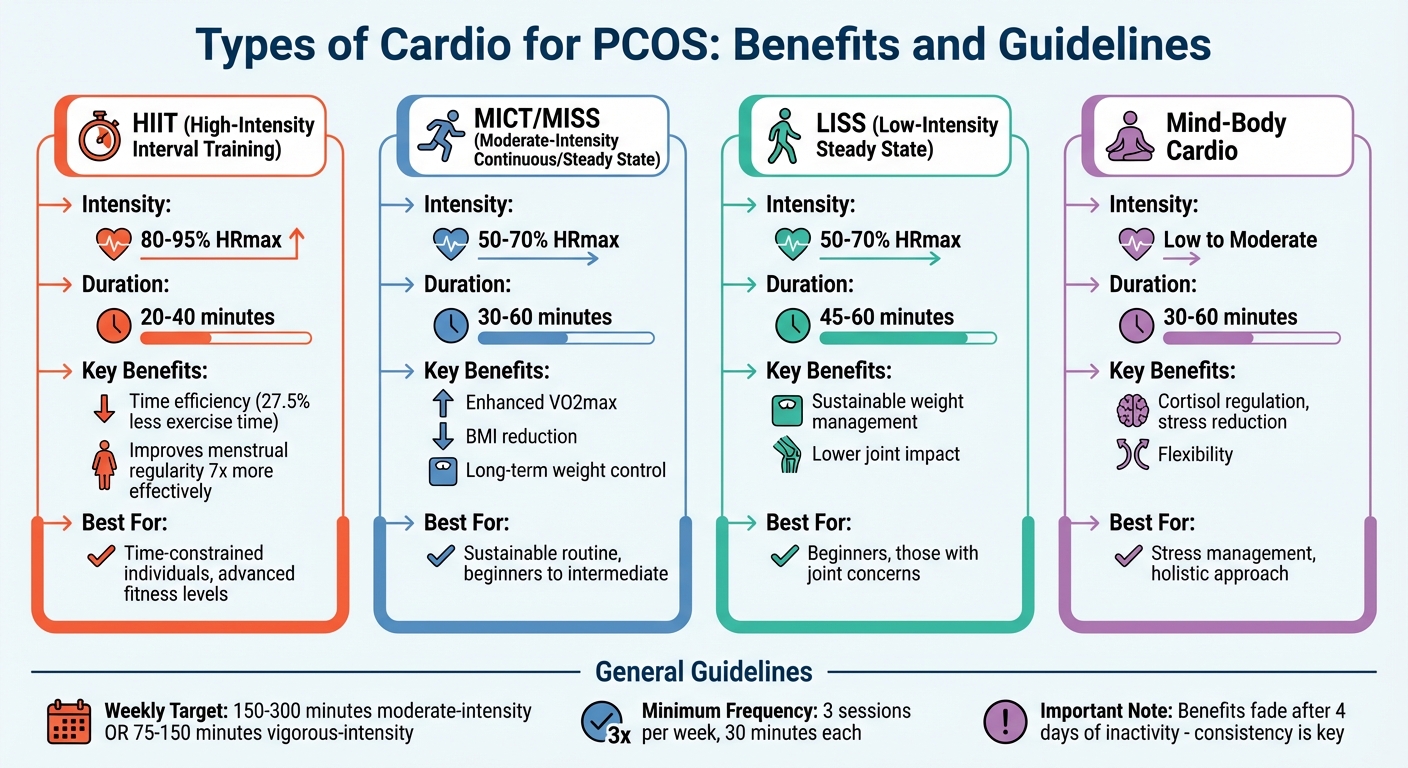
Types of Cardio for PCOS: Benefits and Guidelines Comparison Chart
Cardio can be a great addition to your routine if you're managing PCOS. Here's a guide to help you make it work for you.
Picking the Right Cardio Type
Different types of cardio offer unique benefits for women with PCOS. Choosing the right one depends on your fitness goals and preferences:
- High-Intensity Interval Training (HIIT): This involves short bursts of intense activity (at 80–95% of your maximum heart rate) followed by brief recovery periods. It's a time-saver - requiring about 27.5% less exercise time than continuous workouts - and may improve menstrual regularity over seven times more effectively compared to other methods.
- Moderate-Intensity Continuous Training (MICT) or Moderate-Intensity Steady State (MISS): These workouts keep your heart rate steady at 50–70% of your maximum. Benefits include better VO2max, BMI reduction, and manageable, long-term weight control.
- Low-Intensity Steady State (LISS): Similar to MICT, this type of cardio is easy on the joints and supports sustainable weight management. It’s a good option if you're just starting or prefer lower-impact exercises.
- Mind-Body Cardio: Activities like yoga, Pilates, or Tai Chi combine movement with mindfulness. They help lower cortisol levels, which can worsen PCOS symptoms, while also improving flexibility and burning calories.
Here’s a quick comparison:
| Exercise Type | Intensity (% HRmax) | PCOS Benefits | Typical Duration |
|---|---|---|---|
| HIIT | 80–95% | Time efficiency, improved menstrual regularity | 20–40 mins |
| MICT/MISS | 50–70% | Enhanced VO2max, BMI reduction | 30–60 mins |
| LISS | 50–70% | Sustainable weight management, lower joint impact | 45–60 mins |
| Mind-Body | Low to Moderate | Cortisol regulation, stress reduction | 30–60 mins |
Once you’ve picked your preferred cardio type, adjust the frequency and duration to suit your fitness level and goals.
How Often and How Long to Exercise
Consistency is key when it comes to cardio for PCOS. Not only does it improve insulin sensitivity, but it also helps balance hormones. Start with 30-minute sessions three times a week. As your endurance improves, aim for the recommended 150–300 minutes of moderate-intensity or 75–150 minutes of vigorous-intensity aerobic activity per week.
Research suggests that exercise volume matters. For example, around 170 minutes of cardio weekly produces better results for insulin sensitivity compared to 115 minutes. However, benefits can fade quickly - sometimes within just four days of inactivity. To maintain progress, aim for at least 120 minutes of vigorous-intensity exercise each week.
"Individuals with PCOS should aim to undertake between 150 to 300 min of moderate-intensity or 75 to 150 min of vigorous-intensity aerobic activity per week." – Exercise and Sports Science Australia (ESSA)
Tips for Starting Out
If you’re new to cardio, start simple. A brisk 30-minute walk, either daily or spread across the week, is a great way to build an exercise habit. Use easy methods to gauge your intensity - like checking your heart rate or ensuring you can still talk comfortably during moderate exercise.
If you’re dealing with low activity levels or have conditions like arthritis or heart issues, consult your healthcare provider before diving into a new workout routine. A certified personal trainer can help with proper form and safety, while fitness trackers or online classes can keep you motivated and on track with your heart rate zones.
Sample Cardio Routines for PCOS
Having a solid understanding of cardio basics is essential, but putting it into practice is where the magic happens. These workout plans are designed to match your fitness level, helping you manage PCOS effectively.
Beginner Routine
If you're just starting out, aim for three 30-minute steady-state cardio sessions each week. Walking - whether outdoors or on a treadmill - for 30 to 45 minutes is a great low-impact option that supports heart health and overall fitness. Keep your intensity moderate by staying within your target heart rate zone.
Once you're comfortable, sprinkle in 15-minute HIIT (High-Intensity Interval Training) sessions up to three times a week. Research suggests that this can reduce BMI by about 1.5 kg/m² over time. Start small with brief intervals of higher intensity to ease into it. This beginner-friendly plan helps improve insulin sensitivity and promotes hormonal balance.
Intermediate Routine
Once you've built a foundation, step it up with intermediate-level cardio. Target around 120 minutes of vigorous activity weekly, spread across three to four sessions. Activities like swimming (burning roughly 255 calories in 30 minutes) or running at 5 mph (about 295 calories in 30 minutes) are excellent choices.
A study involving 28 women with PCOS found that performing three 15-minute HIIT sessions weekly for eight weeks led to significant improvements in BMI, waist-to-hip ratio, and insulin resistance (P = 0.001). For moderate cardio sessions, keep them under 60 minutes to avoid potential cortisol spikes, which could affect hormone balance. This plan not only enhances fitness but also supports better insulin regulation.
Advanced Routine
For seasoned cardio enthusiasts, this advanced routine takes things up a notch. Aim for 150+ minutes of mixed-intensity cardio each week, alternating between HIIT and moderate-intensity continuous training. Studies show this approach can reduce insulin resistance by as much as 36%.
During high-intensity intervals, push your heart rate to 80–95% of its maximum, then recover at 50–70%. Mix in activities like running, cycling, or using an elliptical to keep your body challenged. To avoid hitting a plateau, rotate your intensity every four weeks. And don’t forget to balance workouts and rest - fat oxidation enzymes peak 36 to 48 hours after intense exercise, so give yourself at least two days between tough sessions.
Pair this cardio routine with strength training twice a week to maintain lean muscle and boost your metabolism. This combination is a powerful tool for managing PCOS and improving overall health.
"Think of it as dosing medicine - you need the right amount, not just more." – Sina Hartung, MMSC-BMI
Safety Tips and Best Practices
Listen to Your Body
Pay close attention to how your body feels after exercise. If you’re feeling drained instead of energized, it could mean you’re overdoing it. Overtraining can lead to elevated cortisol levels, which may disrupt your hormonal balance and aggravate PCOS symptoms. If high-intensity workouts like HIIT leave you feeling worse, it’s time to scale back.
Start slow and build up your workout intensity over time. Low-impact activities like brisk walking or cycling are great starting points. From there, you can gradually incorporate more vigorous exercises, balancing them with lighter workouts and strength training. If you’re dealing with fatigue, physical limitations, or even low confidence, these are signs to ease up and focus on sustainable progress. This approach ensures that cardio complements your overall PCOS management.
"Exercise is incredibly beneficial for women with PCOS, but more is not always more." – Erin Fisher, Writer and Editor, Sweat
Stay Hydrated and Eat Well
What you eat and drink plays a big role in how effective your workouts are. Before exercising, fuel your body with low-glycemic carbs like whole grains or berries to maintain steady energy levels and stable blood sugar. After your workout, focus on lean proteins and healthy fats to support muscle recovery and improve metabolic health.
Adding 5–10 grams of fiber to your daily diet can improve insulin sensitivity. Aim to keep total fat intake below 30% of your daily calories, limiting saturated fats to under 10% and avoiding trans fats altogether. Planning and prepping meals ahead of time can help with weight management and curb post-workout snacking. Even losing just 5% of your body weight can make a difference, potentially restoring regular ovulation. By pairing proper nutrition with exercise, you’ll maximize the benefits of cardio for managing PCOS.
Combine Exercise with Medical Treatment
Cardio works best when combined with a comprehensive medical plan. If you have conditions like hypertension, type 2 diabetes, arthritis, or heart issues, it’s important to consult your doctor before starting any new workout routine. Gradually increase the intensity of your workouts to align with your current fitness level. Conditions like sleep apnea and high blood pressure also call for careful monitoring of your exercise intensity.
Staying consistent is crucial - improvements in insulin sensitivity can fade after just four days of inactivity. Combining regular exercise with medical guidance can help you maintain long-term control over PCOS. For example, Oana Health (https://oanahealth.com) offers personalized, science-backed treatments aimed at improving insulin resistance and hormonal balance, complementing your cardio routine with expert care from licensed professionals.
Next Steps
Main Takeaways
Here’s a quick recap of what we’ve covered: Cardio plays a crucial role in managing PCOS by improving insulin sensitivity, balancing hormones, and aiding in weight loss. Vigorous exercises like HIIT can enhance insulin sensitivity and glucose metabolism, while moderate-intensity workouts help lower BMI and promote more regular menstrual cycles. Regular physical activity can also restore ovulation and alleviate symptoms like anxiety, depression, and stress. Even modest weight loss - just 5% - can help restore ovulation cycles in up to 80% of women dealing with infertility caused by PCOS.
Experts recommend aiming for 150–300 minutes of moderate-intensity aerobic activity or 75–150 minutes of vigorous-intensity cardio each week. Pairing cardio with resistance training can further improve insulin resistance and body composition. Keep in mind that exercise works best when combined with other strategies, such as a balanced diet and appropriate medical treatments.
Start Your Cardio Plan Today
Ready to take the first step? Before starting a new exercise routine, consult your healthcare provider - especially if you have conditions like arthritis, heart disease, or type 2 diabetes. Together, you can create a plan tailored to your needs, factoring in your medical history and any personal challenges. Choose activities that you genuinely enjoy, like dancing, swimming, or cycling, to make it easier to stick with your plan over the long term.
If you need extra support, check out Oana Health (https://oanahealth.com). They offer science-backed, personalized PCOS treatments designed by licensed medical professionals. Their services target insulin resistance, hormonal imbalances, and other PCOS symptoms, with medications delivered to your door for free. By combining expert medical care with your cardio routine, you can set yourself up for better long-term results.
FAQs
How does cardio help improve insulin sensitivity in women with PCOS?
Cardio plays a key role in improving insulin sensitivity for women with PCOS. By helping muscles absorb and use glucose more efficiently, it tackles one of the most common challenges of PCOS: insulin resistance.
Engaging in regular cardiovascular exercise can also aid in stabilizing blood sugar levels. This not only boosts energy but also contributes to better hormonal balance. Activities like brisk walking, cycling, or swimming are straightforward and effective options to incorporate into your routine, offering a practical way to manage PCOS symptoms while supporting overall well-being.
What are the best cardio exercises for managing PCOS symptoms?
If you're looking to manage PCOS symptoms, certain cardio exercises can make a big difference. Activities like walking, jogging, cycling, swimming, high-intensity interval training (HIIT), dancing, and hiking are excellent options. These exercises can boost insulin sensitivity, help with weight management, and reduce stress hormones like cortisol.
To get the most out of your workouts, aim for 150 minutes of moderate-intensity cardio per week - that’s about 30 minutes a day. The key? Pick activities you genuinely enjoy. When you have fun, sticking to your routine becomes much easier!
How often should I do cardio to help manage PCOS symptoms?
For managing PCOS symptoms, try to get at least 150 minutes of moderate-intensity cardio each week - activities like brisk walking, cycling, or swimming are great options. To complement this, include strength training twice a week for a well-rounded approach.
Even without major weight loss, regular exercise can help with symptoms like insulin resistance, mood swings, and low energy levels. The trick is consistency, so choose activities you genuinely enjoy and make them a regular part of your life.