
Checklist for Starting Metformin-Letrozole for PCOS
Struggling with PCOS-related infertility? Combining Metformin and Letrozole could be the solution you're looking for. Here's a quick guide to help you get started:
- PCOS and Fertility: PCOS affects ovulation, with 95% of women experiencing irregular cycles. Insulin resistance plays a key role in this condition.
- How the Treatment Works: Metformin improves insulin sensitivity, reducing androgen levels, while Letrozole stimulates ovulation by increasing FSH.
- Who Should Consider This: Women with PCOS, especially those with insulin resistance or clomiphene resistance, may benefit from this approach.
- Steps Before Starting:
- Consult your doctor to confirm the diagnosis and evaluate fertility goals.
- Complete baseline tests (e.g., glucose tolerance, hormone panels, ultrasound) to ensure safety.
- Review your medical history and current medications to avoid potential risks.
- How to Start:
- Begin Metformin at 500 mg/day, gradually increasing to 1,500–2,000 mg/day.
- Take Letrozole (2.5–5 mg) for five days during your cycle to trigger ovulation.
- Managing Side Effects: Common issues include nausea (Metformin) and hot flashes (Letrozole). Adjusting doses or switching to extended-release Metformin can help.
Tracking Progress: Regular ultrasounds and blood tests are key to monitoring treatment success. Pairing medication with lifestyle changes, like weight loss and a healthy diet, can enhance outcomes.
This combination therapy, supported by medical supervision and small lifestyle adjustments, has shown promising results in improving fertility for women with PCOS.
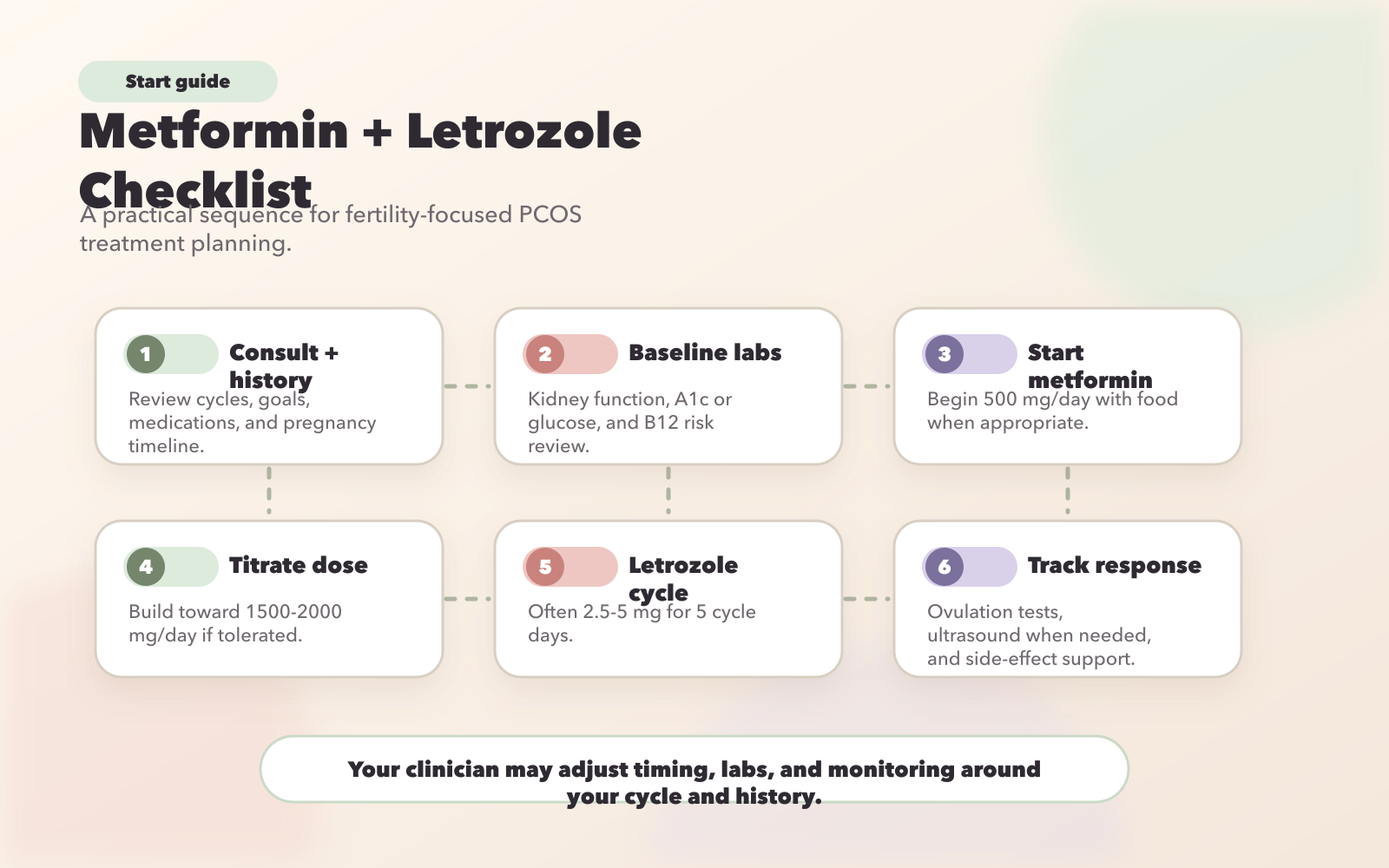
Step-by-Step Guide to Starting Metformin-Letrozole Treatment for PCOS
Before Starting Treatment
Schedule a Consultation with Your Healthcare Provider
Start by meeting with your healthcare provider to confirm your PCOS diagnosis and establish your fertility goals. This step is critical, as about 75% of women with PCOS face infertility due to anovulation. To make the most of your consultation, bring along a menstrual diary covering the past 6 to 12 months, along with details of any previous treatments - especially if you've experienced clomiphene resistance or failure. Your provider will use this information to create a treatment plan tailored to your needs, focusing on whether your ovulation is irregular or absent, two hallmark signs of PCOS.
It's also important to share any symptoms you're experiencing, such as hirsutism (excess hair growth), acne, or hair thinning. Be prepared to discuss your weight and BMI, as even a modest 5% weight loss can improve reproductive outcomes. If your BMI is 30 kg/m² or higher, your provider may recommend letrozole or clomiphene over Metformin, as studies show it tends to be more effective for obese women.
Get Baseline Lab Tests
Before starting treatment, you'll need a series of baseline tests to ensure your plan is both safe and effective. These include a glucose tolerance test, hormone panels (testosterone, LH, FSH), thyroid (TSH), prolactin, lipid profile, pelvic ultrasound, and kidney function (eGFR).
"A glucose tolerance test should be performed regardless of weight".
The hormone panel will help confirm biochemical hyperandrogenism and evaluate ovulatory function. Thyroid and prolactin tests are used to rule out conditions that mimic PCOS symptoms. A lipid profile checks for metabolic syndrome, which affects over 80% of obese women with PCOS. A pelvic ultrasound will assess ovarian morphology, often revealing 10 to 12 small follicles. Kidney function tests are crucial because Metformin is not recommended for individuals with an eGFR below 30 mL/min/1.73 m². If you’re planning to use Metformin long-term, ask about testing your Vitamin B12 levels, as prolonged use can lead to deficiencies.
This comprehensive testing will provide a clear picture of your overall health and guide your treatment plan.
Review Your Medical History and Current Medications
Be open about your medical history and any medications you’re currently taking. Share details of any past kidney disease, heart failure, or imaging procedures involving iodinated contrast. Mention medications like topiramate or cimetidine, as well as lifestyle factors such as excessive alcohol use, anemia, or neuropathy. These details will help your provider determine if extra precautions, like monitoring Vitamin B12 levels, are necessary.
It’s also important to establish protocols for pausing certain medications during acute illnesses or dehydration, as these situations can increase the risk of lactic acidosis. Additionally, discuss whether ultrasound monitoring will be part of your treatment cycles. Ultrasounds can track follicle development and help minimize the risk of multiple pregnancies.
How to Start Metformin and Letrozole
Metformin Dosing: Start Low and Increase Gradually
When starting Metformin, begin with 500 mg once daily, ideally with your largest meal, such as dinner. Gradually increase the dose by 500 mg each week until you reach a total of 1,500 mg to 2,000 mg daily.
"Because of the gastrointestinal side effects of metformin, the usual starting dosage is 500 mg taken with the largest meal of the day. If tolerated, the dosage is gradually increased to 500 mg with each meal." - Anne D. Walling, M.D., American Academy of Family Physicians
A typical dosing schedule might look like this:
- Week 1: 500 mg daily
- Week 2: 1,000 mg daily (split into 500 mg twice daily or 1,000 mg extended-release once daily)
- Week 3: 1,500 mg daily
- Week 4: 2,000 mg daily
If you experience any stomach discomfort during dose increases, stay at your current dose for an extra week before attempting the next step. The extended-release (ER) version of Metformin can reduce stomach upset and allows for once-daily dosing. Keep in mind that doses below 1,000 mg per day are usually less effective, and it may take several months to see full benefits.
Once your Metformin dose is stabilized, you can shift your focus to starting Letrozole.
Letrozole Timing and Dosing Schedule
For managing PCOS, Letrozole is typically taken as 2.5 mg once daily for five consecutive days, starting on either day 3 or day 5 of your menstrual cycle. If your cycles are irregular or absent, your healthcare provider might first induce a period using progestin or, in some cases, recommend a "random start" if your estrogen and progesterone levels are low.
Studies show that the standard 2.5 mg regimen leads to ovulation in only 28.6% of women with PCOS. Research conducted between 2015 and 2022 by Dr. Rachel S. Mandelbaum and her team at Los Angeles General Hospital reviewed 189 ovulation cycles in 52 PCOS patients. They found that women who started with 5 mg for five days or 2.5 mg for 10 days ovulated faster - within 12.0 to 12.9 days - compared to 22.4 days for those on the standard 2.5 mg/5-day regimen. If no follicle development is observed during your cycle, your provider might adjust the dose mid-cycle using a stair-step approach.
Tips to Stay on Track with Your Medications
Once your dosing plan is in place, here are some practical ways to stay consistent:
- For Metformin, take it with your meals to make it part of your daily routine. Setting a phone alarm for mealtimes or keeping the medication in a visible spot near your vitamins can serve as helpful reminders.
- Since Letrozole is only taken during a specific five-day window each cycle, mark these days on your calendar or use a period-tracking app. A pill organizer labeled with the days of the week can also help you avoid missing a dose. If you're using ovulation predictor kits, start testing around day 10 of your cycle to track your response.
Sticking to these strategies can simplify the process and keep you on track with your treatment plan.
PCOS & Ovulation Induction: How Can You Ovulate With PCOS?
sbb-itb-6dba428
Managing Side Effects and Monitoring Progress
Once you’ve established your dosing schedule, keeping an eye on side effects and tracking your progress is key to ensuring your treatment stays on course.
What Side Effects to Expect
Both Metformin and Letrozole can cause side effects, many of which are mild and tend to improve over time. For Metformin, the most common issues are related to digestion: nausea, diarrhea, gas, bloating, stomach discomfort, or even a metallic taste.
"When you first start taking metformin, you may experience some mild gastrointestinal side effects that include: Nausea, diarrhea, increased gas, bloating, stomach pain" - Diana Isaacs, PharmD, Cleveland Clinic
If you’re on Metformin long-term, there’s also a chance of developing a Vitamin B12 deficiency. Symptoms of this include unusual fatigue or tingling and numbness in your hands and feet.
Letrozole, on the other hand, may bring on symptoms that mimic menopause. Common complaints include hot flashes, trouble sleeping, fatigue, and feelings of low mood.
"Letrozole can cause symptoms similar to the menopause such as hot flushes, difficulty sleeping, tiredness and low mood, but these usually improve during the first months of taking it"
How to Reduce Side Effects
For Metformin, switching to an extended-release version can lessen stomach-related issues. Taking the medication with food is another simple way to ease nausea and cramping. If diarrhea or vomiting becomes a problem, stay hydrated by drinking water regularly - dark or strong-smelling urine could mean dehydration. Also, avoid jumping back to a higher dose after a break, as this can worsen side effects.
Managing Letrozole’s hot flashes can be as simple as keeping your environment cool. Use fans, splash cool water on your face, and try to steer clear of triggers like spicy foods, caffeine, alcohol, or smoking. For fatigue, light exercise and sticking to a regular sleep routine can make a difference. If you’re dealing with muscle or bone aches, ask your pharmacist about over-the-counter pain relievers.
Keep track of how these adjustments work for you, and stay alert for signs that might need professional attention. These strategies can help you stay on track with your PCOS treatment.
When to Call Your Provider
Reach out to your healthcare provider if your stomach troubles persist even after taking Metformin with food. If you notice severe symptoms like extreme weakness, difficulty breathing, or unusual muscle pain, these could be signs of lactic acidosis, which requires immediate medical attention. Similarly, call your provider right away if you experience symptoms of blood clots, such as swelling or redness in one limb, or if you have an allergic reaction, like swelling in your mouth or throat.
If your menstrual cycle hasn’t improved after 3 to 6 months of treatment, it’s time to schedule a follow-up appointment. Also, let your provider know before undergoing imaging tests that use iodinated contrast, like certain CT scans, as you might need to pause Metformin temporarily to protect your kidneys. And, if you become pregnant, contact your provider immediately to discuss whether your medications need to be adjusted.
Ongoing Care and Treatment Adjustments
Keeping up with regular monitoring and making necessary adjustments ensures better treatment outcomes while reducing potential risks. This involves follow-up appointments, fine-tuning medications, and adopting healthier habits.
Schedule Regular Follow-Up Appointments
To track progress, schedule transvaginal ultrasounds at 1, 3, and 5 months to monitor endometrial thickness and ovarian volume. Periodic blood tests for LH, FSH, fasting insulin, and HbA1c are also essential.
Additionally, plan for Vitamin B12 screenings and kidney function tests (eGFR) to ensure safe medication dosing. If prescribed, consider DEXA scans every 8–12 weeks to assess visceral fat and lean mass accurately. Keeping a menstrual calendar - noting bleeding days and intercourse - can help your provider evaluate whether the Letrozole-Metformin combination is effective.
Adjusting Your Medication Based on Results
If you experience persistent stomach issues, switching to extended-release Metformin may help. Kidney function plays a critical role in dosage adjustments, as Metformin should be discontinued if eGFR drops below 30 mL/min/1.73 m². For those who don’t respond to oral medications after several cycles, the treatment plan might shift to include gonadotrophin injections or procedures like laparoscopic ovarian drilling.
Most patients notice improved menstrual cycle regularity within 3 to 6 months of consistent treatment. If progress stalls, your provider will reassess and modify the plan to enhance ovulation and fertility outcomes.
Lifestyle Changes That Support Treatment
Medication works best when paired with meaningful lifestyle changes. For example, losing just 5% to 10% of body weight can significantly improve PCOS symptoms, restore ovulation, and boost pregnancy rates. Focus on a low glycemic index diet rich in anti-inflammatory foods like berries, leafy greens, and fatty fish, while cutting back on refined carbs and processed foods.
"Lifestyle intervention, overlooked by many physicians for decades, remains the cornerstone of PCOS management." - Dr. Laurence Jacobs, Reproductive Endocrinologist
Incorporate 30–60 minutes of aerobic exercise 3–7 times a week, along with strength training 2–3 times weekly. Stress management techniques like mindfulness, yoga, or Pilates can also help regulate hormones and reduce anxiety. Don’t underestimate the importance of sleep - aim for 7 to 9 hours per night to support hormone balance. These lifestyle adjustments not only complement medication but also improve overall reproductive health.
For personalized care, Oana Health offers treatment plans that include ongoing monitoring and support. Their licensed professionals can adjust your Metformin dosage, provide tips for managing side effects, and guide you through lifestyle changes - all through convenient telehealth appointments with medication delivered to your door.
Conclusion
Key Steps for Starting Treatment
Starting Metformin-Letrozole therapy requires a well-thought-out plan. First, confirm your diagnosis with a fertility specialist and complete baseline lab tests. Begin Metformin at 500 mg daily, gradually increasing to 1,500 mg over 2–3 weeks. Letrozole is typically taken on days 3–7 of your menstrual cycle. Throughout the process, regular ultrasounds and blood tests are essential to monitor ovarian volume, endometrial thickness, and hormone levels.
Incorporating lifestyle changes, such as achieving even modest weight loss, can significantly improve treatment outcomes. Many women notice improved menstrual regularity after several months of consistent therapy. If results are not seen after a few cycles, your healthcare provider might recommend moving to injectable hormones or IVF. These steps ensure your treatment stays on track with proper monitoring and adjustments.
How Oana Health Can Support Your Treatment
Oana Health is here to make your treatment journey easier. Their platform connects you with licensed physicians specializing in PCOS and fertility care. Through their telehealth services, you can complete an online intake, receive a personalized treatment plan, and have medications delivered to your door with free shipping.
If oral Metformin causes nausea or stomach discomfort, Oana Health offers a topical Metformin cream starting at $89 per month. This alternative provides the same insulin-sensitizing benefits without the gastrointestinal side effects. Additionally, Oana Health provides 24/7 customer support and ongoing monitoring to fine-tune your treatment as needed. With their science-based telehealth services, managing PCOS becomes a more straightforward and convenient process.
FAQs
How long does it take to ovulate on metformin plus letrozole?
Ovulation usually begins within 2 to 3 months after starting metformin and letrozole. However, some women may notice ovulation as early as 4 weeks. For many, regular menstrual cycles return within 4 to 6 months, though individual results can differ based on personal health factors.
What if I don’t get a period - when do I start Letrozole?
If you’re not experiencing a period, your doctor might suggest taking a progestin, such as Provera, to trigger bleeding. After your period begins, you’ll typically start Letrozole on the second day of bleeding. This approach helps regulate your cycle, making ovulation induction more predictable. Be sure to follow your healthcare provider’s instructions for both timing and dosage.
What should I do if metformin side effects don’t improve?
If you continue to experience side effects from metformin after 2–3 weeks - like intense stomach problems or signs of lactic acidosis - reach out to your healthcare provider right away. They might change your dosage, recommend an extended-release form, or consider alternative treatments to prioritize your well-being.