
Roundup: Best Practices for Metformin-Letrozole Use
Metformin and Letrozole together improve fertility outcomes for women with PCOS. Metformin addresses insulin resistance, while Letrozole stimulates ovulation by increasing follicle-stimulating hormone (FSH). Studies show higher ovulation and pregnancy rates when combining these treatments compared to Letrozole alone. Here's what you need to know:
- Metformin Dosage: Start with 500 mg daily, gradually increasing to 1,500–2,000 mg/day to minimize side effects like nausea and diarrhea. Extended-release (ER) versions are gentler on the stomach.
- Letrozole Dosage: Typically 2.5 mg daily for five days during the early follicular phase. Dosage adjustments may be needed if ovulation doesn't occur.
- Monitoring: Regular ultrasounds and blood tests track follicle development, hormone levels, and endometrial thickness for optimal results.
- Lifestyle Tips: A balanced diet, regular exercise, and stress management enhance treatment effectiveness.
Metformin-Letrozole therapy is safe and effective when tailored to individual needs and combined with lifestyle changes. Consult your doctor if ovulation doesn't occur, side effects persist, or pregnancy is achieved.
PCOS & Ovulation Induction: How Can You Ovulate With PCOS?
Dosage and Administration Guidelines
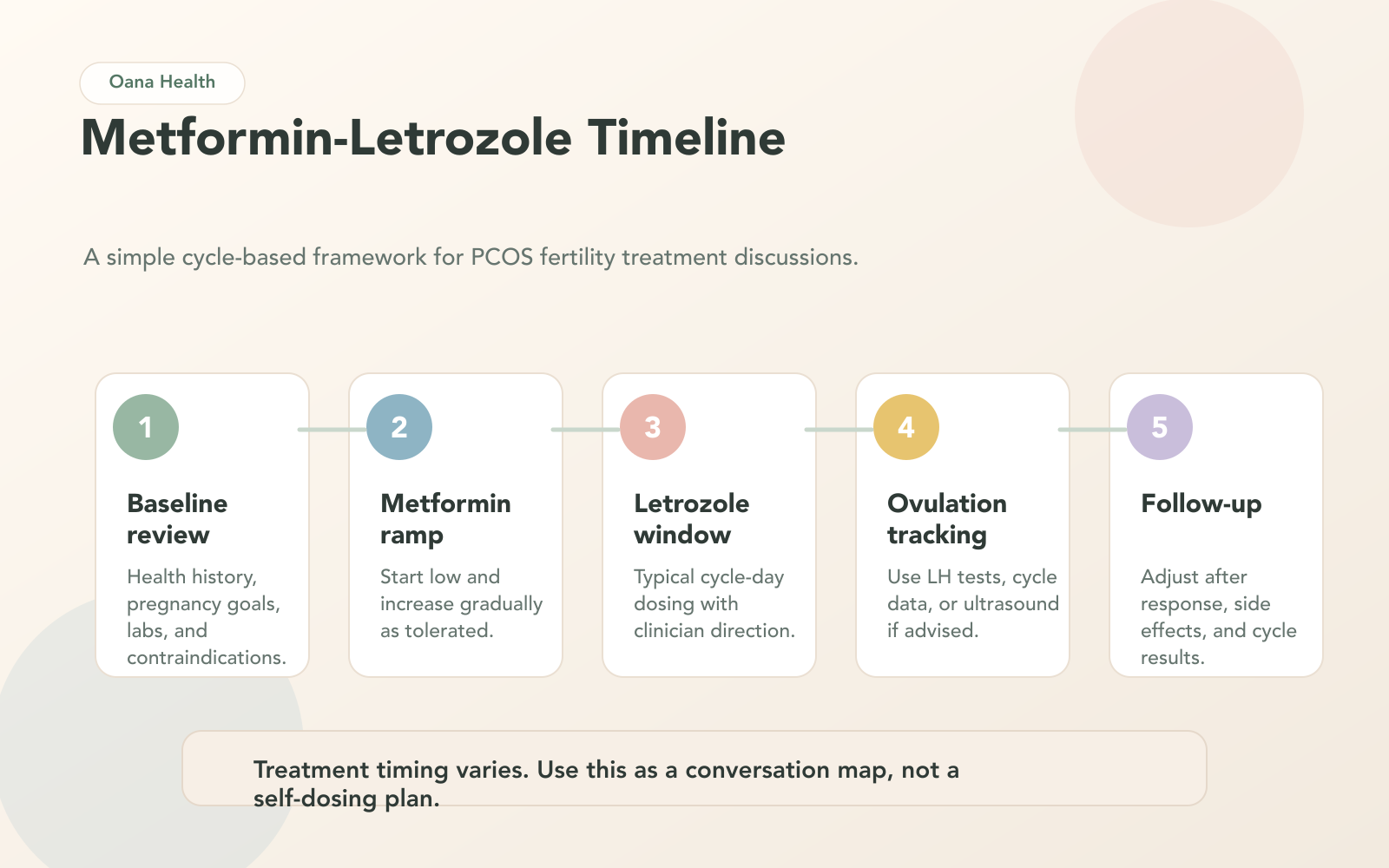
Metformin-Letrozole Dosage Protocol and Monitoring Timeline for PCOS Fertility Treatment
When it comes to treatment, getting the dosage right is key to ensuring effectiveness while minimizing side effects.
Metformin Dosage Recommendations
Starting Metformin at a low dose and gradually increasing it is the best way to improve tolerability. The typical starting point is 500 mg once daily, taken with your evening meal for one week. After that, the dose increases by 500 mg each week until reaching the target range of 1,500–2,000 mg per day. This step-by-step approach allows your body to adapt, significantly reducing common gastrointestinal issues like nausea and diarrhea.
For better tolerance, extended-release (ER or XR) formulations are often preferred over immediate-release versions. These allow for once-daily dosing and are easier on the stomach while still providing the same metabolic benefits. Taking Metformin with food can further help reduce stomach upset.
In some cases, before introducing Letrozole for ovulation induction, doctors may recommend a 6–8 week period of Metformin alone. This pre-treatment phase helps regulate metabolic function and may enhance the uterine environment, setting the stage for implantation.
Letrozole Dosage and Timing
Letrozole is typically timed with your menstrual cycle. The standard starting dose is 2.5 mg once daily for five consecutive days during the early follicular phase. Treatment usually begins on Day 2, Day 3, or Day 5 of your cycle, depending on your doctor’s assessment of your specific cycle pattern.
If ovulation doesn’t occur at the starting dose, your doctor might adjust the dosage in future cycles. Using Letrozole in this cyclical manner - administering it for five days and then monitoring ovulation - helps create the right hormonal conditions for ovulation and increases the chances of conception.
Up next, discover how to track progress and fine-tune these dosages for the best results.
Monitoring Progress and Adjusting Treatment
Keeping a close eye on your progress is essential for getting the most out of Metformin-Letrozole therapy when managing PCOS. Regular tracking helps determine if adjustments to your treatment plan are needed.
Tracking Ovulation and Hormone Levels
Ultrasound monitoring plays a central role in tracking follicle development. Transvaginal ultrasounds help measure whether follicles have reached a mature size (over 18 mm) and assess endometrial thickness to ensure the uterus is ready for implantation. These scans are typically scheduled mid-cycle, close to ovulation.
Blood tests provide valuable information about hormone levels. Your doctor will likely monitor Luteinizing Hormone (LH), Follicle-Stimulating Hormone (FSH), and Estradiol (E2) to evaluate how your ovaries are responding. Adjustments to your treatment can then be tailored to your needs. In addition, metabolic tests - such as fasting insulin, HbA1c, and HOMA-IR (insulin resistance index) - help determine whether Metformin is effectively managing underlying PCOS-related issues.
At-home methods like observing cervical mucus and tracking menstrual cycles can also offer helpful insights. Letrozole generally supports normal mucus secretion, making this a reliable way to confirm ovulation. Studies suggest that combining clinical and at-home monitoring creates a strong foundation for identifying when adjustments may be necessary.
When to Adjust Dosages or Contact Your Doctor
Monitoring results often indicate when it's time to adjust your treatment or consult your doctor. Here are some common scenarios:
- No ovulation detected: If ovulation doesn't occur after one to three cycles, as confirmed through predictor kits or ultrasounds, it's time to reach out to your doctor. Research shows that increasing Letrozole to 5 mg or extending its use to 10 days can improve ovulation rates compared to standard regimens.
- Gastrointestinal side effects: If stomach issues persist, talk to your provider. Switching to a prolonged-release Metformin formulation may help ease these symptoms.
- Positive pregnancy test: Contact your doctor immediately if you become pregnant. Discuss whether to continue Metformin during the first trimester, as doses between 1,000–2,000 mg daily may help lower miscarriage risks. If conception hasn’t occurred after six months, schedule a follow-up to reassess your treatment plan, as this period is typically enough to evaluate Metformin's effect on pregnancy rates.
- Body weight considerations: Dosage needs can vary based on body weight. Non-obese women often respond well to 1,500 mg of Metformin daily, while obese women may require up to 2,000 mg per day for optimal results.
Keeping a medication log can be particularly helpful. Record your daily doses, the specific five-day window for Letrozole, and any side effects. This information can provide valuable insights for your doctor during follow-ups.
Managing Side Effects and Safety
When using Metformin and Letrozole, understanding and managing potential side effects is key to staying comfortable and ensuring safe treatment. While most people handle these medications well, knowing what to expect can make the process smoother.
Common Metformin Side Effects
Digestive issues are among the most frequent side effects of Metformin. Between 22% and 40% of women report symptoms like nausea, diarrhea, vomiting, or stomach cramps, compared to about 10% in those taking a placebo. Fortunately, these symptoms are often manageable.
- Take with meals: This can help reduce stomach upset.
- Start low, go slow: Beginning with a low dose can improve tolerance.
- Consider extended-release (ER) Metformin: If digestive issues persist, switching to ER Metformin, which is taken once daily, may be easier on your stomach.
Some people notice a metallic taste when starting Metformin, but it usually fades within weeks. Mint or ginger may help ease this temporary side effect. If diarrhea occurs, staying hydrated is crucial. Additionally, long-term Metformin use can sometimes lead to Vitamin B12 deficiency. Symptoms like unusual fatigue, muscle weakness, or vision changes may signal a deficiency, so regular monitoring of your levels is important.
Managing Letrozole Side Effects
Letrozole is generally well-tolerated, with headaches being the most commonly reported issue. Interestingly, studies show that combining Letrozole with Metformin doesn’t significantly increase side effects compared to using Metformin alone. For instance, a study involving 72 patients with PCOS found the combination to be 94.44% effective, with no notable increase in adverse reactions.
If headaches occur, track their frequency and intensity. While most are mild and manageable, persistent or severe headaches should be discussed with your doctor. In general, Letrozole’s side effects are unlikely to interfere with daily activities, but any symptoms that disrupt your routine should be addressed with a healthcare professional.
Safety Precautions for Combination Therapy
Serious side effects are extremely rare, affecting fewer than 1 in 10,000 people. However, certain precautions are essential:
- Metformin and kidney health: Avoid Metformin if your kidney function drops below an eGFR of 30 mL/min/1.73 m². Also, temporarily stop Metformin before and after procedures involving iodinated contrast imaging, depending on your kidney function.
- Pregnancy and Letrozole: Letrozole should never be used during pregnancy due to the risk of birth defects. If you test positive for pregnancy, contact your healthcare provider immediately.
- Acute illness and Metformin: Avoid Metformin during severe illnesses that involve dehydration, low oxygen levels (like severe infections), or heavy alcohol consumption, as these can increase the rare risk of lactic acidosis. Symptoms such as severe fatigue, rapid or shallow breathing, or a slow heartbeat require immediate medical attention.
sbb-itb-6dba428
Lifestyle and Additional Interventions
Metformin and Letrozole are effective tools for managing PCOS and improving fertility, but their impact grows when paired with supportive lifestyle changes. These adjustments work hand-in-hand with medication to improve fertility outcomes.
Dietary Recommendations for PCOS
A well-rounded diet can naturally complement Metformin by helping to lower insulin and blood sugar levels. Even a modest weight loss of 5% can significantly improve PCOS symptoms and boost the success of fertility treatments.
Incorporate whole grains like wholemeal bread, wholegrain cereals, and brown rice to maintain stable blood sugar levels. Add at least five servings of fruits and vegetables daily for essential nutrients, and opt for lean proteins such as chicken, fish, or lean meats to support metabolic health without adding excess saturated fat. These dietary habits not only enhance fertility but also reduce the risk of pregnancy complications like gestational diabetes, pre-eclampsia, and high blood pressure.
The Role of Physical Activity
Regular exercise complements a healthy diet by further balancing hormones. Physical activity has been shown to increase levels of Sex Hormone-Binding Globulin (SHBG) by around 3.42 nmol/l and raise Follicle-Stimulating Hormone (FSH) levels by approximately 0.39 IU/l. This helps reduce free testosterone levels, which can hinder ovulation, while supporting the follicular development that Letrozole promotes.
You don’t need to dive into intense workouts to see results. Aim for at least 30 minutes of moderate-intensity aerobic exercise, like brisk walking or cycling, three times a week. Even without weight loss, exercise improves insulin sensitivity, perfectly complementing Metformin’s role in managing hyperinsulinemia. Studies show that combining exercise with dietary changes leads to more significant improvements in hormonal balance.
"Lifestyle factors influence the PCOS course and prognosis, including diet and physical activity, which are fundamental in reducing oxidative stress, inflammation and in improving metabolic and hormonal parameters",
- Scarfò et al., Biomedicines.
Mental Health and Stress Management
Managing stress is another key piece of the puzzle for achieving hormonal balance. PCOS often comes with a heavy emotional toll, including struggles with body image, symptoms like hirsutism and weight gain, and a higher risk of depression and emotional well-being. The stress of infertility treatments can add even more pressure.
Enhanced Adherence Counseling (EAC), conducted biweekly for three months and then monthly, can help reinforce both lifestyle changes and treatment adherence. Behavioral strategies such as goal setting, self-monitoring, and cognitive restructuring can amplify the benefits of combining lifestyle adjustments with Metformin. Additionally, Metformin has been linked to improved quality of life and a lower risk of depression in women with PCOS. Addressing physical symptoms both medically and cosmetically can further improve body image and ease psychological stress.
Oana Health: PCOS Treatment Support
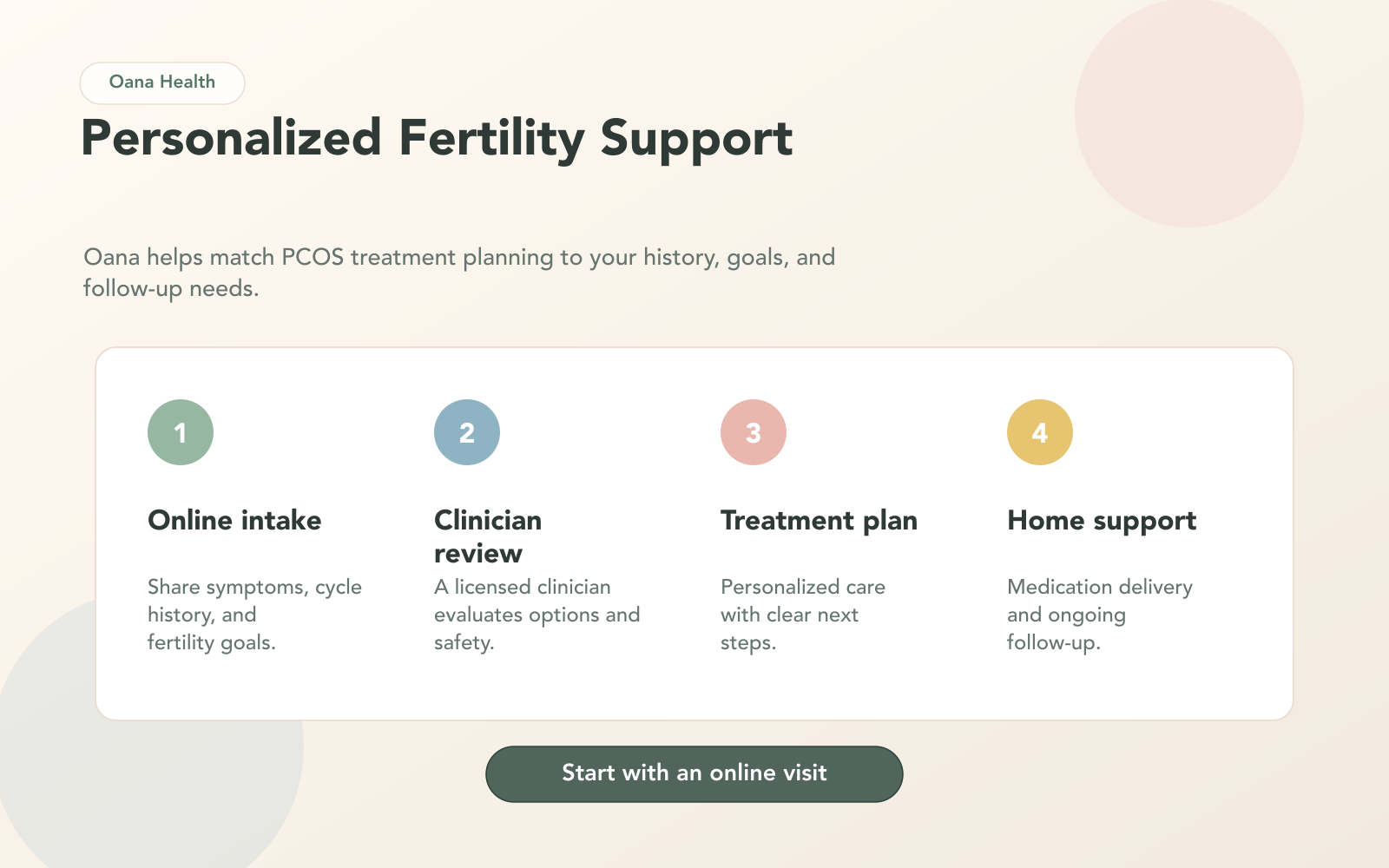
Managing PCOS and fertility doesn’t have to mean endless doctor visits or trips to the pharmacy. Oana Health provides a telehealth platform tailored specifically for women dealing with PCOS symptoms like insulin resistance and hormonal imbalances that can affect fertility. It all starts with a quick 5-minute online intake, followed by a personalized, physician-led treatment plan delivered straight to your door with free shipping.
Oana Health offers customized Metformin treatments designed to fit fertility protocols. Options include:
- Oral Metformin ER: Available for $22/month.
- MetSpiro Pack: A combination of Metformin and Spironolactone, targeting both insulin and androgen balance, priced at $32/month.
- Topical Metformin Cream (Metformin HCL Lotion 20%): Starting at $43/month, this option is perfect for those who experience gastrointestinal discomfort with oral Metformin. It delivers insulin-sensitizing benefits without the common side effects, with noticeable results typically seen after 3–4 weeks of daily use.
"I used to struggle a lot with the side effects for oral Metformin and this is a great alternative for me. I get the same benefits but no more upset stomach and nausea."
- Carrie S., Oana Health Patient
Oana Health doesn’t stop at Metformin. They offer solutions for a variety of PCOS-related symptoms:
- Hairless Hype Treatment: Priced at $69/month, this treatment helps reduce unwanted hair growth. Clinical data shows that 81% of women experience significant improvement within one year.
- Oral Minoxidil: Available at $25/month, this treatment focuses on addressing hair loss.
Every treatment is custom-made in FDA-regulated compounding pharmacies, ensuring quality and safety. Plus, automatic refills and ongoing medical support - via phone or online messaging - help make the process seamless.
"Oana's telehealth service is fantastic! It's helped manage my insulin levels and reduce excess hair growth I was experiencing due to PCOS."
- Victoria A., Oana Health Patient
This telehealth approach encourages consistent treatment adherence, which is key to getting the most out of therapies like Metformin and Letrozole. It’s a convenient, patient-focused solution for managing PCOS symptoms effectively.
Conclusion
The combination of Metformin and Letrozole has shown promising results in improving fertility outcomes for women with PCOS. Research highlights success rates of approximately 94.44% for effectiveness and 93.3% for cumulative ovulation among overweight and obese patients, emphasizing the potential of this therapy when tailored to individual needs.
Achieving success with this treatment requires close medical supervision. Healthcare providers typically adjust Letrozole (commonly 2.5–5 mg for 5 days) and Metformin (usually 1,500–2,000 mg daily) based on detailed monitoring through ultrasounds and blood tests to ensure optimal hormone balance and proper endometrial development.
For the best results, medication works hand-in-hand with lifestyle changes. A combination of a balanced diet, regular aerobic exercise, and stress management techniques has been shown to significantly enhance full-term delivery rates.
"The combination of letrozole and metformin with targeted nursing in the treatment of infertility patients with PCOS has better clinical effect and high safety." - Shuai Jiang et al.
FAQs
How long does it take to see results with Metformin plus Letrozole?
Most women experience better ovulation within 3 to 6 months of consistently using Metformin and Letrozole. However, individual results can differ. It's crucial to stick to your healthcare provider's recommendations and schedule regular check-ins to track your progress effectively.
What should I do if I don’t ovulate on 2.5 mg of Letrozole?
If ovulation doesn’t happen with a 2.5 mg dose of Letrozole, stepping up to 5 mg daily for five days might make a difference. This increase is often seen as a reliable way to boost ovulation rates and is frequently suggested for inducing ovulation.
When should I stop or change these meds if I get a positive pregnancy test?
If your pregnancy test comes back positive, it's important to stop or adjust certain medications. Reach out to your healthcare provider as soon as possible to discuss the safest and most suitable options for your treatment moving forward.