
Emotion-Focused Therapy vs. CBT for PCOS Support
Living with PCOS is tough - not just physically but emotionally. Anxiety affects 42% of women with PCOS (compared to 8.5% in others), and depression rates are nearly triple. Managing these mental health challenges is crucial for improving overall well-being and sticking to lifestyle changes. Two therapy options stand out: Cognitive Behavioral Therapy (CBT) and Emotion-Focused Therapy (EFT).
- CBT focuses on identifying and changing negative thought patterns, helping with body image, anxiety, and depression. It’s structured, goal-oriented, and often includes homework.
- EFT emphasizes processing emotions, helping women address feelings like shame, frustration, and grief. It’s more about exploring and transforming emotions in a safe space.
Both therapies improve emotional health, but research shows CBT has a stronger impact on body image and mental health for PCOS. EFT, however, offers lasting emotional benefits and focuses on deeper emotional healing.
Quick Comparison
| Feature | CBT | EFT |
|---|---|---|
| Focus | Thought patterns and behaviors | Processing and transforming emotions |
| Best For | Body image, anxiety, depression | Emotional struggles, self-compassion |
| Session Structure | Structured, goal-oriented, includes homework | Emotion-driven, less structured |
| Effectiveness | Stronger improvements in body image and mental health | Long-term emotional benefits |
| Accessibility | Widely available, no PCOS-specific training needed | Requires EFT-trained therapists |
Choosing the right therapy depends on whether you want to focus on thoughts (CBT) or emotions (EFT). Both can be accessed through telehealth, making it easier to prioritize mental health alongside PCOS management.
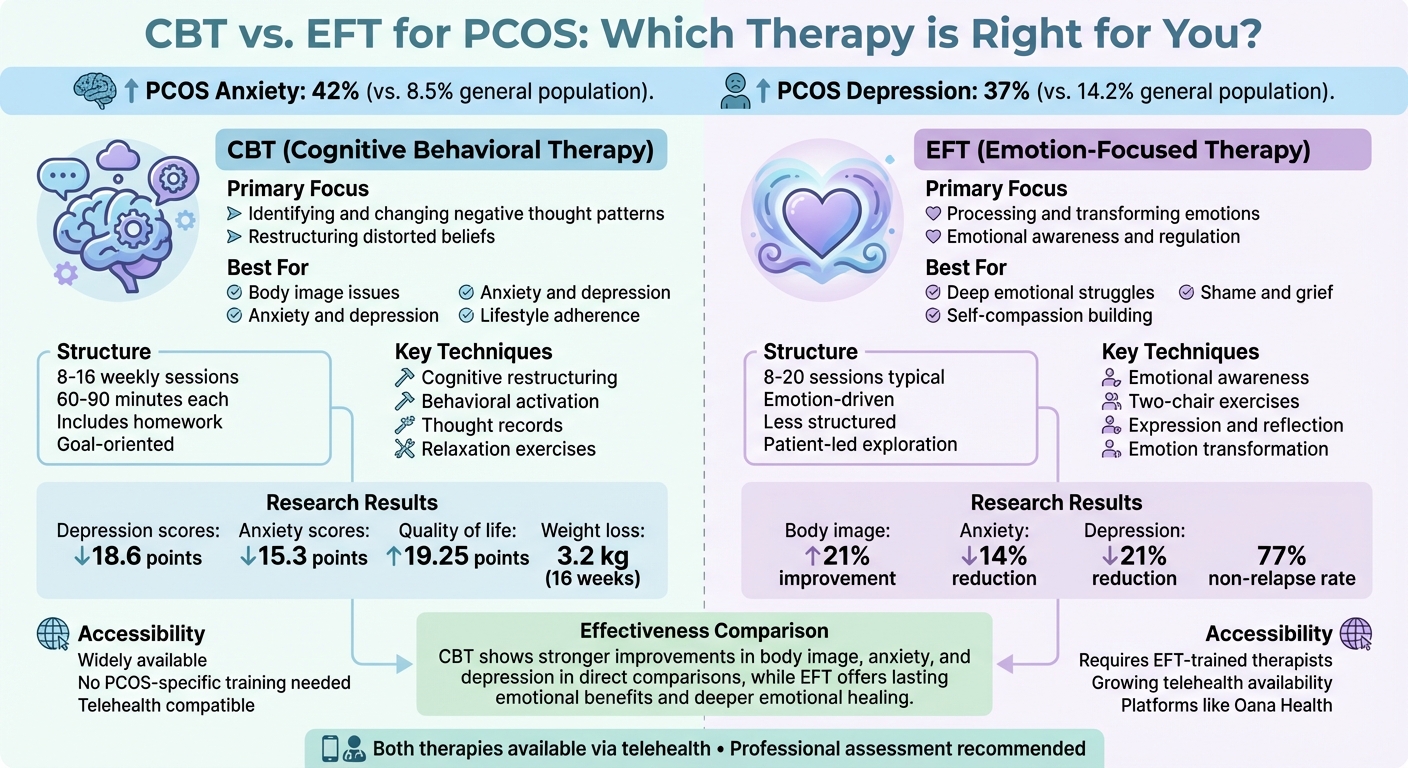
CBT vs EFT for PCOS: Therapy Comparison Chart
What is Cognitive-Behavioral Therapy (CBT)?
Cognitive-behavioral therapy (CBT) is a structured form of psychotherapy designed to identify and replace distorted thoughts and behaviors. By focusing on present-day issues, it combines cognitive techniques with behavioral strategies to address cycles that contribute to anxiety and depression.
For women with PCOS, CBT is tailored to tackle specific mental health challenges like body image concerns tied to weight gain, hirsutism, infertility anxiety, and feelings of inadequacy. As explained in one study:
"CBT is believed to repair processes that maintain depression and anxiety, such as rumination, overgeneralization, and self-focused attention." – BMC Psychiatry
Typically, CBT involves 8–16 weekly sessions where patients work with a therapist to develop practical coping skills. This approach is particularly helpful for managing PCOS, as improved mental health can make it easier to stick to necessary lifestyle changes.
How CBT Works
CBT operates through three main techniques:
- Cognitive Restructuring: This method helps patients identify automatic negative beliefs - often called "hot thoughts" - that trigger emotional distress. For example, a woman with PCOS might think, "I'm worthless because I can't lose weight", or "My body is disgusting because of this facial hair." Using a seven-column thought record, patients document these thoughts, analyze the evidence, and explore alternative perspectives.
- Behavioral Activation: This involves scheduling activities to counteract withdrawal tendencies. Instead of isolating due to depression, patients are encouraged to engage in regular exercise or social interactions. These activities support the lifestyle adjustments often required for managing PCOS.
- Developing Coping Skills: Techniques such as progressive muscle relaxation and imagery exercises help manage physical anxiety symptoms, like a racing heart or shortness of breath. Research shows that CBT can even reduce the body's stress response in women with PCOS, leading to a calmer reaction to stressors compared to standard care.
These strategies empower patients to better handle the emotional struggles associated with PCOS.
CBT for PCOS Emotional Symptoms
CBT has proven effective in addressing emotional challenges linked to PCOS. It helps reduce body image dissatisfaction by challenging negative appearance-related beliefs. Additionally, it has shown success in lowering anxiety and depression levels while improving adherence to medical recommendations and lifestyle changes critical for managing PCOS.
For example, a randomized controlled trial conducted at Al-Zahra Hospital in Tabriz, Iran, involved 84 women with PCOS who attended eight weekly group CBT sessions (lasting 60–90 minutes). The results were striking: depression scores dropped significantly - from an average of 24.4 to just 6.7 - and participants reported noticeable improvements in their quality of life.
Research on CBT for PCOS
Numerous studies underline CBT's benefits for women with PCOS. Between 2013 and 2015, the University of Pennsylvania ran a 16-week pilot trial involving 31 overweight or obese women with PCOS and depressive symptoms. Participants attended weekly 30-minute CBT sessions paired with lifestyle modifications. The CBT group achieved a weight loss rate of 0.35 kg (about 0.77 lbs) per week, more than double the 0.16 kg (around 0.35 lbs) per week seen in the lifestyle-only group. Over the full 16 weeks, the CBT group lost an average of 3.2 kg (approximately 7.1 lbs), compared to 1.8 kg (about 4.0 lbs) in the lifestyle-only group.
Randomized trials have also shown significant improvements in mental health. Among PCOS patients receiving CBT, depression scores dropped by an average of 18.6 points, while anxiety scores decreased by 15.0 to 15.3 points compared to control groups. A 2024 study further confirmed that CBT outperformed emotion-focused therapy in reducing body image dissatisfaction, anxiety, and depression. As one journal puts it:
"CBT can reduce dissatisfaction with body image, anxiety, and depression in women with PCOS, therefore it is recommended to use this therapy." – Journal of Education and Health Promotion
Because of these findings, international guidelines now recommend incorporating CBT into comprehensive PCOS care, particularly to address the emotional toll of the condition.
Next, we’ll dive into Emotion-Focused Therapy, a different approach to managing PCOS-related emotional distress.
sbb-itb-6dba428
What is Emotion-Focused Therapy (EFT)?
Emotion-Focused Therapy (EFT) takes a unique approach by focusing on emotions as the primary tool for healing. It operates on the belief that emotions serve as adaptive systems, signaling whether our needs are being met.
This approach holds particular importance for women with PCOS, a condition that can stir up deep, persistent emotional challenges.
"Emotion is fundamental to the construction of the self and is a key determinant of self-organization." – Psychiatry Online
Instead of suppressing or avoiding painful emotions, EFT encourages individuals to fully experience them within a safe therapeutic environment. This process helps uncover primary adaptive emotions - such as self-compassion or constructive anger - that can replace long-standing negative patterns.
A study conducted in July 2024 at Afzalipur Hospital in Kerman highlights EFT's potential. In this research, 45 women with PCOS were divided into three groups: one received 11 EFT sessions (based on the Johnson protocol), another underwent 18 CBT sessions, and the control group received no intervention. Both EFT and CBT significantly improved body image, anxiety, and depression compared to the control group. Notably, EFT's benefits remained stable during a three-month follow-up. With typical treatment lasting 8 to 20 sessions, EFT offers a relatively short-term yet effective option.
While CBT emphasizes cognitive restructuring, EFT focuses on emotional processing, providing a different but complementary support system for PCOS patients. Below, we’ll explore EFT’s methodology, its impact on emotional symptoms tied to PCOS, and the research backing its effectiveness.
How EFT Works
EFT is built on five core principles that guide emotional healing:
- Awareness: Patients identify and name their emotions, a practice that can reduce activity in the amygdala, the brain's emotional alarm center.
- Expression: Encourages confronting difficult emotions rather than avoiding them.
- Regulation: Teaches self-soothing techniques and distress tolerance to calm the body’s stress response.
- Reflection: Helps individuals create a meaningful narrative around their emotional experiences.
- Transformation: Replaces maladaptive emotions with stronger, adaptive ones.
One common EFT technique, the "two-chair" exercise, is particularly effective for resolving inner conflicts. For instance, it can help patients address harsh self-criticism about weight or appearance by encouraging a dialogue between conflicting emotions.
EFT for PCOS Emotional Well-being
EFT directly tackles the emotional struggles that often accompany PCOS. Many women with the condition experience feelings of shame about their bodies, frustration with treatment difficulties, and grief over fertility challenges. These emotional hurdles are further complicated by the biochemical changes associated with PCOS, which can make emotional regulation even harder.
Unlike CBT’s structured and homework-driven approach, EFT allows patients to lead with their emotions. Therapists create a supportive space where patients can safely explore their feelings and understand how these emotions influence their lives.
Research on EFT for PCOS
Research underscores EFT’s positive impact on the emotional challenges linked to PCOS. For instance, studies on EFT for depression report a 77% non-relapse rate, showing that most patients maintain their improvements over time. In women with PCOS, EFT has been shown to result in a 21% improvement in body image, a 14% reduction in anxiety, and a 21% reduction in depression. While CBT demonstrated slightly higher results in these areas, EFT’s long-term benefits, particularly its emphasis on emotional transformation, make it a powerful tool for fostering lasting change.
"Emotion-focused therapy is based on the premise that the most efficient way to change maladaptive emotions is not through changing the way you think or learning a new skill, but through activating more adaptive emotions." – Mansoureh Amirshahi, PhD Student in General Psychology
EFT has also proven effective for related conditions. For example, studies on women with Premenstrual Dysphoric Disorder (PMDD) revealed significant reductions in emotional regulation difficulties, along with decreases in depression and stress. With nearly 37% of women with PCOS experiencing depression and 42% reporting symptoms of anxiety, these findings highlight EFT’s potential as a valuable treatment option for managing the emotional toll of PCOS.
Platforms like Oana Health are now offering EFT sessions through telehealth, providing accessible, evidence-based emotional care for women with PCOS.
CBT vs. EFT: Direct Comparison
This section dives into how CBT (Cognitive-Behavioral Therapy) and EFT (Emotion-Focused Therapy) differ when it comes to addressing emotional challenges tied to PCOS.
Main Differences Between CBT and EFT
CBT and EFT operate on completely different principles. CBT hones in on thoughts - helping you recognize distorted thinking patterns and replace them with more balanced, realistic perspectives. It’s a structured process involving tools like thought records, homework assignments, and practical exercises that equip you with long-term coping strategies.
EFT, however, centers its approach around emotions. Instead of focusing on thoughts, it encourages you to explore, process, and transform your emotional experiences. The goal is to shift maladaptive emotional responses into healthier ones, creating a safe space to navigate difficult feelings.
When it comes to outcomes, both therapies have been shown to reduce anxiety and depression compared to no treatment. However, studies suggest CBT has a stronger impact on improving body image, anxiety, and depression specifically for women with PCOS. For instance, randomized trials show that CBT can reduce depression scores by 18.6 points and state anxiety by 15.3 points, while also boosting quality of life scores by 19.25 points on average.
"The comparison of the two therapy showed that the effect of CBT on body image, anxiety, and depression is more than EFT." – Mansoureh Amirshahi, PhD Student in General Psychology
CBT also offers additional benefits, like better adherence to lifestyle changes and even improved clinical pregnancy rates. In one study, women with PCOS who combined CBT with lifestyle modifications lost twice as much weight as those who only focused on lifestyle changes.
The table below provides a side-by-side comparison of CBT and EFT.
Comparison Table: CBT vs. EFT
| Dimension | Cognitive-Behavioral Therapy (CBT) | Emotion-Focused Therapy (EFT) |
|---|---|---|
| Primary Focus | Identifying and changing distorted thoughts and behaviors | Processing and regulating underlying emotions |
| Therapeutic Goal | Breaking negative thought cycles and developing practical coping skills | Transforming maladaptive emotions and enhancing emotional awareness |
| Effectiveness for PCOS | Stronger improvements in body image, anxiety, and depression in direct comparisons | Effective at addressing emotional challenges, though less impactful than CBT for specific symptoms |
| Treatment Duration | Typically 8–16 weekly sessions (60–90 minutes each) | Typically structured in similar weekly formats (e.g., around 8 sessions) |
| Key Methods | Thought records, cognitive reframing, relaxation techniques, and homework | Emotional awareness and processing techniques |
| Additional Benefits | Improved treatment compliance, weight loss, and pregnancy rates | Improvement in emotional well-being and body image satisfaction |
| Accessibility | Widely available; therapists do not need to specialize in PCOS | Requires therapists trained in emotion-focused techniques, now increasingly available via telehealth platforms like Oana Health |
CBT is generally easier to access since it doesn’t require therapists to have PCOS-specific training, while EFT often demands specialized expertise. However, platforms like Oana Health are making EFT more accessible through telehealth, offering women with PCOS a broader range of emotional care options. Knowing these distinctions can help in selecting the most suitable therapy for managing PCOS-related emotional challenges.
How to Choose the Right Therapy for PCOS
Factors to Consider When Choosing Therapy
Your symptoms can help steer you toward the right therapy. Research highlights that Cognitive Behavioral Therapy (CBT) is effective in addressing body image issues, anxiety, and depression in individuals with PCOS. It also supports better adherence to lifestyle changes, which are often a critical part of managing the condition.
Think carefully about your treatment goals. CBT focuses on identifying and challenging distorted thinking patterns - like catastrophizing about weight gain or generalizing fears about fertility. This makes it particularly helpful for managing persistent negative thoughts tied to body image or infertility. On the other hand, Emotion-Focused Therapy (EFT) digs deeper into the emotions driving those thoughts, aiming to process and transform them at their root. Each approach has its strengths, so your choice may depend on whether you want to focus on changing thought patterns or exploring underlying emotions.
Given the high rates of anxiety and depression in women with PCOS - 42% experience anxiety compared to 8.5% without the condition, and 37% face depression versus 14.2% in the general population - a professional mental health assessment is essential. Screening for these concerns can guide you toward the most suitable therapy.
Both CBT and EFT can be effective when delivered by a trained specialist. These therapies are also accessible remotely, so telehealth can be a practical and flexible option for ongoing care.
Telehealth Access to Therapy
Telehealth has made therapy more accessible and convenient, especially for managing PCOS-related mental health challenges. Studies confirm that online sessions for CBT and EFT are just as effective as in-person therapy. For example, during the COVID-19 pandemic, eight weekly 45-minute phone sessions provided meaningful support, showing that therapy's benefits remain strong even at a distance.
Platforms such as Oana Health connect individuals with professional mental health support tailored to PCOS. Whether you prefer individual or group therapy, telehealth offers the flexibility to choose what feels right for you.
When exploring telehealth providers, prioritize those that go beyond basic talk therapy. Look for programs that emphasize practical skills - like recognizing and reframing negative thought patterns, managing stress, and building healthier coping mechanisms. Whether you opt for CBT or EFT, telehealth eliminates travel and scheduling challenges, making it easier to stick to your treatment plan.
Conclusion
When it comes to managing PCOS, combining therapeutic approaches can play a major role in comprehensive care. Both CBT and EFT offer valuable tools for addressing emotional challenges. Research indicates that CBT is particularly effective in improving body image and reducing symptoms of anxiety and depression in women with PCOS, while EFT focuses on helping individuals process and regulate their emotions in a deeper way. The choice between these therapies often depends on whether you’re looking to reshape thought patterns or delve into emotional exploration.
Statistics highlight the mental health challenges faced by women with PCOS, who experience significantly higher rates of anxiety (42% vs. 8.5%) and depression (37% vs. 14.2%) compared to the general population. Addressing mental health isn’t just beneficial - it’s essential. When combined with lifestyle changes, psychological support has been shown to improve treatment adherence, enhance pregnancy outcomes, and support weight loss efforts.
"CBT was effective in reducing depression and anxiety and improving the quality of life. Therefore it is recommended that health care providers use this approach to improve the mental health and quality of life of women with PCOS." - S. Majidzadeh, Researcher
These findings emphasize the need for accessible, evidence-based mental health care. Platforms like Oana Health make it easier to access personalized PCOS support, removing common barriers like travel and scheduling conflicts. Whether you choose CBT, EFT, or another therapeutic method, the most important step is committing to prioritizing your emotional well-being as part of your overall PCOS management plan.
Taking care of your mental health is just as crucial as addressing the physical symptoms of PCOS.
FAQs
Which therapy is better for managing emotional challenges with PCOS: CBT or EFT?
Choosing between Cognitive Behavioral Therapy (CBT) and Emotion-Focused Therapy (EFT) to manage emotional challenges related to PCOS largely depends on what feels right for you and your specific needs.
CBT is a proven approach for tackling anxiety and depression, both of which are common among those with PCOS. It’s all about identifying and shifting negative thought patterns and behaviors. If stress, self-esteem issues, or emotional regulation are at the root of your struggles, CBT could be a strong option. Research also highlights that CBT can enhance overall quality of life for women dealing with PCOS.
EFT, on the other hand, centers on understanding, processing, and expressing emotions. This might be a better fit if your difficulties are linked to unresolved feelings or challenges in relationships. While there isn’t much research specifically connecting EFT to PCOS, it’s a choice worth considering if emotional awareness and connection resonate with you.
Ultimately, the best path forward depends on what feels most comfortable for you and the advice of a licensed therapist experienced in PCOS-related issues. A professional trained in both CBT and EFT can help design a personalized plan to support your emotional health.
Can I use telehealth to access CBT or EFT for emotional support with PCOS?
Yes, both Cognitive Behavioral Therapy (CBT) and Emotion-Focused Therapy (EFT) can be accessed through telehealth to support the emotional well-being of women with PCOS. Telehealth provides a convenient way to connect with mental health professionals from home, which can be particularly helpful when dealing with the emotional challenges linked to PCOS.
Research highlights that these therapies are effective in addressing common issues like stress, anxiety, and depression among women with PCOS. Through telehealth, licensed professionals can offer personalized, evidence-based treatments like CBT and EFT, ensuring care is tailored to individual needs.
How does Emotion-Focused Therapy (EFT) address the emotional challenges of PCOS?
Emotion-Focused Therapy (EFT) offers a way for individuals with PCOS to address emotional struggles by helping them understand, process, and manage tough feelings. This approach zeroes in on emotional symptoms like stress, frustration, and challenges with regulating emotions - issues that are frequently tied to PCOS.
Through fostering self-awareness and promoting emotional acceptance, EFT helps patients develop healthier ways to cope, ultimately supporting their emotional well-being.