
HRT and Non-Alcoholic Fatty Liver Disease
Hormone Replacement Therapy (HRT) may help reduce the risk of liver fat buildup in postmenopausal women, a group at higher risk for Metabolic Dysfunction-Associated Steatotic Liver Disease (MASLD), formerly known as NAFLD. Estrogen, a key component of HRT, appears to protect liver health by lowering fat production, improving lipid metabolism, and reducing inflammation. However, the method of HRT delivery matters significantly:
- Transdermal HRT (patches/gels): Shown to lower MASLD prevalence and progression rates while avoiding harmful effects on triglyceride levels.
- Oral HRT: Linked to increased triglycerides and higher MASLD progression rates due to first-pass metabolism.
Women with MASLD or at risk should consider transdermal HRT, regular liver health monitoring, and lifestyle changes like weight management and a balanced diet. Combining these approaches with medical guidance can improve outcomes. More research is needed to refine treatment strategies for MASLD and HRT.
Research reveals the mechanism by which estrogen protects against fatty liver
Hormonal Mechanisms That Drive NAFLD Progression
Hormonal changes significantly influence liver fat accumulation, increasing the risk of NAFLD after menopause. Hormone replacement therapy (HRT) offers a potential approach to modifying these risks. Let’s delve into how specific hormonal pathways contribute to NAFLD progression.
Estrogen's Role in Liver Fat Regulation
Estrogen plays a key role in preventing fat buildup in the liver. It does this by suppressing de novo lipogenesis, a process where the body converts carbohydrates into fat, by downregulating enzymes like FASN and SCD-1. At the same time, estrogen promotes fatty acid oxidation, which helps reduce fat storage.
Through ERα signaling, estrogen regulates glucose and triglyceride metabolism. When this signaling is disrupted, lipid synthesis increases, and insulin sensitivity declines. Additionally, estrogen supports the export of triglycerides from the liver via VLDL particles, further reducing fat accumulation.
"Estrogen exerts anti-steatotic effect in hepatocytes and an anti-inflammatory effect in Kupffer cells." - Sung Eun Kim et al.
As estrogen levels drop during menopause, these protective mechanisms weaken. Women who undergo surgical menopause (removal of ovaries) are nearly twice as likely to develop NAFLD. Similarly, tamoxifen, an anti-estrogen drug used in breast cancer treatment, can interfere with estrogen's beneficial effects, leading to NAFLD and even steatohepatitis.
Moving forward, we’ll examine how insulin resistance and androgen levels further influence NAFLD risk.
The Role of Insulin Resistance and Androgens
Insulin resistance is one of the primary drivers of NAFLD. When cells become resistant to insulin, the body compensates by producing more insulin (hyperinsulinemia), which in turn stimulates de novo lipogenesis in the liver. Menopausal estrogen deficiency worsens this resistance in both the liver and skeletal muscles.
Elevated androgen levels also contribute to metabolic risks. Studies show that a higher Free Androgen Index (FAI) is independently linked to NAFLD in women. Additionally, low levels of Sex Hormone-Binding Globulin (SHBG) serve as a significant biomarker for NAFLD risk. These hormonal imbalances are particularly concerning for women with PCOS, where hyperandrogenism increases the likelihood of NAFLD, even in women who are not obese.
"In women, increasing FAI was associated with NAFLD, whereas SHBG was inversely associated with NAFLD." - Donghee Kim, Stanford University School of Medicine
Growth Hormone and IGF-1 in Liver Metabolism
Growth hormone (GH) plays a critical role in liver metabolism. The liver has GH receptors that activate pathways essential for regulating lipid metabolism. A deficiency in GH is now recognized as an endocrine factor contributing to NAFLD.
GH secretion patterns differ between men and women. Women experience more consistent GH release, while men have episodic patterns. These differences impact about 90% of sex-specific liver genes involved in lipid and steroid metabolism. However, after age 50, these patterns become less distinct, leading to a "masculinized" liver gene profile. This shift may partly explain the increased NAFLD risk in postmenopausal women. Additionally, reduced GH secretion from the pituitary gland further accelerates liver fat accumulation.
"The overall prognosis of NAFLD may be modified by treatment of the underlying endocrine pathology." - Laura Marino and François R. Jornayvaz
How Estrogen-Based HRT Affects NAFLD
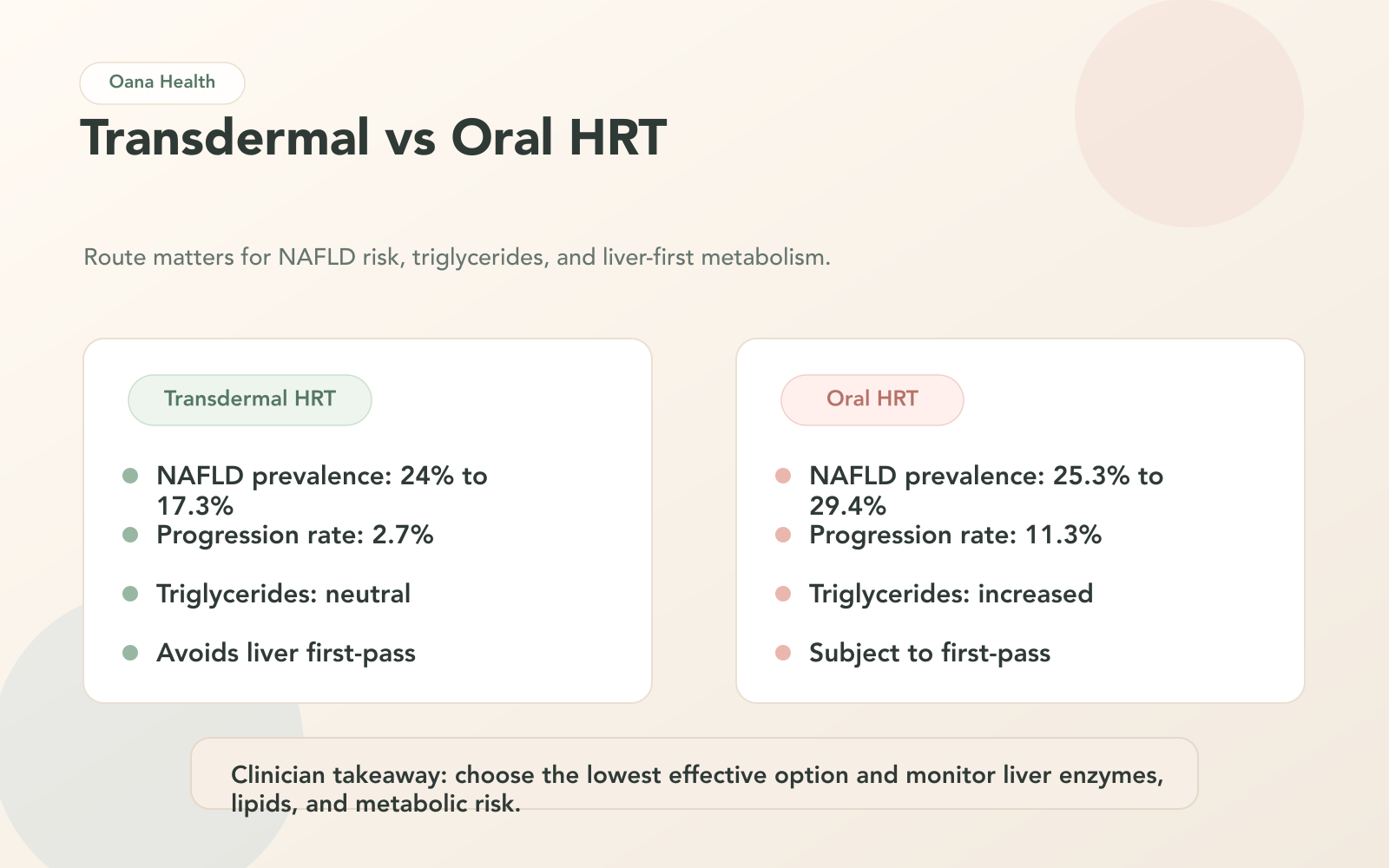
Transdermal vs Oral HRT Effects on NAFLD in Postmenopausal Women
Estrogen-based hormone replacement therapy (HRT) influences non-alcoholic fatty liver disease (NAFLD) differently depending on how it is administered.
Potential Benefits of Estrogen Therapy
A study involving 368 postmenopausal women over 12 months revealed promising results for transdermal HRT (delivered via patches or gels). The prevalence of NAFLD dropped from 24% to 17.3%, with only 2.7% of participants experiencing disease progression. The transdermal method avoids first-pass metabolism, which helps maintain stable triglyceride levels and provides liver-protective benefits. These include reducing fat production, enhancing fatty acid oxidation, and lowering inflammation.
"Transdermal estrogen can be beneficial in terms of NAFLD progression." – Sung Eun Kim, PhD, MD, Department of Obstetrics and Gynecology, Samsung Medical Center
This aligns with earlier findings that estrogen reduces liver fat production (de novo lipogenesis) and inflammation. It achieves this by inhibiting pathways like NF-κB and TLR4, which are responsible for producing inflammatory markers such as TNF-α and IL-6. Additionally, estrogen helps prevent liver fibrosis by suppressing hepatic stellate cells, which are involved in collagen buildup. These combined effects highlight the importance of selecting the right HRT delivery method, a topic further explored in the safety considerations below.
Risks and Safety Considerations
While transdermal estrogen shows clear advantages, oral estrogen poses significant metabolic risks. The same 12-month study found that women on oral HRT experienced an increase in NAFLD prevalence - from 25.3% to 29.4% - with a progression rate of 11.3%, which is over four times higher than the rate observed with transdermal HRT. This is largely due to first-pass metabolism, which stimulates triglyceride production. Triglyceride levels in the study rose from 104.4 mg/dL to 118.4 mg/dL, potentially negating estrogen’s protective effects.
| Feature | Transdermal HRT | Oral HRT |
|---|---|---|
| NAFLD Prevalence Change | Decreased (24% to 17.3%) | Increased (25.3% to 29.4%) |
| Progression Rate | 2.7% | 11.3% |
| Effect on Triglycerides | Neutral/No significant change | Significant increase |
| Liver Metabolism | Avoids first-pass | Subject to first-pass |
The route of administration plays a critical role in NAFLD outcomes. For women requiring oral HRT, close medical supervision is essential. Regular monitoring of triglycerides and overall lipid profiles can help manage the heightened risk of NAFLD progression. Furthermore, natural micronized progesterone or dydrogesterone is preferred over synthetic progestogens due to their minimal impact on lipid metabolism.
"The lowest effective dose of estrogen is recommended for oral MHT, especially in women with pre-existing liver disease such as NAFLD." – Sung Eun Kim, Department of Obstetrics and Gynecology, Samsung Medical Center
For postmenopausal women with pre-existing NAFLD or high metabolic risk, transdermal HRT is often the better choice. It maximizes estrogen's benefits for liver health while minimizing the metabolic challenges that can worsen fatty liver disease.
sbb-itb-6dba428
Managing NAFLD While Using HRT
Taking care of nonalcoholic fatty liver disease (NAFLD) while using hormone replacement therapy (HRT) involves a careful focus on both liver health and overall metabolic well-being.
Tracking Liver Function During HRT
Regular monitoring of liver health is essential, especially for women with NAFLD or metabolic risks. Liver enzymes like AST, ALT, ALP, and γ-GT, along with lipid panels, should be checked consistently. This is particularly important because oral estrogen can significantly increase triglyceride levels, which might exacerbate fatty liver disease.
Abdominal ultrasounds are a valuable tool for directly assessing liver fat levels. For women at higher risk, the FIB-4 index - a screening tool based on platelet counts and liver enzymes - can help identify early signs of fibrosis. If the FIB-4 index suggests intermediate or high risk, further tests like transient elastography or an enhanced liver fibrosis (ELF) panel may be needed to rule out advanced liver damage. These measures are especially critical for postmenopausal women on HRT, as liver fibrosis progression tends to speed up after menopause.
In addition to liver-specific tests, monitoring insulin resistance through HOMA-IR scores, fasting blood glucose, and HbA1c levels is key. Estrogen deficiency is closely tied to problems with glucose metabolism. Women who aren’t on HRT often experience more severe insulin resistance compared to those who are. Combining these metabolic and hormonal assessments ensures a thorough approach to managing liver health during HRT.
Additional Treatments That Support Liver Health
HRT alone isn’t enough to reverse NAFLD. It works best as part of a broader strategy focused on improving metabolic health. Losing more than 10% of body weight can resolve NASH (nonalcoholic steatohepatitis) and even reverse fibrosis, while smaller weight reductions still provide meaningful benefits for liver health. Diets like the Mediterranean or DASH, paired with regular physical activity, have been shown to improve liver function.
For added support, certain medications can complement lifestyle changes. Insulin-sensitizing drugs like pioglitazone and GLP-1 agonists not only improve metabolic health but also promote weight loss. This is especially relevant since about 70% of individuals with type 2 diabetes also have NAFLD. Addressing related conditions like obesity, high cholesterol, and hypertension is equally important, as cardiovascular disease remains the leading cause of death for those with NAFLD. A combination of lifestyle adjustments, medications, and coordinated care can significantly improve outcomes.
Personalized Treatment Through Telehealth
Personalized telehealth services are becoming a practical way to connect hormonal and metabolic care. Oana Health specializes in telehealth solutions for women dealing with hormonal imbalances and metabolic challenges like NAFLD. Their platform offers access to licensed medical professionals who can prescribe treatments tailored to address insulin resistance, weight management, and related issues.
Oana Health’s personalized plans include options like Metformin ER ($22/month) for insulin resistance or combination therapies such as Metformin & Spironolactone ($32/month) and Oral GLP-1 & Metformin ($199/month). These treatments target hormonal, metabolic, and liver health simultaneously.
Telehealth simplifies access to specialized care by delivering treatments directly to patients’ homes with free shipping. The use of FDA-regulated pharmacies ensures safety and quality. This approach is especially helpful for women managing the complex interplay of NAFLD and HRT, offering a streamlined and personalized care experience that addresses multiple health concerns at once.
Conclusion
The connection between hormone replacement therapy (HRT) and nonalcoholic fatty liver disease (NAFLD) is clear, though there’s still much to learn. Research highlights that estrogen has a protective effect against liver fat buildup, and its decline during menopause is a major factor behind the increased prevalence of NAFLD in women. Interestingly, the way HRT is administered plays a key role - transdermal HRT avoids the liver's first-pass metabolism and may help reduce liver fat, whereas oral HRT can elevate triglycerides and potentially harm liver health.
For instance, a 12-month study revealed that transdermal HRT lowered NAFLD prevalence from 24% to 17.3%, with minimal progression (2.7%). In contrast, oral HRT showed an increase in NAFLD prevalence (from 25.3% to 29.4%) and higher progression rates (11.3%). These findings emphasize the importance of tailoring HRT options to improve liver health outcomes.
"The findings can help healthcare providers and patients in decision-making regarding choosing the best MHT option, especially in postmenopausal women who already have pre-existing NAFLD or who are at high risk of developing NAFLD." – Sung Eun Kim, PhD, MD, Sungkyunkwan University School of Medicine
However, the current body of evidence has its limits. Much of the available data comes from retrospective or cross-sectional studies rather than large-scale randomized controlled trials. This gap underscores the pressing need for more comprehensive research. Future studies should focus on using paired liver biopsies as diagnostic tools and explore how varying estrogen doses and types of progestogens affect NAFLD progression. As one review pointed out, "There is a need for specifically designed clinical trials, ideally with paired liver biopsies, to demonstrate the effect of different MHT schemes on NAFLD".
For women balancing NAFLD and HRT, a personalized approach is essential. This includes selecting the right hormone therapy, regular liver health monitoring, metabolic support, and lifestyle adjustments. Platforms like Oana Health offer telehealth services that integrate hormonal and metabolic care, making it easier to manage these interconnected health concerns. As research progresses, the aim is to refine treatment strategies that address both hormonal and liver health effectively.
FAQs
Am I a good candidate for transdermal HRT if I already have MASLD?
If you're dealing with MASLD, transdermal HRT might be the better choice. Studies indicate it’s associated with a reduced risk of NAFLD progression, whereas oral HRT could potentially elevate that risk. It’s important to discuss your options with a healthcare provider to find the treatment that’s right for you.
What liver and metabolic tests should I track while on HRT?
You need to keep an eye on liver function tests (ALT, AST, and alkaline phosphatase), along with lipid profiles and metabolic panels. It's also important to monitor hormone levels such as estradiol, FSH, and LH to evaluate how HRT is affecting liver and metabolic health. Routine testing ensures your treatment stays both safe and effective.
Can HRT improve fatty liver without weight loss or diet changes?
Evidence indicates that hormone replacement therapy (HRT) could play a role in lowering cases of non-alcoholic fatty liver disease (NAFLD), particularly when administered through the skin (transdermal method). However, its impact without accompanying weight loss or dietary adjustments is still uncertain and may vary based on how the therapy is delivered.