
HRT Safety: Bioidentical Progesterone vs Synthetic Progestin
When it comes to Hormone Replacement Therapy (HRT), the type of progestogen you choose matters. Bioidentical vs synthetic hormones differ significantly; bioidentical progesterone is chemically identical to the body's natural hormone, while synthetic progestins are lab-made alternatives with different structures and effects. Here's what you need to know:
- Breast Cancer Risk: Bioidentical progesterone is linked to a 33% lower risk compared to synthetic progestins. Studies show synthetic options, especially norethisterone and medroxyprogesterone acetate, can increase breast cancer risk.
- Endometrial Cancer Protection: Both types prevent uterine lining overgrowth, but proper dosage and timing are key. Continuous use offers better protection.
- Heart and Blood Clot Risk: Bioidentical progesterone is safer for heart health, preserving good cholesterol (HDL) and reducing blood clot risks compared to synthetic progestins.
For safer HRT, bioidentical progesterone often emerges as the preferred option, especially when combined with transdermal estrogen for those at higher clot risk. Always consult a healthcare provider to tailor treatment to your needs.
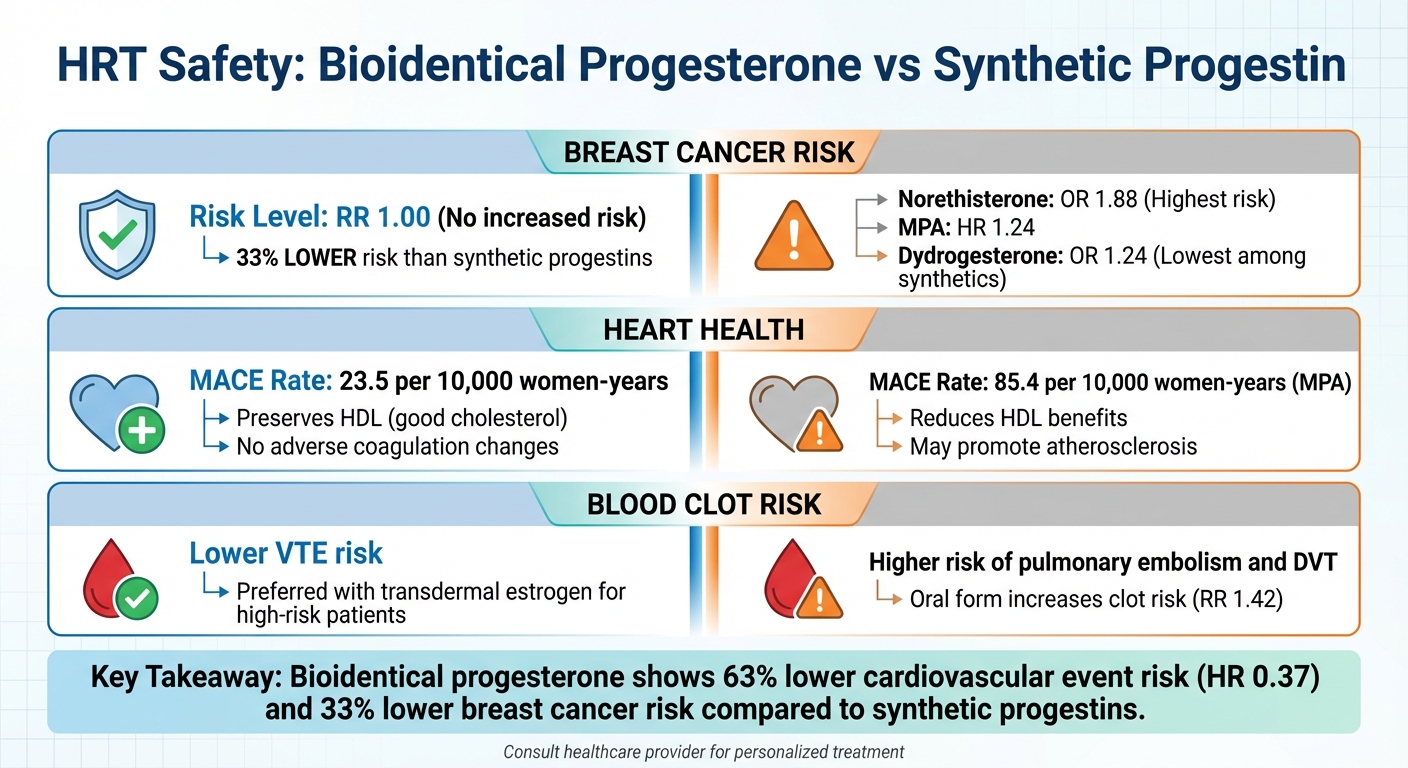
Bioidentical Progesterone vs Synthetic Progestin Safety Comparison
Progestin or Progesterone? | Menopausal Hormone Therapy
sbb-itb-6dba428
What Is Bioidentical Progesterone?
Bioidentical progesterone has a chemical structure that is identical to the progesterone naturally produced by your ovaries and adrenal glands. Although it’s derived from plant sources like soy and yams, the process involves extracting a compound called diosgenin and converting it in a lab to match human progesterone exactly.
"Bioidentical hormones are compounds that have exactly the same chemical and molecular structure as hormones that are produced in the human body."
In hormone replacement therapy (HRT), bioidentical progesterone plays two important roles. First, it helps protect the uterine lining from overgrowth during estrogen therapy. Second, it can alleviate menopause symptoms like hot flashes, night sweats, and trouble sleeping. To make it easier for the body to absorb when taken orally, the hormone is often micronized - reduced into very fine particles - as seen in FDA-approved options like Prometrium.
Bioidentical progesterone also differs from synthetic progestins in significant ways. It acts as a neurosteroid, meaning it directly influences brain activity, and serves as a precursor for other hormones like estrogens and androgens. Research supports its benefits: a meta-analysis involving 86,881 postmenopausal women found that natural progesterone was linked to a lower risk of breast cancer compared to synthetic progestins, with a relative risk of 0.67.
Next, we’ll look at synthetic progestins, the alternative option in HRT, and how they compare.
What Is Synthetic Progestin?
Synthetic progestins are lab-created compounds designed to imitate natural progesterone, though their chemical structures are noticeably different. These compounds are typically derived from steroid bases such as testosterone, progesterone, or spironolactone.
The primary reason for developing synthetic progestins was to address the poor oral bioavailability of natural progesterone. Natural progesterone has less than 5% bioavailability because it undergoes extensive metabolism in the gut and liver. In contrast, synthetic progestins like medroxyprogesterone acetate (MPA) boast oral bioavailability exceeding 90%, making them much more potent. However, these chemical modifications also impact how they interact with various receptors in the body.
"Micronized progesterone is a bioidentical hormone with a molecular structure identical to the endogenous progesterone produced by the ovary. Synthetic progestins, in contrast, have a completely different chemical structure from progesterone."
- Connealy, MD
Synthetic progestins are classified based on their origins. For example:
- Pregnane derivatives (e.g., medroxyprogesterone acetate) come from progesterone.
- Estranes (e.g., norethindrone) and gonanes (e.g., levonorgestrel) are derived from testosterone.
- Drospirenone is sourced from spironolactone.
Currently, around 60 different progestins are available for clinical use.
In hormone replacement therapy (HRT), synthetic progestins play a key role in protecting the uterine lining from excessive thickening caused by unopposed estrogen therapy. Due to their modified structures, these progestins can interact not only with progesterone receptors but also with androgen, glucocorticoid, and mineralocorticoid receptors. These structural variations are crucial for understanding their varying safety profiles. Up next, we’ll explore how these differences impact safety, focusing on the risk of breast cancer.
Breast Cancer Risk: Bioidentical Progesterone vs Synthetic Progestin
A meta-analysis involving 86,881 postmenopausal women revealed that combining bioidentical progesterone with estrogen reduces breast cancer risk by 33% compared to synthetic progestins (RR 0.67). This difference stems from how these hormones interact at the cellular level.
Bioidentical progesterone works by activating progesterone receptors, which help counteract estrogen-driven cell proliferation, effectively curbing cell growth. On the other hand, synthetic progestins - especially medroxyprogesterone acetate (MPA) - can amplify estrogen's effects, potentially increasing cell growth. This may be linked to reduced insulin sensitivity and higher activity of insulin-like growth factor-I (IGF-I).
"Unlike synthetic progestins, progesterone did not increase breast cancer risk in transdermal estradiol-treated women."
- Carlo Campagnoli, Sant'Anna Gynecological Hospital
From 1990 to 2008, the E3N-EPIC cohort study in France followed 54,548 postmenopausal women to evaluate various hormone replacement therapy (HRT) regimens. The study found that combining transdermal estradiol with micronized progesterone resulted in a relative risk of 0.9 (0.7–1.2), showing no notable increase in breast cancer risk. In contrast, pairing estradiol with synthetic progestins was linked to a higher relative risk of 1.4 (1.2–1.7).
In October 2020, Yana Vinogradova's study at the University of Nottingham analyzed data from 98,611 women with breast cancer and 457,498 controls using the QResearch and CPRD databases (1998–2018). The findings highlighted that while combined HRT does elevate breast cancer risk, the extent of the risk depends on the type of progestogen used. Norethisterone was associated with an odds ratio (OR) of 1.88 (1.79–1.99), representing the highest risk, whereas dydrogesterone had a lower OR of 1.24 (1.03–1.48).
Breast Cancer Risk Overview
| Hormone Type | Risk Level (RR/OR) | Key Finding | Study Source |
|---|---|---|---|
| Bioidentical Progesterone | RR 1.00 | No increased risk | E3N Cohort Study |
| Progesterone vs. Progestins | RR 0.67 | 33% lower risk than synthetic progestins | Mayo Clinic Meta-analysis |
| Dydrogesterone | OR 1.24 | Lowest risk among synthetic progestogens | BMJ Nested Case-Control |
| Medroxyprogesterone (MPA) | HR 1.24 | Notable increase in risk | WHI Randomized Trial |
| Norethisterone | OR 1.88 | Highest risk among synthetic options | BMJ Nested Case-Control |
Next, we’ll explore how these hormone types influence endometrial cancer risk.
Endometrial Cancer Risk: Bioidentical Progesterone vs Synthetic Progestin
When estrogen is used by itself in hormone replacement therapy (HRT), it can cause the uterine lining to thicken excessively, a condition known as hyperplasia. This can raise the risk of endometrial cancer by 2 to 10 times, depending on the length of use. For women who still have their uterus, adding a progestogen to estrogen and progesterone therapy is necessary to counteract this effect.
Both bioidentical progesterone and synthetic progestins work to counteract estrogen's impact by promoting differentiation in the glands and stroma of the endometrium. The Women's Health Initiative (WHI) trial showed that using continuous synthetic progestin alongside estrogen for five years reduced the risk of endometrial cancer (HR 0.81). Similarly, the PEPI Trial demonstrated that micronized progesterone effectively prevents hyperplasia. These findings highlight the importance of using the right type and schedule of progestogen to ensure the safety of HRT.
"Progesterone (P) is the essential hormone to maintain a eutrophic endometrium. Its physiological role is to prepare the endometrium for implantation. Its role is to overcome the proliferative effect of estradiol (E2) and to induce differentiation of the glands, stroma, and vessels of the endometrium."
The timing and duration of progestogen use play a more critical role than the specific type. Women on continuous combined therapy (progestogen taken more than 25 days per month) show a reduced relative risk of 0.78 for endometrial cancer. On the other hand, sequential therapy used for fewer than 10 days per month is linked to a higher risk (RR 1.76), while 10–24 days per month tends to have a neutral effect (RR 1.07).
While some studies suggest that micronized progesterone may be less effective in high-estrogen environments, biopsy results confirm that proper dosing prevents hyperplasia. Compliance with the prescribed dosage and schedule is crucial to protect the endometrium effectively.
Comparison Table: Endometrial Cancer Risk
| Feature | Bioidentical Progesterone | Synthetic Progestin |
|---|---|---|
| Mechanism | Induces differentiation of glands and stroma; counteracts estrogen proliferation | Acts as tumor suppressor; induces secretory endometrium |
| Risk Reduction Evidence | Effective protection; RR ~0.78 in continuous use | Strong evidence from WHI trial; HR 0.81 |
| Bioavailability | Low (<5%); requires micronization | High (>90% for MPA) |
| Clinical Outcomes | No increased hyperplasia in biopsy studies at proper doses | Highly effective; may impact HDL cholesterol |
| Optimal Regimen | Continuous or ≥10 days/month | Continuous combined (>25 days/month) |
Heart Disease and Blood Clot Risk: Bioidentical Progesterone vs Synthetic Progestin
When it comes to hormone replacement therapy (HRT), cardiovascular safety is a key factor. Bioidentical micronized progesterone stands out with a much safer profile for heart health and blood clot risk compared to synthetic progestins like medroxyprogesterone acetate (MPA). Research shows that women using bioidentical oral 17β-estradiol with micronized progesterone experience a MACE (major adverse cardiovascular event) rate of 23.5 per 10,000 women-years, compared to 85.4 per 10,000 women-years for those on synthetic conjugated equine estrogens with MPA. That’s a 63% lower risk (hazard ratio 0.37).
This difference comes down to how these hormones interact with the body. Synthetic progestins can cancel out estrogen’s positive effects on HDL (good cholesterol), while bioidentical progesterone preserves these benefits. Clinical studies have shown that women taking 300 mg of progesterone daily experienced no harmful changes in blood vessel function, blood pressure, inflammation, or clotting markers. In contrast, synthetic progestins may suppress estrogen’s vascular protection and even contribute to atherosclerosis.
"Unlike synthetic progestins, micronized progesterone has not been shown to affect mood, decrease high-density lipoprotein (HDL) cholesterol levels or adversely affect pregnancy outcome."
- Barbara S. Apgar, M.D., M.S., Clinical Professor
Delivery method also plays a role in clot risk. Oral estrogen increases the risk of venous thromboembolism (VTE) (relative risk 1.42), but transdermal estrogen does not (relative risk 0.82). Synthetic formulations like PremPro can significantly raise clot risks. It’s important to note that the highest risk occurs during the first year of HRT use, regardless of the formulation. For women at higher risk of blood clots - such as smokers, those with obesity, or women over 40 - transdermal estradiol combined with oral micronized progesterone is the preferred option. These distinctions highlight the safety advantages of bioidentical progesterone in HRT.
Comparison Table: Heart Disease and Blood Clot Risk
| Feature | Bioidentical Progesterone | Synthetic Progestin (MPA) |
|---|---|---|
| MACE Risk | 23.5 per 10,000 women-years | 85.4 per 10,000 women-years |
| HDL Cholesterol Impact | Preserves estrogen’s benefits | Reduces or negates HDL benefits |
| Blood Clot Risk | Lower; no adverse coagulation changes | Higher risk of pulmonary embolism and DVT |
| Blood Vessel Effects | Favorable or neutral | May promote atherosclerosis |
| Preferred Delivery | Oral micronized; transdermal for high-risk patients | Avoid in high VTE risk; oral increases clot risk |
Clinical Guidelines for Safe HRT Use
Research indicates that bioidentical micronized progesterone can lower breast cancer risk by 33%, reduce the likelihood of blood clots, and support healthy HDL cholesterol levels when compared to synthetic progestins. Choosing the right hormone replacement therapy (HRT) should be tailored to your specific health profile. For women with a uterus, adding a progestogen is essential to prevent endometrial hyperplasia and cancer. If breast health or heart disease is a concern, bioidentical progesterone is often the preferred choice. Women with an elevated risk of blood clots - such as those who smoke, have obesity, or are over 40 - should consider discussing transdermal options with their healthcare provider. Starting HRT before age 60 or within 10 years of menopause onset is generally recommended for the best safety outcomes. These factors help guide personalized decisions about HRT based on individual risks and needs.
When using HRT, it’s crucial to stick with FDA-approved bioidentical hormones rather than compounded versions. The FDA has flagged compounded formulations for potential issues like inconsistent dosing, lack of regulation, and sterility concerns. This aligns with broader evidence supporting bioidentical hormones as a safer choice. Additionally, avoid using saliva or urine tests to determine hormone dosages, as these levels can vary daily and don’t reliably indicate the therapeutic dose required.
"The appropriate, often lowest, effective dose of systemic ET consistent with treatment goals that provides benefits and minimizes risks for the individual woman should be the therapeutic goal."
Your HRT plan should be reviewed regularly with your healthcare provider to ensure it still meets your health needs and goals. The aim is to use the lowest effective dose for the shortest time necessary. Women with a history of breast or endometrial cancer should consult their oncologist before considering any form of HRT. By following these recommendations, safer and more personalized HRT options become achievable, especially with the convenience of telehealth services.
How Oana Health Provides Personalized HRT

Oana Health offers a modern telehealth solution for hormone replacement therapy, focusing on personalized, evidence-based care delivered straight to your door. Their platform connects you with licensed medical professionals who evaluate your health history, symptoms, and risk factors to create a treatment plan tailored to you - moving beyond generic approaches. The service emphasizes the use of FDA-approved bioidentical hormones, such as micronized progesterone and estradiol patches, ensuring you receive treatments that are rigorously tested and regulated. With options for personalized dosing adjustments, symptom-based care, an easy-to-use online platform, and free shipping, Oana Health makes safe and effective HRT more accessible than ever.
Conclusion: Choosing Between Bioidentical Progesterone and Synthetic Progestin
Bioidentical progesterone and synthetic progestins are fundamentally different in their effects and safety profiles. Research shows that bioidentical progesterone is linked to a 33% lower breast cancer risk compared to synthetic progestins, making it a more appealing choice for many women. It also supports heart health by maintaining estrogen's positive influence on HDL cholesterol levels, while synthetic progestins may interfere with these benefits and are more likely to cause additional side effects due to their receptor interactions.
"A class effect does not exist for both P4 and synthetic progestins, both in terms of their efficacy and safety." - Best Practice & Research Clinical Obstetrics & Gynaecology
When deciding on hormone replacement therapy (HRT), it’s crucial to consider your specific risk factors and medical history. For women concerned about breast cancer, heart disease, or blood clot risks, bioidentical micronized progesterone often emerges as the safer choice. A licensed healthcare provider can help assess your health history, check for contraindications like active liver disease or unexplained vaginal bleeding, and recommend the lowest effective dose for your needs.
Personalized care is key to safe and effective HRT. Telehealth services, such as Oana Health, make this process more accessible. They connect you with licensed medical professionals who specialize in FDA-approved bioidentical hormones. These providers evaluate your symptoms and health risks to craft a treatment plan tailored to you - delivered straight to your door with free shipping.
Bioidentical progesterone generally offers a safer option for most women. Speak with a healthcare professional to ensure your HRT aligns with your individual health goals.
FAQs
How can I tell if my HRT contains bioidentical progesterone or synthetic progestin?
To determine if your HRT includes bioidentical progesterone or synthetic progestin, take a close look at the product label or ask your healthcare provider. Bioidentical progesterone matches the chemical structure of the hormone naturally produced by your body. In contrast, synthetic progestins are lab-created and differ structurally. Your healthcare provider can clarify which type is part of your treatment plan.
What’s the safest progesterone schedule to protect my uterus on estrogen?
The recommended approach for safety is to take 200 mg of oral micronized progesterone daily for 12–14 days within a 28-day cycle. This method has been shown to provide effective endometrial protection while maintaining a good safety profile for cardiovascular and metabolic health. Always make sure to consult a healthcare provider before beginning or adjusting any hormone therapy.
Should I use transdermal estrogen if I’m worried about blood clots?
Transdermal estrogen is often considered a safer option for individuals worried about blood clots. Unlike oral estrogen, it bypasses extensive liver metabolism, which means it doesn't significantly trigger the production of clotting factors. As a result, the risk of developing deep vein thrombosis (DVT) or pulmonary embolism (PE) is much lower.