
Markers of Inflammation in PCOS: Research Roundup
Polycystic Ovary Syndrome (PCOS) is more than a reproductive disorder - chronic low-grade inflammation plays a central role. This inflammation drives symptoms like insulin resistance, androgen overproduction, and increased risks of type 2 diabetes and heart disease. Even lean women with PCOS show elevated inflammatory markers, highlighting that weight alone isn’t the cause. Here’s what you need to know:
- CRP Levels: Women with PCOS have 96%-102% higher C-reactive protein (CRP) levels than those without, regardless of body weight. CRP is a strong predictor of cardiovascular and metabolic risks.
- Key Markers: Emerging markers like Neutrophil-to-Lymphocyte Ratio (NLR) and Monocyte-to-HDL Ratio (MHR) offer affordable diagnostic options using routine blood tests.
- Inflammatory Pathways: NF-κB and PI3K/Akt pathways drive inflammation in PCOS, leading to insulin resistance and ovarian dysfunction.
- Treatment Insights: Metformin and inositol compounds reduce inflammation by improving insulin sensitivity. Anti-inflammatory diets, magnesium, and chromium supplements also help.
- Future Research: More studies are needed to understand inflammation’s role in PCOS and how markers vary by phenotype.
Inflammatory markers are shaping how PCOS is diagnosed and managed, offering new ways to track treatment progress and reduce long-term health risks.
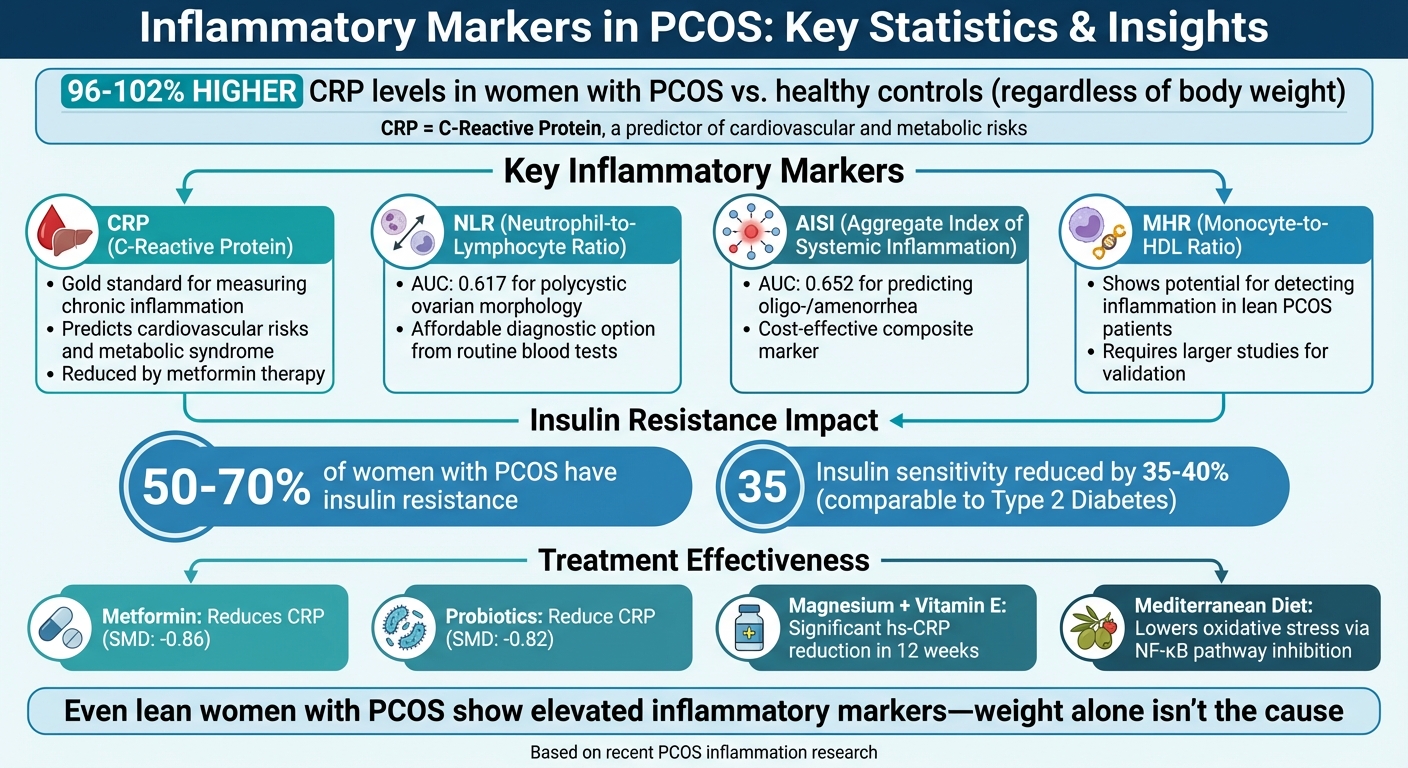
Key Inflammatory Markers in PCOS: CRP Levels and Diagnostic Indicators
Key Inflammatory Markers in PCOS: Recent Findings
Monocyte/HDL Ratio (MHR): A Reliable Indicator
The Monocyte-to-HDL-C ratio (MHR) is being explored for its role in identifying inflammation in PCOS patients. Interestingly, it has shown potential in detecting inflammation in lean PCOS patients. However, a 2021 study that compared 97 women with PCOS to 124 BMI-matched controls found no significant difference in MHR levels between the two groups. This finding suggests that inflammation in PCOS is influenced by multiple factors. To determine MHR's reliability as a diagnostic tool, larger studies are likely needed, especially when comparing it to well-established markers like C-Reactive Protein (CRP). This ongoing comparison could help clarify whether MHR holds unique diagnostic value.
C-Reactive Protein (CRP) and Its Relationship to PCOS
While MHR provides insights into inflammation that may not be tied to weight, CRP continues to be the gold standard for measuring chronic inflammation in PCOS. Research shows that CRP levels are about 96%–102% higher in women with PCOS compared to healthy individuals, regardless of obesity. High-sensitivity CRP (hs-CRP) is particularly useful, as it not only measures chronic low-grade inflammation but also predicts cardiovascular risks and metabolic syndrome in PCOS patients. Studies highlight that many women with PCOS exceed hs-CRP thresholds, demonstrating its strong predictive value.
"A strong association of serum C3 and hs-CRP with serum insulin and insulin resistance in PCOS subjects indicates that these inflammatory markers may serve as the most significant predictor of the risk of future diabetes mellitus and cardiovascular complications in PCOS." – Samy N, et al.
CRP's practical application extends to treatment monitoring. For example, metformin therapy has been shown to significantly lower CRP levels in obese women with PCOS by improving insulin sensitivity and reducing BMI. This makes CRP a valuable marker for tracking treatment progress.
Emerging Markers: Endocan and Lymphocyte/Monocyte Ratio (LMR)
In addition to CRP and MHR, new markers are expanding our understanding of inflammation in PCOS. Composite indices derived from routine blood tests, such as AISI, NLR, and SIRI, are gaining attention for their affordability and ease of use. These markers have shown promise in predicting PCOS-related symptoms like menstrual irregularities and ovarian changes.
Emerging markers such as Endocan, Lymphocyte-to-Monocyte Ratio (LMR), and Platelet-to-Lymphocyte Ratio (PLR) are also being studied. Early findings suggest that LMR may reflect the inflammatory environment in PCOS, while PLR appears to be linked to insulin resistance. Although these markers show potential, further research is needed to validate their effectiveness in larger clinical studies.
Together, these emerging markers could pave the way for earlier detection and more personalized treatment strategies for PCOS, but their role is still being defined through ongoing research.
Inflammatory Pathways and Molecular Mechanisms in PCOS
PI3K/Akt Signaling and NF-κB Activation
Inflammation in PCOS affects multiple systems in the body, with the NF-κB pathway playing a central role in this process. For women with PCOS, glucose intake can trigger oxidative stress in mononuclear cells. This stress causes NF-κB to detach from its inhibitory protein and move into the cell nucleus, where it activates pro-inflammatory genes like TNF-α and IL-6.
"PCOS is a proinflammatory state, and emerging data suggests that chronic low-grade inflammation underpins the development of metabolic aberration and ovarian dysfunction in the disorder." – Frank González, M.D., Indiana University School of Medicine
The PI3K/Akt signaling pathway works in tandem with NF-κB, driving inflammation in ovarian tissues. Research indicates that factors such as WNT5a can activate this pathway in ovarian granulosa cells, leading to oxidative stress, inflammasome activation, and even cell death. This damage to granulosa cells disrupts egg development, contributing to the fertility issues many women with PCOS experience.
These pathways also create a destructive feedback loop. For instance, TNF-α promotes insulin resistance by impairing insulin signaling through IRS-1 serine phosphorylation, which reduces GLUT4 transporters. At the same time, inflammation drives androgen overproduction by upregulating CYP17 in theca cells, while IL-6 suppresses aromatase activity. Insulin resistance is a hallmark of PCOS, affecting 50% to 70% of women with the condition. On average, insulin sensitivity in women with PCOS is reduced by 35% to 40%, a level comparable to Type 2 Diabetes.
These findings highlight the molecular underpinnings of PCOS and open the door for targeted metabolic treatments.
How Inositol Compounds Affect Inflammatory Cascades
Inositol compounds, particularly myo-inositol and D-chiro-inositol, target one of the key drivers of inflammation in PCOS: impaired insulin sensitivity. By improving cellular responses to insulin, these compounds help lower hyperinsulinemia and hyperglycemia, which are known to trigger oxidative stress and activate inflammatory pathways. Their effectiveness spans across both obese and lean women with PCOS.
"Administration of inositol isoforms was effective in improving insulin sensitivity in both obese and lean PCOS women." – Ewa Rudnicka et al.
Better insulin sensitivity interrupts the inflammatory cycle at multiple stages. Lower insulin levels reduce oxidative stress, which in turn decreases NF-κB activation and the production of inflammatory cytokines. This reduction in inflammation not only helps manage PCOS symptoms but also supports diagnostic markers like CRP. Additionally, inositol supplementation often enhances the effectiveness of other PCOS treatments, such as metformin and clomiphene citrate, particularly for women aiming to conceive. While metformin directly inhibits NF-κB activation through AMPK-related mechanisms, inositol compounds address the root metabolic dysfunction, tackling inflammation from the ground up.
Lifestyle and Supplement Interventions for Reducing Inflammation
Addressing both micronutrient deficiencies and dietary habits can target the inflammatory pathways commonly associated with PCOS.
Micronutrients: Magnesium and Chromium
Magnesium plays a key role in reducing inflammation, especially when paired with other nutrients. A 12-week study found that combining magnesium with Vitamin E or a Zinc-Calcium-Vitamin D complex led to significant reductions in hs-CRP levels and improved insulin sensitivity in women with PCOS. This is partly because magnesium acts as a second messenger for insulin, aiding in insulin receptor auto-phosphorylation.
Chromium also shows promise in managing inflammation. It helps lower fasting insulin levels while increasing total antioxidant capacity (TAC). By improving insulin signaling and boosting antioxidant enzyme activity, chromium addresses metabolic dysfunction, a key driver of inflammation. Additionally, chromium has been linked to improved follicle-stimulating hormone (FSH) levels, which supports reproductive health.
| Supplement Strategy | Primary Impact | Clinical Evidence |
|---|---|---|
| Magnesium + Vitamin E | Reduced hs-CRP and improved insulin sensitivity | Significant improvement in 12 weeks |
| Magnesium + Zinc-Calcium-Vitamin D | Reduced hs-CRP and improved insulin sensitivity | Significant improvement in 12 weeks |
| Chromium | Lower fasting insulin, increased TAC, improved FSH | Metabolic and reproductive benefits |
While supplements can be effective, dietary interventions play an equally important role in reducing inflammation and managing PCOS symptoms.
Anti-Inflammatory Diets and PCOS Symptom Management
One of the most effective dietary strategies for reducing inflammation in PCOS is the Mediterranean diet. Packed with omega-3 fatty acids, antioxidants, and fiber, this diet helps lower oxidative stress and inflammation by targeting key signaling pathways. Specifically, it inhibits the NF-κB signaling pathway and activates PPAR-γ, which enhances insulin sensitivity.
On the flip side, avoiding high-glycemic foods and saturated fats is crucial. High-glycemic foods activate the AGE-RAGE axis, exacerbating insulin resistance and inflammation. Similarly, saturated fats stimulate Toll-like receptor 4 (TLR4), increasing pro-inflammatory cytokines like IL-1β and IL-18. Research involving 200 women revealed that those with high Dietary Inflammatory Index (DII) scores had triglyceride levels averaging 252.78 ± 39.68 mg/dL, compared to 206.95 ± 32.38 mg/dL in women with lower scores. Higher DII scores also correlated with elevated hs-CRP (β = +1.18) and Erythrocyte Sedimentation Rate (β = +3.39).
Additional dietary elements, such as probiotics and curcumin, further help reduce inflammation. Probiotics regulate gut microbiota, with studies showing a standardized mean difference (SMD) for CRP of -0.82. Curcumin, on the other hand, inhibits the NF-κB pathway and suppresses the NLRP3 inflammasome, leading to lower inflammation and fasting glucose levels. Combining these dietary changes with regular physical activity can further reduce the Dietary and Lifestyle Inflammation Score (DLIS), improving overall symptom management.
sbb-itb-6dba428
Clinical Implications and Future Research Directions
Personalized Treatments for PCOS Based on Inflammatory Markers
Recent insights into inflammatory markers in PCOS are paving the way for more tailored treatment approaches. Cost-effective composite blood count markers, such as the neutrophil-to-lymphocyte ratio (NLR) and aggregate index of systemic inflammation (AISI), are proving useful in identifying patients at higher risk for cardiovascular and metabolic complications. For instance, the AISI demonstrates an Area Under the Curve (AUC) of 0.652 for predicting oligo-/amenorrhea, while NLR shows an AUC of 0.617 for polycystic ovarian morphology.
This stratification allows for earlier and more targeted interventions. For example, monitoring C-reactive protein (CRP) levels can help guide the use of insulin-sensitizing medications. Metformin, a commonly prescribed drug, has been shown to lower CRP levels significantly, with a standardized mean difference of -0.86, particularly benefiting patients with obesity. Platforms like Oana Health are integrating these markers into telehealth solutions, enabling remote management of PCOS and reducing the need for in-person visits.
However, challenges remain. Interpatient variability complicates the application of universal thresholds for inflammatory markers. For instance, lean women with PCOS often exhibit elevated markers that don’t meet standard “high-risk” levels. Additionally, the interplay between hyperandrogenism and inflammation adds further complexity to developing targeted treatments. Despite these obstacles, inflammatory profiling is a promising step toward more precise care for PCOS, laying the groundwork for future research to uncover the mechanisms driving inflammation in this condition.
Future Directions in PCOS Inflammation Research
While personalized treatments are advancing, there are still critical gaps in understanding the role of inflammation in PCOS. One pressing question is whether chronic inflammation is a core feature of PCOS or simply a consequence of related conditions like insulin resistance and obesity.
"There is still uncertainty whether the inflammation is due to the PCOS itself or to insulin resistance and obesity, and more studies are needed to understand the precise mechanism of elevation of CRP concentrations in PCOS women." – Ewa Rudnicka, Medical University of Warsaw
To address this, future research should prioritize longitudinal studies that examine how inflammatory markers influence long-term outcomes, such as cardiovascular disease and type 2 diabetes. Additionally, high-quality, multicenter randomized controlled trials with consistent diagnostic criteria and larger participant pools are needed to confirm the lasting anti-inflammatory benefits of treatments like metformin.
Another area worth exploring is tissue-specific inflammation, particularly in the ovaries and endometrium. Current research often relies on circulating markers, yet many inflammatory mediators function locally through autocrine and paracrine signaling. Investigating these localized processes could provide deeper insights into the biology of PCOS.
Finally, more attention should be given to phenotype-specific research. PCOS presents in four distinct clinical phenotypes (A, B, C, and D), each with potentially unique inflammatory and metabolic profiles. However, there’s limited research linking specific markers to these subtypes. Understanding these connections could lead to more individualized treatment approaches, targeting the specific causes of symptoms rather than relying on generalized strategies.
Conclusion
Research into inflammatory markers is transforming how we approach PCOS treatment. Studies show that women with PCOS have CRP levels that are 96% higher compared to those without the condition. Composite markers like the Aggregate Index of Systemic Inflammation (AISI) and the Neutrophil-to-Lymphocyte Ratio (NLR) are proving to be effective tools for identifying specific PCOS phenotypes and evaluating long-term cardiometabolic risks.
Chronic low-grade inflammation plays a central role in driving the metabolic dysfunction and ovarian issues linked to PCOS. This creates a vicious cycle that exacerbates insulin resistance and hyperandrogenism. By understanding these mechanisms, healthcare providers can focus on treatments that address the root causes rather than just managing symptoms.
Personalized approaches are paving the way for more effective care. For instance, metformin not only improves insulin sensitivity but also reduces CRP levels and blocks pro-inflammatory pathways. These insights allow for more targeted interventions, whether through medication, dietary adjustments, or other strategies tailored to the individual.
Platforms such as Oana Health are integrating these advancements into telehealth services. They deliver customized treatments for managing insulin resistance, weight, and hormonal imbalances directly to patients, making care more accessible.
Looking ahead, further research into tissue-specific inflammation, phenotype-driven therapies, and the intricate links between inflammation and PCOS holds promise. As this understanding evolves, the potential for delivering highly personalized and effective care continues to expand.
FAQs
Are CRP levels higher in women with PCOS compared to those without?
Women with PCOS frequently have elevated CRP levels compared to those without the condition. CRP, or C-reactive protein, is an indicator of low-grade chronic inflammation, often tied to the metabolic and cardiovascular risks linked to PCOS.
This persistent inflammation can worsen issues like insulin resistance and may contribute to the broader health challenges women with PCOS encounter over time. Recognizing these markers is key to developing more tailored and effective treatment approaches.
How do markers like MHR and NLR help in diagnosing PCOS?
Emerging indicators like the monocyte-to-HDL cholesterol ratio (MHR) and the neutrophil-to-lymphocyte ratio (NLR) are drawing attention for their potential in understanding polycystic ovary syndrome (PCOS). These markers provide insights into systemic inflammation, which is now recognized as a significant factor in the condition.
Studies have found that elevated NLR, along with other markers such as SII (systemic immune-inflammation index) and AISI (aggregate index of systemic inflammation), are closely tied to the inflammatory processes associated with PCOS. Meanwhile, MHR highlights the interplay between inflammation and lipid metabolism - two critical aspects of this disorder. While traditional PCOS diagnosis relies heavily on clinical and hormonal symptoms, these markers present a non-invasive and affordable way to evaluate inflammation. This could pave the way for earlier detection and more tailored treatment strategies.
Can lifestyle changes and supplements help manage inflammation in PCOS?
Lifestyle changes and supplements can play a role in managing inflammation tied to PCOS. Adopting an anti-inflammatory diet, such as the Mediterranean diet, is a great starting point. This diet emphasizes fruits, vegetables, whole grains, and healthy fats, which can help lower inflammation and ease symptoms. Pairing this with regular physical activity and maintaining a healthy weight can further reduce the chronic inflammation often linked to PCOS.
In addition to these changes, certain supplements may offer extra support. Options like omega-3 fatty acids, vitamin D, and inositol have been shown to help improve inflammatory markers and support metabolic health in women with PCOS. When combined with tailored medical care, these strategies can significantly help manage inflammation and improve overall quality of life.