
How Liver Detox Affects PCOS Symptoms
Struggling with PCOS symptoms like irregular periods, weight gain, or acne? Your liver might hold the key. The liver plays a major role in managing hormones and metabolism, both of which are central to PCOS. When liver function is impaired, it can worsen hormonal imbalances, insulin resistance, and even lead to fatty liver disease. Supporting your liver can help improve PCOS symptoms by:
- Balancing hormones: The liver regulates testosterone and produces SHBG (sex hormone-binding globulin), which controls free androgen levels.
- Improving insulin sensitivity: A healthy liver reduces proteins like Fetuin-A and Fetuin-B, which interfere with insulin function.
- Reducing fatty liver risk: Women with PCOS are up to 4 times more likely to develop fatty liver, which worsens PCOS symptoms.
Key takeaway: A combination of liver-friendly foods, supplements like Omega-3s and NAC, and lifestyle changes such as exercise and better sleep can help. Medications like Metformin and Spironolactone may also complement these efforts. Addressing liver health isn’t just about detox - it’s about breaking the cycle of hormonal and metabolic imbalances tied to PCOS.
The 3 Phases of Liver Detoxification
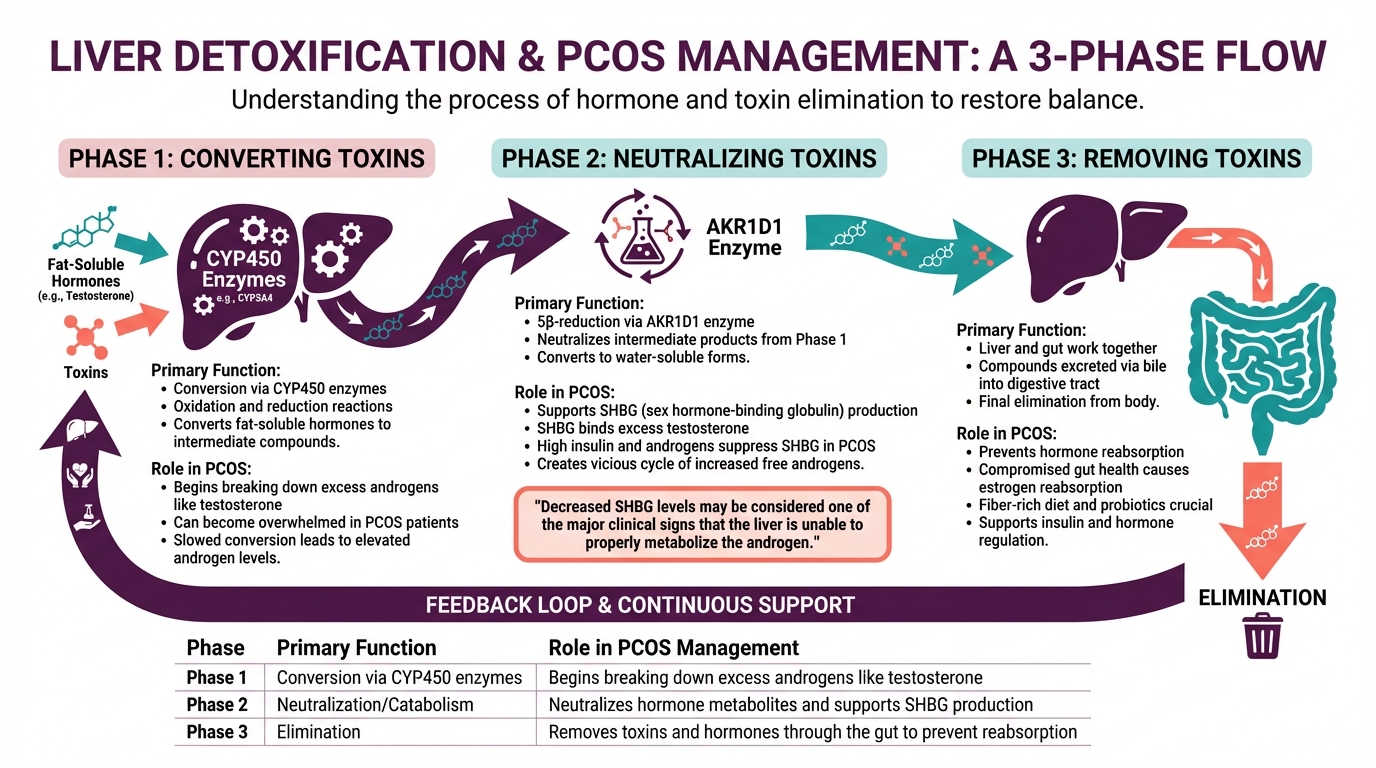
The 3 Phases of Liver Detoxification in PCOS Management
The liver plays a critical role in detoxifying toxins and managing hormones through a three-phase system. For those with PCOS, understanding how these phases work can highlight why liver health is so important for balancing androgen levels and improving insulin sensitivity.
Phase 1: Converting Toxins
In the first phase, the liver uses enzymes from the Cytochrome P450 family, particularly CYP3A4, to kickstart the breakdown of androgens like testosterone. This process also converts fat-soluble steroid hormones into intermediate compounds through oxidation and reduction reactions. However, in individuals with PCOS, the liver may become overwhelmed, slowing this conversion. This can lead to elevated androgen levels, contributing to hormonal imbalances often seen in PCOS.
Phase 2: Neutralizing Toxins
Phase 2 focuses on neutralizing the intermediate products created during Phase 1. The liver employs processes like 5β-reduction, involving the enzyme AKR1D1, to turn these compounds into water-soluble forms for easy elimination. This phase is essential for hormonal balance, as it supports the production of SHBG (sex hormone-binding globulin), which binds to excess testosterone. Unfortunately, in PCOS, high insulin and androgen levels can suppress SHBG production. This creates a cycle where reduced SHBG increases free androgens, worsening symptoms.
"Decreased SHBG levels may be considered one of the major clinical signs that the liver is unable to properly metabolize the androgen." - Muhammad Sohaib Khan et al., Dongguk University
Phase 3: Removing Toxins from the Body
The final phase involves the liver and gut working together to expel neutralized toxins and hormones. Once processed by the liver, these compounds are excreted into the digestive tract via bile. However, if gut health is compromised, hormones like estrogen can be reabsorbed back into the bloodstream, further disrupting hormonal balance. For women with PCOS, maintaining gut health through a fiber-rich diet and probiotics is crucial to prevent this reabsorption. This step supports better insulin and hormone regulation, reinforcing the liver's role in managing PCOS symptoms.
| Phase | Primary Function | Role in PCOS Management |
|---|---|---|
| Phase 1 | Conversion via CYP450 enzymes | Begins breaking down excess androgens like testosterone |
| Phase 2 | Neutralization/Catabolism | Neutralizes hormone metabolites and supports SHBG production |
| Phase 3 | Elimination | Removes toxins and hormones through the gut to prevent reabsorption |
How Liver Function Affects PCOS Symptoms
Your liver plays a key role in managing PCOS symptoms by influencing hormone balance and insulin levels. This connection, referred to as the "liver-to-ovary axis", highlights how liver health directly impacts ovarian function and hormone production. By understanding this link, you can see why supporting your liver is a crucial part of managing PCOS.
Better Insulin Sensitivity
A well-functioning liver produces hepatokines - proteins that help regulate insulin sensitivity. For example, a healthy liver reduces levels of Fetuin-A and Fetuin-B, which are proteins that can interfere with insulin action. Lower levels of these proteins lead to better insulin signaling and glucose control.
Another benefit of optimal liver function is increased production of SHBG (sex hormone-binding globulin). SHBG binds to free testosterone, making it inactive. With higher SHBG levels, there’s less active testosterone circulating in your system, which improves insulin sensitivity.
"Insulin resistance is a primary defect in NAFLD, superimposed by obesity- and diabetes-associated insulin resistance." - Evangeline Vassilatou, MD, PhD
| Hepatokine | Role in PCOS/Insulin Sensitivity | Impact of Improved Liver Health |
|---|---|---|
| Fetuin-A | Inhibits insulin receptor activity; promotes inflammation | Lower levels improve insulin function and reduce inflammation |
| Fetuin-B | Impairs glucose tolerance independently of insulin | Reduction enhances glucose control |
| SHBG | Binds testosterone, reducing its bioavailability | Increased production lowers free androgens, improving insulin sensitivity |
By improving how your body responds to insulin, your liver sets the foundation for better hormonal balance.
Balanced Hormones and Lower Androgen Levels
The liver is responsible for clearing excess steroid hormones from your body. When it’s not functioning well, androgens like testosterone can build up, leading to common PCOS symptoms such as acne, unwanted facial hair, and hair thinning on the scalp.
This creates what researchers call a "vicious cycle". High androgen levels reduce the liver’s ability to produce SHBG, leaving more free testosterone in your bloodstream. This excess testosterone can then contribute to fatty liver disease, which further disrupts hormone clearance and SHBG production. Women with PCOS are 2.23 times more likely to develop NAFLD (nonalcoholic fatty liver disease) than those without the condition. Alarmingly, low SHBG levels (below 30 nmol/L) are linked to an almost 5-fold increase in NAFLD risk.
"Since insulin and androgen reduce hepatic SHBG synthesis, increased free androgen levels subsequently provoke further insulin resistance, ultimately resulting in a vicious cycle over time." - Muhammad Sohaib Khan et al., College of Pharmacy, Dongguk University
Focusing on liver health can help break this cycle. By improving the liver’s ability to detoxify and regulate hormones, you can naturally lower free androgen levels and reduce PCOS symptoms - often without the need for additional medications.
Reduced Fatty Liver
Women with PCOS face a 4 times higher risk of developing fatty liver compared to the general population. Fatty liver, or hepatic steatosis, occurs when fat builds up in liver cells due to insulin resistance, oxidative stress, and inflammation. This condition can worsen insulin resistance, creating a feedback loop that further promotes fat accumulation.
Addressing liver health early can help reverse fatty liver before it progresses to serious conditions like NASH (nonalcoholic steatohepatitis) or cirrhosis. A healthy liver processes fat and toxins more efficiently, reducing inflammation and improving insulin sensitivity. Elevated testosterone levels (above 3.0 nmol/L) have been linked to a 2.3-fold increase in NAFLD risk, underscoring the importance of managing both hormone levels and liver health.
"The liver isn't meant to store fat; its role is to serve as the detox organ for the body filtering out harmful substances." - Angela Grassi, PCOS Nutrition Center
Lifestyle changes can make a big difference. Regular exercise - 30 to 60 minutes of aerobic and resistance training two to three times a week - can significantly reduce liver fat, even without weight loss. These steps tackle the metabolic issues driving both PCOS symptoms and fatty liver disease.
Ways to Support Liver Function for PCOS Management
Foods That Support Liver Health
A Mediterranean-style diet rich in whole foods, healthy fats, and non-starchy vegetables is a great starting point for supporting liver health. Fill half your plate with non-starchy vegetables, including cruciferous options like broccoli and cauliflower, which provide nutrients that aid the liver's detoxification processes.
Omega-3 rich foods, such as salmon, tuna, and trout, can help reduce inflammation and improve liver function. Research shows that taking 4 grams of fish oil daily for eight weeks can significantly lower liver fat and triglyceride levels in women with PCOS. For plant-based options, walnuts and flaxseeds are excellent alternatives.
Swap refined grains for whole grains like quinoa, brown rice, and barley. Incorporate olive oil or avocado, which are packed with monounsaturated fats that benefit both heart and liver health. Adding antioxidant-rich fruits like blueberries, blackberries, or oranges provides essential vitamins and fiber without the unnecessary sugars found in processed treats.
"Think of the liver as an essential multitasker in our bodies, responsible for detoxification, balancing hormones, and overseeing our metabolism." - Natalie Underberg, Functional Medicine Practitioner
These dietary choices lay the groundwork for additional supplementation and lifestyle changes.
Supplements for Liver Support
While a balanced diet is essential, certain supplements can further enhance liver health. Berberine helps prevent liver fat accumulation and supports fatty acid oxidation, reducing triglycerides and liver enzyme levels. Omega-3 fatty acids, taken at 4 grams daily, have been shown to lower liver fat within eight weeks.
N-Acetylcysteine (NAC) is a powerful antioxidant that improves liver function tests when taken at 1,200 mg daily for three months. Milk thistle offers both antioxidant and anti-inflammatory benefits. Studies suggest 140 mg per day can lower liver enzymes more effectively than metformin in some cases, while 600 mg daily may improve insulin resistance.
| Supplement | Benefit for PCOS & Liver | Recommended Dosage/Notes |
|---|---|---|
| Berberine | Reduces liver fat and improves insulin sensitivity | Prevents liver fat build-up |
| Omega-3s | Lowers triglycerides and liver inflammation | 4 g/day studied in research |
| N-Acetylcysteine (NAC) | Reduces oxidative stress and improves liver function | 1,200 mg daily for 3 months |
| Milk Thistle | Antioxidant and anti-inflammatory properties | 140–600 mg/day; helps with insulin resistance |
| Vitamin D | Reduces liver enzymes and fibrosis markers | 3,200 IU/day shown effective |
These supplements complement lifestyle changes and dietary improvements to support liver function and manage PCOS symptoms. Prescription treatments like Metformin, which enhances insulin processing, and Spironolactone, which reduces excess androgens, are also available through providers like Oana Health.
Lifestyle Changes That Help Liver Function
Daily habits play a crucial role in maintaining liver health. Staying hydrated supports the kidneys in flushing out toxins processed by the liver. Aim for 7 to 9 hours of quality sleep each night to help balance hormones and aid detoxification.
Exercise is another key factor. Engage in 150–300 minutes of moderate activity, such as walking or biking, each week. Even 30 to 60 minutes of aerobic or resistance training two to three times weekly can reduce liver fat. Losing just 5% to 7% of body weight can improve fatty liver, while a 7% to 10% reduction may even reverse metabolic-associated steatohepatitis.
Limiting foods that promote inflammation is equally important. Avoid fried foods, processed snacks, and sugary drinks. Cutting back on alcohol reduces liver strain and inflammation. Stress management techniques like yoga, meditation, or journaling can also help lower cortisol levels, supporting balanced blood sugar and reduced inflammation.
"Effective drainage is KEY because it ensures that the toxins leaving the liver are efficiently removed from the body, reducing the risk of reabsorption or recirculation." - Natalie Underberg, Functional Medicine Practitioner
sbb-itb-6dba428
How Oana Health Supports PCOS Management and Liver Health
Oana Health takes a step further in helping women manage PCOS by offering personalized prescription treatments that address both liver health and hormonal imbalances.
Prescription-Based PCOS Treatments
Oana Health’s telehealth services focus on tackling the root causes of liver and ovarian issues in PCOS - specifically, insulin resistance and hormonal imbalances. Their prescription options include:
- Metformin ($22/month): This medication activates AMPK to curb liver fat production and significantly reduces serum ALT and GGT levels in women with PCOS.
- Spironolactone ($14/month): By blocking androgen activity, it helps lower the risk of NAFLD and reduces hepatic triglyceride accumulation.
- GLP-1 Receptor Agonists (e.g., Oral Semaglutide, $199/month): These advanced treatments can cut liver fat content by as much as 44% in just 26 weeks.
Each prescription is reviewed by licensed healthcare professionals and shipped directly to your doorstep with no additional shipping fees.
Affordable and Convenient Care
Oana Health makes managing PCOS easier by combining affordability with convenience. Traditional healthcare often struggles to provide the consistent follow-up needed for long-term PCOS management. Oana Health’s telehealth platform eliminates the hassle of in-person pharmacy visits, offering a streamlined process for busy women. For example, the Metformin & Spironolactone combo pack costs only $32/month, making it a budget-friendly option compared to traditional routes.
Through their digital-first approach, Oana Health offers virtual consultations, tailored treatment plans, and home delivery of medications. This accessibility is especially important given that women with PCOS are four times more likely to develop steatotic liver disease and may face advanced liver fibrosis up to five years earlier than those without PCOS.
Combining Liver Support with Oana Health Treatments
Oana Health’s prescription treatments work even better when paired with targeted lifestyle changes. Medications like Metformin address insulin resistance, but combining them with a healthy diet and regular physical activity creates a more effective strategy for improving liver function and hormonal balance.
"NAFLD is considered to be the hepatic manifestation of the metabolic syndrome while PCOS may be the ovarian manifestation of the metabolic syndrome." – Carly E. Kelley, MD, Duke University Medical Center
Conclusion: Taking Control of PCOS Symptoms
Your liver plays a key role in managing PCOS symptoms, from regulating insulin levels to breaking down excess androgens. When the liver isn’t functioning properly, it produces less SHBG (sex hormone-binding globulin), which leads to higher levels of free testosterone. This can worsen symptoms like hirsutism and insulin resistance. The liver-to-ovary connection highlights why improving liver health is so important in managing PCOS.
This isn’t just a theory - research shows that up to 52% of women with PCOS develop fatty liver disease, with their overall risk increasing fourfold. These statistics make it clear: liver support needs to be a priority in any effective PCOS treatment plan.
"Since the liver is the metabolic hub of the body and is involved in steroid-hormonal detoxification, pathological changes in the liver may contribute to female endocrine disruption, potentially through the liver-to-ovary axis." – Muhammad Sohaib Khan, et al.
This perspective emphasizes the importance of a balanced approach. A combination of a Mediterranean diet, regular physical activity, and targeted supplements - alongside medications like Metformin or GLP-1 receptor agonists - can help restore liver function and balance hormones. Even modest weight loss, as little as 7% to 10% of body weight, can significantly reduce liver fat and may even reverse liver damage.
For women looking to take charge of their PCOS symptoms, Oana Health provides a practical solution. Offering personalized, prescription-based treatments that address both liver dysfunction and hormonal imbalances, Oana Health makes managing PCOS more accessible. With plans starting at just $14/month and the convenience of home delivery, long-term symptom management feels less daunting and much more achievable.
FAQs
How does liver detox help with PCOS symptoms?
Liver detoxification can be a helpful part of managing PCOS symptoms by aiding hormone regulation and boosting metabolic function. When the liver isn’t working at its best, it may lead to problems like hormone imbalances, insulin resistance, and even fatty liver disease - issues that many women with PCOS face.
Supporting your liver’s natural detox abilities might help your body balance hormones more efficiently, lower insulin resistance, and enhance overall health. However, it’s crucial to consult with a healthcare provider before beginning any detox plan. Personalized advice ensures that your approach aligns with your specific needs and health goals.
How can lifestyle changes support liver health and help with PCOS symptoms?
Supporting your liver health plays a big role in managing PCOS symptoms. The liver is responsible for regulating hormones, detoxifying the body, and keeping your metabolism on track. Making a few lifestyle adjustments can have a noticeable impact:
- Focus on nutrient-packed foods: Add more leafy greens, berries, and healthy fats to your meals. These are rich in antioxidants and anti-inflammatory compounds, which can help ease liver inflammation and aid detoxification.
- Get moving: Regular physical activity improves insulin sensitivity, reduces fat buildup in the liver, and promotes better metabolic health overall.
- Steer clear of harmful substances: Cut back on alcohol, processed foods, and added sugars. These can strain your liver and increase the risk of non-alcoholic fatty liver disease (NAFLD), a condition that often affects women with PCOS.
Keeping a healthy weight is just as important, as excess abdominal fat can put extra stress on your liver and worsen PCOS symptoms. Combining these lifestyle tweaks with medical advice can give your liver the support it needs and improve your overall health.
How does liver health impact PCOS symptoms?
The liver plays a key role in managing PCOS symptoms by clearing out hormones and metabolic waste from the body. When the liver isn’t functioning well, it can throw off hormonal balance and worsen problems like insulin resistance - something many women with PCOS already face. For instance, fatty liver disease, which is commonly linked to PCOS, can make these hormonal issues even more challenging.
Studies indicate that poor liver function can lead to elevated androgen levels, which may disrupt ovarian function and intensify PCOS symptoms. Taking steps to support liver health and its detoxification processes can help regulate hormones and improve metabolic health, making it an important part of managing PCOS.