
How Metformin Affects Nutrient Levels
Metformin, widely used for managing PCOS and type 2 diabetes, can lower nutrient levels, especially Vitamin B12 and folate, due to how it interferes with absorption in the gut. Up to 30% of users experience reduced B12 levels, with risks increasing for those on higher doses or long-term treatment. Low B12 can cause fatigue, nerve damage, and memory issues, often mistaken for other conditions. Regular testing and supplementation, like calcium or B12, can prevent deficiencies and support overall health.
Key Points:
- B12 Deficiency: Affects 6-30% of users; symptoms include fatigue, nerve damage, and anemia.
- Risk Factors: High doses (≥1,500 mg), long-term use (3+ years), age 65+, or vegan/vegetarian diets.
- Other Nutrients: Folate, magnesium, and vitamin D levels may also drop with metformin use.
- Prevention: Regular testing, supplements (B12, calcium, folate), and nutrient-rich diets.
Actionable Tip: Get your B12 levels checked annually if you're on metformin, especially if you experience symptoms like numbness or extreme tiredness.
Metformin and Vitamin B12 Deficiency
Metformin's Effect on Vitamin B12
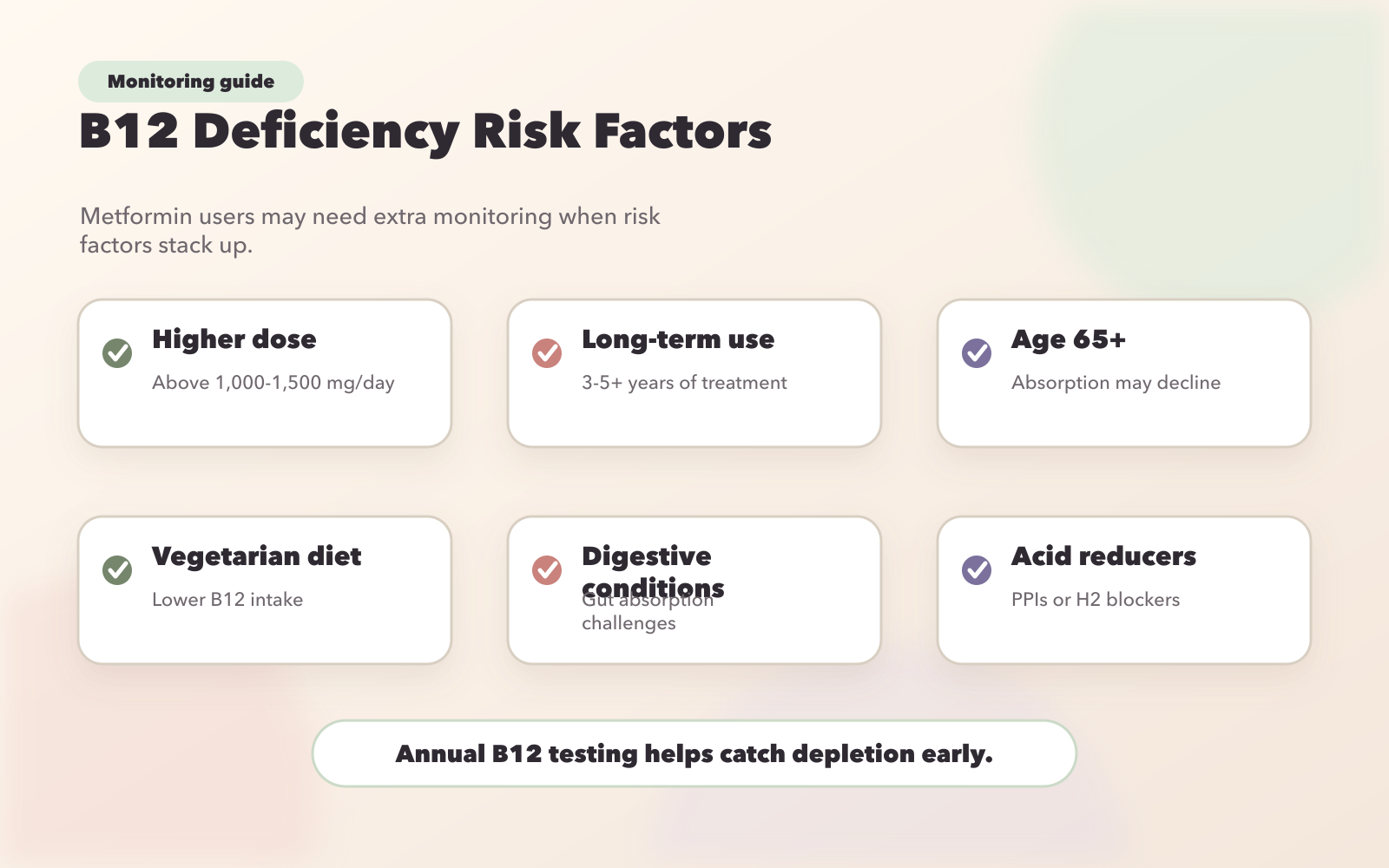
Risk Factors for Vitamin B12 Deficiency in Metformin Users
Metformin can interfere with how your body absorbs vitamin B12. It does this by disrupting the calcium-dependent process needed for the intrinsic factor–B12 complex to bind to receptors in the terminal ileum, where B12 absorption occurs. Essentially, metformin's hydrophobic tail interacts with the cell membrane, pushing away calcium ions that are crucial for this binding. Explaining this, Dr. Jill Crandall states:
"The mechanism for low B12 with metformin... appears to be a problem with absorption. It's not related to intrinsic factors... but there seems to be something about the effect of metformin in the gut that impairs absorption."
This interference can lead to measurable decreases in B12 absorption. Data from the Diabetes Prevention Program revealed that 5% of participants had a B12 deficiency after five years of metformin use, which rose to 9% after nine years. People taking metformin are about 2.5 times more likely to develop a deficiency compared to non-users. While the liver typically stores enough B12 to last up to five years, signs of deficiency can appear as early as three to four months after starting metformin. Long-term use often results in noticeable B12 deficiencies.
Signs of Vitamin B12 Deficiency
Detecting B12 deficiency in metformin users can be tricky since its symptoms often overlap with diabetes complications. Common signs include ongoing fatigue, peripheral neuropathy (numbness or tingling), memory issues, and megaloblastic anemia. Since nerve damage from B12 deficiency involves thinning of the myelin sheath - the protective layer around nerves - it can mimic diabetic peripheral neuropathy. Symptoms like "pins and needles" are often wrongly attributed solely to diabetes. Dr. Crandall highlighted in the Diabetes Prevention Program study:
"The presence of anemia did not discriminate between who did or did not have low B12 levels, so I think we may have a false sense of security by just analyzing hemoglobin and hematocrit."
If untreated, B12 deficiency can lead to lasting neurological damage, including permanent peripheral neuropathy and cognitive impairment.
Who Is at Higher Risk for B12 Deficiency
Certain groups are more prone to B12 deficiency, especially women with PCOS who often take higher doses of metformin. Long-term use - four years or more - and daily doses exceeding 1,000 mg significantly raise the risk. For doses of 2,000 mg or more, the odds ratio for B12 deficiency jumps to 3.8 compared to lower doses.
| Risk Factor | Impact on Vitamin B12 Deficiency |
|---|---|
| Metformin Dose | Doses >1,000 mg increase risk; doses ≥2,000 mg carry the highest risk |
| Duration of Use | Deficiency risk becomes significant after 3–5 years of continuous therapy |
| Age | Older adults (>65) are more vulnerable due to naturally reduced absorption |
| Diet | Vegetarians and vegans are at higher risk because of limited dietary B12 intake |
| Digestive Issues | Conditions like gastric bypass, inflammatory bowel disease, or chronic gastritis accelerate depletion |
| Other Medications | PPIs and H2-antagonists impair B12 absorption, reducing it by about 65% and 25%, respectively |
Women with PCOS face unique challenges. They often require higher metformin doses (1,500–2,000 mg daily) than those with type 2 diabetes, and studies show these doses can lower B12 levels within six months. The risk is further increased by oral contraceptives, which may also hinder B12 absorption.
Effects on Folate and Other Nutrients
Metformin is known to lower folate levels, though severe folate deficiency is uncommon. Folate plays a critical role in DNA synthesis, cognitive health, and maintaining the myelin sheath that protects nerve cells. When folate levels drop - especially alongside a vitamin B12 deficiency - it can lead to conditions like megaloblastic anemia and elevated homocysteine levels.
The reduction in folate appears to be tied to metformin’s inhibition of MDR1 (P-glycoprotein) and changes in intestinal pH, both of which impair folate absorption. Researcher Y Coleman has noted:
"The currently limited evidence on metformin‐folate interactions consistently demonstrates that metformin has a negative impact on folate status, and that it is reasonably consistent in relation to duration of metformin administration and metformin dose."
In addition to folate, metformin can reduce levels of other essential nutrients. It has been shown to lower plasma magnesium in 62% of users, impair thiamine absorption by up to 76%, and decrease vitamin D levels - all of which are crucial for glucose metabolism and insulin activity. These nutrient deficits can have particular consequences for women with PCOS.
Impact on Women with PCOS
For women with PCOS, low folate levels can create additional health risks. Folate is vital for converting homocysteine to methionine, and reduced folate levels can result in elevated homocysteine. This is particularly concerning given the existing cardiovascular risks associated with PCOS. A study found that after six months of metformin treatment (500 mg twice daily), 13 out of 18 women with PCOS had elevated homocysteine levels, with 10 of them reaching 11 μmol/L or higher.
The cardiovascular risks are not minor. Sedigheh Esmaeilzadeh and colleagues have explained:
"High Hcy level acts on the cardiac–vascular endothelium and has a direct toxicity; previous studies have proven that Hcy stimulates the proliferation of the vascular smooth muscle and induces apoptosis in the vascular endothelial cells."
Women with PCOS who have a BMI over 25 kg/m² are particularly at risk for significant increases in homocysteine during metformin therapy for PCOS. However, research suggests that folic acid supplementation can improve vascular endothelial health in these patients. This underscores the importance of regular monitoring and targeted supplementation to address nutrient deficiencies in women with PCOS taking metformin.
Testing for Nutrient Deficiencies on Metformin
Metformin is known to deplete certain key nutrients, making regular testing an essential part of managing its potential side effects effectively.
When to Get Tested
If you're on metformin, it's important to monitor your vitamin B12 levels regularly. The American Diabetes Association recommends periodic B12 testing, especially for individuals who have anemia or peripheral neuropathy, as these conditions can signal a deficiency.
"I think it's hard at this point to have a precise recommendation for when to begin measuring, but I think within a few years of starting metformin is probably when I would start to consider doing it"
This advice comes from Dr. Jill Crandall, a Professor of Medicine at Albert Einstein College of Medicine. Meanwhile, the Agency for Healthcare Research and Quality suggests screening as early as four months after beginning metformin. Ideally, you should get a baseline B12 test before starting the medication and then follow up annually. However, more frequent testing is recommended for specific groups, such as those over 65 years old, individuals taking higher doses (2,000 mg/day or more), or patients with gastrointestinal disorders. In the U.S., a vitamin B12 test typically costs around $80 at many medical facilities.
Beyond B12, your testing panel should include folate levels, as metformin can also reduce serum folate. If your B12 levels fall into a borderline range (200–400 pg/mL), additional tests like methylmalonic acid (MMA) and total homocysteine (tHcy) may be ordered, as they are more accurate indicators of a deficiency. Kidney function should also be monitored annually through an estimated glomerular filtration rate (eGFR) test, as the FDA advises for all patients on metformin or similar treatments. These proactive measures allow for early detection and timely intervention through dietary changes or supplements, which will be discussed later. Understanding problem foods for insulin resistance can further support these efforts.
Warning Signs to Watch For
If you notice certain symptoms, it's critical to seek medical attention right away. The UK's Medicines and Healthcare products Regulatory Agency highlights:
"Seek medical advice if you develop new or worsening symptoms of extreme tiredness, a sore and red tongue, pins and needles, or pale or yellow skin - these can be signs of low vitamin B12 levels"
Neurological symptoms, such as tingling or numbness in your hands and feet, can indicate nerve damage that may become irreversible if untreated. Mental changes like confusion, irritability, or depression are also red flags, along with physical symptoms such as a swollen or sore tongue, mouth ulcers, heart palpitations, and unexplained weight loss.
It's worth noting that a normal complete blood count does not rule out a B12 deficiency - specific testing is required. Research shows that up to 1 in 10 people taking metformin experience B12 deficiency, and for every additional 100 mg of daily metformin, the risk increases by 8%.
sbb-itb-6dba428
Preventing and Treating Nutrient Deficiencies
If you're taking metformin and are concerned about its impact on your nutrient levels, don't worry - there are practical ways to manage this without stopping your medication. Here’s how you can protect yourself from deficiencies or reverse them if they’ve already occurred.
Calcium's Role in Boosting B12 Absorption
Calcium is essential for your body to properly absorb vitamin B12. In the stomach, B12 binds to a protein called intrinsic factor, and calcium is needed in the small intestine to complete the absorption process. Metformin can interfere with this process, but calcium supplements can help resolve the issue.
A study conducted in October 2000 at the James J. Peters VA Medical Center examined 21 patients with type 2 diabetes who had declining B12 levels after three months of metformin use. When these patients started taking oral calcium supplements, their bioavailable B12 levels increased by an average of 53% within a month. More recently, a 2024 study using advanced tracking methods showed that metformin reduced B12 bioavailability from 42.6% to 30.8%. However, adding 500 mg of calcium raised B12 absorption to 46.4%.
"Patients receiving metformin have diminished B12 absorption and low serum total vitamin B12 and TCII‐B12 levels because of a calcium‐dependent ileal membrane antagonism, an effect reversed with supplemental calcium." – William Alan Bauman, James J. Peters VA Medical Center
Research suggests that taking 500–1,200 mg of calcium daily can improve B12 absorption by nearly 50% within a month. To counteract metformin's effects, try taking 500 mg of calcium carbonate alongside your medication.
Options for B12 Supplementation
If your B12 levels are already low, direct supplementation may be necessary. While the average daily requirement for B12 is just 2.4 mcg, metformin-induced deficiencies often require much higher doses - typically between 1,000 and 2,000 mcg.
Dr. Jill Crandall explains:
"We believe and we expect that higher doses of vitamin B12 will overcome the malabsorption that's associated with metformin." – Dr. Jill Crandall, Albert Einstein College of Medicine
There are two primary forms of B12 supplements: cyanocobalamin and methylcobalamin. For severe deficiencies or absorption issues, monthly intramuscular injections may be a better option than oral supplements. Interestingly, metformin users who take a daily multivitamin tend to have 50% higher serum B12 levels compared to those who don’t supplement. This highlights the importance of proactive supplementation, especially for those on higher doses of metformin (≥2,000 mg/day).
Beyond B12, it’s also important to address folate levels to maintain a well-rounded nutrient profile.
Folate and Multivitamin Support
Adding folate to your regimen complements your B12 and calcium intake, ensuring balanced nutrition. Metformin not only impacts B12 but can also lower folate levels, potentially leading to elevated homocysteine - a marker linked to cardiovascular risks. However, it’s crucial to address B12 deficiency first. Taking folate alone can mask the blood-related symptoms of B12 deficiency while allowing neurological damage to persist. A multivitamin containing both B12 and folate provides a balanced solution.
Most daily multivitamins include B12, folate, and other nutrients that metformin may affect, such as magnesium. One study found that 62% of metformin users had reduced magnesium levels. To further support your nutrient intake, incorporate B12-rich foods into your diet. Great options include:
- Clams: 17 mcg per 3 oz
- Salmon: 4.9 mcg per 3 oz
- Dairy products
If you follow a plant-based diet, fortified nutritional yeast (8.3–24 mcg per 1/4 cup) and fortified cereals (2.7–24 mcg per serving) are excellent sources of B12. Pairing these foods with calcium-rich options like dairy, fortified plant milks, or supplements creates a comprehensive approach to maintaining your nutrient levels while on metformin.
Combining Nutrition with Metformin for PCOS
For women dealing with PCOS, metformin can be even more effective when paired with a well-thought-out nutritional plan. High-dose metformin, often prescribed for PCOS, can lead to nutrient depletion over time. By focusing on strategic food choices and supplements, it's possible to maintain nutrient levels and maximize the benefits of treatment.
Oana Health's Nutrient Monitoring Support
Keeping track of nutrient levels while on metformin doesn’t have to be overwhelming. Oana Health provides personalized telehealth services tailored for women with PCOS. Their services include guidance on managing nutrient deficiencies during metformin treatment. Starting at $22/month for Oral Metformin ER, Oana Health connects you with licensed professionals who monitor your nutrient levels and adjust your treatment plan as needed. This approach is especially helpful since B12 levels can drop significantly within just six months of taking high-dose metformin.
While professional support is key, the food choices you make every day also play a crucial role in maintaining nutrient balance.
Foods That Support Nutrient Levels
To maintain healthy B12 levels, focus on incorporating foods like eggs, dairy, beef, and seafood into your meals - they’re some of the best natural sources of this nutrient. If whole foods aren’t enough, fortified breakfast cereals can provide an extra boost.
Beyond B12, balancing your meals can help manage blood sugar and support overall health. Try pairing refined carbohydrates with protein or fiber to keep blood sugar levels steady. Include lean proteins such as chicken, fish, tofu, and legumes, and add anti-inflammatory fats from sources like avocado, olive oil, and fatty fish. Non-starchy vegetables like kale, broccoli, and spinach are also great options - they’re packed with fiber and nutrients without causing blood sugar spikes.
Taking metformin with meals can also help your body absorb nutrients more effectively and reduce common side effects like bloating and nausea. By combining these dietary strategies with professional guidance, you can better support your health while managing PCOS.
Conclusion
Managing the nutrient impact of metformin requires consistent monitoring and timely action. While nutrient deficiencies, especially Vitamin B12, are a potential side effect of long-term metformin use, they are far from unavoidable with the right approach.
Regular testing is critical to catch and address deficiencies early. As Dr. Oracle Medical Advisory Board highlights:
"It is essential to monitor vitamin B12 levels in patients taking metformin... to prevent irreversible neurological damage and other complications associated with vitamin B12 deficiency".
Symptoms of B12 deficiency, such as fatigue or nerve issues, can often be confused with diabetes-related complications. This confusion may delay treatment, increasing the risk of permanent damage.
Women with PCOS, who often take higher doses of metformin, are particularly vulnerable. Studies show significant drops in B12 levels within just six months of starting treatment. The use of oral contraceptives or acid-suppressing medications can further amplify these risks.
Addressing low magnesium is another important step, as it not only improves insulin sensitivity but also enhances metformin’s overall effectiveness. Fortunately, B12 malabsorption caused by metformin is often quickly reversible with proper supplementation when identified early.
Services like Oana Health simplify the process of nutrient monitoring by connecting patients with licensed professionals. Starting at just $22/month for Oral Metformin ER, they help track nutrient levels and adjust treatment plans as needed. When combined with smart dietary choices and targeted supplements, these strategies ensure that metformin works effectively while safeguarding your long-term health. Staying proactive is the key to maintaining the right nutrient balance and maximizing the benefits of your treatment.
FAQs
Which blood tests should I ask for if I take metformin?
If you're taking metformin, it's a good idea to talk to your doctor about keeping an eye on your vitamin B12 levels. Over time, using metformin can cause a drop in vitamin B12, so regular tests can help detect and manage any deficiencies before they become a problem.
Can B12 deficiency symptoms be mistaken for diabetic neuropathy?
Yes, the symptoms of a B12 deficiency can closely resemble those of diabetic neuropathy. B12 deficiency can lead to peripheral neuropathy, even in the absence of anemia. The clinical signs - such as tingling, numbness, or pain in the extremities - are often so similar that it can result in a misdiagnosis.
This is especially important for individuals taking Metformin, a common medication for managing diabetes, as it can interfere with B12 absorption. Regular monitoring of B12 levels is crucial to avoid complications and ensure proper diagnosis and treatment.
Should I take calcium with metformin to improve B12 absorption?
Taking calcium alongside metformin might support better absorption of vitamin B12. Studies indicate that calcium supplements can counteract the reduced B12 absorption caused by metformin. If you're worried about your B12 levels, it's a good idea to talk to your healthcare provider before adding any supplements to your routine to make sure they're suitable for you.