
Metformin and PCOS: Long-Term Use Risks
Metformin is a widely used treatment for managing Polycystic Ovary Syndrome (PCOS), particularly for addressing insulin resistance, which affects up to 70% of individuals with the condition. While it can regulate menstrual cycles, reduce androgen levels, and aid modest weight loss, long-term use comes with potential risks such as gastrointestinal discomfort, vitamin B12 deficiency, and rare cases of lactic acidosis.
Key Takeaways:
- Effectiveness: Improves insulin sensitivity, menstrual cycles, and fertility outcomes for many women.
- Side Effects: Common issues include stomach upset (50% of users) and vitamin B12 deficiency (up to 30% of users).
- Cost: Affordable at around $9/month for generic versions.
- Alternatives: Lifestyle changes, GLP-1 agonists, and hormonal therapies may complement or replace metformin depending on individual needs.
For the best results, combining metformin with lifestyle changes - like a healthy diet and regular exercise - can improve outcomes. Regular monitoring of vitamin B12 levels and kidney function is also essential for long-term users.
Quick Comparison:
| Treatment | Benefits | Risks | Cost (Monthly) |
|---|---|---|---|
| Metformin | Insulin sensitivity, weight loss | GI discomfort, B12 deficiency | ~$9.00 |
| Lifestyle | Ovulation, metabolic health | Adherence challenges | Variable |
| GLP-1 Agonists | Weight loss, insulin sensitivity | GI issues, high cost | ~$1,299 |
| Spironolactone | Reduces acne/hair growth | Birth defect risk, liver toxicity | ~$14.00 |
Metformin remains a cost-effective first-line option, but personalized care - including alternatives like GLP-1 agonists or lifestyle changes - may offer better results for some. Services like Oana Health provide affordable, tailored solutions for managing PCOS.
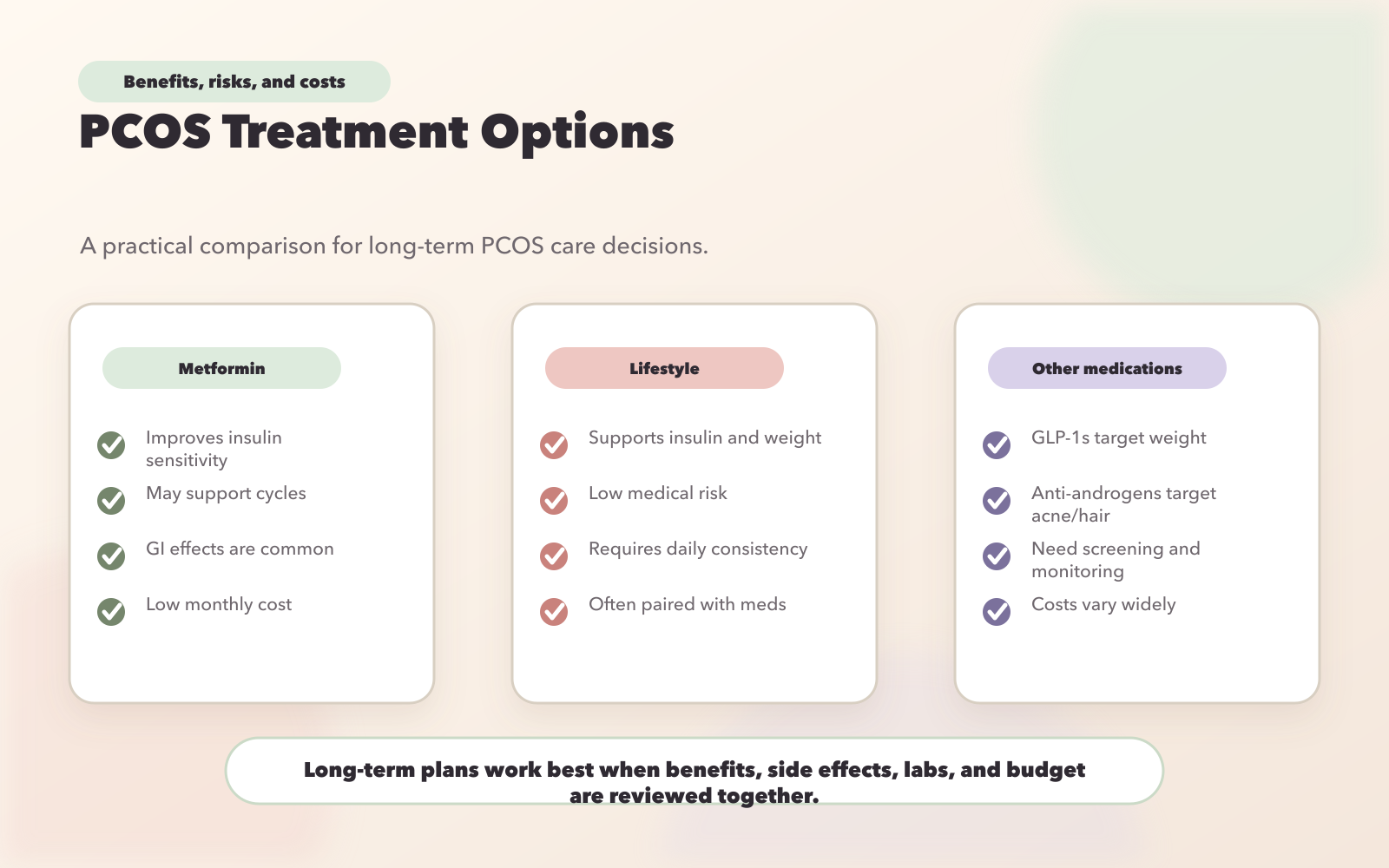
PCOS Treatment Options Comparison: Benefits, Risks, and Costs
1. Metformin
Efficacy for PCOS Symptoms
Metformin helps manage PCOS by activating the AMPK pathway, which reduces glucose production in the liver and improves how the body uses insulin. Over time, this can lead to better menstrual regularity and lower androgen levels, with benefits lasting up to a decade.
This medication is particularly effective for women dealing with metabolic issues and insulin resistance. Research shows that nearly 90% of women with PCOS resumed regular menstruation after at least six months of metformin treatment. When it comes to fertility, metformin achieves live birth rates similar to clomifene citrate when taken for six months or longer. However, letrozole is generally more effective than metformin alone for ovulation and live birth success.
"Metformin can be a helpful part of treatment for some women with PCOS, especially those with insulin resistance or certain pregnancy risks. Still, it is not a one-size-fits-all solution." - Monash Centre for Health Research and Implementation
Side Effects and Safety
While metformin offers notable benefits, long-term use requires close attention to potential side effects.
The most common issue is gastrointestinal discomfort, with over 50% of clinical trial participants reporting diarrhea. Fortunately, these symptoms often improve over time. Starting with a low dose, such as 500 mg once daily, and taking it with your largest meal can reduce stomach upset. Many patients also tolerate the extended-release version better.
Another concern is vitamin B12 deficiency, which affects up to 30% of people using metformin. If left untreated, this can lead to anemia, nerve damage, and cognitive problems. It’s a good idea to check B12 levels every two to three years - or sooner if you notice symptoms like extreme fatigue or numbness. There’s also a rare but serious risk of lactic acidosis, occurring in about 1 in 30,000 patients. Though rare, it can be life-threatening, with a fatality rate of around 25%. To reduce this risk, avoid excessive alcohol and ensure regular monitoring of kidney function.
Cost and Accessibility
Metformin is among the most affordable options for PCOS treatment, with an average retail price of around $9.00. As a widely available generic drug, it’s accessible through traditional healthcare providers as well as telehealth services. Platforms like Oana Health offer convenient access to personalized PCOS care from licensed professionals.
The medication is available in two forms: immediate-release (taken twice daily) and extended-release (taken once daily). This flexibility, combined with its affordability and decades of safety data, makes metformin a practical first-line treatment for many women managing PCOS. Compared to metformin and GLP-1 agonists, metformin remains a cost-effective choice that works well alongside lifestyle changes.
sbb-itb-6dba428
2. Lifestyle Changes
Efficacy for PCOS Symptoms
While metformin is effective in improving metabolic markers, lifestyle adjustments are considered the first-line treatment for PCOS, often recommended before introducing medication. And here’s the encouraging part: even small changes can make a noticeable impact. For instance, losing just 2% to 5% of body weight has been shown to help restore regular menstrual cycles in women with PCOS.
Studies reveal that lifestyle modifications are just as effective as metformin in improving menstrual frequency and pregnancy rates. When it comes to lowering insulin resistance, these changes actually outperform metformin alone. One long-term study demonstrated that 54% of women saw improvements in their menstrual cycles, and 43% began ovulating regularly after adopting healthier habits. These results show how lifestyle adjustments can complement the benefits of metformin in managing PCOS.
Experts recommend aiming for 150 minutes of moderate exercise per week and reducing daily calorie intake by 500–1,000 calories. A diet similar to one designed for type 2 diabetes works particularly well - focus on high-fiber foods and omega-3 fatty acids while cutting back on refined carbs and trans fats. However, when it comes to lowering testosterone levels, metformin still holds an advantage.
Side Effects and Safety
Unlike medications, lifestyle changes come with no direct medical side effects. The main hurdle? Adherence. Studies show that lifestyle programs have a 19.5% dropout rate.
Some practical considerations need to be addressed, though. For individuals with orthopedic or cardiac issues, certain exercises may require medical clearance. Additionally, poorly designed diets - especially those high in carbohydrates and low in fat - can actually raise insulin levels and worsen PCOS symptoms. This is why working closely with healthcare professionals to create a tailored plan is crucial.
"If metformin is not indicated, LSM should be the primary recommendation in women with PCOS before prescribing metformin." - Chan Hee Kim, PhD, Scientific Reports
Cost and Accessibility
Lifestyle changes are often the most budget-friendly treatment option for PCOS, especially when compared to pricier interventions like gonadotropin therapy. However, affordability doesn’t always mean accessibility. Delays in diagnosis - often exceeding two years - can lead to postponed treatment. Shockingly, one-third of women wait over two years and consult at least three healthcare professionals before receiving a proper PCOS diagnosis.
While diet and exercise themselves are inexpensive, proper guidance often requires consultations with specialists such as endocrinologists or nutritionists. Some women may also opt for commercial PCOS supplement bundles, which can cost around $204.00. Telehealth platforms like Oana Health offer a more accessible solution, providing personalized, professional guidance at a lower cost. These options underline the importance of combining expert support with lifestyle adjustments to achieve effective, long-term management.
What Actually Works for PCOS & Insulin Resistance? Metformin vs Inositol vs Birth Control
3. Other Medications (GLP-1 Agonists, Spironolactone)
Expanding treatment options, alternative medications provide additional strategies for managing PCOS beyond metformin and lifestyle adjustments.
Efficacy for PCOS Symptoms
GLP-1 receptor agonists, such as Semaglutide (Ozempic, Wegovy) and Tirzepatide (Mounjaro, Zepbound), focus on improving insulin sensitivity - a key factor in PCOS - rather than solely aiding weight loss. Studies have shown that low doses of GLP-1 agonists can regulate reproductive hormones, reducing elevated luteinizing hormone and testosterone levels in obese PCOS patients. For instance, nearly 80% of obese PCOS patients who hadn’t responded to lifestyle changes experienced normalized menstrual cycles after using low-dose Semaglutide. This underscores the importance of addressing insulin sensitivity beyond the scope of metformin.
"GLP-1 RAs primarily target insulin sensitivity, which is thought to be a core driver of the syndrome, not just weight loss." - Hertility Health
When combined with metformin, GLP-1 agonists can amplify weight loss and improve glycemic control. However, discontinuing these medications often results in regaining most of the weight within a year. Together with other treatments like spironolactone, these medications expand the options for managing PCOS over the long term.
Side Effects and Safety
GLP-1 agonists often cause gastrointestinal side effects, including nausea, vomiting, diarrhea, and fatigue. Some individuals may also experience temporary hair thinning (telogen effluvium), likely due to rapid weight loss. To minimize these effects, maintaining adequate levels of Vitamin D, iron, and zinc is recommended. Rare but serious risks include acute pancreatitis and gallbladder issues.
Spironolactone, an anti-androgen medication, has been linked to possible liver toxicity. Additionally, there is limited safety data on GLP-1 agonists during pregnancy. These medications can cause rapid metabolic changes and impact ovulation, so effective contraception is essential during treatment. For those planning pregnancy, specific washout periods are advised: 2 months for Semaglutide, 1 month for Tirzepatide, and 12 weeks for Exenatide.
Cost and Accessibility
In the United States, the high cost of GLP-1 agonists poses a significant challenge. Without insurance, these medications can range from US$1,000 to US$2,000 per month. However, savings programs can lower these costs significantly. Manufacturer copay cards and commercial insurance can reduce out-of-pocket expenses to as little as US$25 for a 1- to 3-month supply. GoodRx offers introductory pricing, bringing the cost to around US$199 per month for the first two fills.
| Medication Type | Monthly Cost (No Insurance) | With Savings Programs |
|---|---|---|
| Metformin | US$24 - US$69 | Widely available as generic |
| GLP-1 Agonists | US$968.52 - US$1,349.02 | US$199 - US$349 via GoodRx; US$25 with copay card |
| GIP/GLP-1 Agonists | US$1,059.87 - US$1,079.31 | US$25 with manufacturer card |
| Spironolactone | US$14 | Generic available |
Insurance coverage for GLP-1 agonists is typically limited to Type 2 diabetes, making off-label use for PCOS more difficult. Telehealth platforms like Oana Health offer a more accessible alternative. For example, Oana Health provides oral Semaglutide treatments starting at US$199 per month, and Spironolactone for just US$14 per month, including consultations and free shipping. They also offer combination therapy options, such as Metformin & Spironolactone packs for US$32 per month or Oral GLP-1 & Metformin for US$199 per month. These services enable affordable, personalized care, offering important options for patients seeking additional therapy beyond metformin. Together, these medications and services support a well-rounded approach to long-term PCOS management.
Advantages and Disadvantages
Managing PCOS often involves weighing the pros and cons of various treatment options. Each approach has its strengths and limitations, and long-term success depends on balancing therapeutic benefits with potential risks.
Metformin is known for improving insulin sensitivity and promoting modest weight loss at a relatively low cost. However, it often causes gastrointestinal discomfort, may lead to Vitamin B12 deficiency, and carries a rare but serious risk of lactic acidosis.
Lifestyle changes can effectively restore ovulation and improve overall metabolic health. The challenge lies in maintaining these changes over the long term, as sustained adherence is crucial for success.
GLP-1 agonists deliver more significant weight loss compared to Metformin, but they come with a hefty price tag and similar gastrointestinal side effects. Additionally, there is limited data on their long-term effects.
Spironolactone is effective for reducing hirsutism and acne by blocking androgens. However, its potential to cause birth defects makes reliable contraception essential when using this medication.
Oral contraceptives help regulate menstrual cycles and may lower the risk of endometrial cancer. On the downside, they are less effective for addressing insulin resistance and carry an increased risk of blood clots.
Here’s a quick comparison of these treatments:
| Treatment | Primary Benefits | Key Risks | Monthly Cost |
|---|---|---|---|
| Metformin | Improves insulin sensitivity, modest weight loss | GI discomfort, Vitamin B12 deficiency, rare lactic acidosis | ~$9.00 |
| Lifestyle Changes | Restores ovulation, improves metabolic health | Requires long-term commitment | Variable |
| GLP-1 Agonists | Greater weight loss than Metformin | GI issues, high cost, limited long-term data | ~$1,299 |
| Spironolactone | Reduces hirsutism and acne | Teratogenic risk; requires reliable contraception | ~$61.00 |
| Oral Contraceptives | Regulates cycles, may reduce endometrial cancer risk | Higher clot risk; less effective for insulin resistance | Varies by brand |
For those seeking accessible and affordable PCOS care, Oana Health provides telehealth solutions. They offer Metformin at $22 per month and Spironolactone at $14 per month. Combination therapy options, like Metformin & Spironolactone, are available for $32 per month. These services include consultations with licensed medical professionals, free shipping, and a focus on personalized, cost-effective treatment plans.
Conclusion
Managing PCOS effectively requires a personalized approach that adapts to your specific symptoms and metabolic needs. There’s no one-size-fits-all solution. For example, medications like Metformin or GLP-1 agonists can address insulin resistance and metabolic challenges, while Spironolactone targets issues like hirsutism and acne. However, no matter what medication is prescribed, metformin and lifestyle changes serve as the cornerstone of PCOS management.
Regular health monitoring is equally important. For those taking Metformin, periodic Vitamin B12 checks are crucial. If you're using GLP-1 agonists and planning for pregnancy, washout periods are necessary. These details highlight the importance of having a treatment plan that evolves with your symptoms and is carefully balanced to manage both benefits and risks over time.
Access to specialized care is also a key factor. Services like Oana Health make managing PCOS more convenient by offering telehealth consultations with licensed professionals who create personalized treatment plans.
Ultimately, long-term success comes from combining targeted treatments, lifestyle changes, and consistent communication with your healthcare provider.
FAQs
How long is it safe to stay on metformin for PCOS?
The long-term safety of metformin use for PCOS is not completely understood. Some research indicates that its benefits might diminish once the medication is discontinued. For this reason, it's essential to have regular check-ins with your healthcare provider to assess whether continued use is appropriate for your treatment plan. Always consult your doctor to determine if metformin remains the best option for managing your condition.
What symptoms could mean metformin is causing vitamin B12 deficiency?
Vitamin B12 deficiency linked to long-term metformin use can show up as numbness or tingling in your hands and feet, weakness, or fatigue. Over time, low levels of B12 may result in nerve damage and anemia. If you’re on metformin for an extended period, keeping an eye on these symptoms is crucial.
When should I switch from metformin to a GLP-1 medication for PCOS?
If metformin isn't delivering the desired results for managing insulin resistance, hormonal imbalances, or reproductive symptoms associated with PCOS - or if side effects or contraindications make its use challenging - it might be time to explore GLP-1 medications. Studies indicate that GLP-1 receptor agonists could offer added metabolic benefits in specific situations, presenting a potential alternative for those who need a different approach.