
Top 5 Oral Medications for Hormonal Acne: Safety Overview
Hormonal acne affects many adult women, often appearing as stubborn, painful cysts along the jawline and chin. Standard treatments may fail, making oral medications that address hormonal causes a key option. Here are five effective options and what you need to know about their safety:
- Spironolactone: Reduces oil production by blocking androgens. Effective for long-term use with minimal side effects like menstrual changes or dizziness.
- Combined Oral Contraceptives (COCs): FDA-approved options like Yaz and Ortho Tri-Cyclen reduce acne lesions by lowering testosterone. Carries a small risk of blood clots.
- Isotretinoin (Accutane): A powerful option for severe acne, shrinking oil glands and offering long-term remission. Requires strict pregnancy prevention and regular lab tests.
- Drospirenone (Progestin-Only): A safer alternative for those avoiding estrogen, with anti-androgenic benefits and a lower clot risk.
- Metformin: Best for acne tied to PCOS or insulin resistance, improving symptoms by regulating blood sugar and reducing androgens.
Each medication has unique benefits and risks, making it essential to choose based on your health needs and goals. Always consult a healthcare provider for the best treatment plan.
Quick Comparison
| Medication | Primary Use | Time to Results | Key Risks | Best For |
|---|---|---|---|---|
| Spironolactone | Reducing oil production | 3–6 months | Mild side effects (e.g., dizziness) | Long-term acne management |
| COCs | Hormonal acne + contraception | 3–6 months | Small clot risk | Women needing contraception |
| Isotretinoin | Severe acne | 2–6 months | Birth defects, dry skin | Severe or scarring acne |
| Drospirenone | Hormonal acne (no estrogen) | 3–6 months | Irregular bleeding | Women avoiding estrogen |
| Metformin | PCOS-related acne | 3–8 weeks | Stomach upset, rare lactic acidosis | PCOS or insulin resistance |
These treatments target hormonal imbalances, offering tailored solutions for clearer skin.
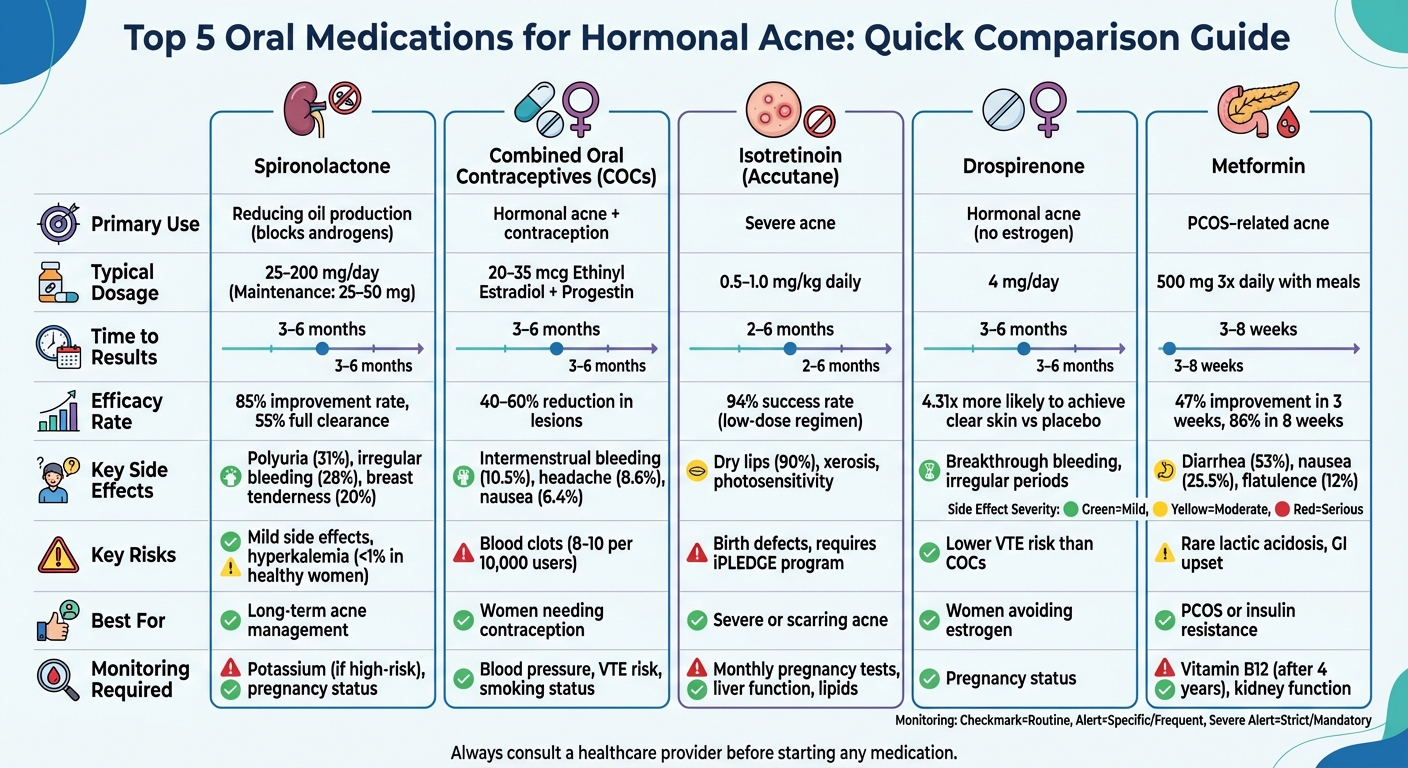
Oral Medications for Hormonal Acne: Safety and Efficacy Comparison Chart
How to Treat Hormonal & Adult Acne! Dermatologist Advice, Skincare Products, & Treatments
1. Spironolactone
Spironolactone is a medication that works by blocking dihydrotestosterone (DHT), a powerful androgen, from binding to receptors in the oil glands. This action helps reduce sebum production, which can play a significant role in managing acne. It’s commonly prescribed off-label for adult women dealing with persistent hormonal acne, especially when other treatments, like antibiotics, have failed.
Efficacy for Hormonal Acne
Research has shown spironolactone to be highly effective in treating hormonal acne. A March 2017 study conducted by the University of Pennsylvania Department of Dermatology reviewed 110 female patients and found that 85% experienced improvements in acne severity. Of those, 55% achieved full clearance. Improvements were notable across different areas, with facial acne improving by 73.1%, chest by 75.9%, and back by 77.6%. Similarly, a 2025 meta-analysis revealed that patients using spironolactone had six times better acne improvement compared to those on a placebo.
It’s worth noting that spironolactone typically requires at least three months before its full benefits become apparent. This delayed but reliable onset of results aligns with its long-standing safety profile, which has been established over decades of use.
Long-Term Safety Profile
Spironolactone has been used as an acne treatment for over 40 years and is considered safe for long-term use. Studies following patients for up to eight years reported no serious adverse events. On average, patients continue using the medication for about 471 days, highlighting its effectiveness and tolerability over extended periods.
"Spironolactone improves clinical outcomes and is well tolerated for many adult women with acne using it for an extended duration." – Barbieri et al., Journal of the American Academy of Dermatology
Unlike antibiotics, spironolactone does not contribute to antibiotic resistance, making it a solid option for long-term acne management. For healthy women under 45, the risk of hyperkalemia (elevated potassium levels) is less than 1%, and regular potassium monitoring is usually unnecessary unless there’s an underlying kidney condition or concurrent use of ACE inhibitors.
Common Side Effects
The most frequently reported side effects of spironolactone include menstrual irregularities (such as breakthrough bleeding or missed periods), breast tenderness, increased urination, dizziness, headaches, and fatigue. In one study, 51 women reported side effects, with breakthrough bleeding being the most common (experienced by 25 patients) and lightheadedness by 7 patients. However, only 6 patients (5.4%) discontinued the medication due to these effects.
Menstrual irregularities are often dose-dependent and can be managed by pairing spironolactone with birth control pills. It’s also important to use effective contraception during treatment, as the medication can cause feminization of a male fetus if pregnancy occurs.
Suitability for Extended Use
Once acne is under control, many women maintain a daily dose of 25–50 mg. In an eight-year study, while 60% of patients experienced some side effects, only 15% stopped treatment altogether. Spironolactone is often combined with oral contraceptives to boost its effectiveness, reduce menstrual side effects, and create a more comprehensive approach to hormonal acne management.
If you’re considering spironolactone for hormonal acne, Oana Health offers personalized consultations with licensed medical professionals. They can craft a treatment plan tailored to your needs, with medications conveniently delivered to your door.
2. Combined Oral Contraceptives (COCs)
Combined oral contraceptives (COCs) work by reducing androgen production and increasing levels of sex hormone-binding globulin, which lowers free testosterone. This reduction in testosterone leads to less sebum production and inflammation, both of which are significant contributors to acne. Currently, three COC formulations are FDA-approved for acne treatment: Ortho Tri-Cyclen, Estrostep, and Yaz.
Efficacy for Hormonal Acne
COCs can reduce total acne lesion counts by 40% to 60%. While oral antibiotics may deliver faster results within the first three months (48.0% reduction compared to 37.3% for COCs), the gap closes by six months, with COCs achieving a 55.0% reduction versus 52.8% for antibiotics. This makes COCs a strong option for long-term acne management, especially since about 80% of adult women with acne fail to achieve lasting improvement after multiple courses of systemic antibiotics.
Most women notice improvements within three to six months of starting COCs. Using the "Quick Start" method can help encourage early adherence to treatment plans.
Long-Term Safety Profile
The most serious long-term safety concern associated with COCs is the risk of venous thromboembolism (VTE), especially during the first year of use. For COC users, the risk is 8–10 VTE events per 10,000 person-years, compared to 5–10 events among non-users. However, this risk is still far lower than the 58–60 events seen during pregnancy.
Certain groups require careful screening before starting COCs, including women who smoke (particularly those over 35), those with obesity, or those with a personal or family history of clotting disorders. Long-term use of COCs comes with a mixed cancer risk profile: a slight increase in breast cancer risk (relative risk of 1.46 for over 10 years of use) and higher cervical cancer risk after five years. On the other hand, they provide long-lasting protection against ovarian, endometrial, and colorectal cancers, benefits that can persist for up to 20 years after stopping use.
COCs also carry an increased risk of myocardial infarction and ischemic stroke, particularly among women who smoke or experience migraines with aura.
Common Side Effects
Some of the more common side effects of COCs include nausea, breast tenderness, headaches, bloating, and mood changes like irritability or fatigue. Breakthrough bleeding and spotting are also frequent, affecting up to 20% of users. These issues are most common in the first three to four months of use and generally resolve over time.
In a clinical trial focused on moderate acne, side effects included intermenstrual bleeding (10.5%), headache (8.6%), and nausea (6.4%). Regular blood pressure checks are recommended during follow-up visits, as COCs can sometimes lead to hypertension. Additionally, there is some concern about reduced bone mineral density in adolescents, with one study noting a mean decrease of 0.83 at the lumbar spine after 24 months of COC use compared to non-users.
Suitability for Extended Use
Modern COCs are designed for safer, long-term use, thanks to lower estrogen doses (20–35 mcg compared to earlier formulations exceeding 100 mcg), which reduce estrogen-related side effects. They also provide lasting protection against ovarian, endometrial, and colorectal cancers, even years after discontinuation.
However, proper patient selection is critical. COCs are not recommended for women who smoke and are over 35, have morbid obesity, a history of thromboembolic disease, or migraines with aura.
For women managing hormonal acne who also need contraception, Oana Health offers personalized consultations with licensed medical professionals to determine whether COCs are the right choice for your needs. With their strong safety and effectiveness profile, COCs remain a key option for long-term hormonal acne management.
3. Isotretinoin (Accutane)
Isotretinoin stands out as a treatment that can provide long-lasting remission after just one course. It's typically reserved for severe, stubborn nodular acne that hasn’t improved with other treatments like systemic antibiotics. However, it can also be used for moderate cases, especially when acne causes significant emotional distress or scarring.
Efficacy for Hormonal Acne
This medication tackles all four main causes of acne: excess sebum production, clogged pores, bacterial growth (P. acnes), and inflammation. Its primary action is shrinking and reducing the activity of sebaceous glands. In a study involving 638 patients with moderate acne, a low-dose regimen of 20 mg per day achieved a 94% success rate, with only 5% of patients experiencing a relapse over four years. To ensure lasting results, a cumulative dose of 120–150 mg/kg over a 15–20-week period is recommended.
"Isotretinoin offers our patients who have severe acne significant, life-changing benefits. Providing this medicine safely is our top priority." – William D. James, MD, FAAD
Long-Term Safety Profile
Isotretinoin is prescribed as a finite course, though retreatment is an option if acne returns. The most serious safety concern is its potential to cause severe birth defects, making it mandatory for patients to enroll in the iPLEDGE REMS program. This program requires regular pregnancy tests and strict adherence to pregnancy prevention measures. Routine lab tests are also crucial, as triglyceride levels may increase in 16% to 44% of patients, and liver enzyme abnormalities occur in up to 15%. However, serious elevations requiring discontinuation are uncommon. Concerns about links to depression or inflammatory bowel disease have been raised, but recent meta-analyses have found no confirmed causal relationship.
Common Side Effects
The most common side effect is cheilitis (severely dry, cracked lips), affecting about 90% of users. Other frequent issues include dry skin, dry eyes, nosebleeds, and heightened sensitivity to sunlight. Some patients, especially younger ones, report joint pain, muscle aches, and back pain.
| Side Effect Category | Common Symptoms | Management Strategy |
|---|---|---|
| Mucocutaneous | Cheilitis (90%), dry skin, dry eyes, nosebleeds | Use petroleum jelly for lips and nostrils; apply preservative-free artificial tears |
| Musculoskeletal | Joint pain, muscle aches, back pain | Limit intense physical activity; monitor creatine phosphokinase (CPK) levels |
| Laboratory | Elevated triglycerides (16–44%), increased liver enzymes (15%) | Regular fasting blood tests; avoid alcohol during treatment |
| Ocular | Decreased night vision, dry eyes | Use lubricating eye drops; avoid driving at night if vision is impaired |
To maximize absorption, traditional isotretinoin capsules should be taken with a high-fat meal. Newer formulations, like Absorica, use Lidose technology, which improves absorption even on an empty stomach by addressing the typical 60% reduction in bioavailability seen with standard capsules. Patients are also advised to avoid vitamin A supplements during treatment to prevent toxicity.
Suitability for Extended Use
Low-dose regimens (around 20 mg per day) can help reduce side effects by 16% to 35%. However, these lower doses are linked to higher relapse rates - up to 42% for very low doses compared to about 10% for standard dosing if the target cumulative dose isn’t met. Patients with hormonal conditions like PCOS may face a higher risk of relapse and might require higher cumulative doses or additional hormonal therapy.
There are also specific precautions to keep in mind. Cosmetic procedures like waxing, dermabrasion, or laser treatments should be avoided during treatment and for six months afterward to prevent scarring. Additionally, patients must wait at least 30 days after their final dose before donating blood. These guidelines set isotretinoin apart from other hormonal acne treatments.
sbb-itb-6dba428
4. Drospirenone (Progestin-Only)
Drospirenone, a fourth-generation progestin derived from 17α-spironolactone, stands out for its anti-androgenic properties. Unlike older progestins like levonorgestrel or norethindrone, which can exacerbate acne, drospirenone lacks androgenic activity. This makes it a valuable option for patients seeking hormonal acne treatment but who cannot use estrogen - for instance, women over 35 who smoke or those with a history of migraines with aura. Let’s take a closer look at its effectiveness and safety.
Efficacy for Hormonal Acne
Most research on drospirenone's acne benefits comes from studies on combined oral contraceptives. However, drospirenone 3 mg has anti-mineralocorticoid activity comparable to 20–25 mg of spironolactone. It works by blocking dihydrotestosterone (DHT) from binding to androgen receptors, which helps reduce sebum production and inflammation. In studies involving combined formulations, users were 4.31 times more likely to achieve clear or nearly clear skin compared to those on a placebo. By six months, drospirenone-based treatments perform similarly to systemic antibiotics but without the concern of antimicrobial resistance.
Long-Term Safety Profile
The progestin-only version of drospirenone (e.g., Slynd) has a lower risk of venous thromboembolism (VTE) compared to combined oral contraceptives that include both drospirenone and ethinyl estradiol. While combined pills are associated with a two- to threefold increased risk of blood clots compared to non-users, progestin-only options avoid this estrogen-related complication. One safety consideration for drospirenone is the potential for hyperkalemia (elevated potassium levels) due to its spironolactone-like effects. However, the risk of hyperkalemia in healthy women is about 0.7%, which is similar to the general population. Women with kidney or liver disease, adrenal insufficiency, or those on ACE inhibitors or NSAIDs may require potassium monitoring or should avoid this medication altogether.
Common Side Effects
Common side effects include irregular vaginal bleeding or spotting, headaches, breast tenderness, and nausea. After a year of continuous use, only about 25% of users experience regular menstrual cycles, and many stop having periods altogether after six months. While drospirenone is effective for acne when used in combination formulations, the progestin-only version reports acne in about 4% of users. Weight gain is relatively uncommon, affecting about 2% of patients.
Suitability for Extended Use
Drospirenone is safe for long-term use and offers consistent disease management without the risk of antimicrobial resistance. Unlike traditional progestin-only pills, which require strict adherence to a 3-hour missed-dose window, drospirenone allows for a more flexible 24-hour window. It is particularly effective for continuous menstrual suppression in adolescents, with a low acne incidence of 2.9% in this group. For individuals transitioning from a combined pill to a progestin-only drospirenone regimen, using an additional method of contraception during the first seven days is recommended to ensure uninterrupted pregnancy prevention.
5. Metformin
Metformin, a medication primarily prescribed for Type 2 diabetes, has found a secondary role in managing hormonal acne, particularly in women with PCOS. By enhancing insulin sensitivity, it helps counteract hyperinsulinemia, which is often a trigger for elevated androgen levels.
Efficacy for Hormonal Acne
Studies have shown metformin can significantly improve acne in women with PCOS. Results indicate a 47.22% improvement within three weeks and an 86.01% improvement after eight weeks of use. For treating acne, the standard dosage is 500 mg three times daily with meals. While metformin may not be as effective as combined oral contraceptives for certain PCOS symptoms in women with a BMI between 25 and 30 kg/m², combining the two treatments often leads to better outcomes. These benefits are further supported by metformin’s established safety when used over the long term.
Long-Term Safety Profile
Metformin’s safety record makes it a reliable long-term option, especially for individuals who cannot use estrogen-based contraceptives. Severe adverse events, excluding gastrointestinal issues, occur in only 1% to 6% of cases, compared to a 12% rate associated with oral contraceptive pills. However, long-term use of metformin requires certain precautions. For example, Vitamin B12 levels should be monitored after four years of continuous use to prevent deficiency. Additionally, periodic kidney function tests are necessary since metformin is processed through the kidneys and carries a rare risk of lactic acidosis in patients with kidney impairment.
Common Side Effects
Gastrointestinal issues are the most frequently reported side effects of metformin. These include diarrhea (53.2%), nausea (25.5%), and flatulence (12.1%). Other less common side effects include a metallic taste and abdominal discomfort. To minimize these symptoms, it’s recommended to take metformin with meals and start with a low dose, gradually increasing it over time. Serious side effects like lactic acidosis are extremely rare, occurring in fewer than 1 in 10,000 users.
Suitability for Extended Use
Metformin is well-suited for long-term use in managing hormonal acne, especially for individuals with insulin resistance or PCOS. Extended-release formulations are available to reduce gastrointestinal discomfort, and long-term users should monitor their Vitamin B12 levels annually after four years to avoid deficiency. For those interested, Oana Health provides Oral Metformin ER starting at $22 per month, with combination options for more comprehensive hormonal acne management. It’s important to note that metformin can increase ovulation, which may raise the risk of pregnancy for women of childbearing age.
Safety Comparison Table
Below is a detailed comparison of dosing, timelines, side effects, and monitoring needs for five common medications. Use this as a guide when discussing options with your healthcare provider.
| Medication | Typical Dosage | Time to Results | Main Side Effects | Required Monitoring | Long-Term Recommendations |
|---|---|---|---|---|---|
| Spironolactone | 25–200 mg/day (Maintenance: 25–50 mg) | 3–6 months | Polyuria (31%), irregular bleeding (28%), breast tenderness (20%), headaches (20%) | Monitor potassium (if high-risk) and pregnancy status | Suitable for long-term use (up to 8 years); use reliable contraception; avoid in cases of personal or family history of breast cancer |
| Combined Oral Contraceptives (COCs) | 20–35 mcg Ethinyl Estradiol + Progestin | 3–6 months | Intermenstrual bleeding (10.5%), headache (8.6%), nausea (6.4%), VTE risk (8–10 per 10,000 users) | Monitor blood pressure, VTE risk, and smoking status | May reduce the risk of endometrial and ovarian cancers; monitor for potential blood clots |
| Isotretinoin (Accutane) | 0.5–1.0 mg/kg daily | 2 months for initial results; 15–20 weeks for remission | Cheilitis/dry lips (90%), xerosis, photosensitivity, mood changes, liver abnormalities (up to 15%) | Monthly pregnancy tests (iPLEDGE), liver function tests, fasting lipids, and mood screening | Cumulative dose of 120–150 mg/kg; avoid skin procedures for 6 months after treatment |
| Drospirenone (Progestin-Only) | 4 mg/day | 3–6 months | Breakthrough bleeding and acne (≈5%); lower VTE risk than COCs | Monitor pregnancy status | A good option for those who cannot use estrogen-based contraceptives |
| Metformin | 500 mg three times daily with meals | 3 weeks for initial improvement (47.22%); 8 weeks for significant results (86.01%) | Diarrhea (53.2%), nausea (25.5%), flatulence (12.1%), metallic taste | Check vitamin B12 levels (after 4 years) and kidney function | Effective for long-term use in individuals with PCOS or insulin resistance; extended-release formulations may reduce gastrointestinal discomfort |
Key Points to Remember:
- Initial Treatment Periods: Most medications require 3–6 months before reassessment. For isotretinoin, expect to wait at least 2 months for noticeable results, with full remission typically achieved in 15–20 weeks.
- Side Effects: Isotretinoin frequently causes dry lips, affecting about 90% of users. Spironolactone's side effects, while common, are generally mild. Metformin’s gastrointestinal issues can often be minimized by switching to extended-release versions taken with meals.
- COC Risks: Combined oral contraceptives carry a small but serious risk of blood clots. The risk increases from 1–5 per 10,000 woman-years in non-users to 8–10 per 10,000 in users.
This table provides a snapshot of what to expect, but always discuss these options and your specific needs with your healthcare provider.
Conclusion
Choosing the right oral medication for hormonal acne involves considering your overall health, lifestyle, and specific treatment goals. It's crucial to consult with a licensed healthcare professional to ensure the treatment is safe and effective for your individual needs.
Several options are available, each with unique benefits. Spironolactone can reduce sebum production by 30–50%, making it a solid choice for long-term management. Combined oral contraceptives not only help control acne but also provide the added benefit of contraception. For severe cases, isotretinoin is the most powerful option, though it requires strict adherence to pregnancy prevention measures and ongoing monthly monitoring. Drospirenone is a lower-risk alternative for those who can't take estrogen, while metformin can be effective for acne linked to PCOS or insulin resistance. Most hormonal treatments take about three to six months to deliver noticeable results.
These therapies tackle the hormonal imbalances that trigger acne, working to restore skin health over time. For those seeking personalized care, Oana Health offers science-driven treatments prescribed by licensed professionals. With just a quick 5-minute online consultation, you can access tailored options like oral spironolactone starting at $14/month or topical spironolactone starting at $43/month. They also offer the MetSpiro pack - a combination of metformin and spironolactone - starting at $32/month. All treatments include free home delivery and 24/7 clinical support.
Clear skin is achievable with the right treatment plan, professional guidance, and commitment to the prescribed regimen.
FAQs
What are the key safety differences between oral medications for hormonal acne?
The safety of oral medications for hormonal acne largely depends on their side effects and how closely they need to be monitored. Here's a breakdown of the key differences:
- Spironolactone: This medication works by blocking androgen receptors and is generally well-tolerated. Possible side effects include mild changes in electrolytes, like higher potassium levels, and irregular menstrual cycles. To ensure safety, doctors often check potassium levels and blood pressure every few months.
- Isotretinoin: Known for its powerful effects, this retinoid can lead to long-term acne relief but comes with serious risks. It’s highly teratogenic, meaning it can cause severe birth defects, so strict pregnancy prevention measures are mandatory. It may also affect liver function and cholesterol, requiring regular blood tests.
- Oral antibiotics (e.g., doxycycline, minocycline): Commonly used for moderate acne, these medications have fewer serious risks but can cause issues like increased sensitivity to sunlight, stomach irritation, and, with long-term use, antibiotic resistance.
Spironolactone is often favored due to its lower risk and less demanding monitoring, while isotretinoin is reserved for severe cases because of its strict safety precautions. Antibiotics are typically used short-term to reduce the chance of resistance.
How can I find the right oral medication for my hormonal acne?
When it comes to choosing the right oral medication for hormonal acne, several factors come into play - like how severe your acne is, whether hormonal issues such as irregular periods or excess facial hair are involved, and if you're pregnant or planning to be. For mild to moderate cases, spironolactone is often a go-to option. On the other hand, more severe or scarring acne might call for isotretinoin. Depending on your needs, oral contraceptives or other anti-androgen medications could also be effective.
A licensed healthcare provider can evaluate your situation and recommend a treatment that's both safe and effective for you. Services like Oana Health make this process even easier by offering personalized telehealth consultations and delivering prescription treatments right to your door.
What are the potential long-term risks of taking isotretinoin for hormonal acne?
Isotretinoin is a medication commonly used to tackle severe acne, but it’s not without its risks, especially with long-term use. Potential side effects can include serious birth defects if taken during pregnancy, liver issues, high blood lipid levels, joint or muscle discomfort, and in some cases, mood changes like depression.
Because of these risks, isotretinoin is prescribed under strict medical oversight. This typically involves regular blood tests and close monitoring. If you’re thinking about this treatment, make sure to have an open conversation with your healthcare provider about your medical history and any concerns to determine if it’s the right fit for you.