
Top 7 Lifestyle Changes for PCOS Management
PCOS affects millions of women, but lifestyle changes can help manage its symptoms. The key is improving insulin sensitivity and reducing androgen levels, which can alleviate acne, unwanted hair, and irregular cycles. Here’s a quick overview of actionable steps:
- Low-Glycemic Diet: Stabilizes blood sugar, reduces insulin spikes, and helps regulate hormones.
- Aerobic Exercise: Improves glucose uptake, reduces visceral fat, and lowers testosterone.
- Resistance Training: Builds muscle, boosts metabolism, and enhances insulin response.
- Stress Management: Lowers cortisol, which helps balance hormones and reduce symptoms.
- Weight Loss (5-10%): Even small reductions improve insulin sensitivity and hormone levels.
- Quality Sleep: Restful sleep supports insulin regulation and lowers androgen production.
- Anti-Inflammatory Foods: Reduce inflammation, improve insulin function, and balance hormones.
These changes, when combined, can improve symptoms and reduce the risk of complications like type 2 diabetes. Start small - swap refined carbs for whole grains or add a 10-minute walk to your day - and build from there.
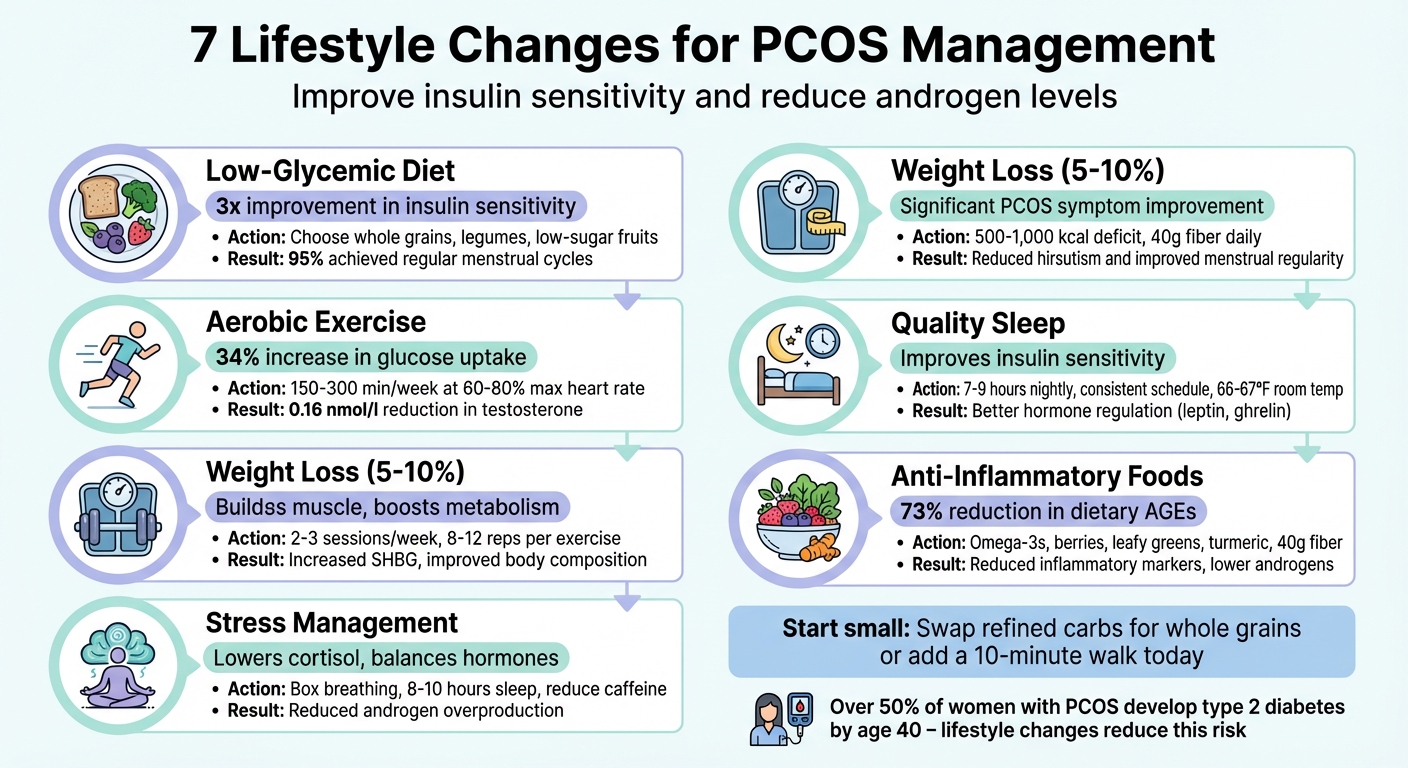
7 Lifestyle Changes for PCOS Management: Key Benefits and Actions
PCOS Symptoms You’re Ignoring & How Lifestyle Changes in 2025 Can Cure Them
sbb-itb-6dba428
1. Follow a Low-Glycemic Index Diet
Eating low-glycemic index (GI) foods helps stabilize blood sugar levels, avoiding the sharp spikes that can worsen PCOS symptoms like acne and excessive facial hair. This dietary approach to PCOS targets the underlying metabolic issues often seen in the condition.
Improves Insulin Sensitivity
Research led by Marsh et al. found that women with PCOS who followed a low-GI diet saw a threefold improvement in whole-body insulin sensitivity compared to those on a standard healthy diet. By lowering the glycemic load, insulin levels are reduced, which directly addresses the hyperinsulinemia responsible for many PCOS symptoms.
"Low glycemic index foods cause the body to release insulin slowly and steadily, making it easier for your body to use food as energy rather than store it as fat." - NYU Langone
Adding more fiber to your diet - around 35 grams daily - can also significantly lower fasting glucose levels and improve insulin resistance. To achieve this, choose whole grains like oats, quinoa, and barley instead of refined grains like white rice or flour. Incorporate legumes such as lentils and chickpeas, and opt for low-sugar fruits like berries, apples, and pears over fruit juices or high-sugar options.
Regulates Androgen Levels
Keeping insulin levels in check reduces the stimulation of ovarian cells that produce excess androgens, a hallmark of PCOS. Additionally, stable insulin levels boost the production of Sex-Hormone-Binding Globulin (SHBG) in the liver, which binds to testosterone and decreases the amount of free testosterone in the bloodstream. This helps balance androgen levels and supports hormonal health. Impressively, 95% of women following a low-GI diet achieved regular menstrual cycles, compared to 63% of those on a general healthy diet.
Promotes Sustainable Weight Management
Since high insulin levels encourage fat storage, maintaining stable insulin allows your body to use glucose for energy instead of storing it as abdominal fat. This makes weight management more achievable without drastic calorie cutting. Pairing carbohydrates with protein can further minimize glucose spikes. For example, choose steel-cut oats or bulgur over white bread or sugary cereals, and fill half your plate with non-starchy vegetables like leafy greens, broccoli, and cauliflower.
2. Do Regular Aerobic Exercise
Aerobic exercise plays a crucial role in managing PCOS by improving insulin sensitivity and addressing hyperandrogenism. Activities like brisk walking, cycling, or swimming at 60-80% of your maximum heart rate encourage muscles to absorb more glucose, which helps lower the body's insulin production.
Improves Insulin Sensitivity
Studies reveal that a 16-week moderate-intensity aerobic program can lead to a 34% increase in glucose uptake for women with PCOS. Regular aerobic activity also helps reduce visceral fat - the fat stored around organs - which is a major contributor to insulin resistance. Engaging in moderate-to-vigorous exercise consistently improves markers of insulin resistance, which in turn lowers androgen levels.
Regulates Androgen Levels
Enhanced insulin sensitivity from aerobic exercise interrupts the cycle where high insulin levels cause the ovaries to overproduce androgens. Research shows that exercise alone can lower total testosterone levels by 0.16 nmol/l and increase SHBG (sex hormone-binding globulin) by 3.42 nmol/l. Women have also reported reduced hirsutism, with an average improvement of 1.13 points on the Ferriman-Gallwey scale.
"Aerobic exercise significantly reduces total testosterone levels in women with PCOS... indicating that it may be used as a non-pharmacological method of managing hyperandrogenism." - Leman Atmaca et al., Doctoral School of Health Sciences, University of Pécs
Promotes Sustainable Weight Management
Improved insulin sensitivity through aerobic exercise also aids in weight management. For effective results, aim for 150-300 minutes of moderate-intensity aerobic exercise weekly, or 75-150 minutes of vigorous-intensity workouts. Vigorous activities, like interval walking (switching between fast and slow paces), dance classes, or swimming, are particularly effective for managing PCOS. They not only enhance insulin resistance but also improve cardiovascular fitness, making it easier to maintain a long-term routine.
3. Add Resistance Training
Resistance training is a powerful tool for managing PCOS, as it helps build lean muscle mass and addresses some of the condition's metabolic challenges. When combined with aerobic exercise, it improves insulin response and muscle metabolism, making it a key component of PCOS management. Exercises like weight lifting or resistance band workouts activate muscle contractions that encourage glucose uptake - this reduces the need for high insulin levels to process blood sugar. The outcome? Better insulin resistance management, a higher basal metabolic rate (BMR), and decreased visceral fat.
Improves Insulin Sensitivity
Resistance training directly benefits insulin sensitivity by stimulating muscle contractions, which leads to improved glucose regulation. Women with PCOS who engage in resistance training often experience lower fasting glucose levels compared to those who don't. Additionally, as lean muscle mass increases, the BMR rises, which helps reduce visceral fat - a significant factor in insulin resistance.
Regulates Androgen Levels
Better insulin sensitivity can also influence hormone levels. Resistance training has been linked to increased levels of Sex Hormone Binding Globulin (SHBG), a protein that binds to excess testosterone. This can help ease symptoms like acne and unwanted facial hair, which are common in PCOS.
Promotes Sustainable Weight Management
While aerobic exercise focuses on calorie burn, resistance training builds muscle and reduces fat, improving body composition even if the scale doesn't reflect major changes. For the best results, focus on compound movements like squats, lunges, deadlifts, and bench presses. Aim for 2–3 sessions per week, with 2–3 sets of 8–12 repetitions per exercise. Gradually increase the weight or resistance (a method known as progressive overload) to keep challenging your muscles. Instead of relying solely on the scale, track your progress through waist measurements or changes in body fat percentage .
"The myogenic or muscular adaptations induced by RT [resistance training] are often accompanied by a range of physiological (metabolic) and functional adaptations that may be clinically important among women with PCOS."
– Pamela J. Wright, College of Nursing, University of South Carolina
4. Manage Stress Effectively
Managing stress is just as important as maintaining a healthy diet and staying active when it comes to balancing insulin sensitivity and androgen levels in PCOS. Chronic stress increases cortisol levels, which can disrupt your endocrine system. For women with PCOS, this can create a cycle where stress worsens symptoms like acne and irregular periods. These hormonal changes highlight why stress management is a key part of addressing PCOS.
Regulates Androgen Levels
The adrenal glands produce some androgens, and prolonged stress can lead to an overproduction of testosterone. Techniques like yoga or mindfulness can help lower cortisol levels, which in turn may naturally regulate androgen production.
Improves Insulin Sensitivity
Stress management doesn’t just help with hormones - it also plays a role in insulin regulation. Elevated cortisol levels can interfere with how your body processes insulin, making insulin resistance worse [30, 31]. By lowering cortisol, you can support healthier insulin sensitivity.
Supports Overall Hormonal Balance
Stress impacts the Hypothalamic-Pituitary-Adrenal (HPA) axis, a key player in regulating reproductive hormones. When stress keeps your body stuck in "fight or flight" mode, essential functions like reproduction and digestion take a backseat. Activating the parasympathetic nervous system - the "rest and repair" mode - can help restore balance.
Simple practices like box breathing (inhale, hold, exhale, and hold for four counts each) for five minutes a day can lower cortisol levels. Other helpful strategies include sticking to a consistent sleep schedule of 8–10 hours per night, cutting back on caffeine, and eating magnesium-rich foods like leafy greens and pumpkin seeds.
"A balanced nervous system leads to balanced hormones, and when your body feels safe, it can thrive - not just survive." – Ruchika Behal, Functional Medicine Health & Nutrition Coach, Almond ObGyn
5. Lose 5-10% of Your Body Weight
Shedding even a small percentage of body weight can have a noticeable impact on managing PCOS symptoms. Losing just 5-10% of your body weight can help improve hormonal balance and metabolic health. This reduction also builds on the benefits of a healthy diet and regular exercise, further enhancing insulin sensitivity and hormone regulation.
Improves Insulin Sensitivity
Weight loss plays a direct role in tackling PCOS weight gain and insulin resistance, two of the condition's core challenges. Excess body fat can interfere with insulin's ability to transport glucose into cells. By losing 5-10% of your body weight, you decrease fat deposits that block insulin function, allowing it to work more effectively. This is particularly important, as insulin resistance affects around 75% of lean women and 95% of those who are overweight and have PCOS.
"Weight loss of just 5% can lead to a significant improvement in PCOS." - NHS
Regulates Androgen Levels
Weight loss also helps regulate hormone levels by increasing the production of sex hormone-binding globulin (SHBG), a protein that binds to testosterone in the bloodstream. Higher SHBG levels mean less "free" testosterone, which can alleviate symptoms like acne and excess facial hair. A 2016 study from the University of Pennsylvania tracked 132 women with PCOS over a 16-week period. Those who followed a diet with a 500-calorie deficit and engaged in 150 minutes of exercise per week experienced significant improvements in body hair concerns (P < .001) and menstrual regularity (P < .05) as their testosterone levels decreased.
Promotes Sustainable Weight Management
Achieving lasting results requires a balanced approach. Aim for a daily calorie deficit of 500-1,000 kcal and include around 40 grams of fiber from low-glycemic foods like beans, lentils, and whole grains. This approach can help you achieve a sustainable 5-10% weight loss over 6-12 months. Tracking your waist circumference can also be a helpful way to measure progress, as reducing abdominal fat is particularly important for improving PCOS symptoms.
6. Get Consistent, Quality Sleep
Getting enough quality sleep plays a crucial role in managing PCOS symptoms. Just like diet and exercise, sleep is essential for balancing hormones and improving insulin sensitivity. Women with PCOS are 5–10 times more likely to face sleep issues, such as obstructive sleep apnea (OSA), compared to those without PCOS. Poor sleep can disrupt hormones, worsening insulin resistance and leading to increased androgen production.
Improves Insulin Sensitivity
When you don’t get enough sleep, cortisol levels rise, which can worsen insulin resistance and stimulate excess testosterone production. Research shows that women with PCOS and OSA are significantly more insulin resistant, with a HOMA index of 5.7 compared to 3.5 in women without OSA. Interestingly, sleeping in a cooler room - around 66–67°F (19°C) - has been linked to activating brown fat, which may help improve insulin sensitivity.
"Insulin resistance was found to be a stronger predictor of sleep disordered breathing than was age, BMI, or circulating testosterone concentrations." - David A. Ehrmann, M.D., Professor of Medicine, University of Chicago
Regulates Androgen Levels
The timing and quality of your sleep can also influence testosterone levels. For example, going to bed late is associated with higher androgen levels and reduced lean body mass. This happens because sleep deprivation increases insulin, which can drive excess testosterone production. Studies have found that women with PCOS have poorer sleep efficiency - 87% compared to 93% in healthy individuals - and spend more time awake after initially falling asleep, averaging 64 minutes versus 38 minutes in those without PCOS.
Enhances Hormonal Balance
Sleep impacts more than just insulin and testosterone. It also regulates hormones like leptin (which controls satiety) and ghrelin (which stimulates hunger). Poor sleep disrupts these hormones, making appetite control and weight management more challenging. Aim for 7–9 hours of sleep each night and stick to a consistent schedule to support your body’s natural rhythm. To improve sleep quality, try turning off screens 30–60 minutes before bed and taking a warm shower to help your body relax. If you frequently feel fatigued or snore, consider discussing OSA screening with your doctor - research shows that around 56% of women with PCOS have OSA, compared to only 19% in those without PCOS. Prioritizing sleep is a key part of a well-rounded approach to managing PCOS symptoms.
7. Eat Anti-Inflammatory Foods
Chronic low-grade inflammation is a key driver behind many PCOS symptoms. Elevated inflammatory markers, like C-reactive protein (CRP) and tumor necrosis factor-alpha (TNF-α), can push the ovaries to produce excess androgens while worsening insulin resistance. Choosing foods that fight inflammation can help restore hormonal balance and work alongside other dietary changes to manage PCOS.
Improves Insulin Sensitivity
Anti-inflammatory foods help by reducing pro-inflammatory cytokines that disrupt insulin signaling. Better insulin function means your body needs less insulin to regulate blood sugar, which can also lower testosterone levels and androgen excess. Fatty fish, such as salmon and mackerel, provide omega-3s that combat inflammation. For plant-based eaters, a tablespoon of ground flaxseeds or chia seeds daily offers similar benefits. Studies show that a low-fat, plant-based diet can cut dietary Advanced Glycation End Products (AGEs) by 73%.
Regulates Androgen Levels
By reducing inflammation, the body naturally decreases ovarian androgen production. Improved insulin sensitivity also raises sex hormone-binding globulin (SHBG), which helps regulate free testosterone levels. Spices like turmeric, ginger, and green cardamom have been found to lower inflammatory markers such as TNF-α and interleukin-6. Antioxidant-packed foods - like berries, leafy greens, and broccoli - help reduce oxidative stress, which can worsen hyperandrogenism.
Promotes Sustainable Weight Management
Anti-inflammatory foods not only support hormonal health but also aid in metabolism and weight management. High fiber intake, particularly from fruits, vegetables, and legumes, is linked to weight loss in women with PCOS. Experts recommend aiming for 40 grams of fiber daily. When combined with anti-inflammatory eating, a high-fiber diet helps address metabolic challenges tied to PCOS.
"Embrace a plant-based diet abundant in fiber and other hormone-regulating compounds, such as soy, to effectively ease numerous painful symptoms and regain control over hormone balance." - Stephanie McBurnett, RDN, LDN, Physicians Committee
Supports Overall Hormonal Balance
Reducing inflammation and improving insulin sensitivity also help regulate key hormones like luteinizing hormone (LH) and follicle-stimulating hormone (FSH), which are often imbalanced in PCOS. Swapping saturated fats (like butter) for unsaturated fats from sources like avocados, nuts, seeds, and olive oil supports hormone production while reducing inflammation. Cutting out refined carbs, sugary snacks, and processed meats can further stabilize hormone levels. Research also highlights that replacing 35% of animal protein with soy protein may lower testosterone and fasting blood sugar levels in women with PCOS.
Oana Health: Telehealth Support for PCOS

While lifestyle changes are the cornerstone of managing PCOS, they often need to be paired with medical treatments to address symptoms that diet and exercise alone can't fully resolve. Oana Health is a telehealth platform that connects users with licensed physicians who create customized treatment plans for issues like insulin resistance, weight management, hormonal acne, and hair loss.
Telehealth services like Oana Health complement lifestyle adjustments by enhancing insulin sensitivity and hormonal balance. For instance, combining a low-glycemic index diet and regular exercise with targeted prescriptions can amplify results.
If severe acne is a concern, Topical Spironolactone ($43 per month) directly targets androgen-related skin issues. For scalp hair thinning that dietary changes haven’t resolved, Oral Minoxidil ($25 per month) offers another focused solution. These treatments are designed to integrate seamlessly with your ongoing lifestyle efforts.
For metabolic support, Oana provides GLP-1 treatments like Oral Semaglutide ($199 per month), which helps manage insulin resistance and supports weight loss. This is particularly vital, as insulin resistance affects about 75% of lean women and 95% of overweight women with PCOS. All medications include free shipping and are managed entirely online, from consultations to follow-ups.
Oana Health also emphasizes regular telehealth check-ups, allowing physicians to adjust treatment plans as your hormonal and metabolic health changes over time. By combining medical treatments with lifestyle changes, this approach aims to better manage PCOS symptoms while reducing the risk of long-term complications like type 2 diabetes, which affects over 50% of women with PCOS by age 40.
Conclusion
Managing PCOS effectively means focusing on two key areas: improving insulin resistance and reducing excess androgen production. The seven strategies - adopting a low-glycemic diet, combining aerobic and resistance exercise, achieving modest weight loss, following an anti-inflammatory diet, reducing stress, and prioritizing quality sleep - work together to enhance insulin sensitivity and support hormonal balance. Together, these changes create a strong foundation for long-term improvement.
"Lifestyle modifications not only improve the biochemical, hormonal, and anthropometric parameters in PCOS patients but also reduce the long-term risks of metabolic and cardiovascular diseases." - Nutrients Journal
Success often comes from starting small rather than trying to change everything at once. For instance, swap white bread for whole-grain options this week or add a 10-minute walk to your routine next week. These gradual, consistent steps are often more manageable - and more effective - than drastic overhauls.
For many women, sticking to these changes can be challenging without support. That’s where expert guidance can make a difference. Oana Health provides personalized telehealth consultations and prescription treatments to help women navigate the unique hurdles of PCOS. This comprehensive approach addresses both the metabolic and hormonal aspects of PCOS while also lowering the risk of type 2 diabetes - a condition that affects over 50% of women with PCOS by age 40.
Whether your focus is on improving fertility, managing symptoms like acne or hair loss, or protecting your metabolic health, these seven lifestyle adjustments provide a strong starting point. Better hormonal balance can also lead to healthier skin and hair, tackling some of the most common PCOS concerns. Begin with small, manageable changes, build momentum at your own pace, and seek professional guidance to create a plan tailored to your specific needs and goals.
FAQs
How do I start a low-GI diet without feeling restricted?
Starting a low-GI diet doesn't have to be overwhelming. Begin by incorporating foods you already enjoy, such as non-starchy vegetables, berries, whole grains, lean proteins, and healthy fats. Small, manageable swaps can make a big difference - like trading white bread for whole-grain options or adding more fiber-rich foods to your meals.
The key is to focus on variety and balance. By including a mix of flavors and textures, you’ll feel satisfied without feeling restricted. Also, pair foods thoughtfully to help maintain fullness and keep your meals enjoyable.
What’s the best weekly workout plan for PCOS beginners?
For those new to managing PCOS through exercise, the key is to stay consistent and mix things up. A well-rounded routine might include 2-3 strength training sessions (like lifting weights or bodyweight exercises), 2-3 moderate cardio workouts (such as walking or cycling), and 1-2 yoga or Pilates sessions to help with stress relief. Begin with sessions lasting about 15-20 minutes, and gradually increase the duration as your fitness level improves. Pick activities you genuinely enjoy and pay attention to how your body responds so you can fine-tune your plan over time.
When should I consider prescription treatment for PCOS symptoms?
If lifestyle adjustments aren’t enough to manage your PCOS symptoms - like irregular periods, excessive hair growth, or insulin resistance - it might be time to explore prescription treatments. A healthcare provider can evaluate your situation and help decide if these options are a good fit for you.