
PCOS and Mental Health: Research on Social Impacts
Polycystic Ovary Syndrome (PCOS) affects more than just physical health - it significantly impacts mental well-being and social relationships. Women with PCOS are:
- 3.78x more likely to experience depression and 5.62x higher risk of anxiety.
- At a 7x greater risk of attempting suicide compared to those without PCOS.
Key challenges include:
- Hormonal imbalances (e.g., elevated testosterone, insulin resistance) linked to mood disorders.
- Physical symptoms like acne, weight gain, and hair growth, leading to low self-esteem and body dissatisfaction.
- Social isolation and stigma, with 70% of women avoiding activities due to visible symptoms.
- Fertility struggles, affecting nearly 50% of women, often creating emotional strain in relationships.
Despite these issues, mental health concerns are often overlooked during PCOS care. Integrated approaches combining medical treatments, mental health support (e.g., therapy, mindfulness), and lifestyle changes are essential. Telehealth platforms, like Oana Health, address these gaps by offering accessible, tailored care for both physical and emotional symptoms.
PCOS is not just a medical issue - it’s a deeply personal struggle that requires addressing mental, physical, and social factors together.
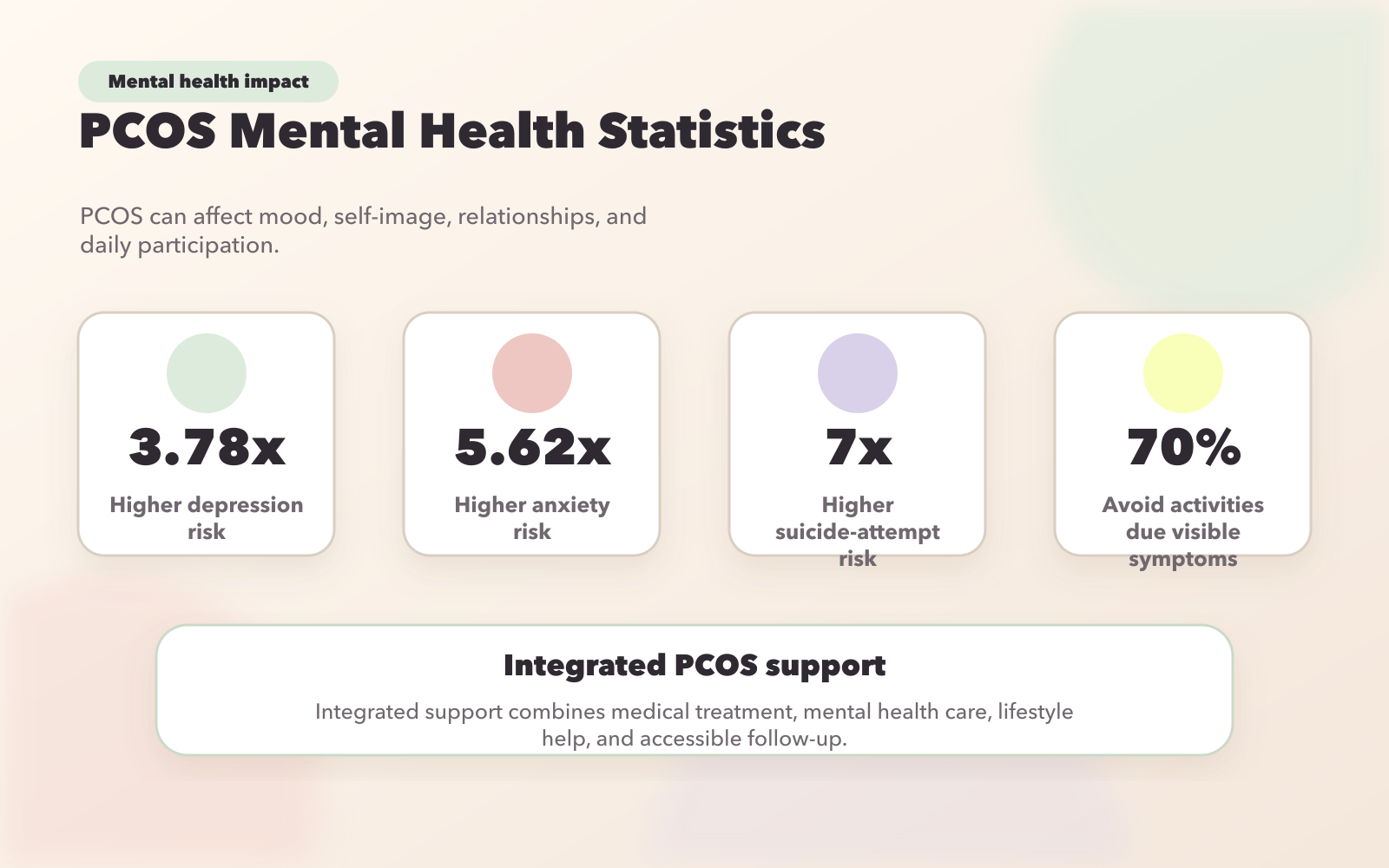
PCOS Mental Health Statistics: Depression, Anxiety, and Social Impact Data
Common Mental Health Problems in Women with PCOS
Depression and Anxiety
Depression and anxiety are alarmingly frequent among women with PCOS. Studies show that 34.8% of women with PCOS are diagnosed with depressive disorders, while 16.9% are diagnosed with anxiety disorders. When looking beyond formal diagnoses, the numbers are even more striking - 75% report elevated anxiety symptoms, and 57.6% experience signs of depression based on symptom scales.
What’s driving this? Hormonal and metabolic imbalances are key culprits. Disruptions in estrogen levels, which directly influence serotonin and dopamine systems, play a major role. Add to that hyperandrogenism, insulin resistance, gut dysbiosis, and chronic inflammation, and you have a perfect storm for mood instability.
These challenges aren’t just biochemical. Emotional stressors like infertility struggles and physical changes caused by PCOS make it harder for women to adopt healthy habits like better eating and regular exercise. To make matters worse, women with depression and anxiety face a higher risk of Metabolic Syndrome, with an incidence rate of 75.3 cases per 100 person-years, compared to 47.6 cases in those without mental health issues. This combination of hormonal chaos and psychological strain often leads to struggles with self-image and emotional well-being.
Body Image and Self-Esteem Problems
The physical symptoms of PCOS - like hirsutism, acne, hair thinning, and weight gain - take a heavy toll on mental health. Research shows that 84.5% of women with PCOS are dissatisfied with their overall physical appearance, while 83.8% are unhappy with specific body areas. This dissatisfaction isn’t just superficial; it deeply affects self-esteem.
Nearly half of women with PCOS report low self-esteem, and 67.5% experience intense anxiety about their weight, often leading to restrictive dieting and unhealthy eating habits. For adolescents with PCOS, self-esteem issues are especially impactful, mediating 37.07% of the link between body dissatisfaction and depression.
Disordered eating patterns, including binge eating and bulimia, are also more common in this group. Hormonal disruptions that interfere with hunger and satiety signals likely contribute to these behaviors. It’s a vicious cycle: body image struggles fuel disordered eating, which further damages self-esteem, creating a feedback loop that’s tough to break.
Social Isolation and Loneliness
The psychological and physical challenges of PCOS extend into social life, often leading to isolation. Stigma surrounding visible symptoms like hirsutism - which affects 70% of women with PCOS - can drive social anxiety and withdrawal. Many women avoid social events, intimate relationships, or even routine activities like going to the gym or swimming, fearing judgment or unwanted attention.
But this isn’t just about avoiding awkward situations. Many women with PCOS report feeling fundamentally different or flawed. For some, the perceived loss of femininity creates barriers in forming or maintaining relationships. Hurtful comments from close partners can deepen these feelings, further eroding their sense of self-worth. This social withdrawal often worsens depression and anxiety, creating a cycle that’s hard to escape.
The combination of emotional, physical, and social challenges makes PCOS not just a medical condition but a deeply personal and psychological battle for many women. Each aspect feeds into the next, amplifying the overall burden.
sbb-itb-6dba428
How PCOS Affects Social Life and Relationships
Fertility Issues and Relationship Strain
PCOS doesn’t just affect a woman’s health - it often creates challenges in her closest relationships too. Nearly half of women with PCOS (48.6%) report fertility struggles, defined as trying unsuccessfully to conceive for over a year. This can lead to feelings of guilt and a sense of failing their partners, adding emotional weight to the relationship. Even in strong partnerships, the stress of trying to conceive can take its toll.
These fertility struggles can also impact intimacy. Many women experience reduced sexual desire and satisfaction, which can sometimes lead to deeper relationship issues or even breakups. In cultures where motherhood is closely tied to a woman’s identity, infertility can bring feelings of shame and intense external pressure - not just from partners but from extended family as well. For younger women and teens, there’s often anxiety about being perceived as "unmarriageable." On top of that, hormonal imbalances like high testosterone levels can be difficult to talk about, leading to ongoing communication challenges within relationships.
Stigma and Social Pressures
The impact of PCOS isn’t limited to romantic relationships - it often extends into broader social interactions. Many women with PCOS internalize stigma, especially in societies where femininity is tied to rigid beauty standards and motherhood. This can make them feel fundamentally flawed. Since PCOS is rarely discussed openly, its symptoms often remain hidden, leaving women feeling isolated and unsupported.
Delays in diagnosis only add to this isolation. On average, women see two or three doctors over a span of three years before getting an accurate PCOS diagnosis. During this time, their symptoms are often dismissed as "normal", which can make them feel misunderstood. In some cultures, infertility is even viewed as divine punishment, further marginalizing affected women within their communities.
The financial and emotional costs of PCOS are staggering. In the U.S. alone, mental health disorders linked to PCOS cost over $6 billion annually. Depression affects about 30% of women with PCOS - three times the rate in the general population - while anxiety impacts up to 40%, compared to 10–15% of women without the condition. Women with PCOS also face a six-fold higher risk of anxiety disorders. These challenges, compounded by social stigma and gaps in healthcare support, highlight how deeply PCOS can affect every aspect of life. Addressing these issues requires a comprehensive approach, as explored in the next section.
Treatment Approaches for Mental Health in PCOS
Combining Medical and Mental Health Care
Addressing both physical and mental health is essential when managing PCOS. Women with PCOS face a 40% higher risk of attempted suicide, highlighting the need for integrated care.
Effective treatment often combines lifestyle changes (like diet and exercise), medical interventions (such as combined oral contraceptives, metformin, and anti-androgens like spironolactone), and psychological support. Lifestyle adjustments not only aid with weight management but also improve mood and overall quality of life. Additionally, targeting physical symptoms like hirsutism and acne can directly reduce emotional distress, helping to break the cycle of psychological strain. This approach aligns with the interconnected nature of PCOS's physical and psychological impacts.
Psychological therapies, including 8–12-week programs like cognitive behavioral therapy (CBT) or mindfulness-based stress reduction (MBSR), have shown success in reducing symptoms of depression and anxiety. Supplements with anti-inflammatory properties, such as Vitamin D and Omega-3, can also play a role in alleviating mental health challenges.
Routine mental health screenings are critical, both at diagnosis and during follow-ups. Tools like the Beck Depression Inventory and the Polycystic Ovary Syndrome Questionnaire (PCOSQ) can help identify issues early. Given that around 70% of women with PCOS experience insulin resistance - which contributes to inflammation linked to depression - addressing metabolic health is a key part of improving mental well-being. By combining these strategies, care can be tailored to meet individual needs and diverse cultural contexts.
Culturally Sensitive PCOS Treatment
The psychological toll of PCOS is deeply influenced by cultural norms and expectations. Emotional distress varies significantly, shaped by views on femininity, appearance, and motherhood. For instance, in Iran, hirsutism has a particularly strong impact on quality of life due to local beauty standards and darker hair characteristics. On the other hand, in Western countries like the U.S. and UK, obesity is often the primary concern. Interestingly, in some South Asian cultures, being overweight may be associated with wealth and prosperity, reducing its perceived impact.
"The meaning and intensity of this distress (e.g., depression, anxiety, low self-worth) are shaped by sociocultural expectations of femininity, appearance, and motherhood."
- Archives of Women's Mental Health
In cultures where motherhood is central to a woman's identity, PCOS-related infertility can cause profound feelings of hopelessness. Racial disparities also play a role; for example, Black and Hispanic women in the U.S. are less likely to use infertility services than White women, and they often report lower emotional well-being and quality of life related to infertility.
To provide effective care, it’s crucial to understand which symptoms cause the most distress for each patient. For some, cosmetic solutions like laser hair removal can reduce feelings of shame and improve social interactions. For others, tailored fertility counseling or metabolic health management might be more appropriate.
How Telehealth Services Can Help
Telehealth platforms are transforming PCOS care, addressing gaps in support and guidance. More than 50% of women report feeling unsupported and lacking long-term care after their initial diagnosis. Digital services offer a private, stigma-free way to access mental health and gynecological care.
In traditional clinical settings, mental health screenings are often overlooked due to limited time and a lack of provider awareness about the psychological effects of PCOS. Telehealth solutions can integrate mental health assessments using tools like the Hospital Anxiety and Depression Scale (HADS), ensuring timely identification of concerns.
Platforms like Oana Health exemplify this approach by combining medical and mental health treatments. They offer personalized solutions for PCOS-related issues, including insulin resistance (with Oral Metformin ER), unwanted hair growth (with Spironolactone and Eflornithine), hair loss (with Oral Minoxidil), and mental health support (with Bupropion XL). All treatments are prescribed by licensed professionals and delivered with free shipping. This comprehensive model addresses both physical and mental symptoms, breaking the cycle where one exacerbates the other.
On average, women with PCOS wait 2 years for a definitive diagnosis, often consulting multiple doctors in the process. Telehealth connects patients with specialists more quickly, reducing delays and preventing worsening mental health symptoms. By ensuring timely, expert care, telehealth completes the integrated care model for PCOS.
Addressing Psychosocial Impacts of Polycystic Ovary Syndrome in Women and Gender Diverse Individuals
Conclusion: Connecting Research to Patient Care
Polycystic ovary syndrome (PCOS) impacts nearly every part of a woman’s life, from mental health to social relationships. Women with PCOS are at a fourfold higher risk of moderate to severe depression and are seven times more likely to attempt suicide compared to those without the condition. These alarming statistics highlight the need for care that goes beyond physical symptoms to include mental and emotional well-being.
Experts emphasize this comprehensive approach:
"Management of polycystic ovary syndrome must include assessment and treatment of mental health symptoms" - Fertility and Sterility
To provide effective care, healthcare providers must move away from treating symptoms in isolation. Instead, they should adopt a biopsychosocial model that considers the interplay between physical health, mental health, and social factors. Mental health challenges like depression and anxiety not only cause emotional distress but also increase the likelihood of developing Metabolic Syndrome by 1.45 times. These conditions can make it harder for women to sustain the lifestyle adjustments needed to manage PCOS effectively. Breaking this cycle requires a combination of medical interventions, mental health support, and individualized care that considers cultural and personal contexts.
Telehealth is emerging as a powerful tool to deliver this kind of integrated care. By reducing diagnostic delays and offering access to specialists, telehealth platforms make it easier to address both physical and mental health. They also provide routine mental health screenings, which are often overlooked in traditional healthcare settings. For example, platforms like Oana Health offer personalized treatments that tackle issues like insulin resistance, hair loss, and unwanted hair growth, and mental health - all from the comfort of a patient’s home.
With these advancements, women with PCOS have more options than ever to manage their condition holistically. No one should have to face PCOS alone. Whether through telehealth, mental health resources, or support groups, help is available. Research shows that when care focuses on the whole person, it improves outcomes in every area of life.
FAQs
Why does PCOS raise depression and anxiety risk?
PCOS can contribute to a higher likelihood of depression and anxiety. This stems from a mix of hormonal imbalances, physical symptoms like weight gain and acne, challenges with fertility, struggles with body image, and increased psychological stress. Together, these issues can deeply affect the mental well-being of many women dealing with this condition.
What are signs my PCOS is affecting my mental health?
PCOS doesn’t just bring physical challenges - it can take a toll on mental health too. Women with PCOS often experience higher levels of anxiety and depression, making emotional well-being just as important as managing physical symptoms.
The physical effects of PCOS, like weight gain, acne, and unwanted hair growth, can chip away at self-confidence, leading to emotional struggles. Hormonal shifts can further complicate things, sometimes intensifying mood swings or feelings of stress. For many, concerns about fertility add another layer of emotional pressure, which can result in social withdrawal or feelings of isolation.
The good news? Recognizing these signs early and reaching out for help - whether through therapy, support groups, or medical care - can make a big difference in managing both the mental and physical aspects of PCOS.
How can telehealth support PCOS mental health care?
Telehealth makes mental health care more accessible for women dealing with PCOS by breaking down common obstacles like long distances, stigma, and scheduling difficulties. It provides tailored, evidence-based solutions for both physical and emotional symptoms, such as therapy, medication management, and guidance on lifestyle changes. Receiving care from home encourages early intervention, consistent support, and improved treatment adherence, helping women navigate anxiety, depression, and other mental health challenges tied to PCOS.