
PCOS and Sleep Apnea: Are They Linked?
Polycystic Ovary Syndrome (PCOS) and Obstructive Sleep Apnea (OSA) are more connected than many realize. Women with PCOS are 5 to 10 times more likely to develop OSA compared to those without PCOS. Studies reveal that 20.8% to 38.5% of women with PCOS also have OSA, even among those with a healthy weight. Shared factors like insulin resistance, obesity, and hormonal imbalances play a central role in this overlap.
Key points:
- PCOS increases the risk of OSA due to high testosterone levels, low progesterone, and airway instability.
- OSA worsens metabolic issues like insulin resistance, raising risks for diabetes and heart disease.
- Symptoms of both conditions - fatigue, mood changes, and weight gain - often overlap, making diagnosis challenging.
Treatment tips:
- Weight loss (even 5–10%) improves symptoms for both conditions.
- CPAP therapy helps with OSA and improves insulin sensitivity.
- Hormonal treatments, like birth control, regulate PCOS symptoms and may stabilize breathing during sleep.
- Medications like Metformin target insulin resistance, a key driver of both conditions.
Addressing PCOS and OSA together improves sleep, metabolism, and overall health. Regular screening for OSA in women with PCOS is recommended, even for those with a normal BMI.
PCOS and Sleep Apnea Connection: Risk Factors and Treatment Outcomes
1. PCOS (Polycystic Ovary Syndrome)
Symptoms and Overlaps
PCOS comes with a range of symptoms that can impact different parts of the body. Some of the most common signs include irregular or missed periods, excessive facial hair (hirsutism), severe acne, and thinning hair on the scalp. Many women with PCOS also struggle with infertility due to irregular ovulation.
Things get more complicated when PCOS overlaps with obstructive sleep apnea (OSA). Women with PCOS are more likely to experience excessive daytime sleepiness, but pinpointing the root cause of fatigue can be tricky. Is it due to hormonal imbalances, poor sleep, or both? To make matters more complex, women with OSA often don't show typical signs like witnessed apneas. Instead, they may face issues like insomnia, depression, or anxiety - symptoms that are also common in PCOS. Understanding these overlaps is key to managing both conditions effectively.
Metabolic and Hormonal Impacts
The shared symptoms of PCOS and OSA stem from deeper hormonal and metabolic disruptions. Insulin resistance plays a major role here. Around 30–40% of women with PCOS have impaired glucose tolerance, and up to 10% go on to develop type 2 diabetes.
"Insulin resistance was found to be a stronger predictor of sleep disordered breathing than was age, BMI, or circulating testosterone concentrations." – David A. Ehrmann, M.D., Professor of Medicine, University of Chicago
High testosterone levels in PCOS can raise the "apneic threshold", making breathing during sleep more unstable. These elevated androgens also contribute to soft tissue buildup in the throat, narrowing the airway. On top of that, low progesterone levels - caused by chronic anovulation - remove a natural respiratory stimulant that helps keep the upper airway muscles active during sleep.
A 2020 study conducted at University Hospital Coventry in the UK found that 38.5% of 39 women with PCOS also had OSA. Even among lean women (BMI under 30 kg/m²), 21.4% were affected by sleep apnea. Those with both conditions had higher LDL cholesterol levels (3.1 vs. 2.4 mmol/l) and increased inflammatory markers.
Treatment Options
Tackling the metabolic and hormonal challenges of PCOS requires a comprehensive approach. Lifestyle changes like weight loss through diet and exercise can reduce insulin resistance and decrease airway fat deposits, leading to better sleep quality. A diet rich in fruits, vegetables, and lean proteins helps stabilize blood sugar levels and balance hormones.
Hormonal therapies, such as birth control pills, can help regulate menstrual cycles and lower androgen levels. Since estrogen and progesterone may protect against OSA, these treatments could also improve breathing during sleep. For insulin resistance, medications like metformin are effective in lowering blood sugar and addressing the metabolic factors linked to sleep disturbances. Platforms like Oana Health provide personalized treatment plans, including metformin starting at $22/month, to target both hormonal and metabolic issues.
Lifestyle adjustments are also critical. Quitting smoking and cutting back on alcohol can reduce airway inflammation and improve overall sleep. Combining these changes with tailored medical treatments ensures the best outcomes for managing PCOS and its related challenges.
2. Obstructive Sleep Apnea (OSA)
Symptoms and Overlaps
Obstructive sleep apnea (OSA) is a condition where the upper airway repeatedly collapses during sleep, causing breathing to stop temporarily. Common signs include loud snoring, pauses in breathing that others may notice, and waking up gasping for air. These disruptions fragment sleep and lower oxygen levels in the blood, often leaving people feeling drained during the day.
For women, the symptoms of OSA can look quite different from the "classic" signs seen in men. Instead of loud snoring, women are more likely to report issues like insomnia, depression, and chronic fatigue. This overlap in symptoms between OSA and PCOS - combined with shared risk factors like obesity, insulin resistance, and high blood pressure - can make diagnosis tricky. The less typical presentation in women often leads to delays in identifying the condition, as healthcare providers may not immediately connect the dots.
The link between PCOS and OSA isn’t just about overlapping symptoms. Research shows that women with PCOS are approximately 30 times more likely to develop sleep-disordered breathing compared to other premenopausal women. A recent study revealed that 20.8% of women with PCOS have OSA, with overall prevalence estimates ranging from 32% to 35%. Even after adjusting for body weight, women with PCOS have more than double the risk of developing OSA, with an adjusted hazard ratio of 2.26.
Metabolic and Hormonal Impacts
OSA doesn’t just disturb sleep - it adds to metabolic stress. The repeated drops in oxygen levels activate the sympathetic nervous system, leading to systemic inflammation and disrupting how the body processes sugars and fats. This creates a vicious cycle that worsens metabolic health.
"Insulin resistance is a stronger risk factor than is body mass index or testosterone for SDB [sleep-disordered breathing] in PCOS women." – Vgontzas AN, Professor of Psychiatry
Hormonal imbalances in PCOS further complicate things. High testosterone levels raise the threshold for apneas, while low progesterone - common due to irregular ovulation - weakens the natural respiratory drive that keeps airways open. Women with both PCOS and OSA often show worse metabolic profiles. For example, their HOMA index (a measure of insulin resistance) averages 5.7 compared to 3.5 in those with PCOS alone. Similarly, impaired glucose tolerance is seen in 55% of women with both conditions versus 26% in those without OSA.
Treatment Options
The go-to treatment for OSA is Continuous Positive Airway Pressure (CPAP). This device delivers pressurized air through a mask during sleep, keeping the airway open. For women with PCOS, CPAP doesn’t just improve sleep - it also offers metabolic benefits. In one study, young obese women with PCOS saw a 2.3 mm Hg drop in daytime diastolic blood pressure and a 44% reduction in cardiac sympathetic activity after just 8 weeks of CPAP use.
Other strategies can also help. Adjusting sleep positions, like sleeping on your side or using a slightly elevated pillow, can improve airflow. Weight loss, while challenging for those with PCOS, is another key factor. A diet focusing on lean proteins, healthy fats, and whole grains can reduce insulin resistance and fat deposits around the airway.
Hormonal birth control may serve a dual purpose by managing PCOS symptoms and supporting airway stability. Progesterone, a component of some contraceptives, acts as a respiratory stimulant. Lifestyle changes, such as quitting smoking and cutting back on alcohol - both of which can increase airway inflammation - are equally important. Considering that women with PCOS are 5 to 10 times more likely to develop OSA than obese women without PCOS, regular screening with tools like the Epworth Sleepiness Scale is highly recommended.
Can't Sleep & Your Periods Are Off? PCOS & Sleep Apnea Explained!
sbb-itb-6dba428
How PCOS and OSA Affect Metabolism and Hormones
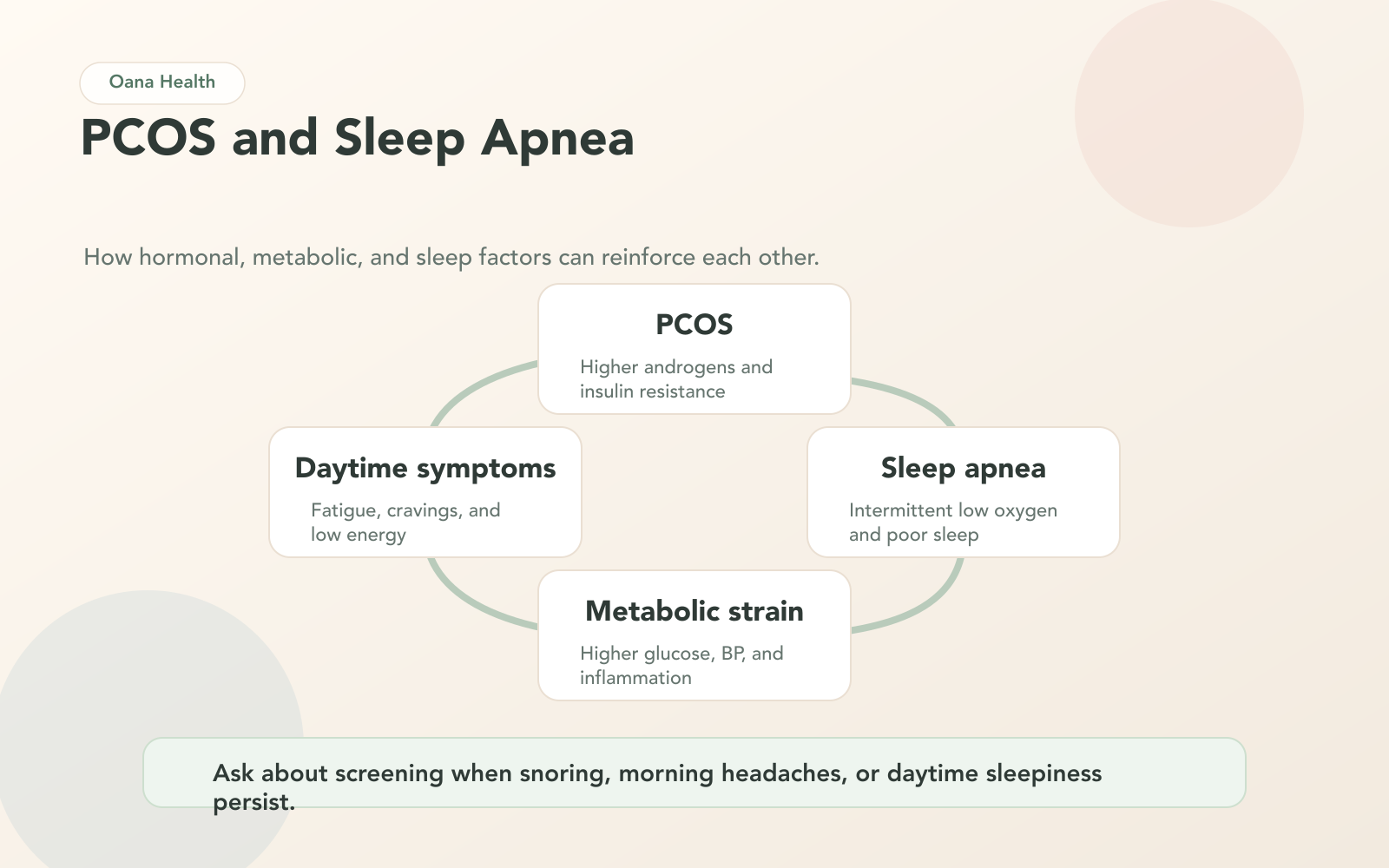
When Polycystic Ovary Syndrome (PCOS) and Obstructive Sleep Apnea (OSA) occur together, they create a feedback loop that worsens both metabolic and hormonal issues. Each condition independently contributes to insulin resistance - PCOS through excess androgens and OSA via intermittent oxygen deprivation and heightened sympathetic activity. The combination of these conditions results in a HOMA index of 5.7, nearly double the 3.5 seen in women with PCOS alone. Impaired glucose tolerance also jumps significantly, from 26% in women with only PCOS to 55% in those with both conditions. Blood pressure sees a similar rise, with systolic levels averaging 8.85 mmHg higher and diastolic levels 4.45 mmHg higher.
"Insulin resistance was found to be a stronger predictor of sleep disordered breathing than was age, BMI, or circulating testosterone concentrations." – David A. Ehrmann, M.D., Professor of Medicine
The hormonal disruptions caused by these conditions further fuel the cycle. Elevated testosterone levels in PCOS increase the apneic threshold, while low progesterone - often linked to irregular ovulation - removes a natural respiratory stimulant. OSA exacerbates these hormonal imbalances by lowering levels of Sex Hormone-Binding Globulin (SHBG), which raises free testosterone and worsens hyperandrogenism.
| Impact Category | PCOS Impact | OSA Impact | Combined Impact |
|---|---|---|---|
| Insulin Resistance | Caused by androgen excess and intrinsic issues | Triggered by intermittent hypoxia and sympathetic overdrive | HOMA index nearly doubles to 5.7 |
| Glucose Regulation | 30–40% experience impaired glucose tolerance | Independent risk for type 2 diabetes | 55% develop impaired glucose tolerance |
| Blood Pressure | Linked to subclinical atherosclerosis and dyslipidemia | Hypertension due to sympathetic overactivity | Systolic rises by 8.85 mmHg; diastolic by 4.45 mmHg |
| Hormonal Profile | High testosterone, low progesterone | SHBG reduction increases free testosterone | Worsened hyperandrogenism |
| Body Composition | Central fat accumulation | Visceral fat tied to airway obstruction | BMI increases by an average of 7.10 kg/m² |
The cardiovascular risks associated with these conditions are also magnified. Both PCOS and OSA independently harm heart health, but their combination significantly worsens lipid profiles by raising triglycerides and LDL cholesterol while reducing HDL cholesterol. These overlapping effects accelerate the risk of severe outcomes, including type 2 diabetes and cardiovascular disease. Addressing these interconnected disruptions requires coordinated treatment approaches, which will be discussed in the following section.
Treatment Options for PCOS, OSA, and Both Conditions Together
Addressing PCOS (Polycystic Ovary Syndrome) and OSA (Obstructive Sleep Apnea) requires a dual-focus approach since these conditions often share underlying metabolic and respiratory issues. Treatments aimed at one condition frequently benefit the other, making a combined strategy highly effective.
Weight loss is one of the most impactful steps for managing both PCOS and OSA. Losing just 5–10% of body weight can reduce airway fat, improve insulin sensitivity, and help restore hormone balance. A nutrient-rich diet that targets insulin resistance, paired with a workout routine combining cardiovascular and strength training, can further alleviate symptoms. This approach not only reduces visceral fat but may also improve sleep quality, leading to deeper, more restorative rest.
For those with both PCOS and OSA, CPAP therapy (Continuous Positive Airway Pressure) offers metabolic benefits beyond keeping the airways open. A clinical study led by Dr. Esra Tasali showed that just 8 weeks of home CPAP treatment improved insulin sensitivity (P = 0.013), lowered norepinephrine levels (P = 0.002), and reduced daytime diastolic blood pressure by an average of 2.3 mm Hg. Additionally, it shifted sympathetic activity toward a healthier balance by 44% - and these benefits increased with longer nightly CPAP use. This highlights the importance of integrating sleep-focused treatments with broader metabolic care.
Hormonal therapies also play a key role in managing these conditions. Oral contraceptives are effective for regulating menstrual cycles and reducing hyperandrogenism in PCOS, and they may even help with sleep-disordered breathing. Progesterone-based treatments, in particular, not only address cycle irregularities but can also enhance respiratory drive and strengthen upper airway muscles. For women dealing with insulin resistance - a central issue in both PCOS and OSA - medications like Metformin can help lower insulin levels and support weight loss. Platforms such as Oana Health provide telehealth services for personalized PCOS treatment plans, offering prescriptions like Metformin, Spironolactone, and GLP-1 therapies delivered directly to patients.
Lifestyle adjustments are equally important for long-term success. Alongside medical treatments, focus on maintaining a consistent nine-hour sleep schedule, reducing screen time before bed, sleeping on your side, and avoiding smoking or nighttime alcohol consumption to reduce airway inflammation. Regular screening for OSA symptoms using tools like the Berlin Questionnaire or Epworth Sleepiness Scale can lead to early detection and coordinated treatment, helping to lower the risk of cardiovascular and diabetic complications over time.
Conclusion
The connection between PCOS and obstructive sleep apnea (OSA) is striking. Women with PCOS are at a much higher risk of developing OSA, with studies showing that about 20.8% to 38.5% of them experience both conditions simultaneously. OSA, on its own, worsens metabolic issues by increasing insulin resistance, inflammation, and cardiovascular risks.
"Considering the increased risk for long-term cardiometabolic disorders associated with both PCOS and OSA, it is important to diagnose and treat OSA in patients with PCOS."
- Nafiye Helvaci, Department of Internal Medicine, Hacettepe University
Early detection is key to preventing these complications. Screening for OSA in all PCOS patients - not just those with higher body weight - should become routine. Tools like the Berlin Questionnaire or Epworth Sleepiness Scale can identify OSA risk during regular checkups, helping to catch it before it leads to conditions like type 2 diabetes or heart disease. Patients who test positive should undergo overnight polysomnography to confirm the diagnosis and start treatment as soon as possible.
Effective treatment requires a combined approach. CPAP therapy, paired with insulin-sensitizing medications like Metformin, has been shown to address both respiratory and metabolic issues in patients with PCOS and OSA. In fact, research indicates that just eight weeks of CPAP use can significantly enhance insulin sensitivity. For customized PCOS care - ranging from prescription treatments like Metformin to GLP-1 medications - telehealth services such as Oana Health offer convenient solutions, including home delivery of medications.
Tackling the overlapping hormonal and metabolic challenges of PCOS and OSA is crucial for improving patient well-being. A multidisciplinary approach, involving sleep specialists, endocrinologists, and primary care providers, can enhance sleep quality, protect long-term metabolic health, and ultimately improve quality of life.
FAQs
Should all women with PCOS get screened for sleep apnea?
Women with PCOS are at a higher risk of developing sleep apnea, making it important to consider screening, especially if symptoms or risk factors are present. Untreated sleep apnea can lead to serious health issues, so early detection is key.
What are the warning signs of sleep apnea in women with PCOS?
Women with PCOS might deal with sleep apnea symptoms like loud snoring, breathing interruptions during sleep, constant daytime fatigue, and challenges with weight loss. These issues are often tied to obstructive sleep apnea, which tends to occur more frequently in women with PCOS. If these symptoms sound familiar, it’s worth bringing them up with a healthcare provider.
Can CPAP or metformin improve PCOS-related insulin resistance?
Yes, both CPAP therapy and metformin can play a role in improving insulin resistance associated with PCOS. CPAP, primarily used to treat obstructive sleep apnea, has been shown to slightly boost insulin sensitivity in women with PCOS when sleep apnea is effectively managed. On the other hand, metformin, a common medication for insulin resistance, helps improve insulin sensitivity and can address other metabolic issues. Using these treatments together might be particularly helpful for individuals dealing with both PCOS and sleep apnea.