
Sleep Fragmentation in PCOS: Causes and Solutions
Sleep fragmentation is a common but often overlooked issue for women with PCOS. Research shows they are 6.22 times more likely to experience disrupted sleep, leading to fatigue, mood swings, and worsening metabolic issues. Causes include hormonal imbalances, obstructive sleep apnea (OSA), and mental health challenges like anxiety and depression. Women with PCOS spend more time awake at night - 64 minutes compared to 38 minutes in those without the condition - and have lower sleep efficiency.
Key Takeaways:
- Hormonal Factors: High androgens, low progesterone, and insulin resistance disrupt sleep and increase OSA risk.
- OSA Prevalence: Affects 20.8% to 35% of women with PCOS, compared to 6% to 19% in the general population.
- Lifestyle Impact: Sedentary behavior, irregular sleep schedules, and stress worsen sleep quality.
Solutions:
- Lifestyle Changes: Stick to a consistent sleep schedule, exercise regularly, reduce blue light exposure, and improve diet.
- Medical Treatments: CPAP therapy for OSA, medications like Metformin and Spironolactone, and melatonin supplements.
- Telehealth Support: Platforms like Oana Health offer personalized care, including hormonal and metabolic treatments.
Addressing sleep fragmentation is crucial for managing PCOS symptoms and improving overall well-being.
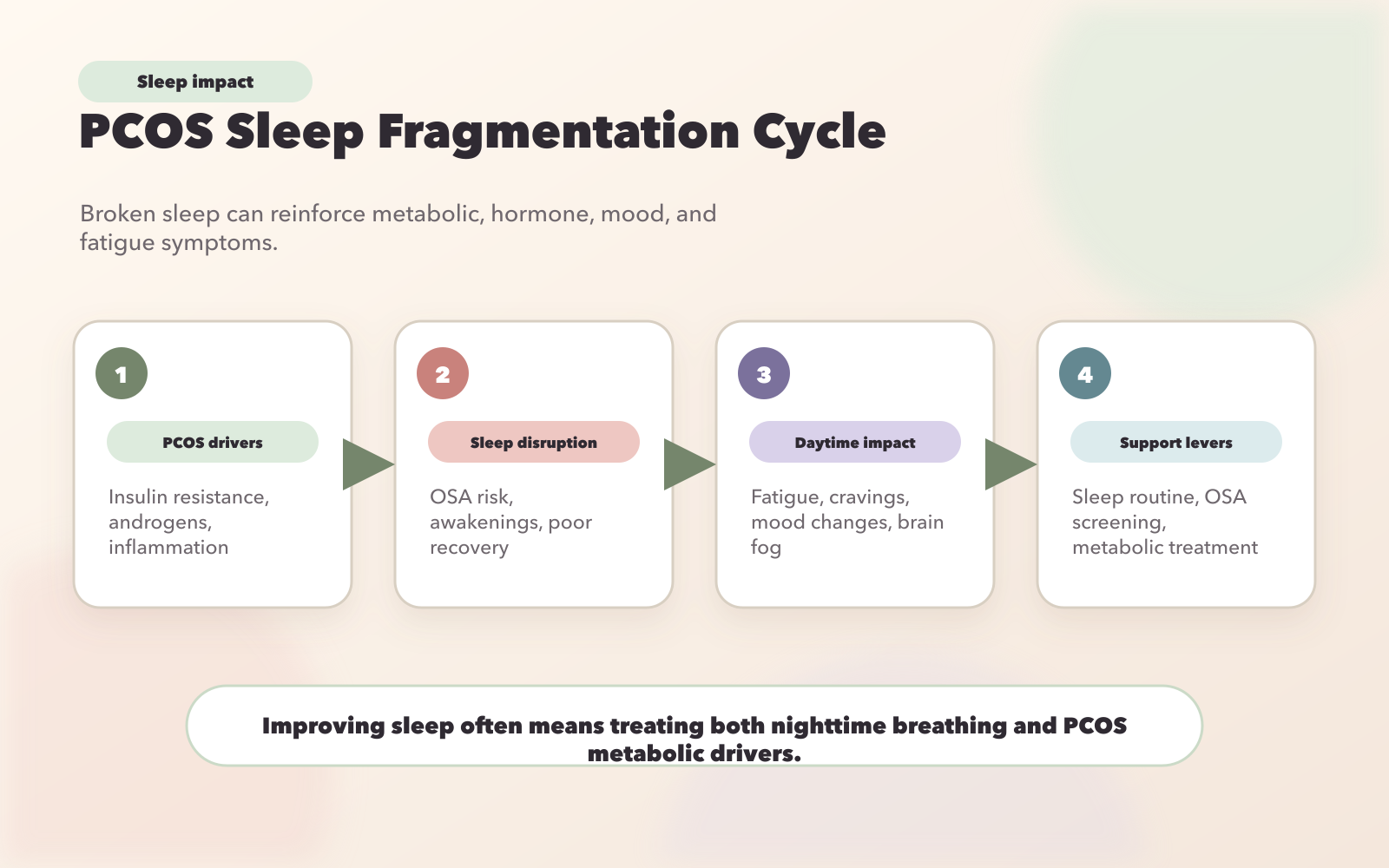
PCOS Sleep Fragmentation Statistics and Impact Comparison
Can't Sleep & Your Periods Are Off? PCOS & Sleep Apnea Explained!
What Causes Sleep Fragmentation in PCOS
A mix of interconnected issues - ranging from breathing difficulties to hormonal shifts - disrupts sleep in women with PCOS.
Obstructive Sleep Apnea (OSA) in PCOS
One of the leading causes of sleep problems in PCOS is obstructive sleep apnea (OSA). This condition leads to repeated airway blockages during sleep, causing brief awakenings (known as cortical microarousals) that interrupt deep, restorative sleep.
The statistics are eye-opening: 20.8% to 35.0% of women with PCOS experience OSA, compared to just 6% to 19% in the general female population. Women with PCOS are also 2.86 to 3.83 times more likely to develop OSA. Sleep studies reveal that OSA in PCOS disproportionately affects REM sleep, with the Apnea-Hypopnea Index (AHI) spiking to 41.3 during REM in women with PCOS, compared to 13.5 in healthy individuals.
"Women with PCOS have been documented to develop OSA at rates that equal and may even exceed those in men."
- David A. Ehrmann, M.D., University of Chicago
Hormonal imbalances in PCOS, such as high androgens and low progesterone, increase the likelihood of airway collapse during sleep. OSA's effects extend beyond sleep quality - it worsens insulin resistance and triggers overactivity in the sympathetic nervous system, creating additional challenges in managing PCOS. Factors like excess neck fat and abdominal obesity also narrow the airway and reduce lung capacity, further contributing to sleep disturbances.
Hormonal and Metabolic Imbalances
PCOS-related hormonal disruptions go beyond reproductive health and directly interfere with sleep. Hyperinsulinemia (excess insulin) and hyperandrogenism (elevated male hormones) disrupt circadian rhythms, making it harder to fall asleep and stay asleep.
Insulin resistance plays a key role in sleep-disordered breathing. For instance, women with PCOS and OSA show a higher HOMA index - 5.7 ± 0.4 compared to 3.5 ± 0.4 in those without OSA. Elevated testosterone raises the "apneic threshold", destabilizing breathing during sleep, while low progesterone - a common issue due to irregular ovulation - removes a respiratory stimulant that helps keep airways open.
Another key factor is low levels of Sex Hormone-Binding Globulin (SHBG), which appear to play a significant role in sleep issues. Women with PCOS and OSA often have lower SHBG levels.
"SHBG, rather than hyperandrogenism, may play a more important mechanistic role for OSA in PCOS."
Sleep fragmentation also activates the hypothalamic-pituitary-adrenal (HPA) axis, increasing nighttime cortisol levels. This cortisol surge disrupts REM sleep and perpetuates a cycle of hormonal imbalance and poor sleep. On top of these hormonal factors, lifestyle habits and mental health challenges further worsen sleep quality.
Mental Health and Lifestyle Factors
Mental health struggles and lifestyle choices add another layer to the sleep challenges faced by women with PCOS. Conditions like depression and anxiety make it difficult to both fall asleep and stay asleep. The stress of managing PCOS symptoms - like unwanted hair growth or weight gain - can amplify anxiety, making it harder to relax at night.
Irregular sleep patterns disrupt the body's natural rhythms, and poor sleep hygiene - such as using electronic devices before bed - makes transitioning into restful sleep even harder. Sedentary behavior is another contributor; women with PCOS spend an average of 6.3 hours a day being inactive, which, along with irregular eating habits, worsens insulin resistance and impacts sleep quality.
Additionally, body image concerns and feelings of social isolation create emotional stress, making it even more challenging to achieve the calm needed for deep, restorative sleep.
How to Improve Sleep Fragmentation in PCOS
Addressing sleep fragmentation in PCOS involves a mix of lifestyle adjustments, medical treatments, and tailored support. The goal is to manage hormonal and metabolic challenges while fostering an environment that encourages deep, restorative sleep. Together, these approaches can help improve sleep continuity for those with PCOS.
Lifestyle Changes for Better Sleep
Simple daily habits can make a big difference in sleep quality. Sticking to a consistent sleep schedule - going to bed and waking up at the same time every day, even on weekends - helps regulate your internal clock and maintain a healthy circadian rhythm. Creating a sleep-friendly environment is equally important. Keep your bedroom dark, quiet, and cool (around 66–67°F or 18–19°C) to support better sleep and potentially improve insulin sensitivity.
Exercise also plays a key role. Aim for at least 120 minutes of vigorous exercise each week, but avoid intense workouts close to bedtime. Pair this with dietary tweaks, like adding lean proteins, fiber, and magnesium-rich foods (think leafy greens or nuts), to help stabilize blood sugar and encourage relaxation.
Caffeine and alcohol can disrupt sleep, so try to avoid caffeine at least five hours and alcohol at least four hours before bedtime. Reducing blue light exposure is another important step - turn off electronics 30–60 minutes before bed to support natural melatonin production. Finally, a calming bedtime routine, such as reading, meditating, or taking a warm shower, can help lower cortisol levels and prepare your body for sleep.
"Quality sleep is not just essential but transformative for women with PCOS, significantly influencing their hormonal health and overall well-being."
- Dr. Madhu Goel, Senior Consultant Obstetrician and Gynaecologist
Medical Treatments for Sleep and PCOS
When lifestyle changes aren’t enough, medical interventions can provide relief. For those with moderate to severe obstructive sleep apnea, Continuous Positive Airway Pressure (CPAP) therapy is often recommended to keep airways open during sleep. In less severe cases, positional therapy, like sleeping on your side, may help prevent airway blockages.
Medications can also address underlying issues. Metformin is commonly prescribed to manage insulin resistance, while Spironolactone helps reduce high androgen levels. Additionally, an eight-week course of melatonin, either alone or combined with magnesium oxide, has shown positive effects on sleep quality. For weight management, GLP-1 agonists such as Semaglutide can aid in weight loss, potentially reducing sleep apnea symptoms.
Cognitive Behavioral Therapy for Insomnia (CBT-I) is another effective option for reshaping unhealthy sleep patterns. If sleep problems persist, consulting a specialist for a sleep study, like polysomnography, may uncover more specific issues.
Personalized Telehealth Support
Telehealth platforms like Oana Health provide customized PCOS treatments designed to tackle sleep fragmentation. Licensed physicians create individualized plans to balance hormones and address insulin resistance. For instance, Spironolactone (starting at $14 per month) helps manage elevated androgen levels, while Metformin (starting at $22 per month) targets insulin resistance. For more advanced metabolic support, Oral Semaglutide GLP-1 (priced at $199 per month) aids in blood sugar stabilization and weight management.
These services include online consultations, follow-ups, and free home delivery. By tracking sleep patterns with digital tools or journals, treatment plans can be fine-tuned for better results. This root-cause approach, focused on stabilizing hormones and blood sugar levels, naturally supports a healthier sleep-wake cycle.
sbb-itb-6dba428
Tracking Progress and Long-Term Management
Improving sleep issues related to PCOS requires consistent tracking and timely adjustments. Women with PCOS are 50% more likely to experience disturbed sleep.
How to Track Sleep and Symptom Improvements
Using a wearable device, like the Oura Ring, can help you monitor essential metrics such as heart rate variability (HRV) and blood oxygen levels (SpO2). Alongside this, keeping a detailed log - whether digital or written - of your diet, stress levels, energy, mood, and menstrual changes can help uncover patterns or triggers affecting your sleep. For example:
- HRV: Daily monitoring can reveal stress levels that might interfere with restful sleep.
- SpO2: Tracking blood oxygen levels can help detect breathing issues, especially if levels fall below 95%.
- Temperature trends: These can signal hormonal fluctuations that may disrupt sleep.
Additionally, working with your healthcare provider to regularly monitor BMI, cholesterol, and glucose levels is crucial for identifying and addressing underlying health concerns.
"Treating OSA [obstructive sleep apnea] also improves PCOS symptoms."
- Dr. Esra Tasali, Director of the University of Chicago Sleep Center
By consistently tracking these factors, you can spot improvements and make informed decisions about your care.
Using Telehealth for Continued Support
Long-term management of PCOS and sleep-related issues often benefits from telehealth services. Platforms like Oana Health simplify ongoing care by connecting you with licensed physicians who can monitor your progress and adjust treatments as needed. These adjustments might include fine-tuning CPAP settings, altering medication dosages, or introducing new therapies to keep up with changes in your symptoms.
Oana Health emphasizes the importance of regular monitoring, stating, "Regularly monitor your PCOS and sleep apnea with a healthcare provider, as changes in symptoms may require adjustments in treatment".
Prescription options available through Oana Health include:
- Oral Semaglutide GLP-1 for metabolic support at $199 per month.
- Spironolactone for androgen management, starting at $14 per month.
- Topical Spironolactone for addressing hair concerns at $43 per month.
Sharing your tracker data and logs during telehealth consultations enables your provider to tailor treatments more effectively, ensuring your care plan evolves to meet your needs.
Conclusion
Sleep fragmentation in PCOS arises from a mix of factors, including obstructive sleep apnea, hormonal shifts (like elevated androgens and reduced progesterone), insulin resistance, and mental health struggles such as anxiety and depression. Women with PCOS are 6.22 times more likely to experience sleep disturbances compared to those without the condition, with 20.8% to 35.0% also dealing with obstructive sleep apnea. These sleep problems not only sap energy but also contribute to metabolic issues, such as higher systolic blood pressure and LDL cholesterol levels.
Tackling sleep fragmentation is key to improving PCOS symptoms. Understanding these challenges enables focused interventions. As Dr. David A. Ehrmann highlights:
"Insulin resistance was found to be a stronger predictor of sleep disordered breathing than was age, BMI, or circulating testosterone concentrations." - Dr. David A. Ehrmann
This emphasizes the need to address insulin sensitivity through medications, dietary adjustments, and weight management to improve sleep quality.
A holistic approach combining lifestyle changes - like sticking to regular sleep schedules and reducing blue light exposure - with medical treatments, such as CPAP therapy for sleep apnea or hormonal therapies, can lead to lasting improvements. Personalized telehealth services add another layer of support. Platforms like Oana Health connect women with licensed physicians who can prescribe treatments for metabolic and hormonal balance, delivered straight to their doorstep.
Focusing on both physical and emotional well-being is essential for achieving restorative sleep. By addressing the metabolic and lifestyle factors disrupting sleep, women with PCOS can reduce fatigue and improve hormonal health. With regular telehealth check-ins, treatment plans can adapt to individual needs, paving the way for better overall health and a higher quality of life.
FAQs
How do I know if I have sleep apnea with PCOS?
Women with PCOS face an increased risk of developing obstructive sleep apnea (OSA), a condition where breathing repeatedly stops and starts during sleep. Common signs to watch for include loud snoring, gasping for air during sleep, excessive daytime fatigue, and morning headaches.
If these symptoms sound familiar, it’s important to consult a healthcare provider. They might suggest undergoing a sleep study to confirm the diagnosis. Addressing OSA early can make a big difference - treatment options like lifestyle adjustments or CPAP therapy can lead to better sleep and improved overall health.
Can improving insulin resistance reduce nighttime awakenings?
Improving insulin resistance can indeed help reduce nighttime awakenings in women with PCOS. When insulin sensitivity improves, it promotes better hormonal balance and tackles metabolic problems that often interfere with sleep. This leads to better sleep quality and helps regulate hormones commonly associated with PCOS.
Which sleep tracker metrics matter most for PCOS?
Tracking sleep duration, efficiency, and REM sleep can be especially helpful for managing sleep-related challenges in PCOS. These metrics reveal patterns that might influence symptoms such as hormonal shifts, insulin resistance, and disrupted sleep. By monitoring these factors, you can gain a clearer understanding of how sleep impacts PCOS and take steps to address potential triggers.