
Spironolactone Dosage: Long-Term Adjustments
Spironolactone is widely used to treat conditions like PCOS, acne, and hirsutism by reducing androgen activity. While effective, the dosage often requires careful adjustments over time to balance results and side effects. Here’s a quick breakdown:
- Starting Dose: Typically begins low (e.g., 25 mg daily) and increases gradually.
- Factors Affecting Dosage: Kidney function, potassium levels, age, body weight, and symptom severity.
- Monitoring: Regular blood tests are essential to track potassium, kidney health, and overall safety.
- Side Effects: Can include hormonal changes, elevated potassium, dizziness, or fatigue - requiring dose changes.
- Timelines for Results: Acne improvement may take 8–12 weeks; hirsutism can take 6+ months.
- Stopping Treatment: Gradual tapering is crucial, especially when planning pregnancy.
Long-term spironolactone use demands consistent follow-ups with healthcare providers to ensure safety and effectiveness. Always consult your doctor for personalized guidance.
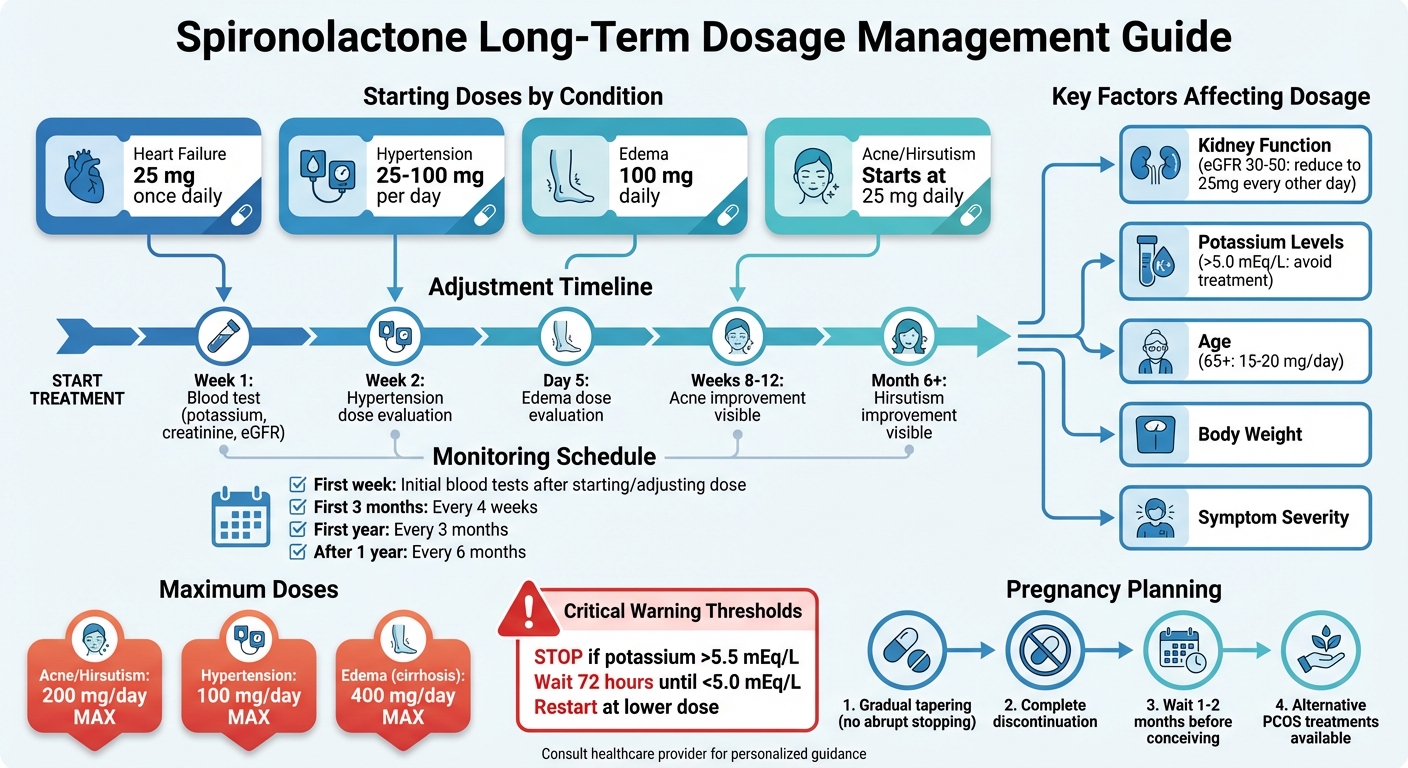
Spironolactone Dosage Adjustment Timeline and Monitoring Guide
Spironolactone Q&A with Dermatologist Dr. Jenny Liu
What Affects Spironolactone Dosage Changes
Doctors adjust spironolactone doses by considering factors like kidney function, potassium levels, age, body weight, and the severity of symptoms. These elements help tailor treatment to each patient’s needs.
Individual Patient Factors
Kidney function plays a key role in determining a safe dosage. Healthcare providers track your estimated glomerular filtration rate (eGFR) and serum creatinine levels through blood tests. If your eGFR falls between 30–50 mL/min/1.73 m², the dose is typically reduced to 25 mg every other day.
Potassium levels are another critical factor. If your serum potassium is higher than 5.0 mEq/L, spironolactone treatment is usually avoided. Your doctor will likely check potassium levels within the first week of starting or adjusting your dose.
Age is especially important for patients over 65, as reduced kidney function may require more cautious dosing, often in the range of 15–20 mg per day. Your body weight also influences both starting doses and any future adjustments.
These measurements work hand in hand with symptom severity to guide dosing decisions.
Symptom Severity and Treatment Goals
The severity of your symptoms often dictates how your spironolactone dosage evolves. For example, treating hirsutism (excessive hair growth) with spironolactone may take at least six months to show visible results. If lower doses don't improve symptoms like acne or unwanted hair, doctors may gradually increase the dose, with a maximum limit of 200 mg daily.
For menstrual irregularities, a different approach may be needed. While spironolactone helps counter androgen excess, it can also cause side effects like spotting or irregular periods. In such cases, your doctor might add oral contraceptives to your treatment plan instead of solely increasing the spironolactone dose. One study found that combining metformin with a low dose of spironolactone (25 mg) helped restore regular menstrual cycles in about 68% of patients with PCOS.
Managing Side Effects
Side effects often require immediate adjustments to your dosage. One major concern is elevated potassium. If your potassium level exceeds 5.5 mEq/L, treatment is paused until levels drop below 5.0 mEq/L for at least 72 hours. Afterward, the medication can be restarted at a lower dose.
Hormonal side effects, such as breast tenderness, are dose-dependent and reversible. For instance, in the Randomized Spironolactone Evaluation Study (RALES), 9% of male participants developed gynecomastia at an average dose of 26 mg daily. If these side effects become problematic, your doctor may lower the dose or stop treatment altogether.
Other symptoms like dizziness, fatigue, or lightheadedness could signal excessive fluid loss or electrolyte imbalances. These issues might lead your doctor to adjust your maintenance dose or slow the rate of dosage increases. According to the American Heart Association and the American College of Cardiology, starting with 12.5–25 mg daily and gradually increasing to 50 mg daily, based on your response and lab results, is a common approach.
Ongoing monitoring and personalized adjustments are key to ensuring the safe and effective use of spironolactone over time.
When and How Dosages Are Adjusted
Starting Doses and Gradual Increases
The starting dose of spironolactone depends on the condition being treated. For heart failure, doctors often begin with 25 mg taken once daily. For hypertension, the initial dose usually falls between 25 and 100 mg per day, while edema treatment typically starts at 100 mg daily.
Dosages are increased gradually, following specific timelines. For hypertension, adjustments are made every two weeks, while for edema, the dose is only increased after five days to allow time to evaluate the diuretic effect. In patients managing heart failure, if the initial 25 mg dose is well-tolerated, it may be increased to 50 mg daily based on the patient’s clinical response.
"Monitor serum potassium within 1 week of initiation or titration of spironolactone and regularly thereafter." – DailyMed
Regular follow-up tests are essential after dose changes to ensure the medication is working effectively and safely.
Follow-Up Schedule
Blood tests are a key part of monitoring spironolactone treatment, typically scheduled within the first week of starting the medication or after a dosage adjustment. If potassium levels rise above 5.0 mEq/L, the doctor may lower the dose or pause the treatment temporarily.
For patients with reduced kidney function, the starting dose may be 25 mg every other day, with follow-up tests guiding any future changes. Taking spironolactone consistently - either always with food or always without - helps maintain steady blood levels. Additionally, taking it with a high-fat, high-calorie meal can increase its bioavailability by about 90%. This consistency in dosing and meal timing ensures the drug is absorbed properly, maximizing its effectiveness.
How Long Until Symptoms Improve
The time it takes to notice symptom relief varies depending on the condition being treated. For hypertension, doctors typically evaluate the effectiveness of the current dose every two weeks. For edema, it’s recommended to wait at least five days before determining if a dosage increase is necessary.
When used for hormonal conditions like hirsutism, spironolactone works by reducing hair growth and thinning the hair shaft. However, visible improvements often take six months or more. For acne, noticeable results generally require 8–12 weeks of consistent use. These longer timelines reflect the gradual way spironolactone addresses hormonal imbalances at their root.
sbb-itb-6dba428
Safety During Long-Term Treatment
When undergoing long-term treatment, keeping safety at the forefront is crucial. Regular monitoring and careful dosage adjustments play a big role in maintaining that safety.
Maximum Doses and Potassium Concerns
The maximum daily dose of spironolactone depends on the condition being treated: 200 mg for acne and hirsutism, 100 mg for hypertension, and up to 400 mg for edema caused by cirrhosis.
One of the most serious risks during extended treatment is high potassium levels, also known as hyperkalemia. This risk is especially concerning for individuals with reduced kidney function, diabetes, or those on ACE inhibitors or NSAIDs. If serum potassium levels rise above 5.0 mEq/L, your doctor may lower your dose or even temporarily stop the treatment. Severe hyperkalemia can disrupt heart rhythm and requires immediate medical attention.
Regular Blood Tests Are a Must
Routine blood tests are essential for managing spironolactone therapy safely. These include monitoring serum potassium, creatinine, and eGFR. Testing should be done within the first week of starting the medication or after any dosage changes. After that, follow-up testing is typically scheduled every four weeks for the first three months, every three months for the first year, and every six months after that.
In addition to potassium, other markers like sodium, magnesium, blood glucose, and uric acid may be checked periodically. Spironolactone can affect these levels, so keeping an eye on them ensures the treatment remains both effective and safe.
Side Effects to Watch For
When on long-term therapy, it’s important to report any side effects without delay. Notify your doctor if you experience persistent fatigue, irregular periods, dizziness, or breast pain. Men should also report any signs of breast enlargement (gynecomastia). In the RALES trial, about 9% of male participants developed gynecomastia while taking an average daily dose of 26 mg.
Seek medical attention right away if you notice serious symptoms such as a slow or irregular heartbeat, muscle weakness with tingling, yellowing of the skin or eyes, confusion, or difficulty breathing. Additionally, avoid potassium supplements or potassium-based salt substitutes unless explicitly recommended by your doctor.
Regular communication with your healthcare provider is key to managing your treatment safely over time.
Stopping Treatment or Planning Pregnancy
When it comes to stopping treatment or preparing for pregnancy, it’s essential to follow a personalized approach that prioritizes your health and safety. If you’re planning to get pregnant, spironolactone must be discontinued under the supervision of your healthcare provider. This medication is unsafe during pregnancy, as its anti-androgen effects can interfere with male fetal development. Abruptly stopping spironolactone, especially after long-term use, is not recommended.
How to Stop Taking Spironolactone
Work closely with your healthcare provider to gradually taper your spironolactone dosage. A slow reduction helps prevent sudden hormonal changes, blood pressure spikes, or fluid retention. Be aware that symptoms such as acne, oily skin, or unwanted hair may return within weeks as your hormone levels regulate. After completing the tapering process, give your body some time to adjust before trying to conceive.
Waiting Period Before Pregnancy
Although spironolactone has a short half-life of about 1.5 hours, its active metabolite, canrenone, remains in the body for 16–18 hours, with full clearance taking 5–6 days. However, most healthcare providers recommend waiting 1–2 months after stopping the medication before attempting pregnancy. This waiting period ensures your hormones have stabilized.
PCOS Treatment Options During Pregnancy
After discontinuing spironolactone, alternative treatments may be necessary for managing polycystic ovary syndrome (PCOS). Lifestyle adjustments, such as losing just 5% of excess body weight, can significantly alleviate symptoms and reduce pregnancy-related risks. Your doctor might also suggest metformin, which can help manage insulin resistance, promote ovulation, and potentially lower the risk of miscarriage.
For addressing hirsutism during pregnancy, physical hair removal methods like shaving, threading, or laser treatments are generally recommended. If you encounter challenges with conception, fertility medications such as clomifene or letrozole may be prescribed to encourage ovulation.
For tailored advice on managing hormonal treatments and PCOS during pregnancy, consulting licensed professionals through Oana Health can be a helpful resource.
Key Points for Long-Term Spironolactone Use
Managing long-term spironolactone treatment successfully hinges on personalized dosing, especially when addressing PCOS symptoms. Doctors often begin with a low dose, adjusting it gradually based on your condition and response. Maintenance doses can range from as little as 25 mg every other day for heart failure to as much as 400 mg daily for primary hyperaldosteronism. For PCOS-related symptoms, dosages are similarly tailored, and it may take several adjustments to determine the lowest effective dose.
Routine blood tests play a vital role in ensuring safe and effective treatment. These tests monitor potassium levels, creatinine, and eGFR. This is particularly important for patients over 65, those with kidney problems, or individuals taking ACE inhibitors or ARBs. Regular check-ups are critical for tracking progress and addressing any potential issues.
As the Mayo Clinic emphasizes:
"It is very important that your doctor check your progress at regular visits to make sure this medicine is working properly and to decide if you should continue to take it." – Mayo Clinic
Consistency in timing is key to maintaining stable drug levels. Take spironolactone at the same time each day - ideally in the morning to minimize nighttime bathroom trips. If your regimen requires a second dose, aim to take it no later than 4:00 PM. Additionally, be consistent with how you take it (with or without food), as a high-fat meal can increase absorption by up to 90%.
Dietary habits and symptom monitoring are equally important for long-term success. Avoid potassium-based supplements and salt substitutes. Be vigilant for signs of high potassium, such as irregular heartbeat, muscle weakness, confusion, or tingling sensations, and report these to your doctor immediately. For expert guidance on managing spironolactone treatment, licensed healthcare providers at Oana Health offer support tailored to hormonal conditions like PCOS, acne, and hirsutism.
FAQs
How often do I need blood tests while taking spironolactone?
Regular blood tests are crucial when you're on spironolactone to keep an eye on your potassium levels and kidney function. How often you’ll need these tests depends on things like your dosage, age, and overall health. Typically, testing is done every few months, especially when starting or adjusting your treatment.
If you have other health conditions or take medications that might influence your results, your doctor may suggest testing more often. Always stick to your healthcare provider’s recommendations to ensure your treatment stays safe and works as intended.
What should I do if I notice side effects while taking spironolactone?
If you notice any side effects while taking spironolactone, contact your doctor promptly. They can assess whether your dosage needs tweaking or if it’s best to stop the medication altogether.
Milder side effects, such as dizziness or slight stomach upset, often lessen as your body adjusts. However, more severe symptoms require immediate medical attention. Always check with a licensed healthcare provider before altering your treatment plan in any way.
Is it safe to take spironolactone during pregnancy?
Spironolactone is typically not advised during pregnancy unless your doctor deems it necessary for specific medical reasons. Its use depends on your unique health circumstances and the stage of your pregnancy. It’s essential to consult your healthcare provider to figure out the safest option for both you and your baby.
If you’re already on spironolactone and discover you’re pregnant, contact your doctor as soon as possible to discuss whether your treatment plan needs to be continued or adjusted.