
5 Common Spironolactone Drug Interactions
Spironolactone is widely used to treat conditions like heart failure, high blood pressure, hormonal acne, and PCOS. However, it can interact with other medications, leading to serious complications like high potassium levels (hyperkalemia), kidney issues, or reduced drug effectiveness. Here's a quick summary of five common drug interactions to watch out for:
- NSAIDs (e.g., ibuprofen, naproxen): May reduce spironolactone's effectiveness and increase potassium levels.
- ACE Inhibitors (e.g., lisinopril, enalapril): Can amplify potassium retention, raising the risk of hyperkalemia.
- Potassium Supplements: Combining these with spironolactone can dangerously spike potassium levels.
- ARBs (e.g., losartan, valsartan): Similar to ACE inhibitors, ARBs increase potassium retention and strain the kidneys.
- Lithium: Spironolactone reduces lithium clearance, increasing the risk of lithium toxicity.
Key Takeaway: Always consult your doctor before combining spironolactone with other medications. Regular monitoring of potassium levels and kidney function is crucial to avoid complications.
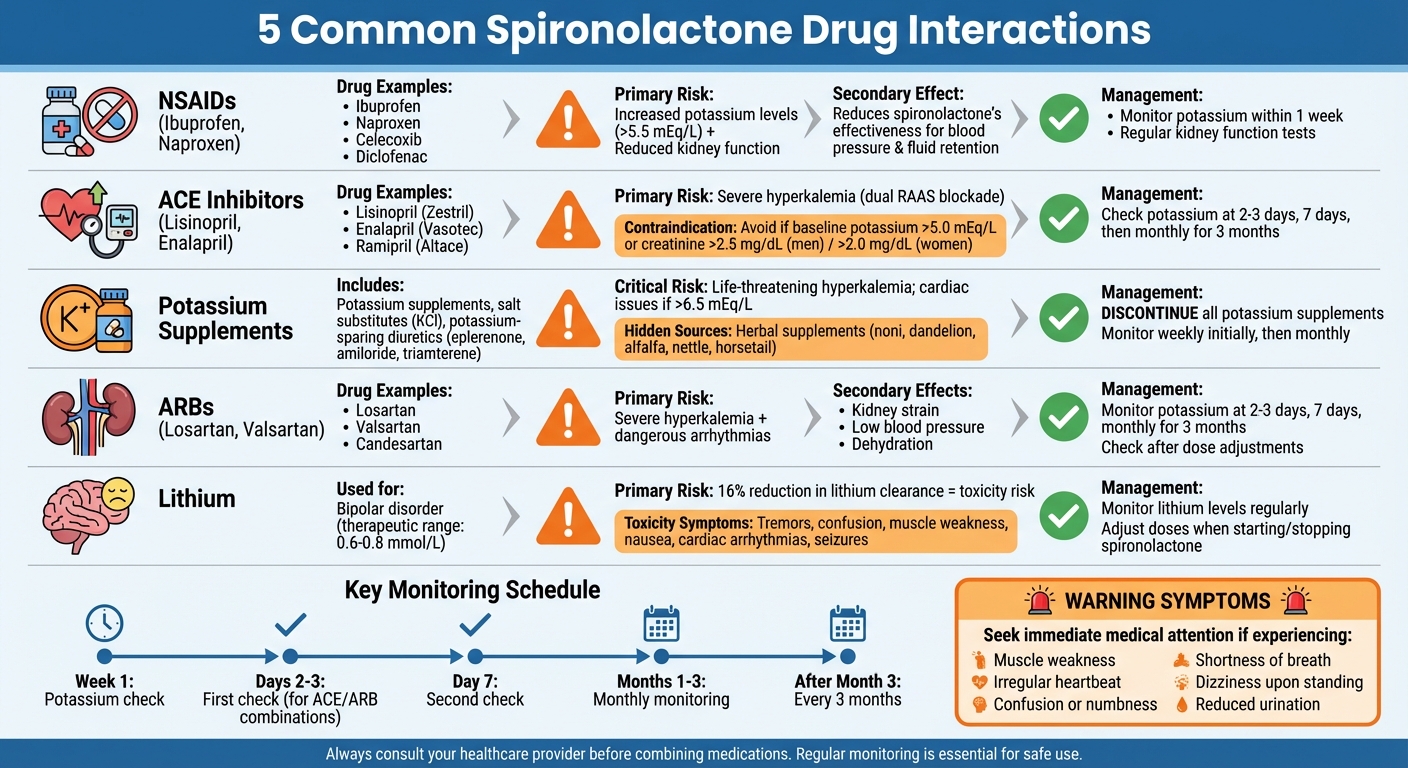
5 Common Spironolactone Drug Interactions: Risks and Management Guide
Spironolactone Pharmacology Podcast
1. NSAIDs (Ibuprofen, Naproxen)
NSAIDs like ibuprofen, naproxen, celecoxib, and diclofenac can increase potassium levels and potentially harm kidney function. When paired with spironolactone, which already helps the body retain potassium, this combination can push serum potassium levels above 5.5 mEq/L, leading to serious health risks. Since the kidneys are responsible for removing excess potassium, any reduction in kidney performance can cause potassium to build up in the body. This makes careful dosage adjustments and close monitoring essential.
Given spironolactone's potassium-retaining effects, combining it with NSAIDs requires extra caution.
"In some patients, the administration of an NSAID can reduce the diuretic, natriuretic, and antihypertensive effect of diuretics." - Pfizer Medical
NSAIDs can also interfere with spironolactone’s ability to lower blood pressure, help the body eliminate sodium, and manage fluid retention. If you regularly take aspirin or other NSAIDs, your healthcare provider may need to adjust your spironolactone dosage to ensure it remains effective.
To stay safe, it’s crucial to check your potassium levels within a week of starting this combination and to have your kidney function monitored regularly.
2. ACE Inhibitors (Lisinopril, Enalapril)
ACE inhibitors such as lisinopril (Zestril), enalapril (Vasotec), and ramipril (Altace) interact with spironolactone in a way that can significantly raise potassium levels. Both types of medications interfere with the renin-angiotensin-aldosterone system (RAAS), which amplifies potassium retention. ACE inhibitors reduce aldosterone production, while spironolactone directly blocks aldosterone’s effects. Together, they create a dual action that increases the risk of severe hyperkalemia.
Despite this risk, doctors often prescribe these medications together for patients with severe heart failure. The RALES study demonstrated that adding low-dose spironolactone to ACE inhibitor therapy significantly reduced mortality rates.
"Combined therapy with spironolactone and an ACE inhibitor has been considered relatively contraindicated because of the potential for developing severe hyperkalemia... however, clinical studies in patients with moderate or severe heart failure indicate addition of low-dose spironolactone to standard therapy decreases mortality and hospitalization." - ASHP
This combination can also lead to side effects like diuresis, dehydration, low blood pressure, and impaired kidney function. These risks become even more concerning for individuals who are salt-depleted or have existing kidney issues. Healthcare providers generally avoid this combination if baseline potassium levels are above 5.0 mEq/L or if creatinine levels exceed 2.5 mg/dL for men or 2.0 mg/dL for women.
If you’re prescribed both medications, frequent monitoring is essential. Potassium and kidney function should be checked at 2–3 days, 7 days, and then monthly for the first three months. You’ll also need to avoid potassium supplements, salt substitutes containing potassium, and potassium-rich foods. If you experience severe diarrhea or dehydration, stop taking spironolactone temporarily and contact your healthcare provider right away to prevent acute kidney injury. Regular check-ins with your healthcare provider are crucial as your treatment plan evolves.
3. Potassium Supplements and Potassium-Sparing Diuretics
Taking potassium supplements or potassium-sparing diuretics alongside spironolactone can dangerously increase serum potassium levels, posing a serious risk of life-threatening cardiac issues. This combination is strongly discouraged because it disrupts potassium regulation, potentially leading to severe complications.
"Concomitant administration of ALDACTONE with potassium supplementation or drugs that can increase potassium may lead to severe hyperkalemia." – Pfizer Medical
Other potassium-sparing diuretics, such as eplerenone (Inspra), amiloride, and triamterene, function similarly to spironolactone and should also be avoided in combination.
Hyperkalemia occurs when serum potassium levels exceed 5.5 mEq/L. If levels rise above 6.5 mEq/L, immediate medical attention is often necessary. For this reason, patients prescribed spironolactone for heart failure are typically instructed to stop taking any potassium supplements.
It's also important to consider hidden sources of potassium. Many salt substitutes use potassium chloride instead of sodium, which can significantly raise potassium levels. Additionally, some herbal supplements - like noni, dandelion, alfalfa, nettle, and horsetail - can contribute to elevated potassium. Always check product labels before starting new supplements to avoid unintended increases in potassium intake.
Potassium levels should be monitored closely when starting spironolactone. Testing is usually recommended one week after beginning treatment and then monthly for the first three months. If you notice symptoms such as muscle weakness, irregular heartbeat, confusion, numbness, or shortness of breath, contact your healthcare provider immediately.
sbb-itb-6dba428
4. ARBs (Losartan, Valsartan)
Angiotensin II receptor blockers (ARBs) like losartan, valsartan, and candesartan work by inhibiting angiotensin II. When combined with medications like spironolactone, which blocks aldosterone receptors, they lower potassium excretion. This combination, however, increases the risk of severe hyperkalemia - a condition that can lead to dangerous arrhythmias.
"Excessive diuresis may cause symptomatic dehydration, hypotension, and worsening renal function, especially in patients who are salt-depleted or those taking an ACE inhibitor or angiotensin II receptor antagonist." – Drugs.com
Because of these risks, careful monitoring is essential when ARBs and spironolactone are used together.
This combination can also strain the kidneys and significantly lower blood pressure. Be alert for symptoms like muscle weakness, irregular heartbeat, confusion, numbness, dizziness upon standing, or reduced urination. If you notice any of these, seek medical attention immediately.
For conditions like severe heart failure or resistant hypertension, healthcare providers often prescribe both drugs. In such cases, they’ll closely monitor potassium levels and kidney function - checking within 2–3 days, again at 7 days, and monthly for the first three months. Potassium should also be checked after any ARB dosage adjustment. To minimize risks, avoid potassium-based salt substitutes and supplements, and consult your doctor about temporarily stopping spironolactone if you experience diarrhea or dehydration.
Older adults (over 65) and those with kidney issues face a higher risk of complications. Stay hydrated and follow your doctor’s guidance on fluid intake to reduce potential problems.
5. Lithium
Lithium, commonly prescribed for bipolar disorder, operates within a narrow therapeutic range (0.6–0.8 mmol/L). When combined with spironolactone, it becomes riskier due to a roughly 16% reduction in renal excretion. Even small increases in lithium levels can lead to toxicity.
"Like other diuretics, ALDACTONE reduces the renal clearance of lithium, thus increasing the risk of lithium toxicity. Monitor lithium levels periodically when ALDACTONE is coadministered." – Pfizer Medical
Spironolactone can cause dehydration and sodium depletion, which further lowers lithium clearance. Warning signs of lithium toxicity include tremors, confusion, muscle weakness, nausea, vomiting, diarrhea, blurred vision, and, in severe cases, cardiac arrhythmias or seizures.
To reduce risks, it's essential to monitor lithium levels and kidney function regularly. Adjust lithium doses when starting or stopping spironolactone. Maintaining proper hydration and salt intake is also critical. If severe vomiting, diarrhea, or signs of toxicity occur, contact your healthcare provider immediately. Older adults and individuals with renal impairment face an even higher risk.
Managing Interactions
Once you've identified common drug interactions, the next step is ensuring patient safety through careful monitoring and management. For those taking spironolactone, regular checks and timely adjustments are key. For instance, potassium levels should be monitored within the first week of starting or changing the dosage. In heart failure patients, monitoring is more frequent: at 2–3 days, 7 days, monthly for the first three months, and then every three months after that.
If potassium levels rise while on a 25 mg daily dose - often seen when combined with ACE inhibitors or ARBs - your doctor might reduce the dosage to 25 mg every other day. For patients with reduced kidney function (eGFR between 30–50 mL/min/1.73 m²), starting at 25 mg every other day can help lower the risk of hyperkalemia. If serum potassium exceeds 5.5 mEq/L, spironolactone should be stopped temporarily. It can only be restarted at a lower dose once potassium levels remain below 5 mEq/L for at least 72 hours.
Dietary adjustments are also crucial. Avoid salt substitutes that contain potassium chloride and limit foods high in potassium. Consistency is important with medication timing - take spironolactone at the same time each day, with or without food. However, taking it with food can increase absorption by about 95.4%. If you experience severe diarrhea or dehydration, it's recommended to stop the medication temporarily.
In cases where safe management becomes challenging, alternatives may be considered. Your doctor might switch you to another aldosterone antagonist like eplerenone or recommend a loop or thiazide diuretic. For patients with primary hyperaldosteronism who cannot tolerate long-term medication, surgery could be an option. Additionally, lifestyle changes - such as reducing sodium intake, maintaining a healthy weight, exercising regularly, and following a low-fat diet - can help manage blood pressure and reduce edema.
Here’s a quick overview of key interactions, their risks, and management strategies:
| Interaction | Primary Risk | Management Strategy |
|---|---|---|
| ACE Inhibitors/ARBs | Severe hyperkalemia | Check potassium within 1 week of dose changes; reduce to 25 mg every other day if needed. |
| NSAIDs | Reduced effectiveness and kidney issues | Monitor kidney function and clinical response regularly. |
| Potassium Supplements | Life-threatening hyperkalemia | Discontinue supplements and avoid potassium-containing salt substitutes. |
| Lithium | Lithium toxicity | Monitor serum lithium levels regularly and adjust the dose as needed. |
Conclusion
Spironolactone is highly effective for addressing conditions like acne, hair loss, and hormonal imbalances, but it comes with risks that require close medical supervision. Serious drug interactions can occur when combining it with ACE inhibitors, ARBs, NSAIDs, potassium supplements, or lithium, potentially leading to complications like hyperkalemia, reduced medication effectiveness, or even toxicity. To avoid these issues, it’s crucial for patients to share a complete list of all medications, over-the-counter products, and herbal supplements they’re using with their healthcare provider.
Regular monitoring is essential for safe use. Adjusting your diet - such as avoiding potassium-based salt substitutes and limiting foods high in potassium - can also help manage risks effectively.
Telehealth offers a convenient way to ensure proper monitoring. Licensed medical professionals can review lab results, adjust dosages, and provide guidance through virtual consultations, reducing the need for frequent in-person visits. For those exploring prescription-based treatments for acne or hair loss, services like Oana Health offer personalized care and home delivery of medications.
To use spironolactone safely, stay informed and maintain open communication with your healthcare provider. Watch for warning signs like muscle weakness, irregular heartbeat, or confusion, and seek medical attention immediately if they occur. With the right monitoring and guidance, you can manage risks while benefiting from the medication’s therapeutic effects.
FAQs
How can I safely take spironolactone with NSAIDs?
Taking spironolactone with NSAIDs requires careful attention, as these two medications can interact in ways that may impact your health. NSAIDs can interfere with spironolactone’s ability to lower blood pressure and eliminate excess fluid. On top of that, both drugs carry the risk of causing hyperkalemia (elevated potassium levels), which can be dangerous.
To reduce risks, your healthcare provider may suggest keeping a close eye on your blood pressure and potassium levels through regular monitoring. If you have conditions such as kidney disease or heart failure, additional precautions might be necessary. Always talk to your doctor before combining these medications. They can adjust your dosages or recommend safer alternatives to help manage potential complications. Maintaining open communication and having regular check-ins with your healthcare provider are essential for safely navigating this drug interaction.
What symptoms of high potassium (hyperkalemia) should I look out for while taking spironolactone?
When using spironolactone, keeping an eye on possible signs of high potassium levels (hyperkalemia) is crucial. Symptoms to watch for include muscle weakness, unusual fatigue, tingling or numbness, and irregular heartbeats. If you experience any of these, reach out to your healthcare provider right away, as untreated hyperkalemia can lead to serious complications.
Why is it important to monitor your health when taking spironolactone with other medications?
Monitoring your health when combining spironolactone with other medications is key to preventing potential issues. Spironolactone can interact with certain drugs, possibly causing serious side effects like elevated potassium levels (hyperkalemia), fluctuations in blood pressure, or even drug toxicity.
Your doctor may recommend regular check-ups to track potassium levels, kidney function, and blood pressure. These tests help ensure your treatment remains safe and effective. Always work closely with your healthcare provider to address any interactions and make adjustments to your medications if necessary.