
Spironolactone and Increased Urination: 5 Tips
Spironolactone, commonly prescribed for hormonal issues like PCOS, acne, and hair loss, often causes increased urination due to its diuretic effects. Managing this side effect is key to staying comfortable during treatment. Here's how you can handle it effectively:
- Drink water consistently: Aim for 1.5–2 liters daily to stay hydrated, even with frequent urination.
- Time your dose wisely: Take it in the morning or early afternoon to avoid disrupting sleep.
- Monitor potassium intake: Limit potassium-rich foods and avoid salt substitutes to prevent high potassium levels.
- Take with food: Reduce stomach discomfort by pairing your dose with meals.
- Adopt healthy habits: Regular exercise, a balanced diet, and stress management can support your overall well-being.
If side effects worsen, consult your healthcare provider. Always follow their advice for safe and effective treatment.
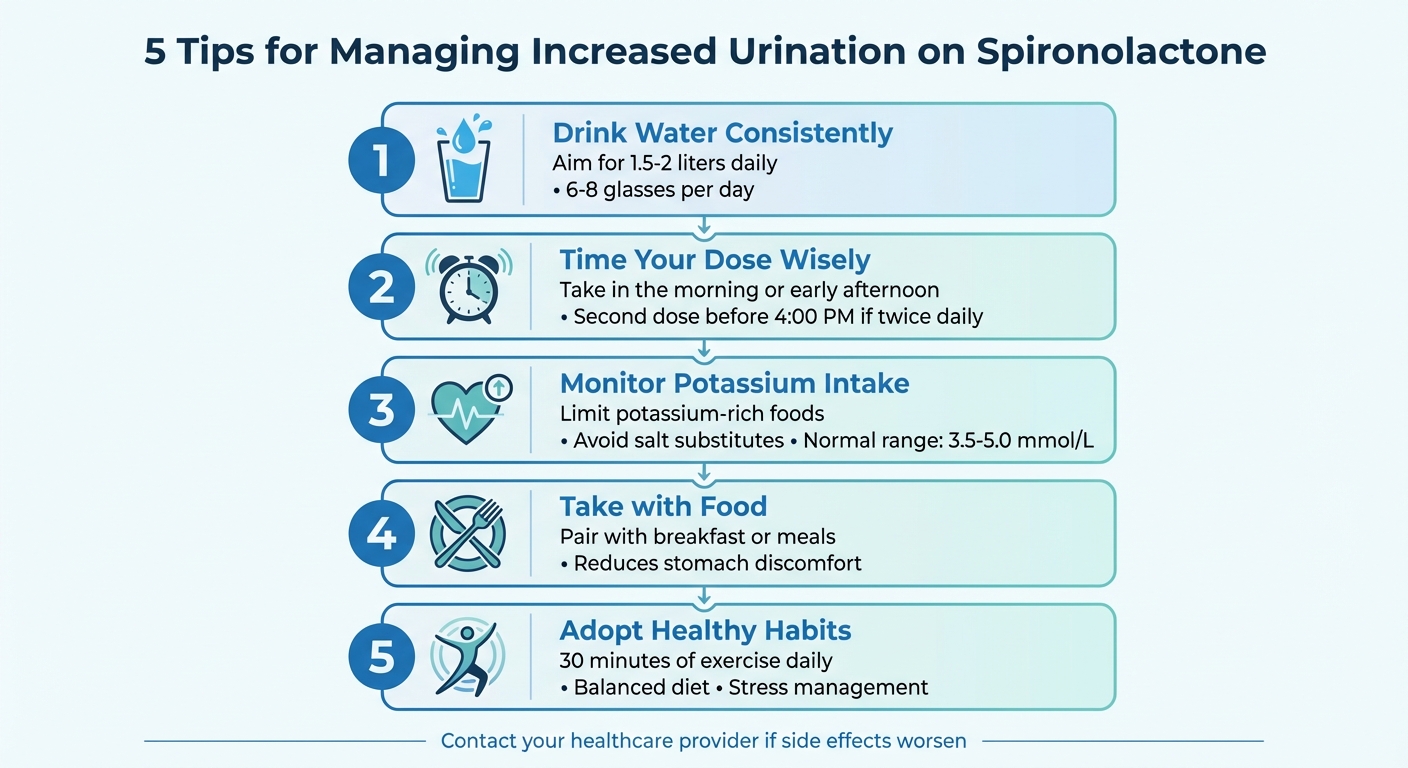
5 Tips for Managing Increased Urination While Taking Spironolactone
Why Does Spironolactone Make Me Pee?
1. Drink Water Consistently Throughout the Day
Staying hydrated is essential when managing spironolactone’s diuretic effects. Even though this medication may increase urination, it’s important not to cut back on water. Instead, aim to drink water steadily throughout the day to help your body process the medication and avoid dehydration.
A good daily target is 1.5–2 liters (50–68 ounces), which equals about six to eight glasses. However, your exact needs might vary based on factors like your weight, activity level, climate, and overall health. As Robynn Lowe, a Family Nurse Practitioner at K Health, explains:
The recommended amount of fluid you should consume to stay hydrated is 1.5 to 2 liters per day.
To stay on track, start your day with a full glass of water, keep a reusable water bottle handy, and set reminders to take small sips regularly. Drinking a glass of water 15–30 minutes before each meal can also help you maintain a steady hydration routine.
You can boost your hydration further by incorporating water-rich foods into your diet. Think watermelon, cucumbers, celery, and lettuce - they’re all great options. Stick to plain water whenever possible, and try to limit sugary, caffeinated, or salty beverages. An easy way to check if you're drinking enough? Pay attention to your urine color - dark yellow or a strong odor could mean you need more fluids.
If you have specific health conditions like heart failure or kidney disease, it’s vital to follow your healthcare provider’s advice on fluid intake. Also, remember to drink more water during hot weather, exercise, or when you’re experiencing fever or vomiting. These strategies can help you manage the increased urination caused by spironolactone while supporting your overall health.
Next, let’s look at how adjusting the timing of your medication might help ease some of its side effects.
2. Take Your Medication Earlier in the Day
Timing matters when it comes to taking spironolactone, especially because of its diuretic effects. This medication prompts your kidneys to flush out extra fluid and sodium, which can lead to increased urination. If you take it in the evening, its peak effect might hit while you're trying to sleep, disrupting your rest. To avoid this, shift your dose to the morning or early afternoon so the effects occur during your waking hours.
For those on a once-daily schedule, it's best to take spironolactone in the morning. If you’re on a twice-daily regimen, make sure the second dose is taken no later than 4:00 PM. The NHS provides this helpful advice:
"If you're taking it twice a day, make sure you take the second dose no later than 4pm. Taking it later than this may mean you have to wake up in the night to pee."
If you miss a dose and it's still before 6:00 PM, take it right away. Otherwise, skip the missed dose and continue with your normal schedule the next day.
To stay on track, set a reminder on your phone or use an app, and keep your medication in a spot where you’ll see it daily. Taking your dose at the same time each day helps your body establish a steady rhythm for fluid elimination, making it easier to manage your treatment plan.
3. Monitor Your Potassium Intake
Keeping an eye on your potassium levels is just as important as taking your medication at the right time. Spironolactone works differently from typical diuretics - it holds onto potassium instead of flushing it out. This happens because it blocks aldosterone, a hormone that tells your kidneys to retain sodium and get rid of potassium. While this helps avoid the low potassium levels often caused by other diuretics, it comes with the risk of potassium building up to dangerous levels in your blood.
The chances of high potassium, or hyperkalemia, increase if you're older, have diabetes, or have kidney issues. Normal potassium levels range from 3.5 to 5.0 millimoles per liter (mmol/L), but when levels climb above 6.5 mmol/L, it can lead to serious heart problems and may require emergency care. Regular blood tests are essential to keep potassium levels in check and ensure spironolactone is used safely.
Avoid salt substitutes. Many of these products replace sodium with potassium chloride, which can push your potassium levels too high. Additionally, be cautious with potassium-rich foods like bananas, avocados, dried fruits (especially apricots and raisins), orange juice, spinach, potatoes with skin, tomatoes, nuts, beans, and salmon. You don’t need to cut these foods out entirely - just limit your intake.
Before taking any supplements or over-the-counter pain relievers like ibuprofen or naproxen, consult your doctor. These can also raise potassium levels. Your healthcare provider will likely schedule routine blood tests to monitor your potassium and kidney function - don’t skip these appointments. Be alert for symptoms such as nausea, muscle weakness, tingling sensations, or an irregular heartbeat. If you notice any of these, seek medical help immediately.
sbb-itb-6dba428
4. Take Spironolactone with Food
Taking spironolactone with food can help ease common stomach-related side effects like nausea, cramps, indigestion, heartburn, and diarrhea.
For consistency, try taking spironolactone with your breakfast. Many people prefer a morning dose to avoid frequent bathroom trips at night. Pair it with low-potassium options such as white toast, scrambled eggs, or oatmeal topped with berries. If your prescription calls for two daily doses, take the second one with an afternoon snack or an early dinner - ideally before 4:00 PM - to reduce the chance of sleep interruptions.
Food can impact how spironolactone is absorbed, so it’s important to stick to one approach: either always take it with food or always on an empty stomach. This is especially crucial if you’re using the oral suspension (liquid form), as consistency ensures stable medication levels. Following this routine supports proper absorption and aligns with the dosing guidelines mentioned earlier.
To stay on track, keep a pill organizer near your breakfast table, set a phone alarm for mealtime, or use any reminder system that works for you. Swallow the tablets whole with water - don’t chew them, as that can interfere with absorption.
If you still experience nausea or stomach discomfort, reach out to your healthcare provider. For tailored advice, you can also consult the licensed professionals at Oana Health.
5. Support Your Body with Healthy Habits
Beyond staying hydrated and managing your medication timing, adopting healthy habits can help ease some of spironolactone's side effects. Simple lifestyle adjustments, like regular exercise, a nutritious diet, and stress management, can make a big difference in supporting your overall well-being while on this medication.
Aim for 30 minutes of exercise daily. If you're just starting spironolactone or experiencing dizziness, stick to low-intensity activities like walking or light stretching. Regular movement can combat fatigue, a common side effect of the medication. And don't forget - staying hydrated is especially important during workouts.
Make some tweaks to your diet as well. Cutting back on caffeine, alcohol, and salty processed foods can help minimize the diuretic effects of spironolactone. Instead, focus on whole, nutrient-rich foods to keep your body balanced and nourished.
Managing stress is another key factor. Practices like deep breathing, maintaining a consistent sleep schedule, and spending time outdoors can all help. If dizziness strikes, try lying down for a moment and standing up slowly when you're ready to move again.
These small but impactful changes can work alongside your treatment plan. For more tailored advice on managing side effects, consider reaching out to Oana Health.
When to Contact Your Healthcare Provider
Increased urination is a common side effect of spironolactone, but some symptoms should never be ignored. If you experience signs of severe dehydration - such as a rapid heartbeat, difficulty breathing, or confusion - reach out to your healthcare provider immediately. Other red flags include extreme thirst, dizziness, dark or strong-smelling urine, or significantly reduced urination.
Keep an eye out for symptoms of high potassium levels (hyperkalemia), which can include a slow or irregular heartbeat, tingling sensations, muscle weakness, or trouble breathing. These require immediate medical attention.
You should also contact your provider if you notice yellowing of the skin or eyes (a sign of jaundice) or if nausea and vomiting persist even when taking spironolactone with food. Severe gastrointestinal issues, like vomiting blood or finding blood in your stool, are serious and warrant prompt medical advice. Additionally, sudden or rapid weight loss could indicate excessive fluid loss - let your healthcare provider know right away.
In life-threatening emergencies, such as sudden swelling of the lips, mouth, or throat, difficulty breathing, or fainting, call 911 immediately. If you're experiencing severe dizziness or signs of an allergic reaction, do not attempt to drive yourself to the hospital.
For those needing a spironolactone prescription or help managing side effects, Oana Health provides telehealth services starting at $14 per month. Their licensed medical professionals can assist with adjusting your treatment plan as needed.
Conclusion
You can handle the increased urination caused by spironolactone without letting it interfere with your routine. Here’s how: take your dose in the morning (or make sure a second dose is taken before 4:00 PM), drink 1.5 to 2 liters of water daily to stay hydrated, avoid salt substitutes and limit foods high in potassium, and stick to taking your medication with food at the same time every day.
Regular blood and urine tests are essential to check your electrolyte levels and kidney function. If any symptoms become troublesome, your healthcare provider can adjust your treatment plan to suit your needs. These adjustments, guided by your provider, help ensure your treatment remains effective.
For more personalized care, telehealth services like those from Oana Health offer access to licensed professionals starting at $14 per month. They can help you manage side effects and optimize your treatment plan.
FAQs
How can I manage the frequent urination caused by spironolactone?
Frequent urination is a well-known side effect of spironolactone, but there are practical ways to handle it. Start by staying hydrated - drink enough water during the day, but try to limit how much you drink right before bed. This can help cut down on those late-night bathroom trips. Another tip? Take your medication earlier in the day to sync with your body’s natural rhythm and avoid sleep disruptions.
Your diet matters too. Since spironolactone can raise potassium levels, it’s best to steer clear of foods that are high in potassium. Pay attention to signs of dehydration, like dizziness, dry mouth, or fatigue. If you notice any of these, adjust your fluid intake and check in with your healthcare provider. Always stick to your doctor’s recommendations to manage these side effects safely.
Why do you need to monitor potassium levels while taking spironolactone?
Monitoring your potassium levels is essential when you're on spironolactone, as this medication can increase potassium in your blood. High potassium levels, or hyperkalemia, can pose serious health risks, such as irregular heart rhythms, muscle weakness, and, in extreme cases, complications that might demand immediate medical care.
Scheduling regular check-ups with your healthcare provider is a smart way to keep potassium levels in check while still gaining the benefits of the medication.
What should I do if the side effects of spironolactone get worse?
If spironolactone's side effects escalate, they could pose serious health risks like high potassium levels, dehydration, muscle weakness, irregular heartbeat, or severe nausea. These are not issues to ignore and demand prompt medical attention.
Reach out to your healthcare provider immediately if you experience worsening side effects or any unusual symptoms. Acting quickly can help avoid complications and keep your treatment on track.