
Spironolactone Side Effects: What Long-Term Users Report
Spironolactone, a medication often prescribed for hormonal conditions like acne, PCOS, and hair loss, is generally well-tolerated but can cause side effects over time. Here's what long-term users report:
- Hormonal Changes: Menstrual irregularities (15%-40% of women), breast tenderness (3%-5%), and gynecomastia in men (10%).
- Increased Urination & Dehydration: Frequent urination due to its diuretic effects, with dehydration reported in 6.1% of women.
- Electrolyte Imbalances: Hyperkalemia (high potassium) occurs in 1%-10% of users, with older women at higher risk (58 times more likely for those 65+).
- Serious Risks: Rare but severe side effects include kidney issues, liver toxicity, allergic reactions, and gastrointestinal bleeding.
To manage these risks, regular blood tests, dietary adjustments (e.g., limiting high-potassium foods), and proper hydration are crucial. Telehealth platforms like Oana Health offer convenient options for monitoring and adjusting treatment plans.
Key Takeaway: While effective for many, spironolactone requires careful monitoring to balance benefits with potential risks.
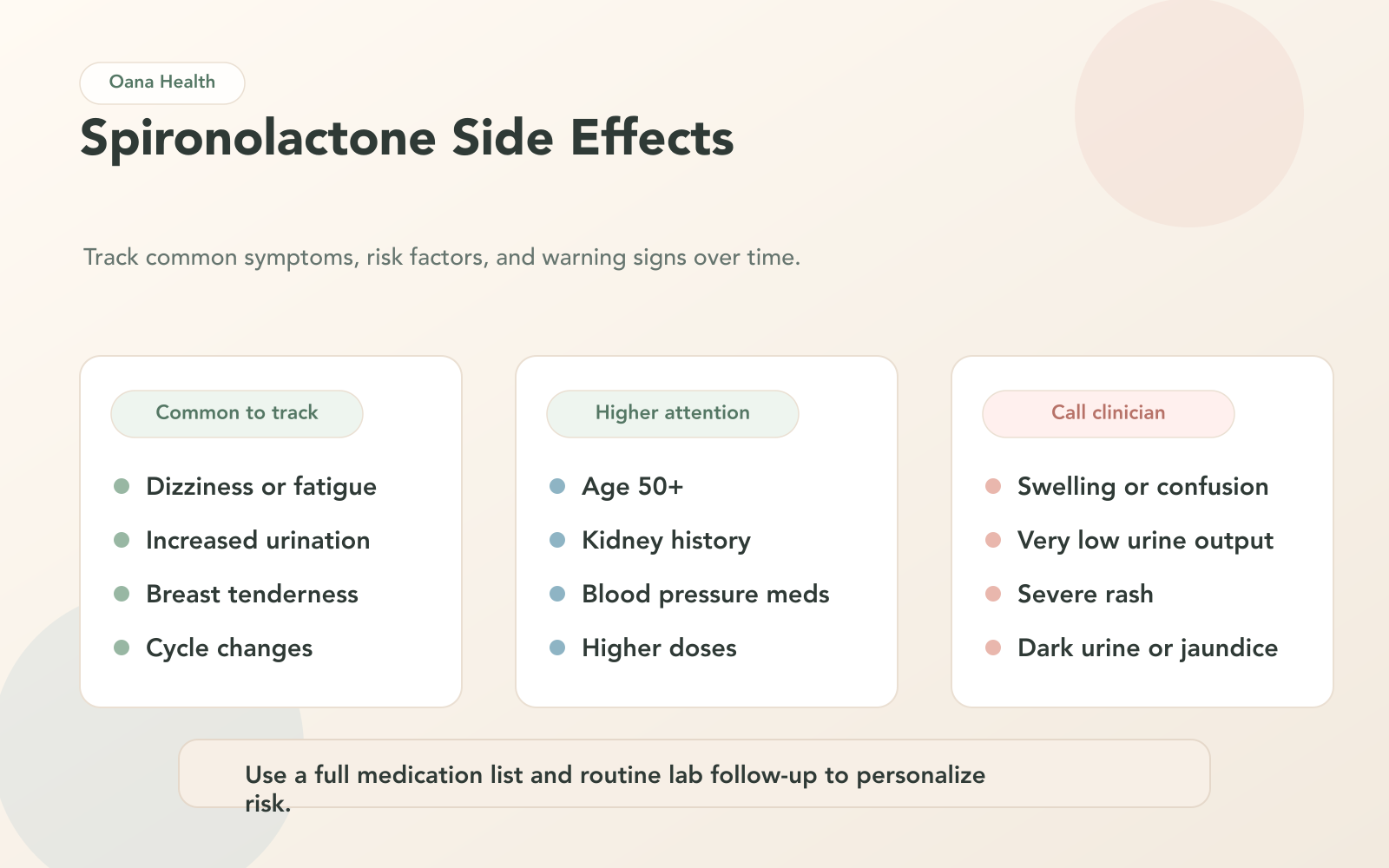
Spironolactone Side Effects Statistics and Risk Factors by Age Group
Spironolactone Q&A with a dermatologist| Dr Dray
sbb-itb-6dba428
Most Common Side Effects in Long-Term Users
Long-term use of spironolactone can lead to distinct side effects, as noted in clinical studies and patient feedback.
Changes in Menstrual Cycles and Hormones
One of the most common side effects in women is menstrual irregularities, affecting 15% to 40% of users. These changes often manifest as shorter cycles, with some women experiencing metrorrhagia - bleeding every 14 days instead of the typical 28-day cycle. The likelihood of these irregularities increases with higher doses; for instance, women taking 200 mg daily are 4.12 times more likely to experience these changes compared to those on lower doses.
In addition, about 3% to 5% of female users report breast tenderness. For men, gynecomastia (breast enlargement) is a side effect seen in approximately 10% of users. These hormonal effects occur because spironolactone interacts with both androgen and progesterone receptors. To manage these side effects, many healthcare providers suggest combining spironolactone with oral contraceptives or a hormonal IUD. Alongside these hormonal changes, the medication’s diuretic properties can lead to other challenges like dehydration.
Increased Urination and Dehydration
As a potassium-sparing diuretic, spironolactone increases urination, which can lead to dehydration. A 50-year retrospective analysis found that dehydration accounted for 6.1% of all reported adverse events in women. To minimize this risk, it's often recommended to take the medication in the morning to avoid frequent nighttime trips to the bathroom. Staying hydrated is also critical - drink plenty of water throughout the day, especially during exercise or in hot weather. Signs of dehydration include dark urine, extreme thirst, or persistent dizziness. If these symptoms occur, consult your doctor. Taking spironolactone with food may also help reduce stomach discomfort. Beyond these effects, some users experience changes in their skin and hair.
Skin and Hair Changes
While spironolactone is commonly prescribed for acne and unwanted hair growth, some users report unusual skin and hair changes. Hair thinning or loss (alopecia) is extremely rare, affecting less than 0.01% of users. On the other hand, some individuals experience increased hair growth in unexpected areas of the body.
Skin reactions such as rashes, hives, and itching are also possible, occurring in about 0.1% to 1% of patients. Additionally, the medication’s diuretic effects may lead to dry mouth and thirst, which can impact skin hydration. If you notice a rash, hives, or yellowing of the skin, contact your healthcare provider immediately, as these could indicate a more serious condition.
Electrolyte Imbalances and Health Risks
Spironolactone works by blocking aldosterone, which leads to the body retaining more potassium and excreting sodium. While this mechanism is beneficial in certain medical conditions, it can disrupt electrolyte balance. Hyperkalemia (elevated potassium levels) and hyponatremia (low sodium levels) occur in about 1% to 10% of patients. In a major heart failure study, 2% of those taking spironolactone developed severe hyperkalemia, compared to just 1% in the placebo group.
The drug can also reduce levels of magnesium, calcium, and chloride. The likelihood of these imbalances increases in people with kidney disease, diabetes, or those using ACE inhibitors, ARBs, or NSAIDs at the same time. Pfizer Medical highlights this risk:
Spironolactone can cause hyperkalemia. This risk is increased by impaired renal function or concomitant potassium supplementation, potassium-containing salt substitutes or drugs that increase potassium.
These chemical changes in the body can cause a range of symptoms, which are important to recognize early.
Warning Signs of Electrolyte Problems
Spotting the symptoms of an electrolyte imbalance early can help prevent serious health issues. High potassium levels might cause a slow or irregular heartbeat, muscle weakness, tingling sensations in the hands or feet, and difficulty breathing. On the other hand, low sodium levels can lead to confusion, extreme fatigue, headaches, nausea, or loss of appetite. In severe cases, it may result in seizures or even loss of consciousness. Other general signs of electrolyte disturbances include muscle cramps, restlessness, dizziness when standing, and unusual urination patterns, which may indicate dehydration or electrolyte issues. The NHS warns:
If you get a slow or irregular heartbeat, tingling feeling, muscle weakness or shortness of breath – these can be signs of potassium levels being too high.
Seek immediate medical help if you experience chest pain, severe confusion, or an inability to move your arms or legs. Addressing these symptoms quickly can lead to timely testing and treatment.
Testing and Prevention Strategies
Routine blood tests are key to catching electrolyte imbalances early. Testing is typically recommended within the first week of starting spironolactone, then monthly for the next three months, and quarterly after that. This consistent monitoring is essential for managing long-term risks.
Dietary adjustments can also help prevent complications. Avoid low-sodium salt substitutes like Lo-Salt, as they often contain potassium, which can raise your potassium levels. Limit high-potassium foods such as bananas, avocados, and nuts. Additionally, consult your doctor before using over-the-counter NSAIDs, as these medications can increase the risk of hyperkalemia and strain kidney function. Staying hydrated, especially during exercise or in hot weather, is another important step, as dehydration can worsen electrolyte imbalances.
Serious Side Effects That Require Medical Attention
While spironolactone is generally well-tolerated, certain severe side effects may require immediate medical attention. These complications, though less common, can pose serious risks if left untreated.
Renal complications are particularly concerning for individuals with pre-existing kidney issues or those taking ACE inhibitors or ARBs. Acute kidney injury has been reported in 15.2% of adverse events. Warning signs include reduced urine output, swelling in the legs or feet, sudden confusion, or rapid weight gain. If you notice these symptoms, seek medical evaluation right away.
Liver toxicity, while rare, can have severe consequences. A 2021 case study highlighted how restarting spironolactone caused a rapid recurrence of liver injury. Symptoms to watch for include yellowing of the skin or eyes, dark urine, pale stools, or upper abdominal pain. Contact your doctor immediately if these occur.
Severe allergic or dermatological reactions such as anaphylaxis, Stevens-Johnson Syndrome (SJS), Toxic Epidermal Necrolysis (TEN), and Drug Rash with Eosinophilia and Systemic Symptoms (DRESS) require urgent care. Symptoms like swelling of the lips or throat, difficulty breathing, or blistering and peeling skin should prompt a 911 call.
Gastrointestinal bleeding is another potential risk, especially with long-term use. Black or tarry stools, coffee-ground-like vomit, or severe stomach pain may indicate internal bleeding. These symptoms should be reported to a healthcare provider immediately.
Additionally, serious blood disorders such as leukopenia (low white blood cells) and thrombocytopenia (low platelets) can occur. These conditions may weaken your immune system or increase your risk of bleeding.
While many side effects of spironolactone can be managed through monitoring spironolactone side effects, these serious complications demand prompt medical attention. Striking a balance between the benefits of treatment and these risks is crucial for safe, long-term use. The table below provides a quick reference for identifying serious side effects, their warning signs, and the actions to take.
| Serious Side Effect | Warning Signs | When to Seek Help |
|---|---|---|
| Acute Kidney Injury / Renal Failure | Reduced urine output, leg/foot swelling, confusion, sudden weight gain | Immediate medical evaluation |
| Liver Toxicity | Yellow skin/eyes, dark urine, pale stools, upper abdominal pain | Contact your doctor immediately |
| Severe Allergic Reactions | Swollen lips/throat, difficulty breathing, skin blistering | Call 911 immediately |
| Gastrointestinal Bleeding | Black/tarry stools, coffee-ground vomit, severe stomach pain | Seek emergency care |
How to Manage Side Effects Over Time
Regular Check-Ups and Dose Adjustments
Keeping an eye on your health through consistent monitoring is crucial for long-term safety. According to the FDA, blood tests should be done within a week of starting or changing your dose, followed by monthly tests for the first three months, quarterly tests for the first year, and then every six months after that. These tests are essential to monitor potassium levels and kidney function, as hyperkalemia (high potassium) has been linked to 16.06% of adverse events in women taking spironolactone.
Age plays a big role in hyperkalemia risk. Women aged 45 and under experience this side effect in only 0.75% to 1.9% of cases. However, for those over 46, the risk jumps to as high as 16%. Women over 65 are especially at risk, being 58 times more likely to develop high potassium than those aged 18–45. For this reason, regular monitoring might not be necessary for healthy women under 45 but is highly recommended for older users.
If side effects like menstrual irregularities or breast tenderness occur, your doctor can adjust your dosage. Around 5% of women may need to lower their dose or stop the medication entirely due to side effects. Scheduling follow-ups every 2–3 months allows your healthcare provider to evaluate your progress and make adjustments before any issues worsen.
Diet and Lifestyle Changes That Help
In addition to regular monitoring, certain dietary and lifestyle tweaks can help manage side effects. Controlling potassium intake is key. Steer clear of low-sodium salt substitutes such as Lo-Salt, as they are high in potassium. It's also wise to limit foods like bananas, avocados, coconut water, nuts, salmon, spinach, and sweet potatoes. If you're unsure how to balance your diet, consulting a dietitian can provide clarity and a personalized meal plan.
Timing and hydration are also important. Taking your medication in the morning can prevent nighttime trips to the bathroom from disturbing your sleep. Staying well-hydrated helps counteract the diuretic effects. If nausea is an issue, try taking spironolactone with or right after a meal, and stick to bland, non-spicy foods.
For dizziness and fatigue, simple adjustments can make a difference. Stand up slowly from sitting or lying down to avoid lightheadedness. Stick to a regular sleep routine and focus on eating a balanced diet rich in fiber and protein. If you're new to the medication or have recently increased your dose, avoid driving or operating machinery until you know how it affects you. As noted by the NHS, "Side effects often happen when you first start taking spironolactone and get better as your body gets used to the medicine".
Online Healthcare for Ongoing Treatment
Telehealth services offer a practical solution for managing spironolactone treatment over the long term. Since regular blood tests and dose adjustments are essential, online healthcare platforms make it easier to stick to this routine. Telehealth platforms provide convenient access to spironolactone prescriptions and ongoing medical support for conditions like acne, hair loss, and unwanted facial hair. For example, Oana Health connects users with licensed professionals who review health histories and prescribe personalized treatments. Medications are shipped directly to your door, with free delivery included.
These online services simplify long-term care by facilitating regular blood tests to monitor potassium and kidney function. With digital tools like questionnaires and photo uploads, you can track your progress between appointments. Providers can then adjust your dosage remotely based on any side effects you report, eliminating the need for frequent in-person visits while maintaining thorough medical oversight.
For women dealing with multiple hormonal issues, Oana Health also offers combination treatments like Metformin & Spironolactone for better hormonal balance, or Topical Spironolactone for hair loss treatment with potentially fewer systemic side effects. This integrated approach ensures safe and effective management throughout your spironolactone journey.
Summary
Long-term use of spironolactone can lead to a range of side effects, from mild to serious. Commonly reported issues include hormonal changes such as menstrual irregularities and breast tenderness, along with increased urination. More serious concerns involve electrolyte imbalances and kidney problems, as highlighted in clinical studies. For instance, women over 65 face a much higher risk - 58 times greater - of developing elevated potassium levels compared to those aged 18–45. Being aware of these risks is essential for making informed treatment decisions.
Regular monitoring plays a key role in managing these risks. Blood tests are recommended within the first week of starting treatment, followed by monthly checks for three months, quarterly tests for a year, and then every six months thereafter. This schedule helps detect potentially dangerous changes early. For example, kidney function deterioration led to treatment discontinuation in 14.5% of heart failure patients in one study. Alongside these checks, lifestyle adjustments can help mitigate side effects.
Dietary changes, such as reducing potassium intake and staying hydrated, are practical ways to manage side effects. Beyond personal efforts, telehealth services have made long-term care more accessible. Platforms like Oana Health simplify the process by offering easy access to prescriptions and ongoing monitoring. Licensed healthcare providers review medical histories, prescribe tailored treatments, and arrange routine blood work to track potassium levels and kidney health. With medications delivered straight to your door and free shipping, these services make managing spironolactone treatment both efficient and safe.
FAQs
How do I know if my potassium is too high on spironolactone?
Signs that your potassium levels might be too high while taking spironolactone include an irregular heartbeat, confusion, trouble breathing, nausea, or a sensation of numbness or tingling in your hands, feet, or lips. To stay on top of this, regular blood tests are crucial - they help monitor your potassium levels and detect any problems early.
Which foods and supplements should I avoid while taking spironolactone?
When you're on spironolactone, it's best to steer clear of foods rich in potassium, such as bananas, avocados, spinach, lentils, and dried apricots. You should also cut back on high-sodium foods, potassium-based salt substitutes, certain fruit juices, dairy products, and celery juice. Additionally, alcohol and too much caffeine should be avoided, as they can contribute to complications like hyperkalemia. Always check with your healthcare provider for guidance tailored to your specific needs.
When should I go to urgent care or the ER for spironolactone side effects?
If you notice severe symptoms such as an irregular heartbeat, confusion, muscle weakness, intense nausea, dehydration, or signs of kidney trouble, seek urgent care or head to the ER immediately. These could be warning signs of serious side effects like hyperkalemia or kidney complications that need prompt medical attention.