
Stopping Spironolactone Before Pregnancy: Timeline Guide
If you're planning to get pregnant and currently taking spironolactone, stopping the medication well in advance is critical to protect your future baby. Spironolactone can interfere with male fetal development due to its anti-androgen effects. Here's what you need to know:
- Why stop spironolactone? It can disrupt male genital development during early pregnancy and cause menstrual irregularities, complicating conception.
- When to stop?
- 1-2 months before trying to conceive: Allows the drug to clear from your system and your menstrual cycle to normalize.
- 3 months before conception: A safer choice to ensure hormone levels stabilize and reduce risks.
- How to stop safely? Consult your doctor, monitor your cycle, and consider alternatives like metformin or topical treatments for managing symptoms like acne or PCOS.
Work closely with your healthcare provider to transition off spironolactone and explore pregnancy-safe options for symptom management.
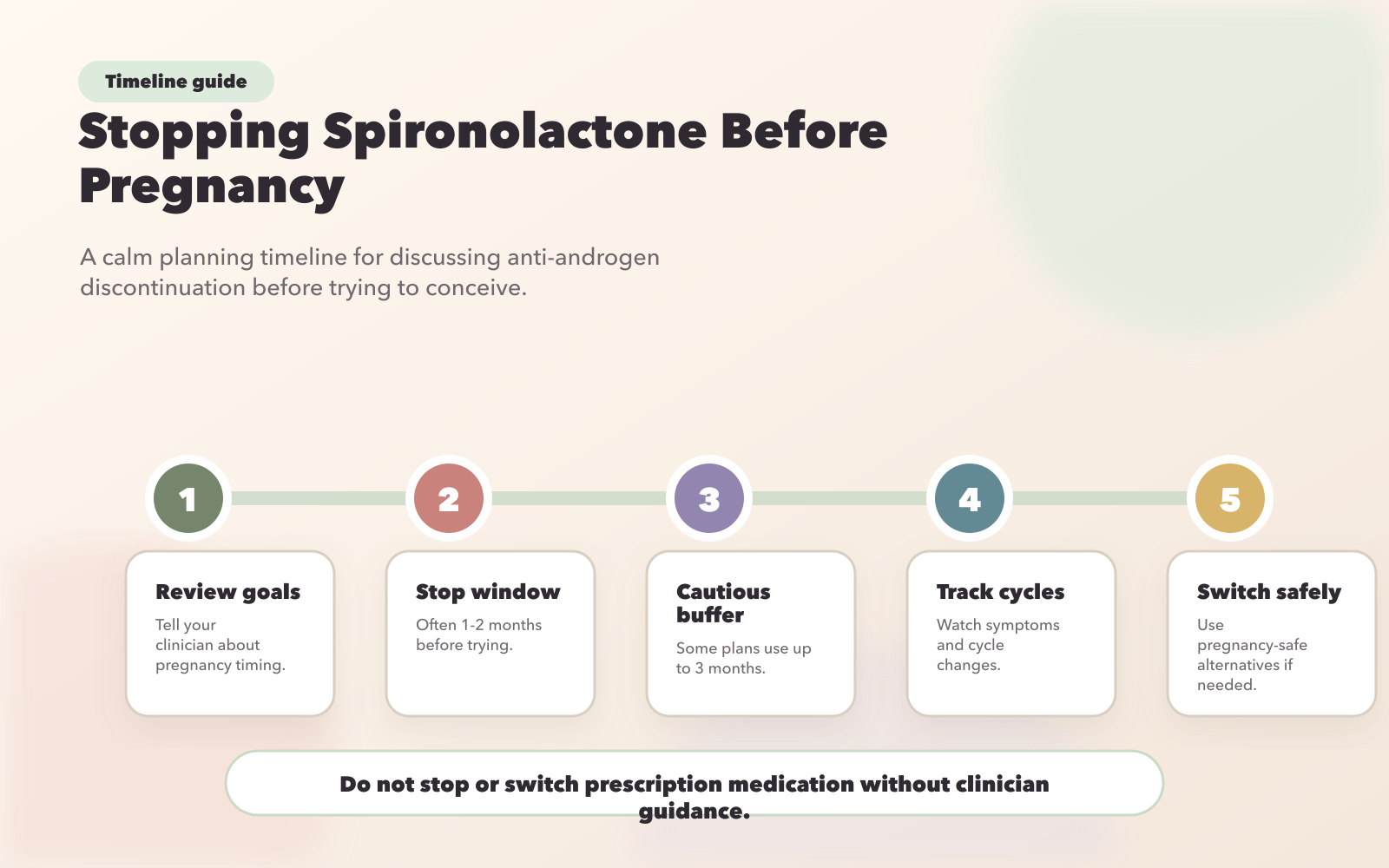
Spironolactone Discontinuation Timeline Before Pregnancy
The half life of spironolactone is 1.4 hours; stop it one month before trying to conceive!
When to Stop Spironolactone Before Trying to Conceive
Timing matters when discontinuing spironolactone to safeguard your pregnancy plans. Depending on your circumstances and your doctor’s guidance, there are two commonly suggested timelines to consider.
The 1-2 Menstrual Cycles Timeline
Some clinical recommendations suggest stopping spironolactone about 1 to 2 months before trying to conceive. This timeframe allows the medication and its byproducts to clear from your system. While spironolactone itself has a short half-life of roughly 1.4 hours, its metabolites may take up to 100 hours (around 4.5 days) to be fully eliminated. Additionally, this period gives your menstrual cycle a chance to normalize, as the drug can sometimes cause irregularities. Waiting for one or two regular cycles helps confirm that ovulation has resumed.
For those seeking extra precaution, a longer waiting period might be the better option.
The 3-Month Timeline
A more cautious approach involves stopping spironolactone at least 3 months before attempting conception. This extended timeline ensures your hormone levels have stabilized completely.
"Women should discontinue spironolactone at least 3 months before attempting to conceive to avoid potential feminizing effects on a male fetus." – Praxis Medical Insights
Most hormonal levels return to normal within 2 to 4 weeks after stopping the medication, and fertility typically rebounds about 2 months later. Following a 3-month waiting period allows for thorough preparation and planning. During this time, you can also explore pregnancy-safe alternatives to manage your symptoms without risking your future pregnancy.
Up next, find out how to safely discontinue spironolactone.
How to Safely Stop Taking Spironolactone
Discontinuing spironolactone isn’t something you should do on a whim. It requires a thoughtful plan and guidance from your doctor to ensure the process is smooth and safe, especially if you’re preparing for pregnancy. Here’s how to approach it step by step.
Step 1: Talk to Your Doctor
Your first move should be consulting your healthcare provider. They’ll confirm a negative pregnancy test, discuss reliable contraception to prevent any accidental pregnancies during the transition, and help you explore pregnancy-safe treatment options. Depending on why you’re taking spironolactone, your doctor will guide you differently. For hypertension or heart failure, they’ll recommend alternative medications. If it’s for conditions like PCOS or acne, the focus will shift to safer options that align with your pregnancy plans.
Step 2: Taper Your Dose (If Necessary)
How you stop spironolactone depends on the condition being treated. For acne, you can usually stop the medication abruptly because it doesn’t cause withdrawal or dependency. As noted by Praxis Medical Insights:
"Unlike its use in heart failure where gradual tapering is required, spironolactone for acne does not require dose reduction or weaning." – Praxis Medical Insights
However, if you’re taking it for heart failure, tapering is essential to avoid rebound effects. Your doctor will design a schedule to gradually lower your dose. Don’t attempt to adjust your dosage on your own - this could lead to symptoms returning or worsening.
Step 3: Monitor Your Menstrual Cycle and Symptoms
Once you stop spironolactone, start paying close attention to your menstrual cycle. Around 15%-30% of patients experience irregularities, so using a calendar or tracking app can help you stay organized. Look for signs of ovulation to confirm your cycle is back on track before trying to conceive.
It’s also important to watch for the return of hyperandrogenic symptoms, such as acne or excess hair growth. Studies show about 32% of patients experience a relapse, with acne often reappearing within 3 to 6 months after stopping the medication. Keeping a simple log of your symptoms will be helpful for follow-up discussions with your doctor.
Step 4: Switch to Pregnancy-Safe Treatments
Before discontinuing spironolactone, work with your doctor to find safe alternatives. Here are some common options:
| Condition | Alternatives |
|---|---|
| Acne / Hirsutism | Topical treatments, mechanical hair removal |
| Hypertension | Methyldopa, labetalol, or nifedipine |
| Heart Failure | Hydralazine, nitrates, or metoprolol |
For women with PCOS, metformin is often suggested. It’s a safer option for managing insulin resistance and can also improve fertility. Having these alternatives ready will help maintain symptom control during your pregnancy planning phase. Once your treatment plan is adjusted, you can focus on managing PCOS symptoms and preparing for a healthy pregnancy.
sbb-itb-6dba428
How to Manage PCOS Symptoms After Stopping Spironolactone
When you stop taking spironolactone, PCOS symptoms might reappear. The good news? There are pregnancy-safe treatments that can help you manage these symptoms while you're preparing to conceive.
Safe Treatment Options During Pregnancy Planning
There are several ways to manage PCOS symptoms without affecting your pregnancy plans. Metformin is a common choice for addressing insulin resistance, a key issue for many women with PCOS. It’s generally considered safer during this phase and may even help regulate your menstrual cycle.
For hair loss, topical spironolactone can be applied directly to the scalp. Since it has minimal systemic absorption, it’s a safer option while planning for pregnancy. If unwanted facial hair is a concern, eflornithine cream can slow down hair growth without the broader effects of oral medications.
Struggling with acne? Topical treatments like benzoyl peroxide or azelaic acid are often safe to use during this time. A doctor can guide you in building a skincare routine that tackles breakouts without interfering with your plans to conceive. For tailored solutions, platforms like Oana Health provide personalized treatment plans using pregnancy-safe options.
To maximize the benefits of these treatments, combine them with healthy eating habits and regular physical activity.
Diet and Lifestyle Changes
Diet and lifestyle adjustments are powerful tools for managing PCOS symptoms. A low-glycemic diet packed with whole grains, lean protein, and plenty of vegetables can help stabilize blood sugar levels and reduce insulin resistance. Choosing foods that promote hormonal balance is key.
Exercise is equally important. Aim for at least 150 minutes of moderate activity each week - whether it’s brisk walking, swimming, or cycling. Regular physical activity not only improves insulin sensitivity but can also help regulate your menstrual cycle, making conception more likely.
Stress can also play a role in PCOS symptoms, so incorporating relaxation techniques like yoga, meditation, or even simple breathing exercises can help lower cortisol levels. By combining these lifestyle changes with medical treatments, you’re creating a well-rounded approach to managing your symptoms while planning for pregnancy.
Conclusion
Stopping spironolactone before pregnancy requires careful planning and guidance from a healthcare professional. This guide has outlined key steps, including understanding the medication's risks, determining the best timeline for discontinuation, safely stopping treatment, and managing symptoms during the transition.
A 3-month washout period is recommended to ensure the drug is fully cleared from your system and to allow your hormones to stabilize before conception. This timeline also provides added protection during the critical early weeks of fetal development. These steps help create a safer foundation as you prepare for pregnancy.
It's crucial to work closely with your healthcare provider throughout this process. They can help you transition to pregnancy-safe alternatives, monitor for recurring symptoms, and ensure you're using effective contraception during the washout period. Since individual conditions may require tailored approaches, professional guidance is key.
After stopping spironolactone, managing PCOS often involves pregnancy-safe treatments and lifestyle changes. Options like metformin for insulin resistance, topical treatments for acne, and a low-glycemic diet for hormonal balance can be effective. For additional support, Oana Health offers telehealth consultations with specialists in PCOS and hormonal health.
Keep in mind that 15%–30% of individuals may experience menstrual irregularities after stopping spironolactone, but these typically resolve within 1–2 cycles. Give yourself time to adjust and maintain open communication with your healthcare team as you navigate your pregnancy planning journey.
FAQs
What if I get pregnant while still taking spironolactone?
If you find out you're pregnant while taking spironolactone, reach out to your healthcare provider right away. It's recommended to stop spironolactone at least three months before trying to conceive, as it may pose risks to fetal development, particularly in male fetuses. Since spironolactone is not safe to use during pregnancy, your doctor can guide you on the best and safest next steps.
How long after stopping spironolactone will I start ovulating again?
Most women usually begin ovulating again roughly two months after discontinuing spironolactone. However, this timeline can differ from person to person, so it’s a good idea to check with your healthcare provider for advice tailored to your situation.
Which acne or PCOS treatments are safest while trying to conceive?
When managing acne or PCOS while trying to conceive, topical treatments and lifestyle adjustments are often the safest choices. It's important to note that medications like spironolactone should be discontinued at least 1–2 months before conception due to possible risks to male fetuses. Always seek personalized advice from a healthcare provider to ensure safety and effectiveness.