
High-Dose Birth Control for PCOS Symptoms
High-dose birth control pills (30–35 μg ethinylestradiol) are a primary treatment for managing PCOS symptoms like irregular periods, acne, and excess hair growth. These pills work by balancing hormones, lowering androgen levels, and increasing SHBG to reduce free testosterone. They also protect the uterine lining, reducing risks like endometrial hyperplasia. Results typically take 6–12 months of consistent use.
Key points:
- Regulates cycles: Stabilizes menstrual periods and reduces uterine cancer risk.
- Improves skin: Reduces acne by lowering free testosterone.
- Slows hair growth: Anti-androgenic effects help with hirsutism.
- Progestin types: Newer options like drospirenone and dienogest offer additional benefits for specific symptoms.
For more severe cases, combining birth control with treatments like spironolactone or metformin may provide better results. Tailoring the choice of birth control to individual needs is critical for effective PCOS management.
Birth Control Pills in PCOS Treatment – Benefits, Risks & All You Need to Know
How High-Dose Birth Control Treats PCOS Symptoms
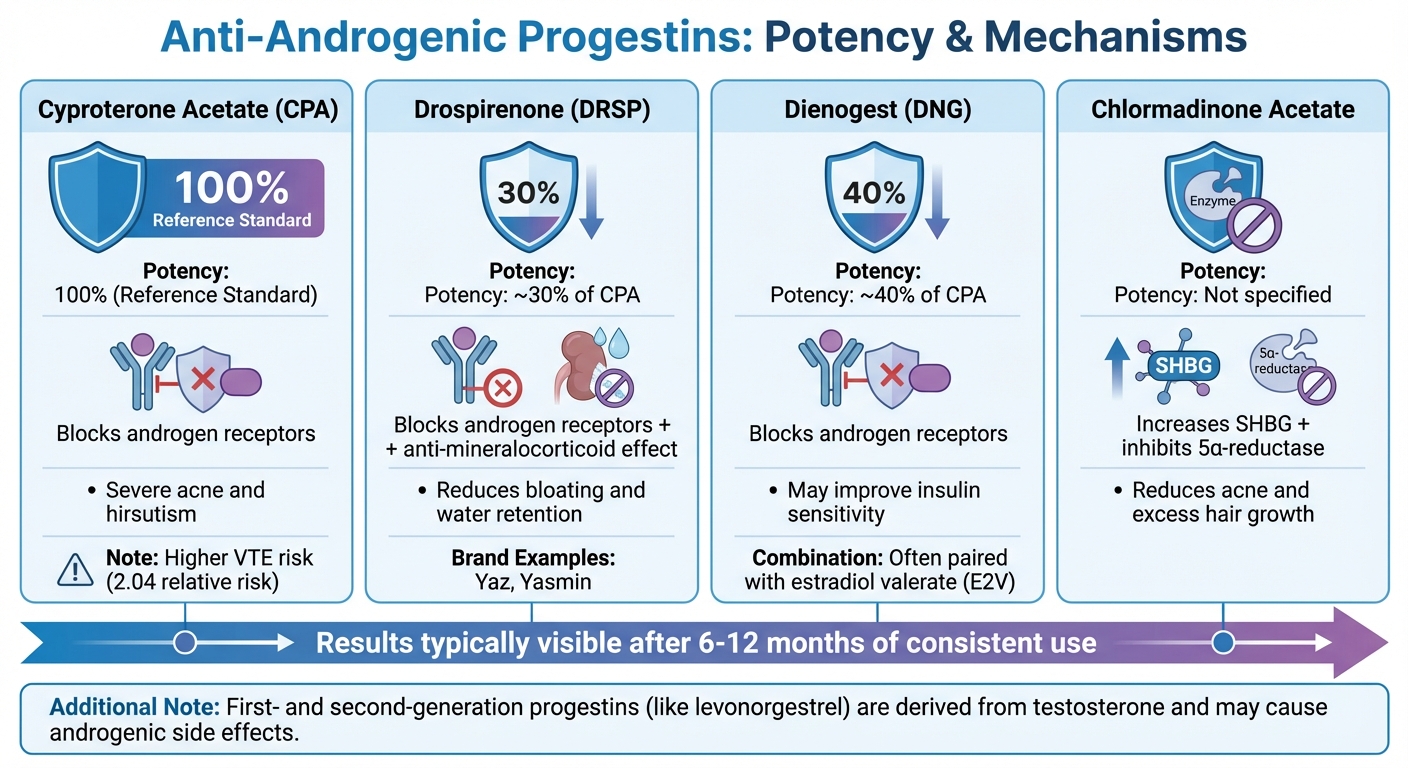
Anti-Androgenic Progestins for PCOS: Potency Comparison and Mechanisms
High-dose birth control pills are often used to address the hormonal imbalances associated with PCOS. These pills typically combine estrogen - usually 30–35 μg of ethinyl estradiol - and progestin to tackle multiple aspects of the condition, offering a multi-faceted approach to treatment.
Stabilizing Menstrual Cycles
One of the key benefits of high-dose birth control is its ability to regulate menstrual cycles. The progestin component works by blocking the release of GnRH, which prevents the LH surge, while estrogen suppresses FSH, stopping the development of a dominant follicle. Estrogen also supports the endometrial lining, ensuring predictable withdrawal bleeding and safeguarding the uterus. Together, these actions help create a hormonal environment that reduces androgen levels.
Lowering Androgen Levels
In addition to regulating cycles, high-dose contraceptives play a crucial role in reducing androgen excess, a hallmark of PCOS. They achieve this through two primary mechanisms. First, by suppressing LH secretion, they directly reduce ovarian androgen production. Second, the estrogen component boosts the liver’s production of Sex Hormone Binding Globulin (SHBG), which binds to free testosterone and renders it inactive. This dual action can lower free testosterone levels by roughly 50%.
"By suppressing LH secretion, the progestin component of COCs inhibits ovarian androgen production, whereas the estradiol component reduces serum free androgen concentrations by increasing SHBG levels." – Seda Hanife Oguz and Bulent Okan Yildiz, Division of Endocrinology and Metabolism, Hacettepe University
This reduction in active androgens helps alleviate symptoms like acne and unwanted hair growth. However, it typically takes 6 to 12 months of consistent use to notice significant improvements.
Anti-Androgenic Properties of Certain Progestins
Not all progestins are created equal when it comes to their anti-androgenic effects. First- and second-generation progestins, such as levonorgestrel, are derived from testosterone and may sometimes cause androgenic side effects. On the other hand, newer progestins are specifically designed to counteract androgens, making them more effective for treating PCOS symptoms.
Cyproterone acetate (CPA) stands out for its strong anti-androgenic activity, directly blocking androgen receptors. Other progestins, like drospirenone (found in brands such as Yaz and Yasmin) and dienogest, offer about 30% and 40% of CPA’s anti-androgenic potency, respectively. Additionally, some progestins, including chlormadinone acetate and norgestimate, inhibit 5α-reductase, which can reduce acne and excessive hair growth. These anti-androgenic effects further enhance symptom relief.
| Progestin Type | Anti-Androgenic Mechanism | Potency Relative to CPA |
|---|---|---|
| Cyproterone Acetate (CPA) | Blocks androgen receptors | 100% (Reference) |
| Drospirenone (DRSP) | Blocks androgen receptors; anti-mineralocorticoid | ~30% of CPA |
| Dienogest | Blocks androgen receptors | ~40% of CPA |
| Chlormadinone Acetate | Increases SHBG; inhibits 5α-reductase | Not specified |
These newer progestins offer additional benefits for managing PCOS symptoms, making them a valuable option for many patients.
Benefits of High-Dose Birth Control for PCOS
High-dose birth control pills, which typically contain 30 to 35 μg of ethinyl estradiol, play a key role in managing PCOS symptoms. They work by addressing the hormonal imbalances responsible for irregular periods, acne, and unwanted hair growth. These pills not only provide symptom relief but also help reduce long-term health risks linked to untreated PCOS.
Controlling Irregular Periods
For women with PCOS, irregular menstrual cycles can lead to both discomfort and serious health issues. High-dose contraceptives help regulate these cycles by suppressing hormone surges that disrupt the natural rhythm. The progestin component of these pills keeps the uterine lining thin, which significantly lowers the risk of endometrial hyperplasia and even reduces the risk of endometrial and ovarian cancer by nearly 30%.
"The primary use of birth control for PCOS patients is to help establish a regular bleeding cycle." – Hey Jane
By ensuring predictable withdrawal bleeding, these pills help the uterine lining shed regularly, eliminating the risks associated with prolonged estrogen exposure without progesterone. This hormonal balance also sets the stage for improvements in other PCOS-related symptoms, such as acne and excess hair growth.
Clearing Acne
Another benefit of high-dose birth control is its ability to improve skin clarity. Acne, which affects more than 60% of women with PCOS, is often triggered by elevated androgen levels that lead to increased oil production. The estrogen component in these pills stimulates the liver to produce more sex hormone-binding globulin (SHBG), which binds to free testosterone, making it unavailable to activate oil glands. Higher doses of ethinyl estradiol (30 to 35 μg) are particularly effective, boosting SHBG levels by 150% to 250%, compared to just 50% with lower-dose pills. This results in a 61% reduction in free testosterone levels and noticeable improvements in skin clarity.
Specific brands of combined oral contraceptives have even been FDA-approved for acne treatment. However, results take time - most women need at least six months of consistent use to see significant improvements.
Slowing Unwanted Hair Growth
Excess facial and body hair, known as hirsutism, is another common PCOS symptom caused by high androgen levels. High-dose birth control addresses this issue through its anti-androgenic properties. The progestins in these pills block androgen receptors and inhibit the enzyme that converts testosterone into dihydrotestosterone (DHT), a more potent form of the hormone.
"A minimum duration of 6 months is required to assess treatment response regarding hirsutism." – Bulent Okan Yildiz, Division of Endocrinology and Metabolism, Hacettepe University
Since hair growth follows a slow cycle, improvements take time. For more persistent cases, high-dose birth control can be combined with other treatments, such as eflornithine cream or laser hair removal. Consistency is key to maintaining hormonal balance and achieving long-term results.
sbb-itb-6dba428
Selecting the Right High-Dose Birth Control
When it comes to managing PCOS with high-dose birth control, there’s no universal solution. The type of progestin in your prescription should be tailored to your specific symptoms, whether it’s acne or unwanted hair growth. Combined oral contraceptives are the go-to option for treating PCOS, but the right choice depends on your unique health needs and the symptoms you want to address.
Common High-Dose Formulations
For PCOS, fourth-generation progestins with anti-androgenic properties are often the top choice. Among these, cyproterone acetate (CPA) stands out for its strong anti-androgen effects, making it particularly effective for severe acne and hirsutism. However, CPA isn't without risks - it has a higher chance of causing venous thromboembolism (VTE), with a relative risk of 2.04 compared to second-generation progestins. Because of this, CPA is usually reserved for moderate to severe cases.
Drospirenone (DRSP), another option, offers about 30% of CPA’s anti-androgenic activity and helps counter water retention. This can be a great choice for women who are concerned about bloating or weight gain. Some brands, like Yaz, use a 24-day active pill cycle, which helps reduce the return of symptoms during the placebo period.
Dienogest (DNG) provides anti-androgenic effects at about 40% of CPA’s potency. When combined with estradiol valerate (E2V), it may even improve insulin sensitivity without negatively affecting lipid profiles, making it an appealing option for women with metabolic concerns. These metabolic factors often play a role in choosing the best formulation.
Options for Women with Metabolic Concerns
For women with PCOS who also face metabolic challenges, the choice of birth control becomes even more nuanced. Between 40% and 85% of women with PCOS are overweight or obese, and metabolic syndrome affects 33.4% to 47% of this group. For those dealing with insulin resistance or obesity, formulations containing natural estrogens, like estradiol valerate or estetrol, are often preferred. These options are considered more neutral for metabolism compared to synthetic ethinyl estradiol (EE), as they have a lesser impact on liver protein synthesis, including clotting factors and lipid profiles.
To assess cardiometabolic risks, women with PCOS should undergo baseline evaluations of BMI, waist circumference, blood pressure, and lipid levels. For those with obesity or a family history of diabetes, an oral glucose tolerance test (OGTT) is recommended over relying solely on fasting glucose measurements.
"Individual risk assessment is the key in order to avoid unfavorable outcomes related to COC use in women with PCOS." – Seda Hanife Oguz and Bulent Okan Yildiz, Division of Endocrinology and Metabolism, Hacettepe University
Reducing Side Effects
Adjusting the hormone-free interval in birth control regimens can help minimize side effects. For example, a 24+4 schedule (24 active pills followed by 4 placebo pills) instead of the traditional 21+7 regimen helps maintain steadier hormone levels and reduces breakthrough bleeding. For women prone to menstrual-related side effects, skipping the placebo days altogether and using continuous dosing may be effective. Studies show that 97% of women return to regular menstrual cycles within 90 days after stopping continuous dosing.
Taking the pill at night can also help reduce nausea. Additionally, if using drospirenone, it’s important to monitor potassium levels during the first treatment cycle, especially if you’re also taking medications like NSAIDs or ACE inhibitors that can raise potassium. Given the increased VTE risk during early use, CPA-containing formulations should be reserved for moderate to severe cases.
Combining High-Dose Birth Control with Oana Health Treatments
High-dose birth control plays a key role in managing PCOS by regulating hormonal imbalances, but it doesn't address every aspect of the condition. PCOS often impacts metabolic and dermatologic systems, so combining birth control with additional treatments can provide a more comprehensive solution. This multi-faceted approach tackles persistent symptoms like acne, excess hair growth, and insulin resistance more effectively.
Additional Treatments for Ongoing Symptoms
While birth control helps regulate cycles and reduce androgen levels, it may not fully resolve all PCOS symptoms. For example, spironolactone (50–200 mg/day) is widely used to address androgen-related skin and hair issues. However, because it carries teratogenic risks, it must always be paired with contraception.
"In my practice, I believe that the best approach to the long-term hormonal treatment of PCOS for many women is to prescribe a combination of 3 medicines: a combination estrogen-progestin oral contraceptive (COC), an insulin sensitizer, and an antiandrogen." – Robert L. Barbieri, MD, Editor in Chief, OBG Management
Reducing free testosterone levels not only improves acne but also lessens excess hair growth. To further address metabolic issues, metformin is often prescribed. It helps reduce insulin resistance, supports weight loss, and can improve both metabolic and skin-related symptoms. For facial hair, Eflornithine cream (13.9%) offers a topical solution by blocking the enzyme responsible for hair production. However, noticeable results for hair growth treatments typically require at least six months of consistent use.
Accessing Care Through Oana Health
Oana Health simplifies access to these specialized treatments, offering personalized, prescription-based care. Through online consultations with licensed medical professionals, patients can receive medications like metformin ($22/month), spironolactone ($14/month), or eflornithine ($69/month), delivered directly to their door with free shipping. This telehealth approach eliminates traditional barriers to care, making it easier to manage PCOS - a condition that demands long-term treatment and regular monitoring of health markers such as blood pressure and glucose tolerance.
Conclusion
High-dose birth control remains a reliable first-line treatment for PCOS, targeting key hormonal imbalances. These contraceptives help regulate menstrual cycles, lower free testosterone levels by up to 61%, reduce acne, and slow the growth of unwanted hair. Formulations containing 30–35 µg of ethinyl estradiol are especially effective, increasing SHBG levels by 150%–250%, which makes them a strong option for women dealing with severe hyperandrogenism.
That said, hormonal regulation often needs reinforcement. Since PCOS impacts reproductive, metabolic, and dermatologic systems, combining high-dose birth control with medications like metformin and spironolactone can significantly enhance outcomes. This combination tackles insulin resistance and hirsutism more comprehensively, creating a more robust treatment plan.
Oana Health’s telehealth platform supports this approach by offering tailored care plans that integrate contraceptives with additional medications such as metformin ($22/month), spironolactone ($14/month), or eflornithine ($69/month). This personalized model ensures a well-rounded strategy for managing PCOS.
While managing PCOS takes time - often showing noticeable improvements after six months - this integrated approach provides a solid foundation for long-term care and symptom relief.
FAQs
How can high-dose birth control pills help manage PCOS symptoms?
High-dose birth control pills play a key role in managing symptoms of PCOS by addressing the hormonal imbalances that lead to issues like irregular periods, acne, and excessive hair growth. These pills work by suppressing ovulation and stabilizing hormone levels, particularly by lowering androgens such as testosterone, which are often elevated in women with PCOS. This can help regulate menstrual cycles and reduce symptoms like acne and unwanted hair growth.
Some newer formulations of birth control pills, especially those containing progestins like drospirenone, are specifically designed to target androgen-related symptoms. While these pills are not a cure for PCOS, they are highly effective at reducing many of its symptoms by balancing hormone levels, offering improved symptom management and a better quality of life for many women dealing with the condition.
What side effects can high-dose birth control have when treating PCOS symptoms?
High-dose birth control pills are often used to help manage symptoms of PCOS, such as irregular menstrual cycles, acne, and excessive hair growth. While they can be effective, they may also bring potential side effects. For some, this could include a higher risk of blood clots - especially with certain formulations - or changes in weight and fat distribution. It's worth noting that these side effects can differ widely from person to person.
If you're thinking about using this treatment for PCOS, talking to a healthcare provider is essential. They can evaluate your specific health needs and risks, helping you find a safe and suitable approach tailored to your situation.
Can high-dose birth control be used with other treatments to better manage PCOS symptoms?
Yes, high-dose birth control can be paired with other treatments to better manage PCOS symptoms. This combination often helps balance hormones while targeting specific issues like irregular periods, acne, and excessive hair growth. Adding treatments like metformin or anti-androgens can also improve insulin sensitivity and help reduce symptoms linked to high androgen levels.
Working with a licensed healthcare provider is crucial to develop a treatment plan that fits your individual needs. Combining therapies requires careful monitoring to ensure both safety and effectiveness, helping you achieve the best possible results for managing PCOS.