
Hormonal Acne: Causes and Topical Solutions
Hormonal acne is caused by fluctuations in hormones, particularly androgens like testosterone, which increase oil production in the skin. It often appears on the jawline, chin, and neck and is common in women, with 50% experiencing it in their 20s and 25% in their 40s. Conditions like PCOS and hormonal changes during puberty, menstrual cycles, pregnancy, and menopause can worsen symptoms.
Key Points:
- Main Cause: Hormonal changes leading to excess oil production.
- Common Locations: Jawline, chin, neck, and sometimes chest or back.
- Affected Groups: Women in their 20s (50%) and 40s (25%).
- PCOS Link: Responsible for 90% of hyperandrogenism cases in women.
Treatment Insights: Topical spironolactone directly targets hormonal acne by blocking androgen activity in the skin, reducing oil production. It avoids the side effects of oral medications and has shown significant effectiveness in reducing acne lesions. Other options like benzoyl peroxide and metformin HCL lotion address bacterial or insulin-related factors but don’t tackle hormonal causes directly.
For personalized care, telehealth platforms like Oana Health offer consultations and prescription treatments, including topical spironolactone, delivered to your home for $43/month.
How to manage Hormonal Acne | Dr Davin Lim
Dr. Lim discusses how to manage breakouts using the best ingredients for hormonal acne and professional treatments.
What Causes Hormonal Acne
Hormonal acne stems from internal hormonal fluctuations that directly impact your skin's oil glands. These changes set off a series of events that often result in breakouts.
Androgen Levels and Excess Oil Production
Androgens, particularly testosterone and its more potent form, dihydrotestosterone (DHT), play a central role in sebum production. Mohamed L. Elsaie from the Department of Dermatology and Venereology highlights this by stating:
"Androgens represent the most important of all hormones regulating sebum production."
Inside sebaceous glands, the enzyme 5α-reductase converts testosterone into DHT, which is 5 to 10 times more potent. When androgen levels are high - or when the skin is overly sensitive to these hormones - the sebaceous glands enlarge and produce an excess of sebum. This overproduction clogs pores and creates an environment ripe for bacterial inflammation.
PCOS and Related Hormonal Disorders
Polycystic Ovary Syndrome (PCOS) is the leading cause of hyperandrogenism in women, responsible for more than 90% of cases. The elevated androgen levels seen in PCOS overstimulate sebaceous glands, leading to acne. Studies show that 20% to 40% of women with acne have PCOS, and girls with severe or treatment-resistant acne face a 40% chance of developing the condition.
Insulin resistance, often associated with PCOS, adds another layer to this issue. It promotes higher androgen production and lowers sex hormone-binding globulin (SHBG) levels, leaving more active testosterone circulating in the bloodstream. Other conditions, such as Congenital Adrenal Hyperplasia and adrenal tumors, can also increase androgen production. Additionally, hyperprolactinemia - caused by pituitary problems - may elevate adrenal androgen levels and reduce SHBG.
Dr. Sujata Mehta-Ambalal emphasizes the importance of considering these underlying issues:
"The skin reflects the internal health of the body. Dermatologists should keep a high index of suspicion for other disorders, including PCOS, in their patients with acne."
Understanding these hormonal influences is key to crafting a tailored treatment approach.
Hormonal Changes Throughout Life
Hormonal fluctuations throughout life can trigger or worsen acne. For instance, puberty brings a surge in androgen levels, which stimulates sebaceous glands. Growth hormone also peaks during this time, further converting testosterone into DHT. This explains why acne affects around 80% of people aged 11 to 30.
For women, the menstrual cycle is a common culprit. About 75% of women with acne report premenstrual flare-ups, which are linked to shifts in estrogen and progesterone levels. Pregnancy can also bring hormonal changes that either worsen or improve acne, depending on the individual.
Menopause introduces its own challenges. While androgen levels generally decline with age, falling estrogen levels disrupt the hormonal balance, potentially leading to acne. Medical News Today explains:
"Women who experience acne around menopause usually have androgen levels within the normal range, but falling estrogen levels. It may be this imbalance that gives rise to acne flares."
Even normal androgen levels can overstimulate sebaceous glands when estrogen levels drop, leading to late-onset breakouts or even the first occurrence of acne during perimenopause or menopause.
These diverse hormonal shifts highlight the importance of targeted treatments, which will be explored in the following sections.
How to Recognize Hormonal Acne
Hormonal acne stands out from other types of breakouts due to its distinct characteristics. One of the most noticeable differences is its location. While teenage acne often targets the T-zone (forehead and nose), hormonal acne typically shows up on the lower third of the face - along the jawline, chin, and around the mouth. It can also spread to areas like the neck, chest, shoulders, and back. These patterns can help distinguish hormonal acne from other forms of acne.
Another telltale sign is how hormonal acne looks and feels. It often presents as deep, painful cysts and nodules, along with a mix of blackheads, whiteheads, papules, and pustules. These blemishes tend to linger longer than surface-level breakouts. Unlike fungal acne, which appears as uniform, itchy red bumps, hormonal acne lesions are usually larger, more inflamed, and more varied in appearance. Paying attention to these traits can help confirm whether hormones are the culprit with a hormonal acne severity analyzer.
Timing is another major clue. Hormonal acne often follows a cyclical pattern, linked to hormonal fluctuations. Jenni Salarno from McMaster University's Department of Family Medicine explains:
"Hormonal acne is known for its cyclical nature. Many individuals with hormonal acne notice that their breakouts worsen around the same time each month."
If you track your hormonal health and breakouts, you might notice they tend to worsen in the days leading up to or during your period. This recurring pattern is a strong indicator that hormonal changes are playing a role in your acne.
Topical Spironolactone for Hormonal Acne
When hormones are the driving force behind breakouts, it makes sense to use a treatment that targets the root cause. Topical spironolactone works by blocking androgen activity, addressing hormonal acne directly. Unlike treatments aimed at bacteria or exfoliation, this approach zeroes in on the hormonal triggers behind the problem.
How Topical Spironolactone Works
Topical spironolactone blocks androgen receptors in the sebaceous glands and hair follicles, reducing sebum production and preventing clogged pores. This targeted action minimizes acne while avoiding significant absorption into the bloodstream.
Clinical studies highlight its effectiveness. A 2% spironolactone formulation has been shown to outperform clindamycin in reducing acne lesions, while a 5% gel significantly decreases overall lesion counts (p = 0.007). Research suggests that topical spironolactone can reduce acne by 50% to 100%, with noticeable improvements in oiliness within weeks. For most, optimal results appear after 3 to 5 months of consistent use. By addressing hormonal causes directly, this treatment stands out as a reliable option for persistent breakouts.
Benefits of Topical Spironolactone
The topical version offers several advantages over oral spironolactone. It avoids systemic side effects like low blood pressure, dizziness, frequent urination, breast tenderness, and menstrual changes, eliminating the need for potassium monitoring. Dr. Claudia Ricotti, a Dermatology Resident at Cleveland Clinic, explains:
"If you prefer not to take oral medications or it is not recommended to take oral spironolactone due to side effects or medication interactions, your provider may recommend the topical cream."
Topical spironolactone is safe for both men and women, avoiding risks like feminization or gynecomastia associated with the oral form. It also provides a long-term alternative to antibiotics, reducing the risk of antibiotic resistance. According to research published on PubMed:
"Topical spironolactone yields better results than other first-line treatments for acne and displays fewer side effects."
Additionally, as this treatment reduces excess oil, you might find that other skincare products, such as retinoids, feel more irritating over time.
How to Apply Topical Spironolactone
To get the best results, proper application is crucial. Work with your healthcare provider to determine the right concentration for your needs. They can also guide you on how to incorporate it into your skincare routine.
Apply the cream to areas prone to hormonal breakouts, such as the lower face, jawline, and chin. For those with acne on the chest or back, it can be used there as well. Consistency is key - most acne treatments, including this one, require at least three months of regular use to see significant improvements.
Store the medication in a closed container at room temperature, away from heat and moisture. It’s important to note that spironolactone, in any form, is not recommended for those who are pregnant or planning to become pregnant due to potential risks to a male fetus.
If you’re curious about trying topical spironolactone, Oana Health offers consultations with licensed medical professionals to help determine if this prescription treatment is the right fit for your hormonal acne.
sbb-itb-6dba428
Comparing Topical Treatments for Hormonal Acne
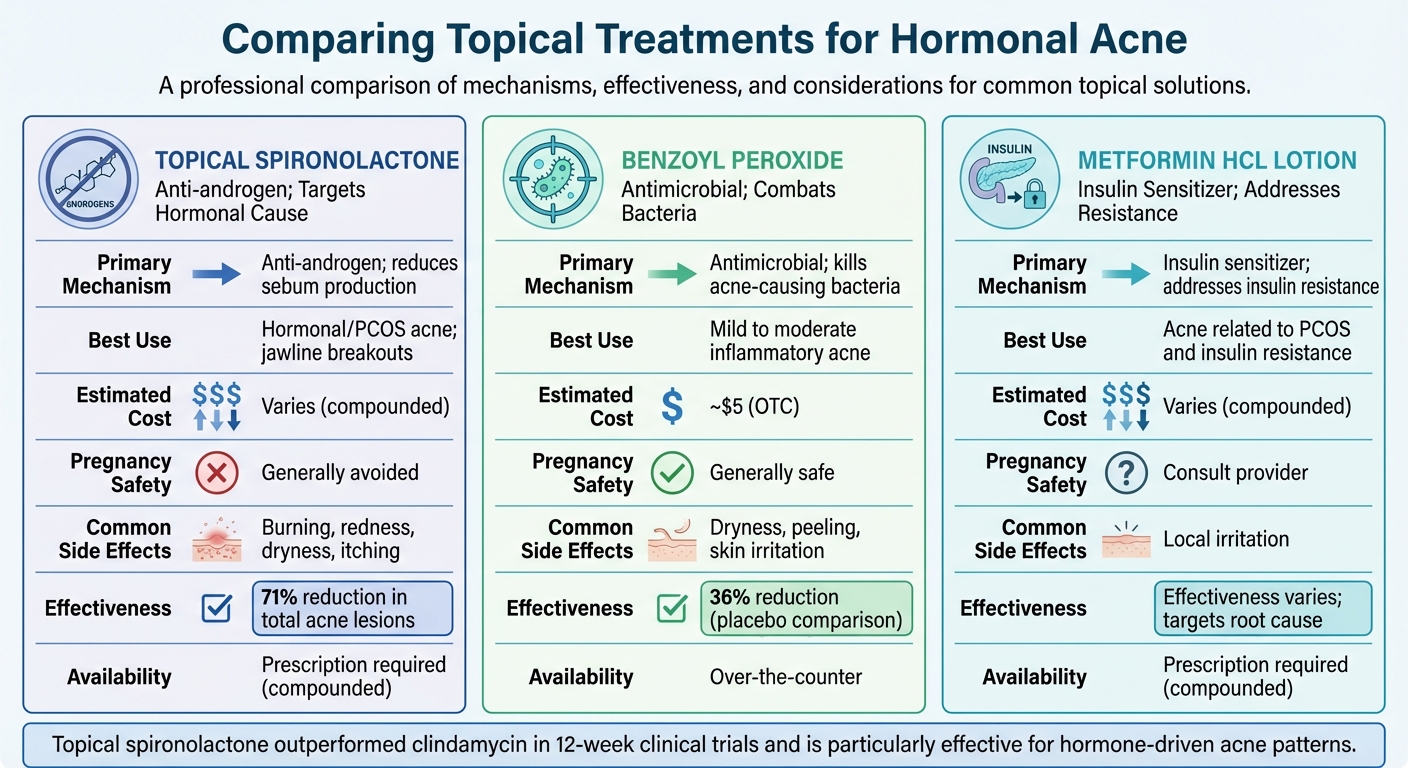
Topical Treatments for Hormonal Acne: Comparison Guide
Understanding how hormonal triggers influence acne is only part of the equation. The next step is comparing how various topical treatments tackle these challenges.
When it comes to hormonal acne, not all topical treatments are created equal. Topical spironolactone works by addressing the hormonal root cause, reducing androgen-driven sebum production. In contrast, benzoyl peroxide serves as an antimicrobial, targeting acne-causing bacteria. Meanwhile, Metformin HCL lotion focuses on insulin resistance, which is often linked to PCOS. Recognizing these differences is key to choosing the right treatment for your specific needs.
As Dr. Jacqueline Zuponcic, an Ob/Gyn at Cleveland Clinic, explains:
"This resistance to standard treatment can be a sign that the acne products aren't addressing the root cause, which is hormones."
How the Treatments Differ
Benzoyl peroxide is one of the most accessible options, available over the counter for about $5. It’s effective for mild to moderate inflammatory acne and is generally safe for use during pregnancy. However, because it doesn’t address hormonal imbalances, some users may find its results limited, even with consistent application.
Topical spironolactone, on the other hand, is designed specifically for hormonal acne. By reducing androgen-driven oil production, it’s particularly effective for patterns like jawline breakouts, adult-onset acne, and menstrual flares. For those dealing with PCOS-related acne, Metformin HCL lotion offers a unique approach by improving insulin sensitivity.
Treatment Comparison Table
| Treatment | Primary Mechanism | Best Use | Estimated Cost | Pregnancy Safety | Common Side Effects |
|---|---|---|---|---|---|
| Topical Spironolactone | Anti-androgen; reduces sebum production | Hormonal/PCOS acne; jawline breakouts | Varies (compounded) | Generally avoided | Burning, redness, dryness, itching |
| Benzoyl Peroxide | Antimicrobial; kills acne-causing bacteria | Mild to moderate inflammatory acne | ~$5 (OTC) | Generally safe | Dryness, peeling, skin irritation |
| Metformin HCL Lotion | Insulin sensitizer; addresses insulin resistance | Acne related to PCOS and insulin resistance | Varies (compounded) | Consult provider | Local irritation |
Accessibility and Effectiveness
One major distinction lies in availability. Benzoyl peroxide is FDA-approved and easy to find, while topical spironolactone requires a prescription and must be obtained through compounding pharmacies since it’s not yet FDA-approved. Despite this, research highlights its potential: topical spironolactone has been shown to reduce total acne lesions by 71%, compared to 36% for a placebo , and even outperformed clindamycin in a 12-week trial . This makes it an excellent option for those who cannot tolerate oral vs topical spironolactone or prefer to avoid antibiotics, offering a targeted solution with fewer systemic side effects.
These differences emphasize the importance of tailoring your treatment approach to your specific hormonal profile and needs.
Getting Personalized Topical Treatments Through Oana Health
You no longer need a traditional doctor’s visit to access prescription-strength topical treatments for hormonal acne. With Oana Health's telehealth platform, you can connect with licensed physicians who specialize in conditions like PCOS and acne - all from the comfort of your home. This service streamlines the process, making personalized care more accessible.
Here’s how it works: Start with a secure online consultation by completing a short form. Within 24 to 48 hours, a licensed provider reviews your information to determine if treatments like topical spironolactone are suitable for you. This careful evaluation ensures your treatment plan is tailored to your specific needs, without the hassle of an in-person appointment.
Once your provider has assessed your case, they create a customized treatment plan designed around your hormonal profile. For example, someone dealing with PCOS-related jawline acne might be prescribed a 5% topical spironolactone cream to help reduce oil production, with noticeable improvements typically seen in four to six weeks. Each prescription comes with clear instructions and is adjusted to fit your unique condition. The cost? $43 per month, including free shipping.
Your prescription is then shipped directly to your doorstep in discreet, temperature-controlled packaging, arriving in three to five days. Beyond just delivering medication, Oana Health provides ongoing support with automated check-ins at two, four, and 12 weeks. You can even schedule video consultations or request adjustments to your treatment plan as needed. This continuous care model is especially helpful for managing hormonal acne, which often requires consistent, long-term attention to achieve lasting improvements.
If you’re ready to explore topical spironolactone or other hormonal acne solutions, visit the Oana Health website to begin your consultation. The service is available to U.S. residents aged 18 and older, with providers screening for pregnancy and potential medication conflicts to ensure safe and effective treatment.
Conclusion
Hormonal acne stems from androgens triggering excess oil production, leading to clogged pores and inflammation. It’s a common issue, affecting about 50% of women in their 20s and 25% of women in their 40s, with breakouts often concentrated around the chin and jawline. Conditions like PCOS are responsible for over 90% of hyperandrogenism in women, while hormonal shifts during puberty, menstrual cycles, pregnancy, and menopause can worsen symptoms.
Because hormonal acne has various underlying causes, treatments need to be customized. For example, topical spironolactone works by blocking androgen receptors directly in the skin, cutting down on oil production without the systemic side effects seen with oral medications. This approach avoids issues like menstrual changes or potassium imbalances, offering a safer yet highly effective alternative to oral spironolactone and traditional topical antibiotics.
Since hormonal acne differs widely between individuals, a personalized treatment plan is key. Addressing your unique hormonal profile ensures better results than relying on generalized solutions.
Thanks to advancements in telehealth, getting tailored care for hormonal acne is more convenient than ever. Services like Oana Health connect you with licensed experts who specialize in hormonal issues, offering prescription-strength treatments delivered straight to your doorstep. Consistent, specialized care from professionals who understand the intricate relationship between hormones and skin can make all the difference in managing acne effectively.
FAQs
How is hormonal acne different from other types of acne?
Hormonal acne stems from hormonal shifts, which can lead to an overproduction of oil and result in deep, painful cysts. It commonly shows up around the lower face, jawline, and chin. On the other hand, other acne types are often linked to factors like clogged pores, bacteria, or irritants from the environment. These can appear in various areas of the body and manifest as blackheads, whiteheads, or smaller pimples.
Pinpointing the cause of your acne is crucial for selecting the right treatment. Hormonal acne often calls for specific approaches, such as prescription-strength topical treatments, to tackle the hormonal imbalance effectively.
What are the benefits of topical spironolactone compared to oral treatments for hormonal acne?
Topical spironolactone offers a focused approach to managing hormonal acne while reducing the risk of systemic side effects. Unlike its oral counterpart, which lowers androgen levels throughout the entire body, the topical form is applied directly to the skin. This localized application targets problem areas without significantly entering the bloodstream, making it a great option for those aiming to avoid issues like electrolyte imbalances or hormonal fluctuations.
Both oral and topical spironolactone work to address hormonal factors that contribute to acne. However, the topical version is particularly suited for individuals seeking a more localized solution with minimal systemic exposure. Deciding between the two often comes down to factors like the severity of the acne, personal preferences, and guidance from a healthcare professional.
Can you manage hormonal acne without a prescription?
Yes, mild hormonal acne can often be treated with over-the-counter options such as benzoyl peroxide or topical retinoids. These treatments work by reducing inflammation and clearing out clogged pores, which are common culprits behind breakouts.
However, if your acne is more severe or doesn’t improve with these remedies, it might be time to consult a healthcare professional. They can recommend prescription treatments designed to target the hormonal imbalances contributing to your acne, ensuring a more tailored and effective approach.