
Targeted Therapies for Hormonal Acne in PCOS
If you’re struggling with stubborn acne that doesn’t respond to typical treatments, PCOS might be the underlying cause. About 42% of women with PCOS experience acne due to hormonal imbalances, particularly elevated androgens like testosterone and DHEA. These hormones increase oil production, clog pores, and lead to inflammation, making PCOS-related acne difficult to manage without addressing the root cause.
Key treatments for hormonal acne in PCOS include:
- Spironolactone: Blocks androgen receptors, reducing oil production and inflammation.
- Birth Control Pills: Balances hormones by lowering free testosterone levels.
- GLP-1 Medications: Improves insulin sensitivity, which helps reduce androgen levels.
- Topical Options: Retinoids, benzoyl peroxide, or androgen-blocking creams for mild cases.
Each option targets specific hormonal triggers, offering solutions for mild to severe acne. Lifestyle changes, like a PCOS-friendly diet and weight management, can further support these treatments. Consult your doctor to create a plan tailored to your needs.
Hormonal Acne & Polycystic Ovary Syndrome (PCOS) Skincare Routine for Lala | DERMATOLOGIST REACTS
sbb-itb-6dba428
How Hormonal Imbalances Cause Acne
When hormones like testosterone and DHEA-S surge in women with PCOS, they trigger the sebaceous glands in the skin to produce more sebum. These glands have androgen receptors that, when activated, ramp up oil production. Additionally, the skin’s 5α-reductase enzymes convert testosterone into dihydrotestosterone (DHT), a stronger androgen that drives even higher sebum levels.
This excess sebum isn’t just more plentiful - it’s also altered in composition. Androgen-driven sebum contains higher levels of squalene and lipid peroxides, along with reduced linoleic acid. This imbalance weakens the skin’s barrier and sparks inflammation. At the same time, androgens slow natural skin cell turnover and increase keratinocyte production within hair follicles. The result? Clogged pores and comedones. Together, these changes create the perfect environment for acne to thrive.
Clogged pores allow Cutibacterium acnes to flourish, leading to inflammation and the development of red papules and deep cysts - types of acne that are often resistant to standard topical treatments.
Hormones That Trigger Acne
Testosterone and DHEA-S are the main culprits behind hormonal acne. Testosterone directly stimulates sebaceous glands while also slowing skin cell turnover, which increases the likelihood of clogged pores. Meanwhile, DHEA-S converts into DHT in the skin, further ramping up oil production.
Insulin resistance can make matters worse. High insulin levels lower sex hormone-binding globulin (SHBG), increasing the amount of free testosterone available to the skin. Elevated insulin also boosts insulin-like growth factor 1 (IGF-1), which stimulates sebum production and accelerates skin cell growth, adding to the problem.
"Testosterone and DHEA tell your skin's sebaceous glands to produce more oil. These hormones can also slow down your skin's turnover rate, making the oil more likely to clog your pores."
- Dr. Jacqueline Zuponcic, DO, Cleveland Clinic
Signs of Hormonal Acne
Hormonal acne tied to PCOS often has telltale signs. One of the most noticeable is its location - breakouts tend to cluster on the lower face, particularly around the jawline and chin. These aren’t just surface-level blemishes; they’re usually deeper, cystic, and often tender or inflamed.
Timing is another clue. Many women report that these breakouts flare up around the same time each month, often aligning with their menstrual cycle or recurring in the same areas. Additionally, these stubborn lesions often resist common treatments like salicylic acid or benzoyl peroxide, suggesting that hormones - not just bacteria or excess surface oil - are the main drivers.
About 20% to 30% of women with hormonal acne also experience hirsutism, which is another indicator of elevated androgen levels. In such cases, blood tests measuring total testosterone, free testosterone, and DHEA-S can help identify the underlying hormonal imbalance.
Main Treatment Options for Hormonal Acne in PCOS
When topical treatments don't deliver results, hormonal therapies can tackle the root causes of PCOS-related acne. Three key options stand out: spironolactone, birth control pills, and GLP-1 medications. Each works differently to address androgen-driven oil production and inflammation.
Spironolactone: Blocking Androgen Receptors
Spironolactone helps manage hormonal acne by targeting androgen receptors in the skin. While originally approved for treating high blood pressure, it's now widely used off-label for PCOS-related acne. Its mechanism involves reducing testosterone levels, speeding up testosterone breakdown, and blocking the enzyme 5-alpha reductase, which converts testosterone into dihydrotestosterone (DHT).
For severe cases, doses between 100–200 mg are common, with noticeable improvements typically seen after about three months. Since spironolactone can harm a developing male fetus, it’s often paired with birth control pills to prevent pregnancy.
"Spironolactone may be effective against hormonal and PCOS acne when other treatments haven't worked." - Dr. Jacqueline Zuponcic, DO, Ob/Gyn, Cleveland Clinic
Potential side effects include menstrual irregularities, breast tenderness, dizziness, and fatigue. Patients are advised to avoid low-sodium salt substitutes and foods high in potassium. While routine potassium monitoring isn’t necessary for healthy individuals, occasional blood tests may be recommended to check kidney and electrolyte levels. For those seeking a localized option, topical spironolactone is available for around $43 per month.
While spironolactone works by blocking receptors, birth control pills take a different route by balancing hormone levels.
Birth Control Pills: Balancing Hormone Levels
Combined oral contraceptives (COCs) are another option for managing hormonal acne. They work by reducing androgen production from the ovaries and adrenal glands while increasing sex hormone-binding globulin (SHBG), which binds free testosterone. The FDA has approved three specific formulations for acne treatment: Ortho Tri-Cyclen (norgestimate/ethinyl estradiol), Estrostep (norethindrone acetate/ethinyl estradiol), and Yaz (drospirenone/ethinyl estradiol). Pills containing low-androgenic progestins like norgestimate, desogestrel, or drospirenone are often preferred.
"Birth control pills can improve acne if you do or do not have PCOS. However, not all types of oral contraceptives have this effect." - Dr. Jacqueline Zuponcic, Ob/Gyn, Cleveland Clinic
Clinical trials show that drospirenone/ethinyl estradiol combinations are particularly effective, with users being four times more likely to achieve "clear or almost clear" skin compared to a placebo. However, drospirenone-containing pills come with a slightly higher risk of blood clots compared to older formulations. Before starting COCs, patients should be screened for contraindications like migraines with aura, smoking (for women over 35), and high blood pressure. Results generally appear within three to six months, with a follow-up review recommended around the six-month mark.
GLP-1 Medications: New Options for PCOS Acne
GLP-1 medications take a different approach by addressing the metabolic issues linked to PCOS. These drugs, like semaglutide, improve improve insulin sensitivity and reduce androgen levels. For women with PCOS, high insulin levels can trigger the ovaries to produce excess androgens like testosterone and DHEA, which increase oil production and slow skin cell turnover - both contributors to acne.
By improving insulin sensitivity and promoting weight loss, GLP-1 medications help lower androgen production. Research suggests that losing just 5% of body weight can significantly improve insulin resistance and reduce acne symptoms tied to PCOS. Unlike spironolactone, which blocks androgen activity directly, GLP-1s work by addressing the underlying metabolic causes.
Oral semaglutide costs around $199 per month and is often part of a broader PCOS treatment plan that includes diet and exercise. While topical treatments like benzoyl peroxide target surface-level symptoms, GLP-1 medications go deeper by tackling the root metabolic drivers of hormonal acne. Consult your healthcare provider to see if this option aligns with your needs.
Treatment Plans Based on Acne Severity
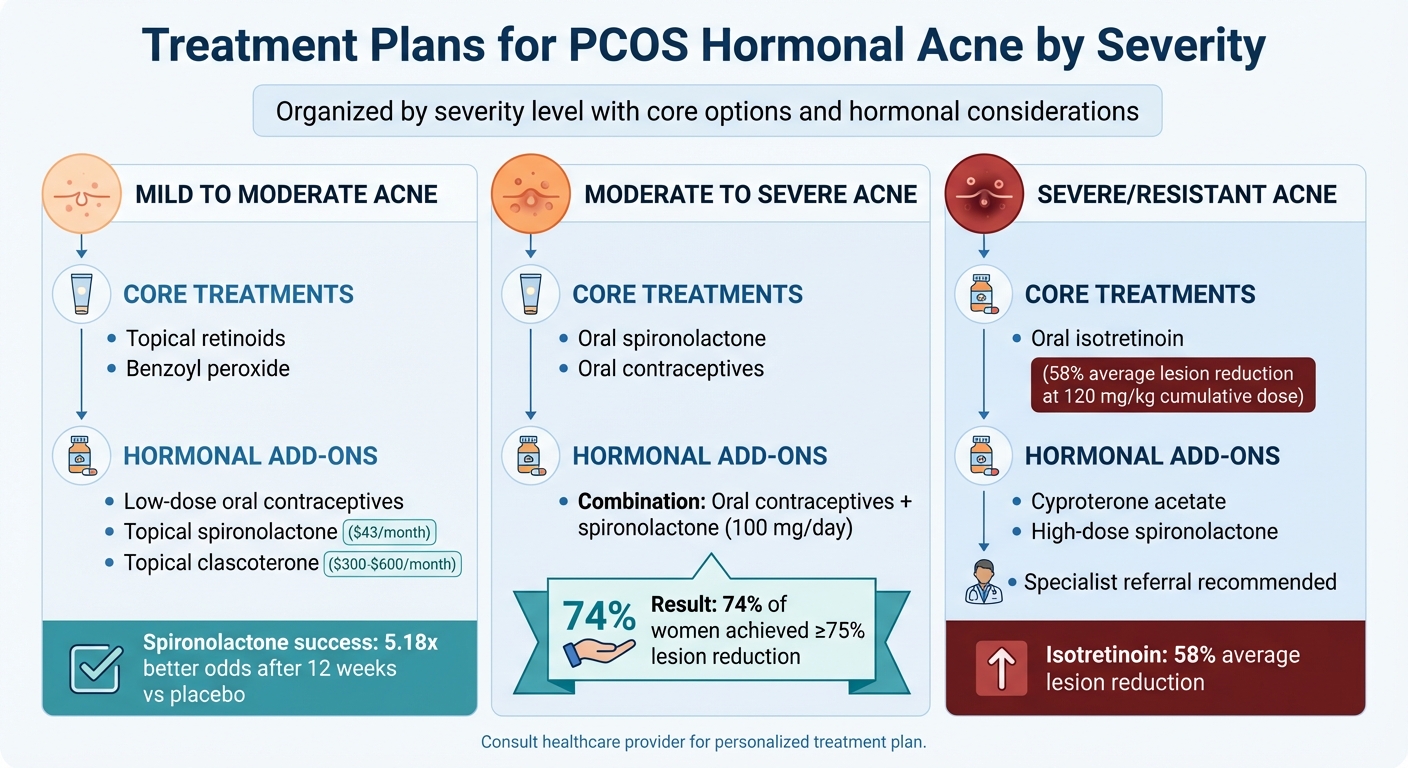
PCOS Hormonal Acne Treatment Options by Severity
When it comes to treating acne, the approach often depends on how severe the condition is. Treatments range from topical options for mild cases to more intensive hormonal therapies for severe or persistent acne.
Mild to Moderate Acne: Combining Topicals and Hormonal Therapies
For mild to moderate hormonal acne, combining topical treatments with hormonal therapies can often deliver better results than using either method alone. A common starting point includes topical retinoids and benzoyl peroxide. If these don’t fully address the issue, adding hormonal options like spironolactone or low-dose combined oral contraceptives can help manage oil production and hormonal triggers.
For women who also need contraception, a low-dose combined oral contraceptive paired with a topical retinoid can be particularly effective. Those who prefer to avoid systemic medications might consider topical clascoterone 1% or topical spironolactone (2–5%), which deliver localized androgen-blocking effects. However, cost can be a factor - topical clascoterone typically ranges between $300 and $600 per month.
This combined approach lays the groundwork for stepping up to more aggressive treatments if needed.
Severe or Treatment-Resistant Acne: Advanced Options
For cases of severe or treatment-resistant acne, oral isotretinoin is often the go-to option. It’s highly effective, achieving an average lesion reduction of 58% at cumulative doses of 120 mg/kg or more. However, due to potential side effects, isotretinoin requires close medical supervision and is strictly contraindicated during pregnancy.
For acne driven by excessive androgens, a combination of spironolactone (100 mg/day) and an oral contraceptive containing drospirenone has shown promising results. Studies report that 74% of women using this combination achieved a 75% or greater reduction in acne lesions. If symptoms persist after six months, consulting a reproductive endocrinologist may be necessary. Additional hormonal treatments, such as cyproterone acetate, could be explored, which has shown effectiveness comparable to isotretinoin in some cases.
These targeted strategies aim to provide long-term skin clarity and control.
| Acne Severity | Core Treatments | Hormonal Add-Ons |
|---|---|---|
| Mild to Moderate | Topical retinoids, benzoyl peroxide | Low-dose oral contraceptives, topical spironolactone ($43/month), topical clascoterone |
| Moderate to Severe | Oral spironolactone, oral contraceptives | Combination of oral contraceptives + spironolactone (100 mg/day) |
| Severe/Resistant | Oral isotretinoin | Cyproterone acetate, high-dose spironolactone, specialist referral |
Maintaining Clear Skin Long-Term
Ongoing Use of Topical Retinoids and Hormonal Treatments
Achieving clear skin is a milestone, but keeping it that way requires sticking to your treatment plan. Hormonal therapies, like spironolactone and combination oral contraceptives, address the androgen-driven pathways behind PCOS-related acne. Meanwhile, retinoids work to normalize skin cell turnover. Together, these treatments provide a comprehensive approach: hormonal medications reduce sebum production at its source, while retinoids help prevent clogged pores, tackling the problem from both inside and out.
Research supports the effectiveness of these treatments. For example, women using spironolactone had significantly better odds of success after 12 weeks compared to those on a placebo, with an odds ratio of 5.18. However, oral contraceptives come with risks, such as a threefold increase in the likelihood of venous thromboembolism compared to non-users. Because of these potential risks, regular check-ins with your doctor - ideally every six months - are crucial to monitor both effectiveness and side effects. Pairing these treatments with healthy lifestyle habits can further support long-term results.
Diet and Lifestyle Factors
While medical treatments form the backbone of clear skin maintenance, diet and lifestyle changes can provide extra support. A low-glycemic diet, for instance, helps stabilize blood sugar levels, reducing insulin spikes that can lead to elevated androgen levels and acne breakouts. Focus on whole foods like vegetables, lean proteins, and complex carbohydrates to keep insulin in check. Adding omega-3-rich foods, such as salmon, walnuts, and flaxseeds, can also help lower inflammation linked to PCOS.
Weight management is another crucial factor. Dr. Jacqueline Zuponcic, an Ob/Gyn at Cleveland Clinic, emphasizes:
"Losing just 5% of your body weight can make a difference"
in reducing insulin resistance and improving PCOS symptoms. Exercise plays a key role here - combining aerobic activities like walking or swimming with strength training can improve metabolism and help maintain a healthy weight. Stress management is equally important, as elevated cortisol levels can increase oil production and inflammation. Aim for 7–9 hours of quality sleep each night, and consider relaxation techniques like yoga or meditation to keep stress in check. Even small changes, like drinking spearmint tea, may help lower testosterone levels slightly.
Conclusion
Treating PCOS-related acne effectively means addressing androgen imbalances at their root. Research highlights that spironolactone nearly doubles the chances of treatment success (pooled OR 2.51), and when combined with hormonal therapies, it provides lasting results without contributing to antibiotic resistance. Options such as spironolactone, oral contraceptives, topical clascoterone, and GLP-1 medications offer reliable pathways for managing symptoms.
It's important to work closely with your healthcare provider to develop a treatment plan tailored to your unique health needs and lifestyle. Regular check-ins - ideally every six months - can help track your progress and make necessary adjustments. As Dr. Jacqueline Zuponcic from Cleveland Clinic points out:
"You may be told that acne, hair growth or other PCOS symptoms are just something you have to live with, but this isn't the case. Safe, effective therapies are available and you deserve effective treatment that fits your life."
If PCOS-related acne persists, consider long-term solutions that target the hormonal causes. Oana Health offers telehealth consultations with licensed professionals who specialize in PCOS and hormonal therapies. Through personalized, prescription-based care delivered directly to your home, you can access treatments like spironolactone designed to address the root causes of your acne. Science-backed solutions are available - you deserve a plan that works for your body.
FAQs
How does spironolactone help with hormonal acne in women with PCOS?
Spironolactone is often used to manage hormonal acne in women with PCOS by blocking androgens like testosterone and DHEA. These hormones can overstimulate the skin's oil glands, leading to excessive oil production, clogged pores, and ultimately, acne. By limiting the impact of these hormones, spironolactone helps reduce oil production, gradually improving acne symptoms.
This treatment is frequently recommended for women with PCOS because it directly addresses one of the primary causes of hormonal acne, offering a researched-based approach to achieving clearer skin.
How does insulin resistance contribute to hormonal acne in women with PCOS?
Insulin resistance plays a key role in hormonal acne for women dealing with PCOS. When the body becomes resistant to insulin, it compensates by producing more of the hormone. These elevated insulin levels can push the ovaries to produce excess androgens (male hormones). The result? Overactive sebaceous glands that produce too much oil. Combine this with slower skin cell turnover, and you’ve got the perfect recipe for clogged pores and acne breakouts.
Managing insulin resistance can be an effective way to tackle acne and other PCOS symptoms. Treatments like anti-androgens or medications that improve insulin sensitivity may help. On top of that, lifestyle changes - like eating a balanced diet and staying active - can go a long way in promoting better insulin regulation and improving skin health.
What lifestyle changes can help reduce PCOS-related acne?
Managing acne related to PCOS often involves focusing on lifestyle changes that support hormonal balance and promote healthier skin. A low-glycemic diet - featuring foods like whole grains, leafy greens, and legumes - can help keep blood sugar levels steady, reducing insulin spikes that are often tied to increased androgen levels and acne breakouts. Alongside this, staying properly hydrated, managing stress effectively, and sticking to a consistent skincare routine are all important steps toward improving skin health.
There’s also evidence that nutritional supplements and certain herbal remedies can play a supportive role. However, these tend to work best when combined with medical treatments tailored to address the hormonal imbalances driving PCOS-related acne. Together, these lifestyle adjustments and therapies can lead to clearer skin and better overall results.