
Hormone Replacement Therapy: Long-Term Risks to Know
Hormone Replacement Therapy (HRT) can relieve menopause symptoms like hot flashes and night sweats, improve bone health, and address hormonal imbalances. However, it comes with risks, including increased chances of breast, ovarian, and endometrial cancers, as well as heart and blood vessel issues like blood clots and stroke. Timing, delivery method, dosage, and individual health history play major roles in determining these risks.
Key points to know:
- Cancer Risks: Estrogen-progestin therapy raises breast cancer risk, while estrogen-only therapy may lower it short-term but increase it after prolonged use.
- Heart and Stroke Risks: Oral HRT raises risks of blood clots and stroke, while transdermal options (patches, gels) are safer.
- Gallbladder and Cognitive Risks: Oral HRT increases gallbladder disease risk, and starting HRT after 60 may heighten dementia risk.
- Timing Matters: Starting HRT before age 60 or within 10 years of menopause lowers risks compared to starting later.
For safer use:
- Opt for the lowest effective dose for the shortest time.
- Consider transdermal methods over oral.
- Regularly reassess with your doctor and stay up-to-date on screenings.
HRT isn’t one-size-fits-all. Work with your healthcare provider to weigh the benefits and risks based on your unique health profile. You may also explore natural ways to balance hormones alongside medical treatments.
Dr. Jewel Kling - What are the risks and benefits of hormone therapy?
sbb-itb-6dba428
Long-Term Health Risks of HRT
Hormone Replacement Therapy (HRT) is a proven method for alleviating menopausal symptoms, but it comes with potential long-term risks. These risks depend on factors like the type of hormones used, how long the therapy lasts, and individual health profiles. Understanding these risks is crucial for tailoring treatments to meet individual needs, starting with a female hormone symptom analyzer.
Increased Cancer Risk
One of the most discussed risks of HRT is its connection to certain types of cancer.
- Breast cancer: Combined estrogen-progestin therapy (EPT) has been linked to about 5 additional breast cancer cases per 1,000 women over five years. The risk increases for women over 60 or those using EPT for more than a decade. Interestingly, estrogen-only therapy (ET) has shown a 23% reduction in breast cancer incidence and a 40% decrease in breast cancer-related deaths, based on long-term data from the Women's Health Initiative. However, some studies suggest that ET may raise breast cancer risk after more than 10 years of use.
- Endometrial cancer: Women with an intact uterus who use estrogen alone face a higher risk of endometrial cancer. Adding progestin, as in combined EPT, helps protect the uterine lining and effectively neutralizes this risk.
- Ovarian cancer: Both ET and EPT might slightly increase ovarian cancer risk during active treatment. Fortunately, this risk tends to diminish after stopping HRT.
These cancer-related risks provide a foundation for understanding other health concerns tied to HRT, such as cardiovascular issues.
Heart and Blood Vessel Risks
HRT can also affect the cardiovascular system, with notable differences between oral and transdermal (skin-applied) methods.
- Venous thromboembolism (VTE): Oral HRT doubles the risk of VTE, leading to approximately 9 extra cases per 1,000 women during the first year of use. In contrast, transdermal HRT (patches, gels, or sprays) does not increase this risk. Data from the Women’s Health Initiative also highlights that combined EPT adds about 120 cases per 10,000 women over 5.6 years.
"The risk of VTE associated with HRT is greater for oral than transdermal preparations." – National Institute for Health and Care Excellence (NICE)
- Stroke: Oral HRT raises stroke risk, with an estimated 79 additional cases per 10,000 women for ET and 52 cases for EPT. Transdermal HRT, however, does not appear to increase stroke risk. This difference stems from the way oral HRT is processed in the liver, which can elevate coagulation factors and inflammation markers. Transdermal methods bypass the liver, avoiding these effects.
These cardiovascular risks highlight the importance of choosing the appropriate delivery method for HRT. Beyond the heart and blood vessels, HRT also impacts other areas of health.
Gallbladder Disease and Other Risks
Oral HRT significantly raises the risk of gallbladder disease. For example, estrogen-only therapy leads to 377 additional cases per 10,000 women over 7.1 years, while combined EPT results in 260 extra cases over 5.6 years.
For women aged 65 or older, combined EPT has been associated with a higher likelihood of developing probable dementia. The Women’s Health Initiative reported 88 more cases per 10,000 women over four years. This finding supports the "timing hypothesis", which suggests that starting HRT before age 60 or within 10 years of menopause may result in fewer overall risks.
What Affects Your HRT Risk Level
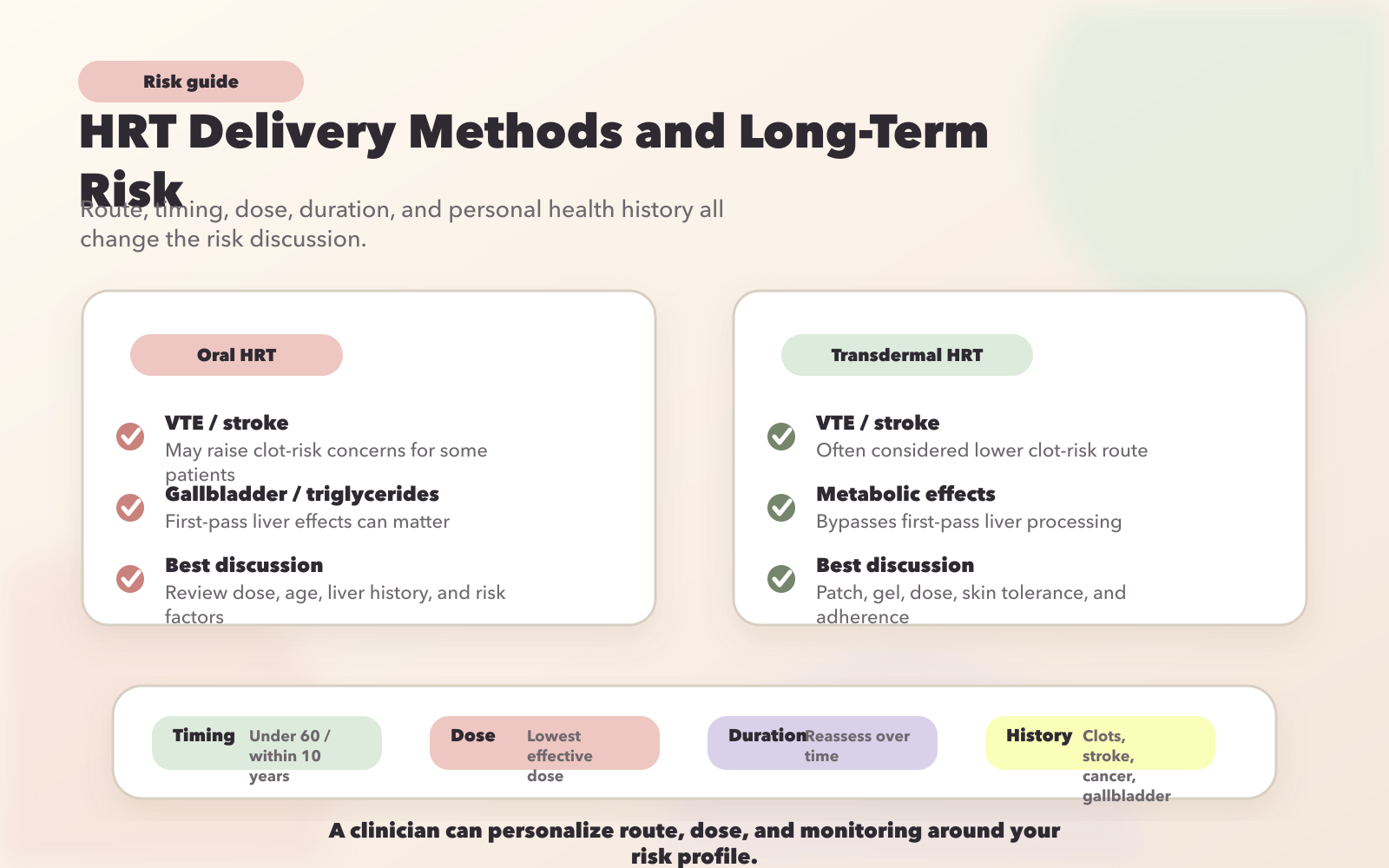
HRT Delivery Methods: Risk Comparison and Safety Guide
Your individual circumstances play a big role in shaping the safety of hormone replacement therapy (HRT). Factors like when you start treatment, how you take it, and your personal health history all contribute to your overall risk profile. Here's a closer look at these key elements.
When You Start HRT
Timing can significantly influence how your body responds to HRT. Starting treatment before the age of 60 or within 10 years of menopause is often considered the "window of opportunity." During this time, the benefits - like improved cardiovascular health - are more likely to outweigh the risks.
For example, women who begin HRT within this 10-year window have a 30% lower mortality rate and experience 48% fewer cardiac events compared to those who start later. Data from the Women's Health Initiative trials also showed that women aged 50–59 using estrogen-only therapy had a trend toward reduced all-cause mortality compared to older age groups.
However, starting HRT after age 60 or more than 10 years past menopause increases risks. A 2026 study involving over 83,000 women found that beginning HRT at age 65 or older was linked with higher rates of cancer, stroke, and heart disease. This is partly because the natural risk of stroke and blood clots rises with age, and HRT can amplify these risks.
"The study authors reinforce current recommendations for a personalized approach to hormone therapy use with regular reassessment of risks and benefits for women as they age." – Dr. Stephanie Faubion, Medical Director, The Menopause Society
If you're considering HRT, it's best to consult your healthcare provider early through telehealth for hormonal health, ideally as soon as menopause symptoms start. The next step is understanding how different methods of delivery and dosages affect your risk.
Dose and How You Take It
The method of delivery for HRT can make a big difference in safety. Oral tablets, for instance, pass through the liver first, which can increase clotting factors and inflammatory markers. This makes blood clots and gallbladder issues more likely. In fact, oral HRT doubles the risk of blood clots, particularly during the first year of use.
On the other hand, transdermal options - like patches, gels, and sprays - bypass the liver, which reduces the risk of blood clots and strokes. These methods are often a safer choice, especially for women with a BMI over 30 kg/m².
| Delivery Method | Blood Clot Risk | Stroke Risk | Best For |
|---|---|---|---|
| Oral Tablets | Increased (approx. 2-fold) | Slightly increased | Women with no clot risk factors |
| Transdermal (Patch/Gel) | No significant increase | No significant increase | Women with higher BMI or clot concerns |
| Vaginal (Low-Dose) | No increased risk | No increased risk | Local symptoms only (e.g., vaginal dryness) |
The dosage also matters. Lower doses of oral estrogen - such as 0.3 mg instead of 0.625 mg - can reduce the risk of stroke while still being effective. For localized symptoms like vaginal dryness, low-dose vaginal creams or tablets can provide relief without the systemic risks of full hormone therapy.
"For all women, the lowest effective dose should be used for the shortest time." – Medicines and Healthcare products Regulatory Agency (MHRA)
Your Medical and Family History
Your personal and family medical history is another critical factor in assessing HRT risks. For women with a uterus, combining estrogen with progestogen is necessary to prevent endometrial cancer, as estrogen-only therapy can increase this risk by three- to ninefold depending on the dose and duration. Women who have had a hysterectomy can safely use estrogen-only therapy.
A history of breast cancer generally rules out HRT. Similarly, a family history of breast or ovarian cancer should be carefully considered when evaluating your options.
Blood clot history is another major consideration. If you or your close relatives have experienced deep vein thrombosis (DVT), pulmonary embolism (PE), or hereditary clotting disorders, the risks associated with oral HRT increase. In such cases, consulting a hematologist and exploring transdermal options may be beneficial.
For women with a BMI over 30 kg/m², the baseline risk of blood clots is already higher, making transdermal HRT the preferred choice. Additionally, if you have a history of heart disease, stroke, or high blood pressure, these conditions should be carefully reviewed, as HRT can elevate these risks - especially for older women or those starting therapy more than 10 years after menopause.
Regular screenings are essential while on HRT. Attend all scheduled mammograms and cervical cancer screenings to monitor for potential complications. It's also a good idea to review your HRT plan with your healthcare provider every year to ensure you're using the lowest effective dose for the shortest necessary duration.
Other Options for Managing Hormonal Health
For women looking to manage long-term hormone replacement therapy (HRT) risks, alternative therapies offer ways to address symptoms while limiting exposure. These options are especially helpful for women who cannot use traditional HRT due to a history of breast cancer, clotting risks, or personal preferences. Alternatives include bioidentical hormones, non-hormonal medications, and telehealth services.
Bioidentical vs. Synthetic Hormones
Bioidentical hormones are designed to exactly replicate the body’s natural hormones, such as 17β-estradiol (found in Vivelle-Dot) and micronized progesterone (like Prometrium). Synthetic hormones, on the other hand, differ structurally from the body’s own hormones. Examples include conjugated equine estrogens (Premarin) and medroxyprogesterone acetate (Provera).
Studies from the Women's Health Initiative highlight the differences in risk between these options. Estrogen-only therapy was shown to reduce breast cancer incidence by 23% and breast cancer mortality by 40%. However, combined synthetic therapy (estrogen with medroxyprogesterone acetate) increased invasive breast cancer risk by 24% after 5.6 years. Observational data also suggest that micronized progesterone may present a lower breast cancer risk compared to synthetic progestins.
"Bioidentical refers to the structure of hormones; bioidentical hormones and endogenous hormones have exactly the same chemical and molecular structures."
– Dr. Richa Sood, Mayo Clinic
Bioidentical hormones come in two forms: FDA-approved versions and custom-compounded products mixed by pharmacists. FDA-approved options are rigorously tested for safety, purity, and accurate dosing. In contrast, compounded products have shown quality issues in 34% of cases during an FDA survey, compared to less than 2% for FDA-approved alternatives.
"No evidence currently suggests that custom CBHT [compounded] formulations offer clinically relevant benefit over the FDA-approved products available to treat the symptoms of menopause."
– Dr. Julia A. Files, Mayo Clinic
These differences highlight the importance of informed decision-making when choosing hormonal therapies.
Non-Hormonal Treatment Options
For women who prefer to avoid hormones, several non-hormonal medications can effectively address specific symptoms. For hot flashes, low-dose antidepressants like Paroxetine (Brisdelle) and Venlafaxine, as well as Gabapentin, have been shown to help. For painful intercourse caused by menopause, Ospemifene (Osphena) is an FDA-approved solution.
Women with polycystic ovary syndrome (PCOS) often benefit from non-hormonal treatments targeting insulin resistance and androgen-related symptoms. Metformin is commonly prescribed to address insulin resistance and may lead to weight loss of around 6.5 to 8.8 pounds (3 to 4 kilograms). For managing acne and unwanted facial hair, Spironolactone is a frequent choice, while Eflornithine cream can slow abnormal facial hair growth, especially when combined with laser or electrolysis treatments.
| Medication | Condition | Monthly Cost |
|---|---|---|
| Metformin | PCOS (Insulin/Weight) | $73 (generic) / $107 (brand) |
| Spironolactone | PCOS (Hirsutism/Acne) | $61 (generic) / $97 (brand) |
| Eflornithine Cream | Facial Hair Growth | $46 (brand) |
| Gabapentin | Menopause (Hot Flashes) | $14 (generic) / $340 (brand) |
"Metformin is probably the first-line medication for obesity or weight reduction in patients with PCOS."
– Dr. Lee Radosh, FAAFP
These non-hormonal options provide effective symptom management while avoiding hormonal exposure.
Telehealth for Personalized Treatment
Telehealth platforms have made hormonal care more accessible and convenient. These services allow for personalized treatment plans tailored to individual needs, often involving trial-and-error to determine the right dosage and regimen. Providers can monitor progress remotely and adjust treatments to ensure the lowest effective dose is used for the shortest necessary time.
For example, Oana Health offers science-backed treatments for hormonal health, PCOS, and weight management. Licensed professionals review your health history and prescribe FDA-regulated medications, which are delivered directly to your home with free shipping. Treatments include options like Spironolactone (starting at $14/month) for acne and unwanted hair, Eflornithine ($69/month) for facial hair growth, and Oral Minoxidil ($25/month) for hair loss. They also offer weight loss and insulin-sensitizing medications like Metformin.
Telehealth is particularly helpful for women needing regular treatment adjustments. Hormonal changes can be unpredictable, and these platforms provide the flexibility and personalized care that traditional in-person visits may lack. Whether you're exploring non-hormonal treatments or bioidentical hormones, telehealth offers a practical way to manage your hormonal health.
How to Reduce HRT Risks
Working with your healthcare provider to adjust your dosage and delivery method is key to managing symptoms while reducing the risks of hormone replacement therapy (HRT).
Use the Smallest Effective Dose
Starting with the lowest dose that eases your symptoms is one of the best ways to minimize HRT risks. Lower doses are associated with fewer complications, such as strokes and blood clots. For instance, FDA-approved ultra-low doses like 0.014 mg/day of transdermal estradiol or 0.3 mg/day of conjugated estrogen can reduce hot flashes and night sweats by approximately 85%.
Finding the right dose may take time, often requiring weeks of adjustments. Keeping a daily symptom journal and sharing it with your doctor can help fine-tune your treatment.
"The goal is to relieve symptoms with the lowest dose possible for the shortest amount of time."
– Cleveland Clinic
Equally important is choosing the right method of delivery.
Choose Safer Delivery Methods
The way you take HRT can significantly impact your risk levels. Transdermal methods - like patches, gels, and sprays - bypass the liver, avoiding the first-pass metabolism that can increase blood clotting factors and raise the risk of venous thromboembolism (VTE) and stroke.
For individuals with a BMI over 30 kg/m², smokers, or those at higher risk for blood clots, transdermal delivery is often recommended. If your symptoms are localized, such as vaginal dryness, low-dose vaginal estrogen formulations can reduce systemic absorption and lower risks.
Adjusting your treatment plan is only part of the equation - regular monitoring is just as essential.
Schedule Regular Check-Ups and Screenings
Routine check-ups, including mammograms, pelvic exams, and blood pressure monitoring, can help detect complications early. The increased breast cancer risk linked to combined HRT typically becomes more apparent after five years of continuous use, making periodic evaluations crucial to reassess whether the benefits outweigh the risks.
"Treatment should be individualized using the best available evidence to maximize benefits and minimize risks, with periodic reevaluation of the benefits and risks of continuing therapy."
– North American Menopause Society (NAMS)
Be sure to report any unusual symptoms, such as unexpected vaginal bleeding, to your doctor immediately. Additionally, adopting a healthier lifestyle - maintaining a healthy weight, exercising regularly, and avoiding smoking - can further reduce risks while on HRT.
Making the Right Decision About HRT
Choosing whether to start hormone replacement therapy (HRT) means carefully weighing short-term symptom relief against potential long-term health risks. Timing plays a key role here. Research suggests that beginning HRT before age 60 or within 10 years of menopause can significantly tilt the balance in your favor. For example, studies show a 50% reduction in heart attack risk and a 35% lower risk of Alzheimer's disease when HRT is started early. However, starting HRT after age 70 or more than 10 years post-menopause may increase risks for heart disease and stroke.
When deciding, consider the severity of symptoms like hot flashes and vaginal dryness, along with your personal and family medical history. Factors like a history of breast cancer, blood clots, or heart disease can influence whether HRT is the right choice for you. For those who’ve had a hysterectomy, estrogen-only therapy is usually recommended, as it carries a lower risk of breast cancer compared to the combined therapy often prescribed for individuals with a uterus. This information helps create a treatment plan tailored to your unique needs.
"It deserves an individualized conversation with your doctor."
– Dr. Kathryn Corelli, Internist and Menopause Specialist, Brigham and Women's Hospital
Personalized care is essential for safe and effective hormone management. For example, transdermal options might be better suited if you are overweight, while low-dose vaginal estrogen could be ideal for addressing localized symptoms. Telehealth platforms like Oana Health make it easier than ever to access licensed professionals who can design customized treatment plans and deliver prescriptions straight to your door.
Stay active in your care by scheduling regular check-ups and keeping an open line of communication with your healthcare provider. Discuss any changes in symptoms or concerns as they arise. Pairing medical treatments with healthy lifestyle habits, such as regular exercise and quitting smoking, can further enhance your overall well-being. It's also important to periodically reassess your treatment to ensure the benefits continue to outweigh the risks as your health needs change. This thoughtful approach helps balance immediate relief with long-term health goals.
FAQs
How do I know if HRT is safe for me?
When it comes to deciding if hormone replacement therapy (HRT) is a good option, it's essential to work with a healthcare professional. They’ll take a close look at several factors, including your age, the severity of your menopause symptoms, and any potential risks like breast cancer or blood clots.
For many women under 60 who don’t have significant risk factors, the potential benefits of HRT often outweigh the risks. That said, every individual is different. Be sure to share your full medical history and voice any concerns you have. This conversation with your provider will help you make the best, most informed decision for your health.
Which HRT type has the lowest long-term risks?
Estrogen-only hormone replacement therapy (HRT) is associated with fewer long-term risks when compared to combined therapy. Research suggests it may lower the risk of breast cancer and generally results in fewer side effects. However, it’s essential to consult a licensed medical professional to find the option that best suits your individual health needs.
What health checks do I need while on HRT?
When undergoing HRT, it’s important to schedule regular health check-ups to keep an eye on potential side effects. These might include headaches, breast tenderness, vaginal bleeding, nausea, mood swings, leg cramps, rashes, diarrhea, or even hair loss. If any of these symptoms become severe or don’t go away, it’s crucial to consult a healthcare provider promptly. Regular evaluations of hormone levels and overall health are also advised to make sure the treatment stays safe and works as intended.