
Metformin and Fiber: A Perfect Match?
If you’re managing PCOS or insulin resistance with metformin, adding fiber to your diet can make a big difference. Fiber helps stabilize blood sugar, reduces inflammation, and even cuts metformin’s side effects by up to 50%. Research shows this combination improves insulin sensitivity, lowers HbA1c levels by 1.0% (vs. 0.6% with metformin alone), and supports a healthier gut microbiome.
Here’s why it works:
- Metformin targets gut bacteria and reduces glucose production in the liver.
- Fiber slows glucose absorption, fuels beneficial gut bacteria, and reduces inflammation.
- Together, they optimize metabolic health and improve medication tolerance.
For best results, aim for 25–30 grams of fiber daily from foods like oats, legumes, and vegetables. Start slow, drink plenty of water, and consult your healthcare provider to create a plan that works for you.
How Metformin Works in the Body
Recent studies reveal that metformin's primary glucose-lowering effect occurs in the gut rather than directly in the bloodstream.
Metformin's Effects on Insulin Sensitivity
Metformin targets a specific process in the intestinal lining by suppressing mitochondrial complex I. This action boosts the secretion of glucagon-like peptide-1 (GLP-1), a hormone that promotes insulin release and helps regulate blood sugar levels. Interestingly, metformin concentrations in the bloodstream are significantly lower - 30 to 300 times less - than in the jejunum, a segment of the small intestine. This highlights the gut as the central site for metformin's activity, laying the groundwork for its impact on gut bacteria.
Metformin and Gut Bacteria
Beyond improving insulin sensitivity, metformin also alters the gut microbiome. It increases the population of beneficial bacteria, particularly Akkermansia species, and influences the production of short-chain fatty acids and bile acid metabolism. These changes are critical for maintaining insulin sensitivity. However, these gut-related benefits are less effective without proper nutritional support.
Why Metformin Alone May Not Be Enough
While metformin offers many benefits, using it alone has its drawbacks. Although it can influence gut bacteria, it doesn’t fully restore the balance of beneficial bacteria without adequate dietary fiber. Its ability to enhance GLP-1 secretion is notably stronger when paired with fermentable carbohydrates.
For example, a 2025/2026 crossover trial conducted at the Chinese University of Hong Kong involved 26 individuals with prediabetes. Participants were given metformin alongside either a moderate or low FODMAP diet for 10 days. Those on the moderate FODMAP diet experienced lower post-meal blood sugar levels and higher GLP-1 secretion. Lead researcher Natural H. S. Chu summarized the findings:
"Moderate FODMAPs with metformin, as compared with low FODMAPs with metformin, result in lower postprandial glycaemia, higher GLP-1 secretion and higher Butyricimonas virosa abundance."
Dietary fiber enhances metformin's ability to regulate gut bacteria and increase GLP-1 secretion. Additionally, metformin alone may not significantly reduce systemic inflammation markers, such as lipopolysaccharide (LPS) levels. These anti-inflammatory effects are more pronounced when dietary fiber is included. However, gastrointestinal side effects remain a challenge for some patients, often preventing them from achieving an optimal dose of the medication.
sbb-itb-6dba428
How Dietary Fiber Supports Metabolic Health
Metformin primarily works in the gut to improve insulin sensitivity, but dietary fiber lays the groundwork to amplify these benefits. Fiber plays a key role in regulating glucose metabolism. Let’s take a closer look at how different types of fiber contribute to these effects.
How Fiber Supports Gut and Metabolic Function
Dietary fiber forms a gel-like substance in the gut, which slows glucose absorption and helps mitigate metformin’s gastrointestinal side effects - cutting them by nearly 50%. This makes fiber an excellent partner for metformin.
Fiber also acts as a fuel source for beneficial gut bacteria. When these bacteria ferment fiber, they produce short-chain fatty acids (SCFAs) like acetate, propionate, and butyrate. These compounds help reduce fat storage and improve glucose uptake in other tissues. Additionally, SCFAs regulate inflammation, which is crucial for addressing the chronic low-grade inflammation linked to insulin resistance.
Metformin and fiber complement each other beautifully: metformin reduces glucose production in the liver, while fiber slows the release of glucose into the bloodstream during digestion.
Different Types of Fiber and Their Effects
Fiber isn’t a one-size-fits-all nutrient - different types provide distinct benefits. Soluble fiber - found in foods like oats, beans, and psyllium husk - dissolves in water to create that gel-like substance. This type is especially effective for managing glucose levels. On the other hand, insoluble fiber, found in whole grains and vegetable skins, doesn’t dissolve but adds bulk, aiding gut motility and protecting the intestinal lining.
| Fiber Type | Food Examples | Primary Metabolic Role |
|---|---|---|
| Soluble/Fermentable | Psyllium husk, oats, beans, lentils | Produces SCFAs, slows glucose absorption, stimulates GLP-1 |
| Insoluble | Whole grains, vegetable skins, leafy greens | Improves gut transit, enhances satiety, protects intestinal lining |
For example, consuming just 5g of psyllium husk with meals can lower post-meal glucose levels by about 20%. This makes soluble fiber especially helpful for those managing insulin resistance or PCOS. Following specific dietary tips to lower insulin resistance can further enhance these results.
Research on Fiber and Insulin Resistance
Recent studies highlight the measurable impact of fiber on insulin resistance. A 2019 pilot trial conducted at Samsung Medical Center found that adding a fiber supplement (3.9g plantago seed and 0.13g ispaghula husk, taken three times daily) to a regimen of metformin and sulfonylurea increased levels of incretin hormones (GIP and GLP-1) while reducing LPS levels from 81.0 to 72.0.
The American Diabetes Association suggests consuming 14g of fiber per 1,000 calories - roughly 28g daily for a 2,000-calorie diet. If you’re increasing your fiber intake, do it gradually to give your gut bacteria time to adapt. Pairing metformin with fiber-rich foods like leafy greens, broccoli, chia seeds, or flaxseeds can also improve both its tolerability and effectiveness.
These findings underscore the importance of incorporating fiber into your diet alongside metformin to better manage PCOS and insulin resistance.
Combined Effects of Metformin and Fiber
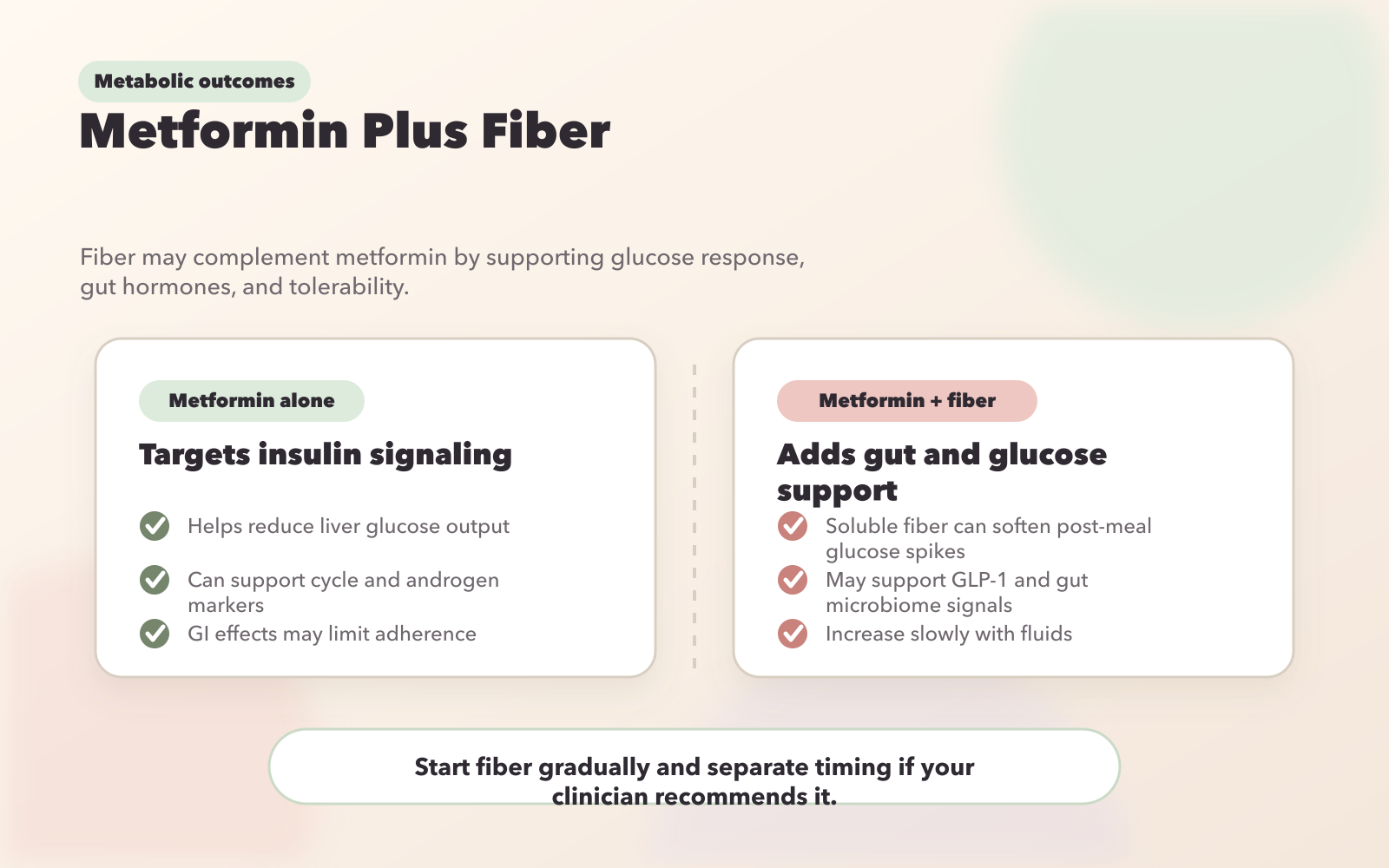
Metformin Alone vs Metformin Plus Fiber: Metabolic Outcomes Comparison
What Research Shows
The combination of metformin and fiber has shown promising results in improving metabolic health, particularly for managing conditions like PCOS and insulin resistance. A 2025 study published in Nature Metabolism explored this synergy in 26 individuals with prediabetes. The findings revealed that pairing metformin with a moderate intake of fermentable carbohydrates significantly lowered postprandial glucose levels and boosted GLP-1 secretion compared to a low-fiber diet alongside metformin. The study, led by Natural H. S. Chu and Elaine Chow from the Chinese University of Hong Kong, also highlighted an increased presence of Butyricimonas virosa, a bacterium linked to better insulin regulation.
Another study, a 2019 pilot trial conducted at Samsung Medical Center, further supported these results. In this trial, 10 patients already on metformin and sulfonylurea were given a fiber supplement (3.9 g plantago seed and 0.13 g ispaghula husk, three times daily) for four weeks. The addition of fiber enhanced incretin levels and reduced systemic inflammation, showcasing the added benefits of combining fiber with diabetes treatments.
"Even if patients are already receiving diabetes treatment, the additional administration of fiber can lead to additional benefits in the treatment of diabetes." – Moon-Kyu Lee, Division of Endocrinology and Metabolism, Sungkyunkwan University School of Medicine
These studies highlight the potential of fiber to amplify the effects of metformin, making it a valuable addition to treatment plans.
Metformin Alone vs. Metformin Plus Fiber
When comparing metformin on its own to its use alongside fiber, the differences in metabolic outcomes are clear. Metformin works by lowering blood glucose through reduced hepatic glucose production. However, adding fiber enhances these effects by reshaping the gut microbiota, which further improves glucose regulation .
The Samsung Medical Center study also categorized participants into "responders" and "non-responders" to the fiber-metformin combination. Responders experienced a 3.57% decrease in glucose AUC and better insulin sensitivity, as measured by the Matsuda Index and QUICKI. In contrast, non-responders showed a 13.48% increase in glucose AUC, which correlated with higher baseline levels of unfavorable bacteria such as Blautia and Clostridium.
Interestingly, the combination also addresses one of metformin's common drawbacks - gastrointestinal side effects. High-fiber diets appear to improve metformin's tolerability, encouraging better adherence to treatment. Research suggests that a daily fiber intake of 35 g, when combined with metformin, is necessary to significantly alter gut bacteria and increase short-chain fatty acid production.
How the Combination Affects Gut Bacteria
Metformin alone promotes the growth of beneficial bacteria like Akkermansia muciniphila. However, adding fiber takes this a step further by creating an even more favorable gut environment. The combination encourages the growth of bacteria such as Butyricimonas virosa and Roseburia intestinalis, which are linked to improved insulin sensitivity and overall metabolic health .
At the same time, the fiber-metformin duo reduces the abundance of bacteria associated with negative metabolic outcomes, such as members of the Coriobacteriaceae family and Enterobacter soli. Baseline gut microbiota composition also plays a role in treatment success. For instance, higher levels of Dorea formicigenerans have been linked to gastrointestinal intolerance to metformin, a side effect that fiber may help alleviate. Conversely, individuals with higher levels of Butyricicoccus tend to respond more positively to the combination therapy.
These findings highlight the importance of gut health in managing insulin resistance and PCOS. The changes in gut bacteria provide insight into how the metformin-fiber combination works, offering a practical approach to improving metabolic outcomes through dietary adjustments.
How to Combine Metformin and Fiber in Your Diet
Daily Fiber Intake Guidelines
The recommended daily fiber intake for women in the US is 25 grams per day. However, many women with PCOS typically consume only 9 to 20 grams daily, falling short of this goal.
For those managing PCOS and insulin resistance with metformin, aiming for 25–30 grams of fiber per day from whole foods and supplements is ideal. Studies suggest that combining metformin with a high-fiber, low-glycemic index (GI) diet can reduce HbA1c levels by 1.0%, compared to a 0.6% reduction with metformin alone. Soluble fiber, in particular, forms a gel-like matrix in the digestive tract, which can cut metformin's gastrointestinal side effects by up to 50%. By pairing metformin with fiber-rich meals, you can minimize discomfort while enhancing the benefits of both.
These recommendations provide a foundation for choosing foods that support your health and maximize the effectiveness of metformin.
High-Fiber Foods to Add to Your Diet
Focusing on whole foods rather than supplements ensures you gain the full nutritional benefits without potential absorption issues. Here are some excellent fiber-rich options:
- Legumes: A half-cup of cooked lentils or chickpeas delivers about 8 grams of fiber and has a low glycemic index (20–35). Black beans provide approximately 7.5 grams of fiber per half-cup.
- Whole grains: Steel-cut oats (GI 50–55) and quinoa offer sustained energy while keeping blood sugar stable. A half-cup of cooked oats is a great source of fiber.
- Non-starchy vegetables: Include 1–2 cups of cooked broccoli (about 5 grams of fiber per cup), Brussels sprouts, cauliflower, or kale in your meals.
- Berries: Raspberries pack around 8 grams of fiber per cup, and other berries provide similar benefits in portions ranging from half a cup to one cup.
- Seeds and healthy fats: Mix 1–2 tablespoons of chia seeds or ground flaxseed into yogurt or smoothies. Half an avocado adds roughly 5 grams of fiber, along with beneficial fats.
When to Eat Fiber and How to Start
Timing your fiber intake can improve metformin's tolerability and enhance its metabolic benefits.
Take metformin with your largest, fiber-rich meals. If nausea occurs, try taking the medication at breakfast and dinner, while increasing fiber at lunch. For appetite control, consume fiber 10–15 minutes before meals with a full glass of water.
When incorporating more fiber into your diet, start slowly to avoid bloating or gas. If you're using supplemental fiber, begin with 2–3 grams per day and increase every 3–4 days until you reach 7–10 grams daily. For whole foods, increase your intake by no more than 5 grams per week to give your gut bacteria time to adjust. For example:
- Week 1: Add 2 tablespoons of ground flaxseed or one serving of fruit with the skin.
- Week 2: Replace white carbohydrates with legumes.
- Week 3: Introduce chia seeds and raw vegetables.
Hydration is key when increasing fiber. Drink at least 12 ounces (350 ml) of water with every fiber dose, aiming for a total of 1.8–2.5 liters per day. To avoid absorption issues, space fiber intake at least 2 hours apart from minerals like iron, zinc, and magnesium, and 4 hours away from thyroid medications.
Conclusion
Pairing metformin with fiber offers an effective approach to managing PCOS and insulin resistance. Studies reveal that this combination can lower HbA1c by 1.0%, compared to 0.6% with metformin alone. Beyond blood sugar control, it helps regulate hormones by reducing insulin levels, which in turn decreases androgen production. Over 16 weeks, this can lead to a 12% drop in free testosterone levels. Additionally, this duo supports a healthier gut microbiome, which plays a role in reducing inflammation.
Another advantage is improved tolerance to medication. Soluble fiber forms a gel-like layer in the digestive system, cutting metformin’s gastrointestinal side effects by as much as 50%. This means fewer interruptions to your routine while still reaping metabolic benefits, ultimately enhancing daily management and overall quality of life.
However, dietary changes should always be guided by a healthcare provider. Some research indicates that fiber supplements may unexpectedly raise HbA1c levels in certain metformin users. Timing is also key - high-fiber meals should be spaced at least two hours apart from your medication to avoid interfering with absorption. A well-planned, personalized approach ensures optimal results. Utilizing accountability strategies can further help you stay consistent with these lifestyle changes. Your provider can also monitor essential markers like Vitamin B12, which metformin may deplete, and adjust dosages as needed to match your progress.
"Until this interaction is clarified, healthcare providers should carefully consider the use of fiber supplements in this population [those on metformin]." - Rosemary M. Hall, Department of Medicine, University of Otago
For those seeking customized care, Oana Health provides telehealth consultations with licensed professionals. They can create tailored plans that incorporate metformin and dietary guidance. With plans starting at $22 per month and free shipping, you can access expert support from the comfort of home.
FAQs
Which fiber foods work best with metformin?
Foods rich in soluble fiber - such as oats, legumes, fruits, and vegetables - are excellent choices to complement metformin. These foods can aid in managing blood sugar levels more effectively while potentially boosting the medication's impact. Plus, adding these fiber-packed options to your meals may promote healthier digestion and support overall metabolic health.
How do I add fiber without worsening gas or bloating on metformin?
When adding fiber to your diet while taking metformin, ease into it to avoid gas or bloating. Start with small amounts of soluble fiber like psyllium husk, gradually increasing the intake over time. To prevent any interference with metformin absorption, take fiber supplements at least 2 hours before or 4–6 hours after your medication. Introduce fiber-rich foods slowly, drink plenty of water, and pay attention to how your body reacts. These steps can help maintain gut health and minimize discomfort.
When should I take fiber so it doesn’t affect metformin or other meds?
To make sure your body absorbs metformin properly, take it at least 2 hours before or 4 to 6 hours after eating fiber. This timing allows both the medication and the fiber to do their jobs without interfering with each other.