
Metformin Side Effects: Rare Allergic Reactions
Metformin is a widely prescribed medication for Type 2 diabetes and sometimes PCOS, but allergic reactions to it are extremely rare. While common side effects like nausea or diarrhea affect many users, severe allergic responses occur in fewer than 1 in 10,000 cases. Symptoms can range from mild skin reactions, such as rashes and itching, to severe issues like swelling of the throat or face, difficulty breathing, or rare conditions like leukocytoclastic vasculitis and DRESS. Immediate discontinuation and medical attention are crucial for severe symptoms.
Key points:
- Mild symptoms: Rashes, itching, hives, or oral lesions.
- Severe symptoms: Swelling, breathing difficulties, or systemic reactions.
- Rare skin conditions: Leukocytoclastic vasculitis, psoriasiform eruptions, and DRESS.
- Diagnosis: Often confirmed by symptom resolution after stopping the drug.
- Treatment: Mild cases may require antihistamines; severe cases need emergency care.
If you experience any unusual symptoms after starting metformin, consult your doctor immediately.
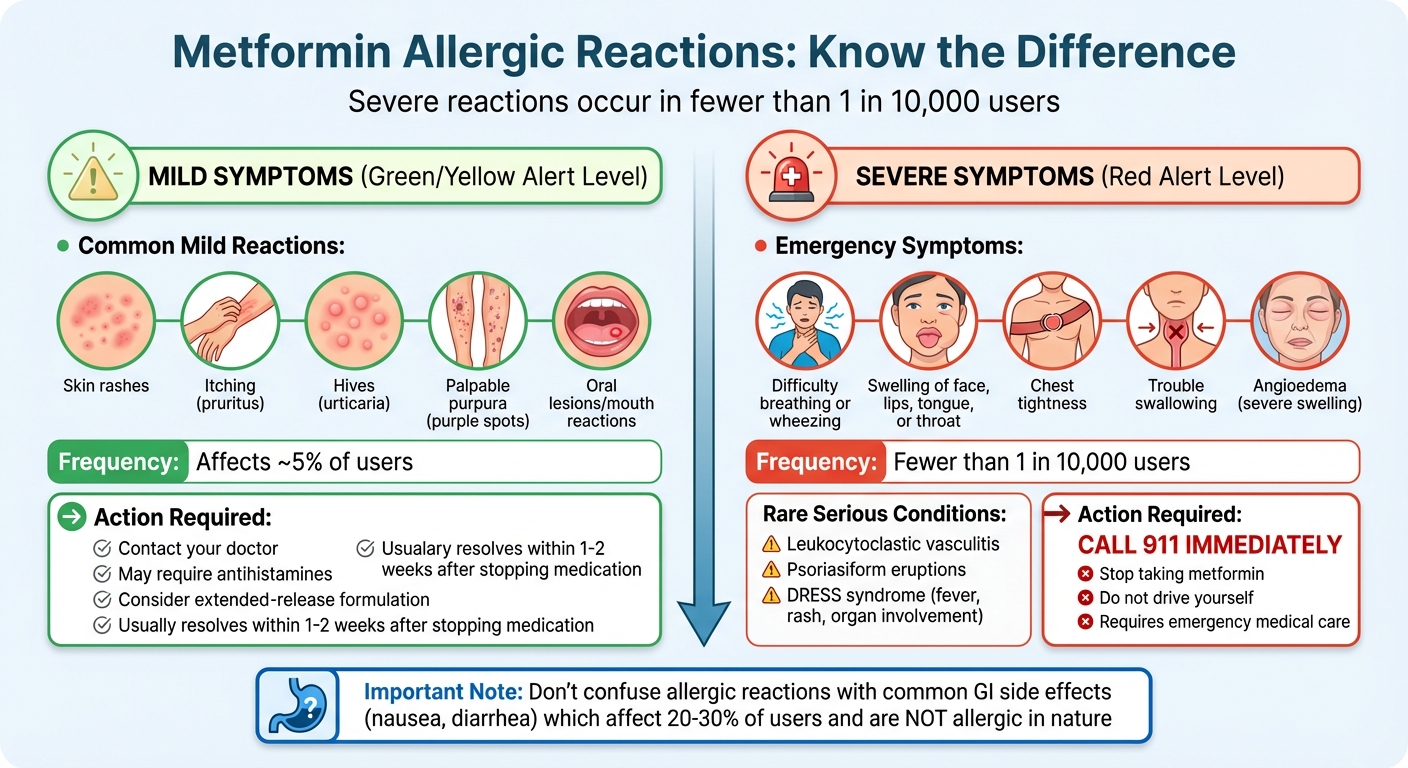
Metformin Allergic Reactions: Mild vs Severe Symptoms Guide
Symptoms of Allergic Reactions to Metformin
Mild Allergic Symptoms
Allergic reactions to metformin often show up as skin and mucosal issues within just a few days of starting the medication. Fortunately, these symptoms usually clear up quickly once the drug is discontinued.
"The mucocutaneous manifestation is the most common [presentation of metformin allergy]." – Viroj Wiwanitkit, Professor, Wiwanitkit House
Mild symptoms frequently include rashes, itching (pruritus), and hives (urticaria). In some cases, patients may also experience palpable purpura, which are purple spots that can appear on the limbs or genital area. For instance, the Indian Journal of Pharmacology reported a case in April 2011 involving a 35-year-old woman who developed palpable purpura on her upper and lower limbs, as well as her genital area, shortly after starting a 1,000 mg/day metformin regimen. Her symptoms began to improve within a week of stopping the medication and resolved completely after two weeks.
Allergic reactions can also affect the mouth, leading to conditions like lichenoid reactions of the oral mucosa or oral lichen planus. While respiratory symptoms such as nasal congestion or sneezing are common with general allergies, they are rarely associated with metformin. It’s also important to differentiate these allergic symptoms from metformin’s common gastrointestinal side effects, like nausea or diarrhea, which affect up to 30% of users but are not allergic in nature.
Though these mild symptoms typically resolve on their own, some reactions can escalate and require urgent medical attention.
Severe Symptoms That Need Emergency Care
Severe allergic reactions to metformin are rare but can be life-threatening. Symptoms such as difficulty breathing, wheezing, chest tightness, or angioedema - swelling that affects areas like the face, eyelids, lips, tongue, throat, or even hands and feet - demand immediate medical attention. If you experience sudden swelling of the lips, tongue, or throat, or have trouble swallowing, call 911 or seek emergency care right away.
While such severe systemic reactions are uncommon, they should never be ignored.
Metformin Weird Side Effects (& Why They Occur)
Rare Skin Reactions Reported in Medical Literature
Medical literature has highlighted rare but severe skin reactions linked to metformin. While most allergic responses to this medication are mild, these cases underscore the possibility of more serious cutaneous events. Below are specific examples of these uncommon reactions, each supported by documented clinical cases.
Leukocytoclastic Vasculitis
Leukocytoclastic vasculitis (LCV) occurs when small blood vessels in the skin become inflamed and damaged. One case from July 2006 involved a 33-year-old woman who developed palpable purpura on her lower legs just days after starting a daily dose of 850 mg of metformin for weight loss. Her symptoms resolved after she discontinued the medication, but the rash reappeared when she resumed taking it a month later. A skin biopsy confirmed the diagnosis of LCV.
In another case from November 2023, a 58-year-old woman treated at Kahramanmaraş Sütçü İmam University Faculty of Medicine developed widespread purpura on her limbs and abdomen after starting 1 gram of metformin daily. The reaction escalated, leading to kidney involvement, including focal proliferative glomerulonephritis and 2.5 g/day proteinuria. After metformin was discontinued and treatment with methylprednisolone and azathioprine began, her skin symptoms resolved within two months, and her kidney function showed marked improvement over nine months.
Another rare reaction to metformin is the psoriasiform drug eruption.
Psoriasiform Drug Eruption
Some individuals experience psoriasis-like skin lesions soon after beginning metformin. For example, in May 2019, a 62-year-old man who had been taking 850 mg of metformin twice daily for five years developed progressive erythroderma, which affected 90% of his body. Symptoms included severe itching, skin peeling, and hardened, "turtle-like" skin (lichenification). A skin biopsy revealed psoriasiform epidermal hyperplasia. His condition improved significantly after metformin was discontinued and treatment with prednisone and PUVA therapy was initiated.
Drug Reaction with Eosinophilia and Systemic Symptoms (DRESS)
DRESS is a serious systemic allergic reaction that presents with a widespread rash, fever, and elevated eosinophil levels (a type of white blood cell). Unlike reactions confined to the skin, DRESS can affect multiple organs, making it a life-threatening condition that requires immediate medical attention. Recovery can take weeks to months after stopping metformin and initiating appropriate treatment.
sbb-itb-6dba428
How to Diagnose and Manage Allergic Reactions
Diagnosing Allergic Reactions to Metformin
When it comes to identifying an allergic reaction to metformin, healthcare providers rely on a combination of steps. First, they’ll review all medications and supplements you’re taking, along with conducting a physical exam. This helps spot characteristic symptoms like palpable purpura, psoriasiform eruptions, or oral lesions.
If metformin is suspected, temporarily stopping the medication often leads to noticeable symptom improvement within one to two weeks. Case reports back this up, showing significant lesion improvement within this timeframe after discontinuing the drug. To confirm metformin as the cause, providers may use tools like the Naranjo Probability Assessment Scale. In some cases, they might also recommend a skin biopsy or additional lab tests to diagnose conditions such as leukocytoclastic vasculitis.
Once an allergic reaction is identified, it’s crucial to act quickly and tailor treatment to the severity of symptoms.
Treatment for Mild and Severe Reactions
Treatment plans depend on how severe the reaction is. For mild symptoms, such as a rash or itching, it’s important to reach out to your doctor. They might suggest antihistamines or adjusting your dosage. Another option could be switching to an extended-release version of metformin, which is generally easier on the body compared to immediate-release tablets.
However, severe reactions demand immediate attention. If you experience sudden facial or throat swelling, trouble breathing, a rapid heartbeat, dizziness, or skin discoloration, call 911 right away. Don’t drive yourself to the hospital - get an ambulance instead. Stop taking metformin immediately if you notice symptoms of lactic acidosis, such as extreme fatigue, shallow breathing, severe muscle pain, or feeling unusually cold. Dr. Diana Isaacs, an Endocrine Clinical Pharmacist at Cleveland Clinic, explains:
"Lactic acidosis is a very rare side effect. It's more likely to occur if there are super high levels of metformin in the bloodstream and someone has reduced kidney function where it's not being cleared out".
When to See a Healthcare Provider
It’s essential to contact your healthcare provider if you develop an unexplained rash, persistent itching, or any unusual symptoms after starting metformin. Even mild symptoms that worsen or recur should be evaluated by a professional. For long-term users, regular checks of vitamin B12 levels are recommended to prevent nerve-related complications. Additionally, wearing a diabetic identification bracelet can be a lifesaver, ensuring emergency responders are aware you’re taking metformin in case of an urgent situation.
For quick and convenient medical advice, telehealth platforms like Oana Health (https://oanahealth.com) provide access to licensed professionals. These experts can evaluate your symptoms, adjust your treatment plan, and even prescribe alternative medications - all without leaving your home.
Research on Allergic Reaction Rates and Causes
How Often Do Allergic Reactions Occur in Metformin Users?
Serious allergic reactions to metformin are extremely rare. According to NHS data, fewer than 1 in 10,000 users experience such reactions. On the other hand, gastrointestinal side effects are much more common, affecting between 20% and 30% of patients, while mild skin reactions occur in about 5% of users.
The FDA Adverse Reporting System (FAERS) has documented 3,127 cases of skin-related side effects associated with metformin. However, it’s important to note that this number includes both allergic and non-allergic reactions. These statistics provide a foundation for exploring the immune processes behind these uncommon allergic responses.
What Causes Allergic Reactions to Metformin?
Pinpointing the exact causes of allergic reactions to metformin can be tricky due to their rarity. These reactions are typically linked to a complex immune response, with Type IV hypersensitivity playing a central role. This type of hypersensitivity often leads to rashes that appear days or even weeks after starting the medication. Specialists from the Department of Dermatology and Venereology describe the mechanisms behind these reactions as follows:
"The exact mechanisms on the development of skin reactions include Type IV hypersensitivity, circulating immune complex deposits, immunological or/and nonimmunological release of proinflammatory factors, components of the complement, derivatives of the prostaglandin pathways, cytokines, and cytotoxicity".
In some cases, circulating immune complexes can lead to leukocytoclastic vasculitis, which manifests as purplish skin lesions. Additionally, T-cell activation and the release of inflammatory mediators like cytokines play a significant role in these immune responses.
One major obstacle in understanding these reactions is the lack of biopsy confirmation. Many patients decline skin biopsies once their symptoms improve after discontinuing metformin, making it harder to identify the exact cause. As a result, healthcare professionals often rely on clinical observations and tools such as the Naranjo probability assessment scale to evaluate whether metformin is the likely trigger.
Conclusion
Severe allergic reactions to metformin are extremely uncommon, occurring in fewer than 1 in 10,000 users. However, it's essential to differentiate these rare reactions from the more frequent gastrointestinal side effects like nausea and diarrhea, which can affect up to 30% of users. Conditions such as leukocytoclastic vasculitis, psoriasiform eruptions, and anaphylaxis require immediate medical attention . Recognizing these distinctions can be crucial for your safety.
If you notice symptoms like raised purple spots, sudden swelling of the throat or tongue, or difficulty breathing, stop taking metformin right away and seek emergency care . Case studies show that skin-related allergic reactions often resolve within one to two weeks of discontinuing the medication.
For those using metformin to manage PCOS or insulin resistance, starting with a low dose - such as 500 mg once daily - and gradually increasing it or switching to an extended-release version can help minimize side effects.
Additionally, Oana Health provides personalized metformin treatment plans, including Oral Metformin ER, for $22 per month. These plans are managed by licensed professionals to ensure proper care.
If you've been on metformin for four or more years, it's a good idea to request an annual Vitamin B12 check. To further reduce risks, take the medication with meals, stay hydrated (aim for about 64 ounces of water daily), and work closely with your healthcare provider. This proactive approach helps you get the most out of your treatment while keeping potential risks in check.
FAQs
What should I do if I think I’m having an allergic reaction to metformin?
If you think you’re having an allergic reaction to metformin, stop using the medication right away and get in touch with a healthcare provider. Allergic reactions can show up as a rash, itching, swelling (particularly around the face, tongue, or throat), or difficulty breathing.
For mild symptoms, contact your doctor promptly to figure out the next steps. However, if you experience severe reactions - like breathing problems or major swelling - don’t wait. Head to the nearest emergency room or call for immediate medical help. Acting quickly is essential for your safety.
What are the differences between common side effects and allergic reactions to metformin?
Common side effects of metformin - like nausea, diarrhea, and stomach discomfort - are generally mild and tend to show up when you first start taking the medication. The good news? These symptoms usually ease over time or with adjustments to the dosage. Taking metformin with food or slowly increasing the dose can also help make these side effects more manageable.
On the other hand, allergic reactions to metformin, while rare, are far more serious. Signs of an allergic reaction might include rash, itching, swelling (especially around the face, tongue, or throat), severe dizziness, or trouble breathing. These reactions can happen suddenly and demand immediate medical care, as they may signal a life-threatening hypersensitivity. The key distinction here is in the intensity and type of symptoms - common side effects are usually mild and short-lived, while allergic reactions are severe and affect the entire body.
What factors might increase the risk of an allergic reaction to metformin?
Allergic reactions to metformin, though uncommon, can happen under certain conditions. These include having a known allergy to metformin or similar drugs, or being particularly sensitive to specific ingredients in the medication. Symptoms to watch out for include rash, itching, swelling, or trouble breathing after starting the treatment.
If you think you’re experiencing an allergic reaction, stop taking metformin right away and reach out to a licensed healthcare provider. For tailored advice and care, you might explore telehealth services like those from Oana Health, which specialize in managing conditions like insulin resistance and PCOS.