
Healthy Fats and Insulin Resistance in PCOS
Key takeaway: For women with PCOS, diets rich in healthy fats (like avocados, nuts, and olive oil) can lower insulin levels by 30% - a major improvement compared to traditional low-fat diets, which often lead to insulin spikes. This approach also reduces inflammation, balances hormones, and improves cholesterol levels, all without requiring weight loss.
Why it matters:
- Insulin resistance affects 60-70% of women with PCOS, worsening symptoms like acne, irregular cycles, and hirsutism.
- Saturated fats (found in fatty meats and high-fat dairy) can worsen insulin issues, while unsaturated fats (like omega-3s and olive oil) improve insulin sensitivity.
- A 2016 Stanford study showed that a high-fat, low-carb diet reduced day-long insulin levels without harming cholesterol or triglycerides.
Quick Tips:
- Focus on monounsaturated and polyunsaturated fats from foods like fatty fish, seeds, and olive oil.
- Limit saturated fats to less than 7% of your daily calorie intake.
- Pair healthy fats with balanced carbs and proteins to stabilize blood sugar.
This dietary shift can help manage PCOS symptoms, lower cardiovascular risks, and improve overall metabolic health.
1. Healthy Fats Diet
Insulin Sensitivity Improvements
Diets rich in monounsaturated and polyunsaturated fats can significantly lower insulin levels, even without weight loss. A 2015 study led by Dr. T. McLaughlin at Stanford University observed this effect in women with PCOS. Participants followed two three-week isocaloric diets: one with 60% carbohydrates and 25% fat, and another with 40% carbohydrates and 45% fat (saturated fat ≤7%). The higher-fat diet reduced day-long insulin levels by 30% (from 644 ± 174 μU/mL to 450 ± 140 μU/mL). This reduction was comparable to the effects of certain medications like thiazolidinediones, but without side effects like weight gain or fluid retention.
Replacing carbohydrates with healthy fats can help prevent the insulin spikes that exacerbate PCOS symptoms. Since about 75% of women with PCOS are insulin resistant or hyperinsulinemic, this dietary adjustment targets a critical underlying issue. Foods such as avocados, nuts, fatty fish, and olive oil not only stabilize insulin but also reduce systemic inflammation, breaking the cycle of high insulin levels triggering excess testosterone production in the ovaries.
Impact on PCOS Symptoms
Hyperinsulinemia is a key driver of PCOS symptoms, including hirsutism, acne, irregular menstrual cycles, and infertility. It increases androgen production while reducing sex hormone-binding globulin, further disrupting hormonal balance. Lowering insulin levels by 30% can help mitigate these effects.
"Lowering ambient insulin concentrations is important because hyperinsulinemia has been linked to adverse sequelae of the syndrome such as anovulation/infertility, hyperandrogenism/hirsutism, and adverse lipid profile."
– T. McLaughlin, Division of Endocrinology, Stanford University School of Medicine
Dr. Yolanda Thigpen, an Ob/Gyn at Cleveland Clinic, highlights the role of unsaturated fats in managing PCOS:
"Unsaturated fats are the healthy kind. They can help to tamp down inflammation in your body and balance your hormones."
In contrast, saturated fats may worsen insulin resistance by triggering inflammatory pathways and raising C-reactive protein levels. By improving hormonal balance, healthy fats also support better overall metabolic health.
Metabolic Health Outcomes
A diet rich in healthy fats doesn’t just regulate insulin - it also improves cardiovascular health markers. In the Stanford study, participants on the 45% fat diet saw reductions in LDL cholesterol (from 116 ± 17 mg/dL to 108 ± 21 mg/dL) and triglycerides (from 198 ± 221 mg/dL to 134 ± 73 mg/dL). These changes are particularly important for women with PCOS, who face a higher risk of metabolic syndrome, type 2 diabetes, and heart disease.
Practicality and Sustainability
Adopting a healthy fat diet is described as a "low-cost, safe treatment" that’s easier to maintain over time compared to restrictive, calorie-focused diets. While weight loss can also lower insulin levels, its benefits are often short-lived due to the likelihood of regaining weight. A diet emphasizing healthy fats offers similar metabolic benefits without requiring weight loss, making it a more sustainable option. Unlike low-fat diets, which may lead to high-carbohydrate consumption and insulin spikes, this approach aligns with the specific needs of women managing PCOS.
Incorporating foods like avocados, nuts, seeds, fatty fish, and olive oil - and keeping saturated fat intake below 7% of total calories - can be an effective strategy for addressing PCOS symptoms and improving overall health.
sbb-itb-6dba428
2. Low-Fat Diet
Insulin Sensitivity Improvements
Low-fat diets often fall short in managing insulin resistance for women with PCOS. A study from Stanford revealed that women following a low-fat diet (approximately 60% carbohydrates, 25% fat) had 30% higher day-long insulin levels (644 ± 174 μU/mL) compared to those on a diet with 45% healthy fats (450 ± 140 μU/mL).
Given that around 75% of women with PCOS are insulin resistant or hyperinsulinemic, this can create a vicious cycle. Some research even indicates that low-fat diets might worsen blood sugar control in women with pre-existing metabolic issues. For instance, diabetic women on low-fat diets saw glucose increases that were 7.9 ± 20.3 mg/dL higher compared to other dietary approaches. These findings highlight the challenges of using low-fat diets to manage insulin resistance in PCOS effectively.
Impact on PCOS Symptoms
The insulin spikes caused by low-fat, high-carbohydrate diets can worsen hormonal imbalances associated with PCOS. Elevated insulin levels stimulate the ovaries to produce more testosterone and reduce SHBG (sex hormone-binding globulin), which can aggravate symptoms like hirsutism, acne, and irregular menstrual cycles.
When it comes to regulating menstrual cycles, low-fat diets also underperform compared to low-glycemic index diets, which are better at stabilizing blood sugar and insulin levels.
Metabolic Health Outcomes
Low-fat diets are associated with higher LDL cholesterol levels (116 ± 17 mg/dL) compared to diets that include healthy fats (108 ± 21 mg/dL), which can further heighten cardiovascular risks for women with PCOS. This is concerning, as women with PCOS already face an increased risk of heart disease. Additionally, low-fat diets are less effective at improving HDL cholesterol and triglyceride levels compared to diets rich in monounsaturated and polyunsaturated fats.
Practicality and Sustainability
Low-fat diets are notoriously hard to maintain, leading to high dropout rates. This often results in weight regain, which can elevate insulin levels once again and worsen PCOS symptoms.
"Dietary weight loss, the first line intervention, is safe and can reduce ambient insulin concentrations by 30%, but is infrequently sustained, and thus long-term benefits are rarely realized." – Stanford University researchers
Unlike approaches that incorporate healthy fats, low-fat diets lack the ability to provide lasting metabolic improvements for women with PCOS.
PCOS Nutrition Guide: The Truth About Carbs, Fat & Hormones
Pros and Cons
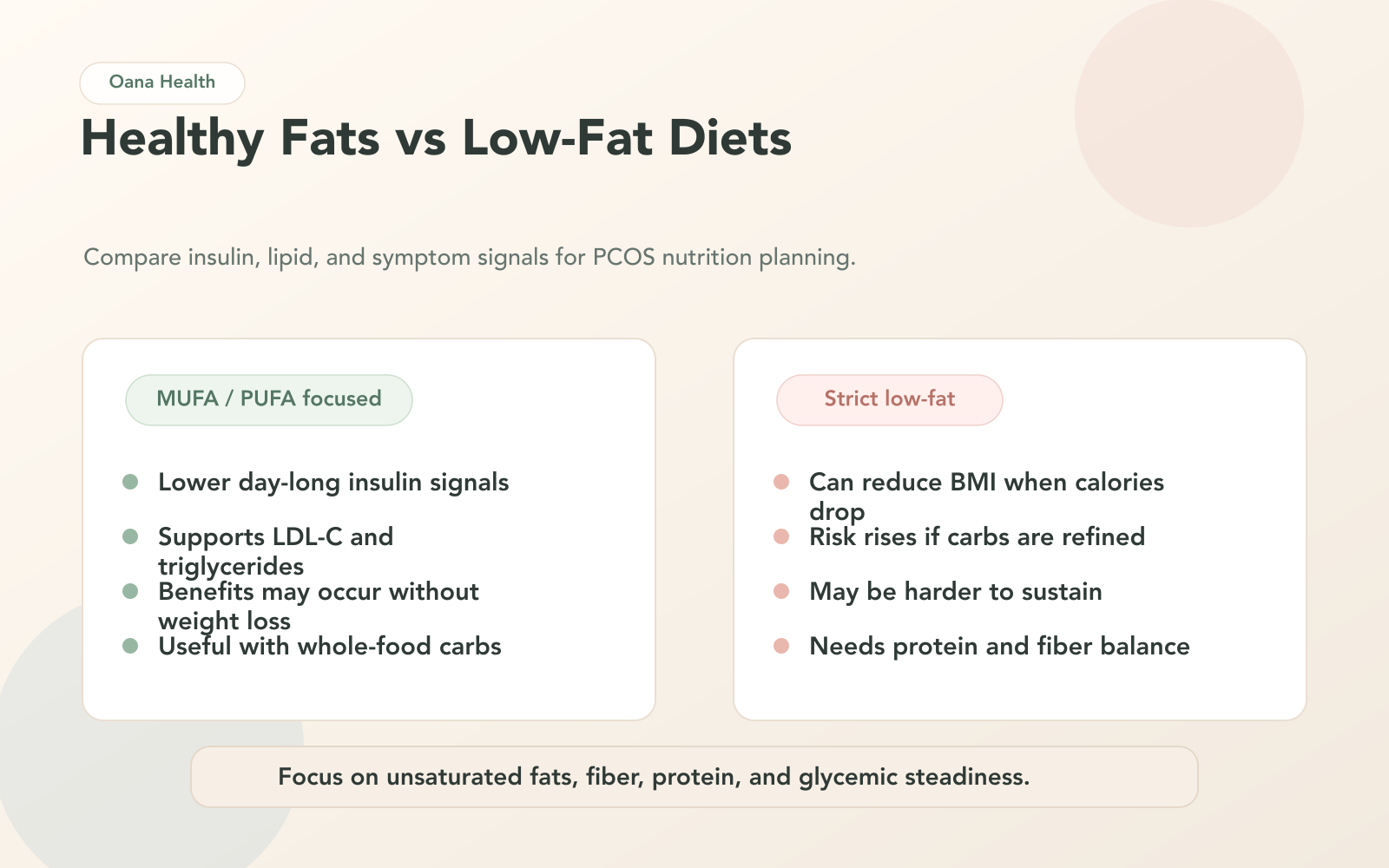
Healthy Fats vs Low-Fat Diets for PCOS: Insulin and Metabolic Health Comparison
Including healthy fats in your diet can lead to a 30% reduction in day-long insulin levels compared to low-fat diets. This aligns with earlier studies highlighting the metabolic advantages of healthy fats over low-fat dietary approaches.
Here’s a breakdown of the key health markers comparing healthy fats diets (rich in MUFAs and PUFAs) to low-fat diets:
| Feature | Healthy Fats Diet (MUFA/PUFA) | Low-Fat Diet |
|---|---|---|
| HOMA-IR / Insulin | 30% drop in day-long insulin levels | Higher day-long insulin; modest HOMA-IR reduction (~0.2) in general trials |
| BMI / Weight Effects | Benefits observed even without weight loss (isocaloric diets) | Most effective for BMI reduction when calorie intake is strictly limited |
| Symptom Improvements | balances androgens and testosterone and reduces inflammation | May trigger insulin spikes and worsen glycemic control in diabetic subgroups |
| Lipid Profile | Lowers LDL-C and improves triglyceride levels | Higher triglyceride risks if unhealthy carbs replace fats |
The DASH diet stands out as a top intervention, combining healthy fats with low glycemic index foods. It achieves a 92.33% SUCRA score for reducing HOMA-IR and 79.73% for lowering fasting insulin. On the other hand, low-calorie diets, regardless of fat content, are most effective for BMI reduction, scoring 84.59%, but they fall short in addressing insulin resistance.
For women with metabolic challenges, low-fat diets can worsen glycemic control. Diabetic women on such diets saw fasting glucose levels increase by 7.9 ± 20.3 mg/dL compared to other groups. In contrast, diets emphasizing healthy fats not only improve hormone balance and reduce inflammation but also avoid these adverse effects when unsaturated fats replace saturated ones.
Conclusion
The data strongly supports incorporating healthy fats over low-fat diets to manage insulin resistance in PCOS. Research highlights that a diet with moderate fat intake (40% carbohydrates, 45% healthy fats) can reduce day-long insulin levels by 30% - a significant improvement compared to low-fat diets, which often lead to higher post-meal insulin spikes.
"Replacement of dietary CHO with mono/polyunsaturated fat yields notable reductions in day-long insulin concentrations, without adversely affecting lipid profile in obese, insulin-resistant women with PCOS." – Perelman D, Stanford University School of Medicine
To optimize results, focus on monounsaturated and polyunsaturated fats from sources like olive oil, avocados, nuts, seeds, and fatty fish. Keep saturated fats below 7% of daily calorie intake. Additionally, boost omega-3 consumption through deep-sea fish or EPA/DHA supplements. Pair fats with carbohydrates and proteins to help stabilize blood sugar levels.
While dietary changes are essential, combining them with medical support can further improve outcomes for women with PCOS. For tailored, prescription-based solutions, Oana Health offers telehealth services designed to address insulin resistance and related PCOS symptoms. Options include oral Metformin for $22/month to improve insulin sensitivity, Spironolactone for $14/month to manage androgen-related symptoms, and GLP-1 medications for advanced metabolic support. All medications are prescribed by licensed professionals and delivered directly to your home with free shipping.
FAQs
How do healthy fats lower insulin in PCOS?
Healthy fats play a key role in managing insulin levels for those with PCOS. They improve cell membrane fluidity, which helps cells function better, reduce inflammation, and enhance the way cells respond to insulin. These combined effects can lead to a reduction in insulin levels by as much as 30%, even if weight loss isn’t part of the equation.
Which fats should I eat (and avoid) with PCOS?
Focus on including healthy fats in your diet, such as those found in fish, walnuts, and olive oil. These can help improve insulin sensitivity, which is especially important for managing PCOS. On the other hand, try to steer clear of saturated fats, as they may contribute to worsening insulin resistance.
How do I add healthy fats without gaining weight?
To include healthy fats in your diet without packing on extra pounds, focus on polyunsaturated and monounsaturated fats. Small changes can make a big difference - swap butter for olive oil, toss in some avocado or nuts with your meals, or enjoy fatty fish like salmon. These types of fats are known to improve insulin sensitivity, support hormonal balance, and help reduce insulin levels, all without necessarily leading to weight gain. Replacing refined carbs and saturated fats with these healthier options can also contribute to better metabolic health.