
PCOS Symptom Management: Birth Control Pros and Cons
Birth control is a common treatment for managing PCOS symptoms, especially for those not planning to conceive. It can regulate menstrual cycles, reduce acne, unwanted hair growth, and lower the risk of ovarian and endometrial cancers. However, it doesn't address underlying issues like insulin resistance and comes with potential side effects, such as weight fluctuations, mood changes, and increased risk of blood clots.
Key Takeaways:
- Benefits: Regulates hormones, reduces androgen-related symptoms (acne, hair loss), and lowers cancer risks.
- Risks: Can worsen insulin resistance, cause metabolic changes, and increase cardiovascular risks.
- Alternatives: Medications like Spironolactone or Metformin, and topical treatments for specific symptoms.
Consult your healthcare provider to determine the best approach based on your health profile and goals.
Benefits of Birth Control for PCOS
Regulating Hormones and Menstrual Cycles
Combined oral contraceptives (COCs) help regulate hormones by targeting the hypothalamic–pituitary axis. They reduce gonadotropin secretion, suppress ovarian stimulation, and stabilize hormone levels. The progestin in these pills lowers luteinizing hormone (LH), which decreases ovarian androgen production, while estrogen increases the liver's production of sex hormone-binding globulin (SHBG) to bind free testosterone.
By standardizing hormonal cycles, COCs help reduce the irregular fluctuations that are common in PCOS. They induce a monthly withdrawal bleed, mimicking a natural period. This ensures the regular shedding of the uterine lining, which helps prevent endometrial hyperplasia. Additionally, by preventing ovulation, these contraceptives can reduce the formation of new follicle cysts on the ovaries.
"COCs, in addition to lifestyle modifications, are the first line treatment for women with PCOS who do not wish to conceive, as they can regulate menstrual cycles and alleviate symptoms of hyperandrogenism."
– Gynecological and Reproductive Endocrinology & Metabolism (GREM)
This hormonal balance also helps alleviate androgen-related symptoms like acne and hair issues.
Reducing Acne, Unwanted Hair, and Hair Loss
Hormonal birth control does more than regulate cycles - it also tackles hyperandrogenism symptoms. COCs are effective at reducing moderate to severe acne, oily skin, unwanted hair growth (hirsutism), and male-pattern hair loss (alopecia). By increasing SHBG levels, they lower free testosterone and dihydrotestosterone (DHT). Some newer progestins, such as drospirenone, dienogest, and norgestimate, come with anti-androgenic properties. These progestins inhibit enzymes like 5α-reductase, which are linked to acne and hair loss. For instance, dienogest (DNG) provides about 40% and drospirenone (DRSP) about 30% of the anti-androgenic effects of cyproterone acetate (CPA), a strong anti-androgen. Improvements in these symptoms usually become noticeable within three to six months of starting treatment.
Lower Cancer Risk
Beyond managing hormonal symptoms, oral contraceptives offer long-term health benefits. Studies show that long-term use of COCs reduces the risk of ovarian and endometrial cancers by 30%–50%. The protective effects increase the longer the pill is used and can last for up to 30 years after stopping. This is particularly valuable for women with PCOS, as they are at a higher risk for these cancers due to irregular cycles and thickened endometrial tissue.
"In young women who are using the birth control pill, the risk of it leading to any cancer is extremely low. Its use has been demonstrated to be associated with a reduction in the risk of ovarian, endometrial and colorectal cancers."
– Roni Wilke, M.D., Gynecologic Oncologist, MD Anderson
The reduced ovarian cancer risk is primarily due to ovulation suppression, which lowers the number of lifetime ovulatory cycles and related hormonal exposure. For endometrial cancer, the pill helps by limiting excessive uterine lining growth, a crucial benefit for women with PCOS.
sbb-itb-6dba428
Birth Control Pills in PCOS Treatment – Benefits, Risks & All You Need to Know
Risks and Side Effects of Birth Control for PCOS
While oral contraceptives are a common choice for managing PCOS symptoms, they come with potential risks that need careful consideration.
Hiding Insulin Resistance
Birth control pills can help regulate menstrual cycles and reduce acne, but they don't address insulin resistance, which is a major underlying issue in PCOS. In fact, metabolic syndrome is more prevalent among women with PCOS, affecting 33.4%–47%, compared to 24% in the general population. To tackle this, healthcare providers often recommend insulin-sensitizing medications like metformin after conducting baseline metabolic evaluations.
"Research suggests that oral contraceptives may contribute to severe PCOS symptoms and increase the risk of obesity, type 2 diabetes, heart diseases, and blood clotting."
– Healthline
This highlights the importance of a broader, more comprehensive approach to managing PCOS beyond just symptom relief.
Weight Gain and Metabolic Effects
The estrogen component in many birth control pills, ethinylestradiol, can increase levels of VLDL-C, HDL-C, and triglycerides, which is why monitoring is crucial, especially for patients at higher metabolic risk. It also raises angiotensinogen levels, which can lead to water retention and weight gain. However, newer progestins like drospirenone and dienogest are metabolically neutral and may even improve insulin sensitivity, potentially reducing these side effects.
Despite these advancements, oral contraceptives still come with notable cardiovascular risks.
Blood Clots and Heart Health Risks
Women with PCOS already have a 1.5–3× higher baseline risk of venous thromboembolism (VTE). When combined with oral contraceptives, this risk can double. Some formulations, such as those containing 35 μg of ethinylestradiol and 2 mg of cyproterone acetate, can increase the risk of VTE by more than seven times. Third- and fourth-generation contraceptives, which use less androgenic progestins, are particularly associated with higher cardiovascular risks. This is especially concerning for women over 35 or those who smoke. Women with the hyperandrogenic phenotype of PCOS may face even higher risks, with a hazard ratio of 2.49.
Additionally, combined oral contraceptives can impact the coagulation system by boosting pro-coagulation factors while reducing protective factors like protein S. They may also contribute to endothelial dysfunction by altering levels of nitric oxide, homocysteine, and angiotensin. Because of these risks, healthcare providers often take an individualized approach, carefully weighing a patient's metabolic and cardiovascular health before prescribing these medications.
Birth Control for PCOS: Pros vs. Cons
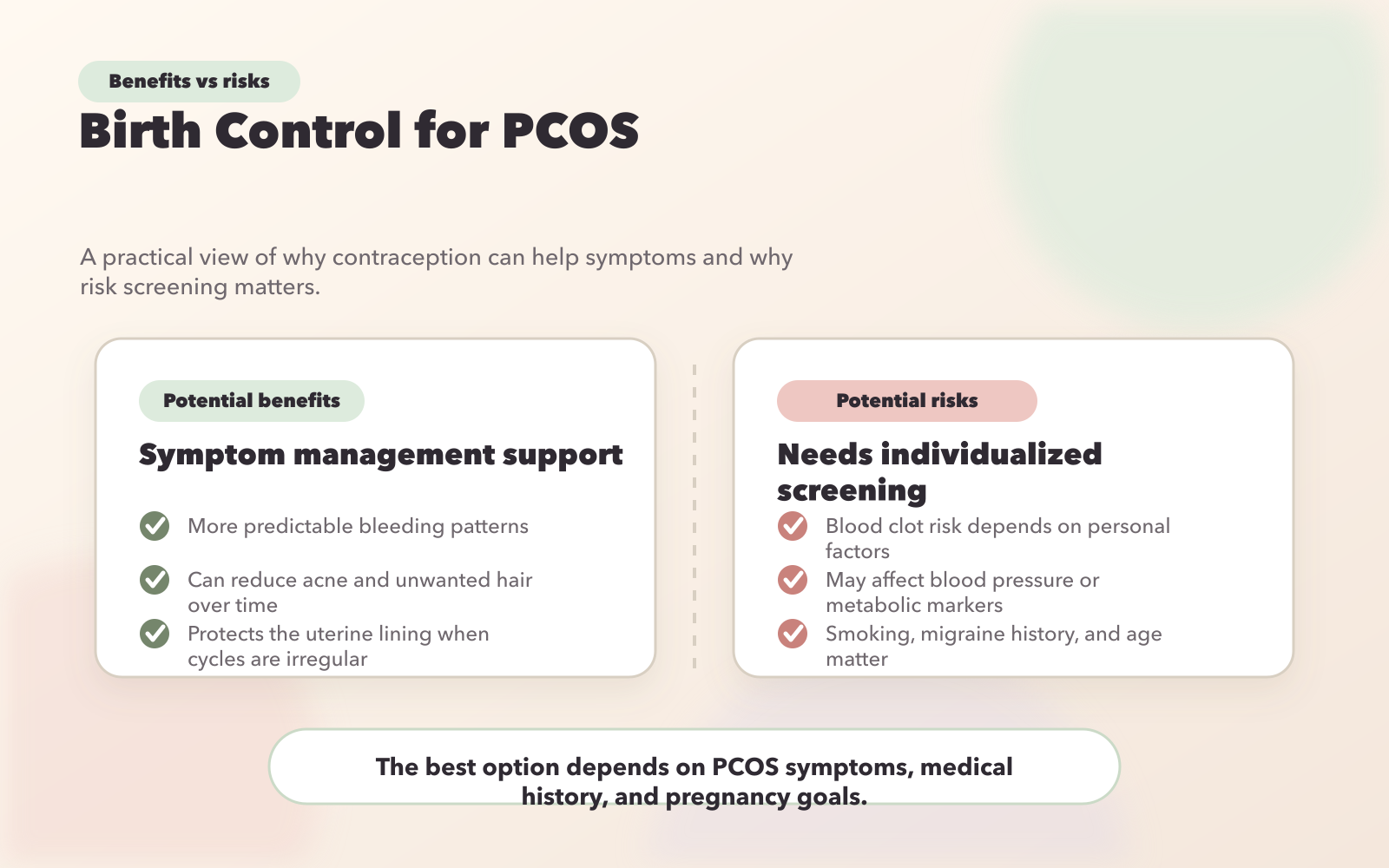
Birth Control for PCOS: Benefits vs Risks Comparison Chart
Choosing birth control to manage PCOS symptoms involves weighing its benefits against potential risks. This decision is highly individual, depending on factors like your medical history, the specific type of PCOS you have, and your long-term health priorities. There’s no universal solution - what works for one person might not suit another.
Here’s a quick breakdown of the key advantages and drawbacks:
Comparison Table
| Factor | Pros (Benefits) | Cons (Risks/Side Effects) |
|---|---|---|
| Hormonal Regulation | Helps regulate menstrual cycles, prevents endometrial overgrowth, and reduces cancer risk by up to 30% | Masks underlying hormonal imbalances, causes "withdrawal bleeding" instead of natural periods, and halts ovulation. |
| Symptom Relief | Reduces acne, excess facial/body hair (hirsutism), and male-pattern baldness. | May cause nausea, breast tenderness, headaches, spotting, and mood changes. |
| Cancer Protection | Dramatically lowers the risk of ovarian and endometrial cancers. PCOS increases the risk of endometrial cancer by 2.7 times. | – |
| Metabolic Impact | – | Can worsen insulin resistance, raise cholesterol and triglycerides, and increase the risk of Type 2 diabetes. May also contribute to water retention and weight gain. |
| Cardiovascular Health | Decreases the risk of ectopic pregnancy. | Women with PCOS face a higher risk of blood clots (VTE) and cardiovascular disease when using oral birth control. The risk is especially significant for smokers over 35. |
| Mental Health | May ease PMS symptoms and menstrual migraines. | Could increase the likelihood of depression and anxiety in about 20% of users. |
| Nutrient Levels | – | Prolonged use can deplete vital nutrients like zinc, magnesium, selenium, and B vitamins (B6, B9, B12). |
The type of progestin in your birth control matters, too. Anti-androgenic options like drospirenone (found in Yasmin and Yaz) or dienogest are often preferred for PCOS since they counteract male hormones. On the other hand, older progestins like levonorgestrel can sometimes aggravate symptoms. While newer third- and fourth-generation pills may be more effective for acne and hair growth, they might also carry a higher risk of cardiovascular issues compared to second-generation pills.
If you’re considering birth control, it’s crucial to consult your healthcare provider. They can evaluate your personal risk factors, such as smoking, obesity, high blood pressure, diabetes, or a history of blood clots. Regular monitoring of blood pressure, cholesterol, and glucose levels is also essential. Additionally, if you’re worried about nutrient depletion from long-term use, discuss supplementation with B-complex vitamins, magnesium, and zinc with your doctor.
For tailored PCOS care, consider reaching out to Oana Health. Their team of specialists provides science-based, individualized treatment plans to address your specific needs. They can also guide you through alternative treatments that complement or replace birth control for managing PCOS symptoms.
Other Treatment Options for PCOS
PCOS symptoms can vary widely, so some treatments focus on specific issues rather than systemic hormonal changes. These options work well either on their own or alongside other therapies, offering targeted relief for particular symptoms. Here’s a closer look at some alternatives.
Spironolactone for Unwanted Hair Growth
Spironolactone helps reduce unwanted hair growth by blocking testosterone and dihydrotestosterone from interacting with androgen receptors. This action directly targets hair follicles, unlike oral contraceptives, which primarily regulate hormones systemically.
"Contraceptives are widely used but are of limited value in women with established hirsutism." - AAFP
Research indicates that a daily dose of 100 mg can significantly thin hair over 6–18 months. However, the effects are temporary, and hair growth often resumes after stopping the medication. To address this, spironolactone is often paired with birth control to mitigate the risk of antiandrogen-related birth defects.
Oana Health offers Spironolactone starting at $14 per month, which includes medical consultations and free shipping.
Metformin for Insulin Resistance
Metformin is an insulin sensitizer that improves how the body processes glucose. Many women with PCOS struggle with weight and insulin resistance, making this medication a helpful addition to treatment plans. While oral contraceptives regulate cycles and lower androgen levels, they don’t address metabolic concerns. For those facing significant metabolic challenges, combining metformin with hormonal therapies for weight management can be effective, improve ovulation, and lower the risk of developing Type 2 diabetes.
Oana Health provides Oral Metformin ER for $22 per month. Combination treatments, like Metformin & Spironolactone, are available for $32 per month. Alternatively, you can try Metformin HCL Lotion 20% for $43 per month.
Topical Treatments for Hair Issues
Topical treatments offer another way to address hair-related concerns without affecting the entire body. For example, Eflornithine is a prescription cream that slows facial hair growth by inhibiting a specific enzyme in hair follicles. Meanwhile, Topical Spironolactone delivers antiandrogen effects directly to the scalp, making it a practical choice for hair thinning or male-pattern baldness without the systemic effects of oral medications.
Oana Health offers Topical Spironolactone for $43 per month and Eflornithine 12% for $69 per month.
These treatments can complement or serve as alternatives to birth control. Oana Health includes consultations with licensed medical professionals to develop a personalized plan tailored to your unique health needs.
Conclusion
Birth control can play a key role in managing PCOS symptoms. It helps regulate menstrual cycles, reduces acne and unwanted hair growth, and even lowers the risk of certain cancers by nearly 30%. But it’s important to remember that birth control isn’t a cure - it addresses the symptoms without tackling root issues like insulin resistance or inflammation. For women with existing metabolic concerns, the potential risks, such as increased chances of blood clots and cardiovascular problems, may outweigh the benefits.
"Birth control does not fix your hormones or the underlying causes of PCOS – it acts as a bandaid over the symptoms." - Jenna Rayachoti, Dr. Jenna
The best treatment plan depends on your individual health profile, symptoms, and goals. Since PCOS manifests differently in each person, solutions need to be tailored. Some may benefit from combining hormonal therapy with insulin-sensitizing medications like Metformin, while others might see better results with targeted treatments for specific symptoms, such as Spironolactone for hair growth or topical treatments for skin concerns. This underscores the importance of a personalized approach.
A well-rounded plan often combines hormonal therapy with treatments targeting metabolic and dermatological issues. Oana Health offers personalized, science-backed PCOS treatment plans designed to meet your unique needs. Licensed medical professionals review your health history and metabolic markers to recommend the most effective combination of treatments - whether that’s hormonal therapy, insulin sensitizers, or specific solutions for hair and skin concerns. Plus, all medications are shipped directly to your door for convenience, and ongoing consultations ensure your plan adapts as your needs change.
Understanding the pros and cons of each treatment option is crucial for effective PCOS management. Partnering with healthcare providers who take a comprehensive approach ensures you’re not only addressing symptoms but also prioritizing your overall health and long-term well-being.
FAQs
Which birth control pill is best for PCOS symptoms?
The right birth control pill for managing PCOS symptoms depends on your unique health needs and lifestyle. Combined oral contraceptives - which include both estrogen and progestin - are often a good option. They can help regulate menstrual cycles, reduce androgen levels, and alleviate symptoms like acne and unwanted hair growth. However, since everyone's hormonal balance and medical history are different, it's essential to consult a healthcare provider. They can recommend a pill that aligns with your specific situation, as there’s no universal choice that works for everyone.
How do I know if birth control is worsening my insulin resistance?
If you're wondering whether birth control might be influencing your insulin resistance, keep an eye out for symptoms like unexpected weight gain, persistent fatigue, or changes in blood sugar levels. Should you notice these signs, it's a good idea to reach out to your healthcare provider for proper testing and evaluation. Since different types of contraceptives can affect insulin sensitivity differently, getting professional advice is crucial.
What tests should I get before starting birth control for PCOS?
Before beginning birth control for PCOS, it's crucial to rule out other conditions such as thyroid dysfunction, hyperprolactinemia, and nonclassic congenital adrenal hyperplasia. If you've recently stopped hormonal contraception, wait at least three months before checking hormone levels to ensure accurate results. Always work closely with your healthcare provider for a comprehensive evaluation and tailored treatment plan.