
Why Spironolactone Causes GI Issues and How to Prevent Them
Spironolactone is effective for hormonal issues like acne and PCOS, but it often causes digestive problems such as nausea, diarrhea, and stomach pain. These side effects occur due to changes in electrolytes and hormone interactions in the gut. While most symptoms are mild and temporary, severe cases can signal serious conditions like hyperkalemia or internal bleeding.
Key Takeaways:
- Common side effects: nausea, vomiting, diarrhea, and stomach cramps.
- Rare but serious risks: ulcers, gastric bleeding, or electrolyte imbalances.
- Prevention tips:
- Take with food or milk to reduce stomach discomfort.
- Split doses to ease digestion.
- Avoid potassium-rich foods and stay hydrated.
- Consider topical spironolactone for fewer side effects.
If symptoms persist or worsen, consult a doctor immediately. For personalized care, telehealth services like Oana Health offer alternative solutions, including topical options.
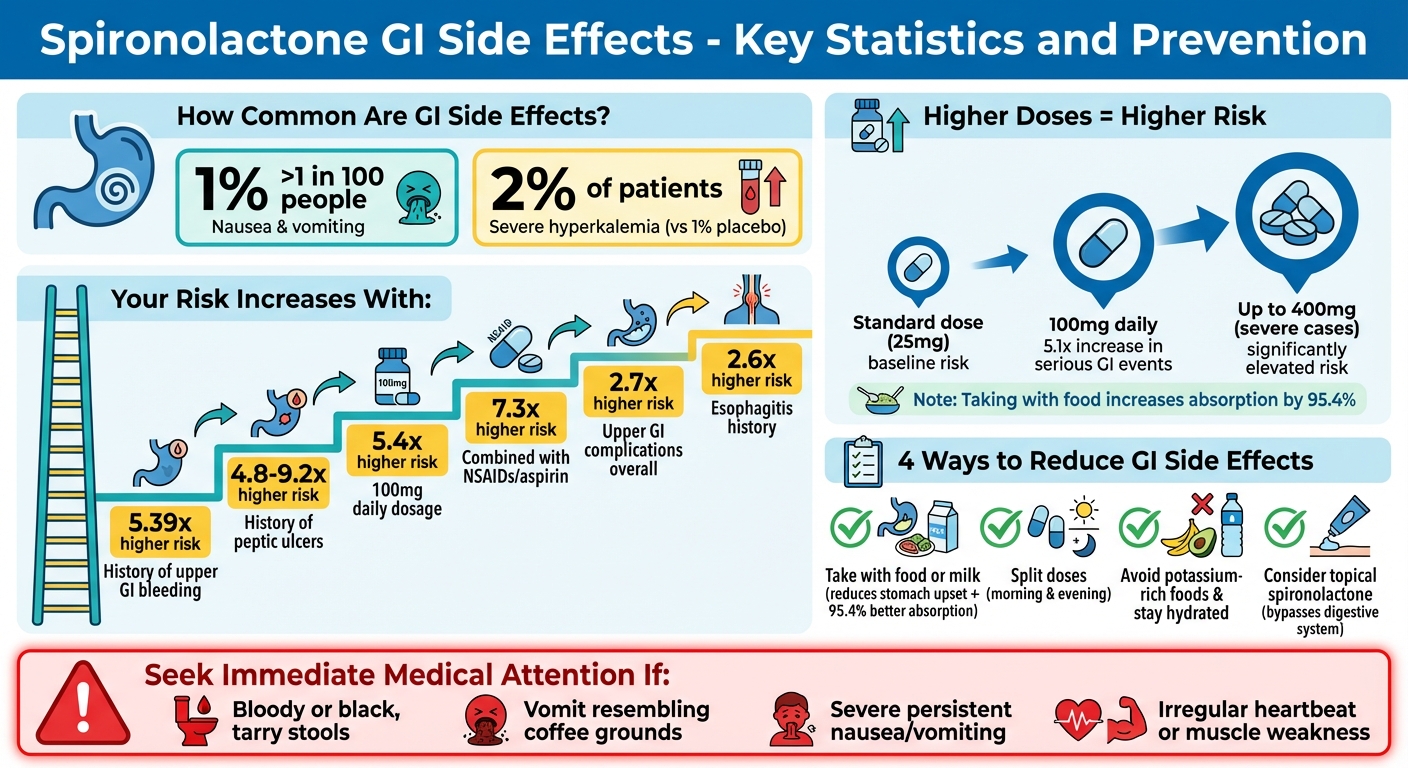
Spironolactone GI Side Effects: Risk Factors and Prevention Statistics
What are the side effects of Aldactone?
Common GI Side Effects of Spironolactone
Understanding the gastrointestinal (GI) side effects of spironolactone is key to managing discomfort and ensuring proper care for those taking this medication.
Most Reported Symptoms
Some of the most frequently reported GI issues include nausea, vomiting, diarrhea, abdominal pain, cramping, constipation, heartburn, indigestion, and loss of appetite. These symptoms are often more noticeable when starting the medication but tend to subside as your body adapts.
While most side effects are mild and short-lived, more serious complications like gastric bleeding, gastritis, or ulceration can occur in rare cases. Watch for warning signs such as bloody or black, tarry stools or vomiting that resembles coffee grounds - these could indicate gastric bleeding and require immediate medical attention.
If nausea and vomiting persist, they might point to more serious conditions like hyperkalemia (elevated potassium levels) or liver dysfunction. These symptoms, especially when paired with confusion or an irregular heartbeat, should prompt further evaluation.
How Often These Side Effects Occur
GI side effects like nausea and vomiting are relatively common, affecting more than 1 in 100 people taking spironolactone. In a major clinical trial involving heart failure patients, severe hyperkalemia was observed in 2% of those on spironolactone compared to 1% in the placebo group.
Additionally, spironolactone use has been linked to a 2.7-fold increased risk of upper gastrointestinal complications, such as bleeding or ulcers. Higher dosages amplify the risk, with a 5.1-fold increase in serious GI events. These statistics highlight the importance of monitoring for side effects, especially at elevated doses.
Why Spironolactone Causes GI Issues
Spironolactone can lead to gastrointestinal (GI) problems by disrupting electrolyte balance and interfering with hormone-driven tissue repair in the gut. Here's a closer look at how these effects impact digestive health.
Effects on Electrolyte Balance
Spironolactone works by blocking aldosterone receptors, which reduces sodium and water retention while increasing potassium levels in the body. This shift can lead to hyperkalemia, which is often associated with symptoms like nausea, vomiting, and stomach pain. On the flip side, it may also cause hyponatremia (low sodium) and dehydration, which can result in anorexia, diarrhea, and dizziness.
"Check with your doctor right away if you become sick while taking this medicine, especially if you have severe or continuing nausea, vomiting, or diarrhea that does not stop. These conditions may cause you to lose too much water or salt".
Hormonal Changes and Digestive Function
Beyond electrolyte changes, spironolactone's hormonal effects can negatively impact digestive health. By blocking aldosterone, the drug interferes with the repair of gastric tissues, which increases the likelihood of ulcers and bleeding. Additionally, its nonselective action on androgen and progesterone receptors can further disrupt normal digestive processes. Katia Verhamme from Erasmus MC highlights that this receptor antagonism can delay the healing of gastric erosions.
Risk Factors for GI Issues with Spironolactone
Several factors can heighten the likelihood of gastrointestinal (GI) problems when taking spironolactone. Knowing these risks can help you and your healthcare provider make better treatment choices.
Preexisting Digestive Conditions
Your digestive health history plays a big role in how spironolactone might affect you. For example, people with a history of peptic ulcers are 4.8 to 9.2 times more likely to experience GI issues while on the medication.
One of the strongest indicators of future complications is a history of upper GI bleeding, which increases the risk by 5.39 times. Other conditions, such as esophagitis (2.6 times higher risk), gastritis, duodenitis, and liver cirrhosis, also contribute to the likelihood of issues. If you’ve ever dealt with ulcers, GERD, or GI bleeding, it’s crucial to share this information with your healthcare provider.
"Aldosterone receptor antagonists, such as spironolactone, could impair the healing of gastric or duodenal erosions and result in the formation of gastroduodenal ulcers, with or without bleeding."
- Katia Verhamme, Senior Researcher, Erasmus MC
While your medical history is a key factor, the dosage and how long you take the medication are just as important.
Higher Dosages and Long-Term Use
The risk of GI problems also goes up with higher doses and extended use of spironolactone. For instance, patients taking 100 mg daily face a 5.4 times greater risk. Though doses for heart failure often begin at 25 mg, other conditions like primary hyperaldosteronism or severe edema may require up to 400 mg per day, significantly increasing the chance of side effects.
Taking spironolactone with food can raise its bioavailability by as much as 95.4%, effectively increasing the dose your body absorbs. Additionally, combining spironolactone with certain medications can amplify the risks. For example, using it alongside NSAIDs (like ibuprofen), aspirin, or anticoagulants can increase the likelihood of a GI event by 7.3 times.
sbb-itb-6dba428
How to Prevent GI Side Effects
Dealing with gastrointestinal (GI) issues while on spironolactone can be frustrating, but there are practical steps you can take to minimize or even avoid these side effects. Backed by research and expert recommendations, here are some strategies to help ease your discomfort.
Taking Spironolactone with Food or Milk
A simple yet effective way to reduce stomach upset is to take spironolactone with a meal or immediately afterward. This not only protects your stomach but also improves the medication's absorption by approximately 95.4%. The NHS advises sticking to plain meals and steering clear of rich or spicy foods.
"Take spironolactone with or just after a meal. It may help if you stick to simple meals and do not eat rich or spicy food."
- NHS
Consistency is essential. If you decide to take spironolactone with food, make it a daily habit to maintain steady medication levels in your body. For those who experience nausea, smaller, more frequent meals might provide additional relief.
Adjusting Dosage and Timing
If taking your daily dose all at once leads to GI discomfort, talk to your healthcare provider about splitting it into two smaller doses - one in the morning and another in the evening. This can lessen the impact on your stomach and reduce side effects. Additionally, taking spironolactone earlier in the day may help avoid frequent nighttime urination, which can disrupt sleep.
Missed a dose? Take it as soon as you remember, unless it’s close to your next scheduled dose. Never double up. If you experience severe nausea, vomiting, or diarrhea, contact your doctor immediately. These symptoms can lead to serious issues like dehydration or electrolyte imbalances.
If splitting doses or adjusting timing doesn’t help, your doctor may suggest trying a different formulation of the medication.
Considering Topical Spironolactone
For those who continue to struggle with GI symptoms despite trying all the above adjustments, topical spironolactone could be a game-changer. This option bypasses the digestive system entirely, providing the same anti-androgen benefits for conditions like hormonal acne and hirsutism. By avoiding systemic side effects, topical formulations can be particularly helpful. Companies like Oana Health offer topical spironolactone products specifically designed for skin and hair concerns, offering an alternative for those who find oral spironolactone intolerable.
When to Consult a Provider
Symptoms That Require Medical Attention
Mild stomach upset from spironolactone typically resolves on its own in a few days, but certain symptoms should never be ignored. Severe or ongoing stomach pain, cramping, or a burning sensation could indicate a more serious issue and require immediate medical attention. Additionally, if you notice bloody stools, tar-like stools, or vomit that looks like coffee grounds, contact your doctor or emergency services right away - these are possible signs of internal bleeding.
Be alert for symptoms of dangerous electrolyte imbalances, such as an irregular heartbeat, significant muscle weakness, confusion, or persistent tingling in your hands or feet. These can point to hyperkalemia, a condition that needs urgent medical evaluation. Similarly, signs of liver issues - like yellowing of the skin or eyes (jaundice), dark urine, or pain in the upper right abdomen - should prompt immediate consultation.
"Check with your doctor right away if you become sick while taking this medicine, especially if you have severe or continuing nausea, vomiting, or diarrhea that does not stop."
Persistent vomiting or diarrhea can lead to dehydration, so monitor for symptoms like reduced urination, dark or strong-smelling urine, or extreme thirst. If common side effects such as dizziness or nausea linger beyond a few days, it’s important to seek medical advice. For symptoms that persist despite initial home care, professional support is available.
How Oana Health Can Help

Personalized telehealth services can be a game-changer in managing spironolactone effectively, particularly when regular monitoring is required. Traditional in-person visits can be inconvenient, but Oana Health simplifies the process with accessible telehealth options for hormonal conditions like acne, hirsutism, and PCOS. Their licensed medical professionals can assess your symptoms, adjust your dosage or schedule, and help you explore formulations that suit your needs.
For those experiencing persistent gastrointestinal issues with oral spironolactone, Oana Health provides alternative solutions, such as topical spironolactone starting at $43/month. They also offer combination treatments like the PCOS Pack for $32/month. With free shipping and medications delivered straight to your door, these services make hormonal care both convenient and budget-friendly. Plus, the initial consultation with a doctor is only $20, ensuring specialized care is within reach.
Conclusion
Spironolactone can cause gastrointestinal (GI) side effects like nausea, vomiting, diarrhea, and stomach pain due to its effects on electrolyte levels. These issues often occur when starting the medication and usually improve as your body adjusts. However, in some cases, they could indicate more serious conditions, such as hyperkalemia or dehydration. Knowing these risks highlights the need for proactive steps to manage them.
To minimize GI discomfort, try taking spironolactone with food, stick to a consistent dosing schedule, avoid potassium-rich salt substitutes, opt for simple meals, and stay hydrated by sipping water regularly.
If you experience persistent GI symptoms or signs of severe complications, contact your healthcare provider promptly. Regular blood and urine tests are also essential to monitor your health while on this medication.
FAQs
Why does spironolactone sometimes cause stomach issues?
Spironolactone is known to cause gastrointestinal (GI) side effects such as nausea, stomach discomfort, or diarrhea. These symptoms occur because the medication influences the way your body manages sodium, water, and potassium, which can sometimes upset the digestive system. While the precise cause isn't completely clear, these side effects are fairly common.
To reduce the chances of GI discomfort, consider taking spironolactone with food or a light snack. If the symptoms don’t improve or become more severe, reach out to your healthcare provider. They might adjust your dosage or recommend other strategies to help manage these issues.
What are the warning signs of serious gastrointestinal issues from spironolactone?
Serious gastrointestinal problems linked to spironolactone can manifest as severe stomach pain, ongoing nausea or vomiting, or signs of internal bleeding - like black, tarry stools or vomiting blood. These symptoms might point to conditions such as gastroduodenal ulcers or upper gastrointestinal bleeding.
Spironolactone can also trigger severe electrolyte imbalances, which could result in dehydration, irregular heart rhythms, seizures, or kidney complications. If you notice any of these symptoms, it's crucial to reach out to a healthcare provider right away.
How can I minimize gastrointestinal side effects from spironolactone?
To minimize stomach-related discomfort when taking spironolactone, consider eating smaller, more frequent meals throughout the day. It's also a good idea to steer clear of potassium-rich foods like bananas and avocados. Staying well-hydrated and sticking to a low-sodium diet can make a difference as well. For tailored advice, reach out to your healthcare provider to make sure your dietary choices align with your treatment plan.