
Patient Satisfaction with Spironolactone for PCOS Weight Loss
Spironolactone, a medication originally used for high blood pressure, is often prescribed off-label to help manage PCOS (Polycystic Ovary Syndrome) symptoms. While it doesn't directly cause fat loss, it can reduce water retention and improve hormonal imbalances. Here's what you need to know:
- Weight Impact: Spironolactone primarily causes water weight loss, not fat loss. Combining it with diet and exercise leads to better results for metabolic health and insulin sensitivity.
- Symptom Relief: Many patients report reduced acne, hirsutism (unwanted hair growth), and improved scalp hair health within a few months.
- Metabolic Benefits: It helps lower insulin resistance, triglycerides, and may improve cholesterol levels, especially when paired with lifestyle changes.
- Patient Feedback: While 72% of users see improvements in symptoms, satisfaction with weight outcomes is mixed due to unrealistic expectations about fat loss.
- Safety: Regular potassium monitoring is essential as spironolactone can raise potassium levels. Side effects like dizziness and nausea are typically mild and manageable.
Spironolactone works best when combined with a balanced diet, regular exercise, and medical guidance. While it helps with PCOS-related symptoms, realistic expectations about its weight-loss effects are key.
A Magic Pill for Acne, PCOS, Female Hair Loss, Hirsutism and HS
sbb-itb-6dba428
How Spironolactone Works in PCOS
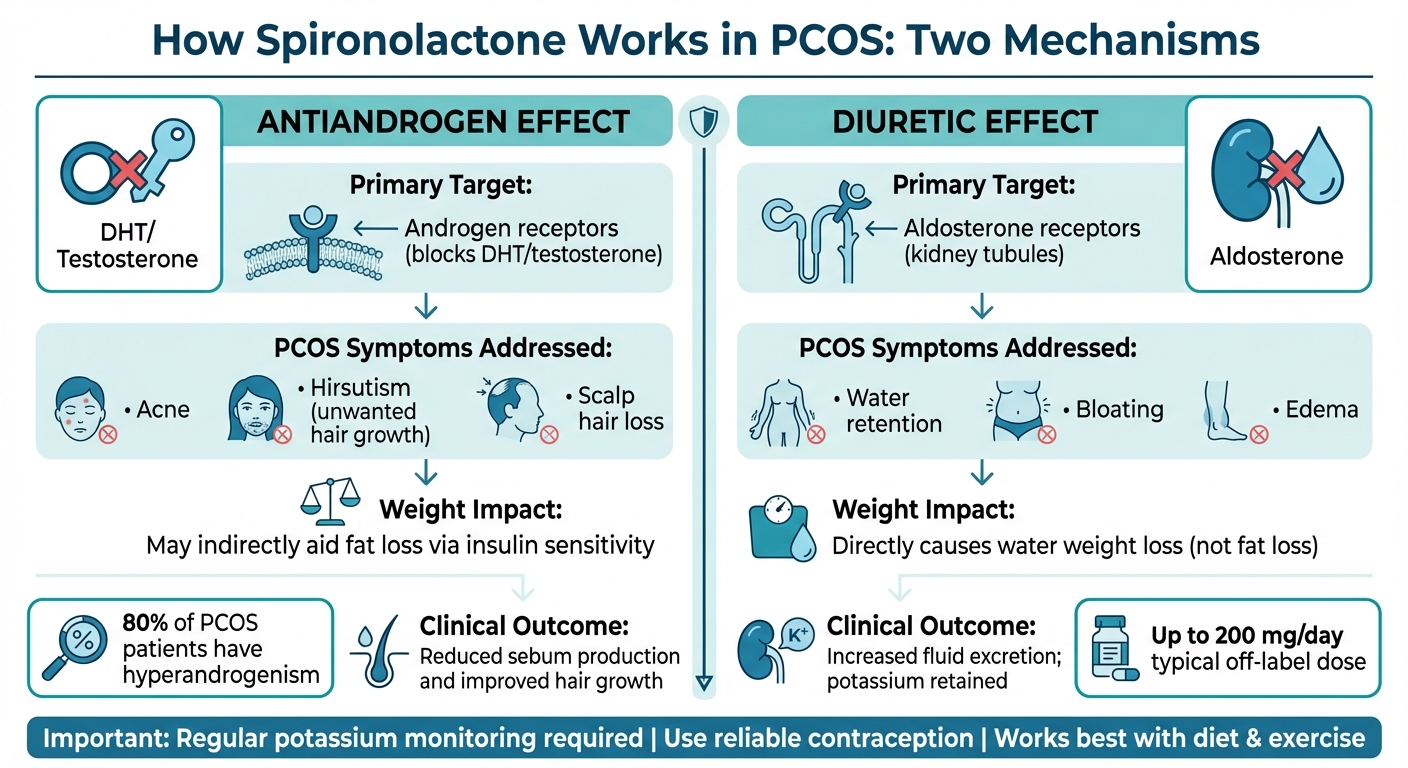
How Spironolactone Works in PCOS: Antiandrogen vs Diuretic Effects
Spironolactone is often used to treat PCOS symptoms by targeting male hormones and reducing fluid retention. Interestingly, this medication was originally developed for managing high blood pressure.
Antiandrogen Effects on Hormones
For about 80% of women with PCOS, hyperandrogenism - an overproduction of male hormones like testosterone and dihydrotestosterone (DHT) - is a common issue. Spironolactone combats this by binding to androgen receptors, effectively blocking these hormones from carrying out their usual functions. This action can lead to reduced sebum production, slowing the growth of unwanted facial and body hair (hirsutism), and even helping to manage scalp hair loss or encourage regrowth.
Dr. Christina Han, MD FRCPC, explains: "Spironolactone helps with PCOS because it can treat associated hormonal imbalances... taking a medication like spironolactone can help combat the effects of androgen excess, providing some relief from symptoms".
Excess androgens also interfere with insulin function, but antiandrogen treatments like spironolactone can help mitigate this effect, especially when paired with lifestyle changes like diet and exercise. In one clinical trial, women who combined a 100 mg daily dose of spironolactone with lifestyle modifications saw a marked reduction in insulin levels during glucose tolerance tests over 12 months.
While its hormonal effects address the root causes of PCOS symptoms, spironolactone’s diuretic properties play a separate role in symptom relief.
Diuretic Effects on Body Weight
As a potassium-sparing diuretic, spironolactone works by blocking aldosterone receptors in the kidneys. This reduces sodium reabsorption and decreases water retention. By increasing the excretion of sodium and water while conserving potassium, it helps alleviate bloating and swelling, often resulting in an initial drop in weight due to water loss rather than fat loss.
According to Healthline Medical Network, "Spironolactone works as a diuretic, which means that it causes the body to remove extra fluid. Reducing fluid in the body can result in body weight loss".
| Feature | Antiandrogen Effect | Diuretic Effect |
|---|---|---|
| Primary Target | Androgen receptors (blocks DHT/testosterone) | Aldosterone receptors (kidney tubules) |
| PCOS Symptom Addressed | Acne, hirsutism, scalp hair loss | Water retention, bloating, edema |
| Weight Impact | May indirectly aid fat loss via insulin sensitivity | Directly causes water weight loss |
| Clinical Outcome | Reduced sebum and improved hair growth | Increased fluid excretion; potassium retained |
For PCOS, typical off-label doses of spironolactone can go up to 200 mg per day. However, it’s crucial to work closely with a healthcare provider to determine the right dose. Because it retains potassium, regular blood tests are necessary to monitor potassium levels and kidney health. Additionally, women of childbearing age must use reliable contraception while on spironolactone, as it can affect the development of a male fetus.
Research on Spironolactone for Weight Loss and Metabolic Health
Water Weight Loss vs. Fat Loss
Studies suggest that spironolactone on its own has a limited effect on reducing BMI. A 2025 meta-analysis comparing its performance to metformin and other weight loss medications found a minimal change in BMI, with a weighted mean difference of just -0.22. The weight loss observed with spironolactone is largely due to water loss, not fat reduction. For instance, in a 12-week pilot study, patients taking a daily dose of 40 mg saw their weight drop from 65.5 kg to 63.7 kg (around 4 lbs). This initial decrease is primarily linked to reduced fluid retention.
Interestingly, the diuretic effect alone does not explain BMI reductions when spironolactone is used in combination therapy. According to Frontiers in Endocrinology, combining spironolactone with lifestyle changes or medications like metformin yields better results. A meta-analysis of six randomized controlled trials involving 717 participants showed that pairing spironolactone with metformin led to a BMI reduction of 0.62 points more than metformin alone.
While its diuretic properties play a role, spironolactone's effects on metabolic health - like insulin resistance and lipid profiles - are equally noteworthy.
Effects on Insulin Resistance and Cholesterol
Beyond weight changes, spironolactone has shown potential for improving metabolic markers. In the same 12-week pilot study, patients on spironolactone monotherapy experienced a drop in HOMA-IR (a measure of insulin resistance) from 3.02 to 2.38. Those combining spironolactone with metformin saw even greater improvements, with HOMA-IR decreasing from 2.47 to 1.71.
"Both metformin and spironolactone decreased HOMA-IR in patients with PCOS but without differences between the two monotherapies. The combined therapy decreased HOMA-IR to a greater extent than monotherapy." - Tao Long et al., PMC
Long-term data further highlight spironolactone's benefits. A 12-month study on overweight PCOS patients taking 100 mg daily, alongside lifestyle adjustments, revealed a notable drop in triglyceride levels. Lean PCOS patients, on the other hand, experienced an increase in HDL cholesterol (commonly referred to as "good" cholesterol) after a year of treatment. These benefits tend to be more pronounced after six months and are amplified when paired with dietary changes.
"Long-term treatment with spironolactone does not adversely affect lipoprotein profile and glucose metabolism; more relevant beneficial effects on glucose and lipid metabolism were observed when the antiandrogen was associated with weight loss in overweight PCOS women." - Zulian et al., Journal of Endocrinological Investigation
Spironolactone also works by blocking mineralocorticoid receptors, which helps reduce inflammation in fat tissue. This action inhibits inflammatory markers like NF-κB, TNF-α, and IL-6, enhancing insulin sensitivity beyond its diuretic effects. These metabolic improvements not only address underlying health issues in PCOS but also contribute to better long-term outcomes, potentially improving patient satisfaction.
Patient Satisfaction: What Users Report
Symptom Relief and Quality of Life
In a study involving 109 women with PCOS, 72% reported improvements in hirsutism, alongside noticeable reductions in hormonal acne and scalp hair loss. However, despite these physical improvements, patient satisfaction often falls short of expectations. For example, a larger study of 1,926 women with PCOS revealed that satisfaction with aesthetic counseling scored an average of just 31.4 out of 100. This low score highlights a disconnect between clinical priorities and patient concerns, especially given that 78.2% of women with PCOS report body image dissatisfaction, and 75% struggle with hirsutism. Overall, care satisfaction for PCOS-related issues averaged only 35.1 out of 100.
"Symptoms often considered 'cosmetic' by clinicians may in fact represent core burdens for patients, and that psychosocial aspects of PCOS care remain inadequately addressed." - Archives of Gynecology and Obstetrics
Even when symptoms like acne and hair growth improve, many patients face challenges adjusting their expectations - especially around weight loss.
Managing Weight Loss Expectations
Patient feedback sheds light on the realistic effects of spironolactone when it comes to weight management. A recurring issue is the gap between what patients hope for and what the medication can actually deliver. Any weight reduction associated with spironolactone is typically due to temporary water loss rather than fat loss. Some patients even report weight gain, though experts attribute this more to PCOS-related insulin resistance than the medication itself.
"For women experiencing weight gain while taking spironolactone, it may be a result of the mechanisms of PCOS, rather than the medication." - Ciera Parsons, Medical Writer
While spironolactone’s diuretic effects are relatively quick, improvements in hair and skin often take 6–12 months to become noticeable. Although symptom relief can enhance overall quality of life, weight management remains a complex and ongoing challenge for individuals with PCOS.
Combining Spironolactone with Diet and Exercise
Research on Combined Treatment Approaches
Research increasingly supports the idea that pairing spironolactone with diet and exercise can lead to better metabolic outcomes. Spironolactone, known for its hormonal and anti-inflammatory effects, works well alongside lifestyle changes. The medication blocks androgen receptors and may reduce inflammation in fat tissue, while dietary adjustments and regular exercise improve insulin sensitivity and help achieve a caloric deficit. This is particularly important since insulin resistance affects between 60% and 95% of people with PCOS.
Studies reveal that a six-month combination of spironolactone and lifestyle changes results in greater reductions in insulin resistance, total testosterone, and BMI compared to using the medication alone. Spironolactone helps address hormonal imbalances, while diet and exercise foster sustainable fat loss.
Losing just 5% of body weight is often enough to significantly improve fasting insulin levels, ovulation, and cardiovascular health markers. Even small weight reductions can make a meaningful difference.
Practical Advice for Patients
For those using spironolactone, adopting specific lifestyle strategies can amplify its benefits. Following a Mediterranean-style diet is a good starting point. Focus on plant-based whole foods, extra virgin olive oil, and minimize processed foods. Aim for 28–30 grams of fiber per day and ensure protein makes up 20–30% of your daily calorie intake to help you feel full and preserve muscle mass. Reducing carbohydrate intake to less than 100 grams daily may provide additional advantages.
When it comes to exercise, aim for 150–300 minutes of moderate-intensity activity each week to maintain weight, or 250 minutes for weight loss. Include resistance training twice a week to build muscle and prevent weight regain. Combining aerobic and resistance exercises tends to deliver better results for improving metabolic and hormonal health than focusing on just one type of workout.
Safety and Long-Term Use of Spironolactone
Common Side Effects and Management
Spironolactone is generally well-tolerated, but like any medication, it can come with side effects. Common ones include dizziness, nausea, fatigue, muscle cramps, breast tenderness, frequent urination, and irregular periods. The good news? These are usually mild and temporary.
Managing these side effects is pretty straightforward:
- If you feel dizzy, try standing up slowly or lying down if you feel faint.
- Taking the medication with food can help with nausea - stick to bland meals to ease discomfort.
- For fatigue, focus on a regular sleep schedule, balanced meals, and light exercise.
- Breast tenderness can be relieved with a supportive bra and warm compresses.
Spironolactone can also raise potassium levels (a condition called hyperkalemia), so it’s important to monitor your diet. Avoid low-sodium salt substitutes and limit foods high in potassium like bananas, avocados, and nuts. Be alert for symptoms like an irregular heartbeat, tingling, or muscle weakness, as these could signal a potassium imbalance.
"You can take spironolactone for a long time, but you will have to see your doctor or nurse occasionally for blood tests. These tests make sure the chemicals in your blood such as potassium are properly balanced." - NHS
While these short-term effects are manageable, spironolactone’s long-term benefits make it a valuable option for PCOS treatment.
Long-Term Benefits for PCOS
Spironolactone has proven to be safe and effective for long-term use in managing PCOS. In a study of 403 women treated for acne, the average duration of use was over 470 days, reflecting its tolerability. The medication works by blocking androgen receptors and lowering testosterone levels, helping to restore hormonal balance. Improvements in acne are often noticeable within three months, while hair-related symptoms typically improve after about six months.
Beyond its hormonal benefits, spironolactone offers metabolic advantages. A 12-month clinical trial found no negative effects on glucose metabolism or cholesterol levels in PCOS patients. In fact:
- Overweight patients experienced a 22% drop in triglycerides.
- Lean patients saw a 24% increase in HDL (the "good" cholesterol).
These benefits go a long way in improving both metabolic and hormonal health, making it easier for patients to manage their PCOS symptoms over time. When paired with lifestyle changes like a healthy diet and regular exercise, the results are even better. Regular check-ups and blood tests ensure that the treatment remains both safe and effective in the long run.
Conclusion
Spironolactone helps alleviate PCOS symptoms like acne and hirsutism by blocking androgen receptors and lowering testosterone levels. These actions target the hormonal imbalances found in 75–90% of patients. Beyond hormonal effects, the medication also supports better metabolic health, such as improved insulin sensitivity and cholesterol levels, particularly when paired with lifestyle changes. This combination highlights the importance of setting realistic goals for treatment.
Managing expectations is essential for a positive experience. Early weight loss often comes from shedding water weight, while meaningful metabolic improvements require spironolactone to be combined with a balanced diet and consistent exercise. For instance, a clinical trial showed that overweight women taking 100 mg/day of spironolactone alongside a 1,400-calorie diet saw marked reductions in insulin resistance and triglycerides. On the other hand, those without weight loss experienced minimal metabolic improvements.
Dr. C. Scaroni from the Division of Endocrinology at the University of Padua emphasizes:
"Long-term treatment with spironolactone exerts no negative effects on lipoprotein profile and glucose metabolism; more relevant beneficial effects... were observed when the antiandrogen was associated with weight loss."
Symptom improvement varies: acne often clears up within 2–4 months, while hirsutism may take 6–12 months to see noticeable changes. For persistent symptoms, additional treatments like electrolysis may be needed. By integrating spironolactone with diet, exercise, and regular medical monitoring, patients can achieve better hormonal balance and metabolic health. This holistic approach not only boosts patient satisfaction but also supports long-term well-being.
FAQs
How does spironolactone help with PCOS symptoms if it doesn’t directly cause weight loss?
Spironolactone helps manage PCOS symptoms by targeting the effects of excess androgens (male hormones) in the body. By doing so, it can help improve common concerns like acne, unwanted facial hair, and hair thinning, which are often associated with PCOS.
Although spironolactone itself doesn’t cause weight loss, its role in balancing hormones can aid in overall symptom management. This may make it easier for some individuals to focus on lifestyle changes that support healthy weight control.
What side effects can spironolactone cause, and how can they be managed?
Spironolactone can lead to a range of side effects, from mild to more serious. Common ones include dizziness, nausea, breast tenderness, fatigue, muscle cramps, and increased urination. You can manage these by staying hydrated, limiting potassium-rich foods (like bananas or avocados), taking the medication with meals to ease nausea, and standing up slowly to reduce dizziness.
However, there are more serious risks to be aware of, such as high potassium levels (hyperkalemia), kidney problems, or liver complications. Watch for symptoms like an irregular heartbeat, confusion, or yellowing of the skin, as these require immediate medical attention. Regular blood tests and kidney function monitoring are essential, especially if you have existing health conditions or take medications that impact potassium levels.
Over time, spironolactone may also cause menstrual changes, persistent fatigue, or breast tenderness. Routine check-ins with your healthcare provider are key to tracking any side effects and ensuring your treatment remains both safe and effective.
Why should spironolactone be paired with a healthy diet and regular exercise for managing PCOS?
Pairing spironolactone with a healthy diet and regular exercise plays a key role in managing PCOS symptoms effectively. While spironolactone works to address issues like hormonal imbalances and unwanted hair growth, combining it with a nutrient-rich diet and consistent physical activity can amplify its effects. This combination helps improve insulin sensitivity, supports weight management, and promotes better hormonal balance.
Lifestyle adjustments, such as focusing on whole, nutrient-dense foods and staying physically active, also target underlying challenges like insulin resistance and metabolic issues - both common in PCOS. Together, these strategies provide a more well-rounded and sustainable approach to managing symptoms and boosting overall health in the long run.