
Ultimate Guide to PCOS Supplements for Insulin Resistance
Managing PCOS-related insulin resistance requires a mix of lifestyle adjustments, medical treatments, and targeted supplements. This guide highlights supplements like inositol, berberine, CoQ10, curcumin, and alpha-lipoic acid, which are backed by research for improving insulin sensitivity, balancing hormones, and reducing inflammation. Key takeaways:
- Inositol (40:1 myo-inositol to d-chiro-inositol) improves insulin signaling and menstrual regularity.
- Berberine helps regulate glucose and lipids, often compared to metformin.
- CoQ10 supports energy production and reduces oxidative stress.
- Curcumin combats inflammation and improves cholesterol.
- Alpha-lipoic acid (ALA) reduces oxidative damage and aids glucose uptake.
Dosages vary, and some supplements may interact with medications or cause mild side effects. Pairing supplements with professional guidance and tools like Oana Health’s personalized treatments (e.g., oral/topical metformin or GLP-1 therapies) can enhance results. Always consult a healthcare provider before starting new supplements.
How to Reverse Insulin Resistance: Top Supplements for PCOS and Diabetes
Best Supplements for Insulin Resistance in PCOS
Managing insulin resistance is a key focus in addressing the metabolic challenges of PCOS. Research highlights certain supplements that can improve insulin sensitivity, lower HOMA-IR scores, reduce testosterone levels, and increase SHBG levels, offering better hormonal and metabolic balance. Let’s break down the most effective options backed by science.
Berberine
Berberine works by activating AMPK and increasing GLUT-4 activity, which boosts glucose uptake and helps cells respond more effectively to insulin. Studies suggest that berberine can reduce waist circumference more effectively than metformin or myo-inositol. It also improves lipid profiles by lowering triglycerides and enhancing overall cholesterol levels.
"Berberine may have greater potential to reduce the risk of cardiovascular disease than metformin in PCOS patients due to its effect on body composition, lipid profile, and improvement in hormone status." - Neha Mishra, Obstetrics and Gynaecology, Government Institute of Medical Sciences
Some users may experience mild gastrointestinal discomfort. Starting with a lower dose and taking it with food often minimizes this side effect. Pairing berberine with inositol can further enhance insulin sensitivity.
Inositol (Myo-Inositol and D-Chiro-Inositol)
The combination of myo-inositol (MI) and d-chiro-inositol (DCI) in a 40:1 ratio has been shown to be highly effective. Studies report that this specific ratio improves menstrual regularity 14.7 times more effectively than metformin. It also reduces HOMA-IR scores and restores hormonal balance faster compared to single-isomer therapies.
Inositol is particularly beneficial for women with PCOS who are not yet experiencing prediabetes or diabetes. It’s also well-tolerated and supports lipid management by lowering triglycerides and total cholesterol levels. Its safety profile and effectiveness make it a preferred first-line option for many.
Coenzyme Q10 (CoQ10)
Coenzyme Q10 plays a crucial role in supporting mitochondrial function, which is essential for energy production and metabolic health. Research indicates that CoQ10 can significantly lower LDL cholesterol levels, addressing a key cardiovascular risk in PCOS. While its direct effect on HOMA-IR scores may be limited, its overall contribution to metabolic health makes it a valuable addition to a supplement plan.
Curcumin
Curcumin, the active ingredient in turmeric, combats insulin resistance by reducing inflammation. It has been shown to improve cholesterol levels (both LDL and HDL) and lower fasting plasma glucose, contributing to better metabolic outcomes.
Alpha-Lipoic Acid (ALA)
Alpha-lipoic acid is a powerful antioxidant that helps combat oxidative stress, which is often elevated in PCOS. By reducing markers like malondialdehyde (MDA) and improving total antioxidant capacity (TAC), ALA can alleviate some cellular damage tied to insulin resistance. Its antioxidant properties make it a valuable part of a comprehensive approach to managing PCOS-related metabolic challenges.
Together, these supplements create a well-rounded strategy for tackling insulin resistance in PCOS, addressing both metabolic and hormonal imbalances. Each offers unique benefits, and combining them can yield even better results.
How to Use These Supplements Safely
Recommended Dosages
For myo-inositol, take 2,000 mg twice daily (totaling 4,000 mg), ideally split between morning and evening for the best results. If you're combining it with d-chiro-inositol, look for a 40:1 ratio in the formulation.
Berberine should be taken at 500 mg 2–3 times daily with meals. Alternatively, for phytosome forms (which are more absorbable), 550 mg twice daily works well. Taking berberine with food can help reduce stomach discomfort.
For CoQ10, aim for 100–200 mg per day. Since CoQ10, Vitamin D, and Omega-3 fatty acids are fat-soluble, take them with meals that include healthy fats to improve absorption. Vitamin D dosage typically ranges from 1,000–2,000 IU daily, but avoid exceeding 4,000 IU per day unless directed by a doctor. For Omega-3s, a daily dose of 1,000–3,000 mg of combined EPA and DHA is recommended.
Before starting any new supplements, it's a good idea to get baseline blood tests for fasting glucose, insulin (to calculate HOMA-IR), and Vitamin D levels. Stick with the supplement routine for 8–12 weeks to see noticeable metabolic benefits.
Next, let's explore how combining these supplements can improve insulin sensitivity.
Combining Supplements for Better Results
Some supplements complement each other when used together. For instance, curcumin combined with metformin (if prescribed) has been shown to lower fasting glucose and insulin levels more effectively than metformin alone. Starting with inositol can help regulate cycles, and adding supplements like NAC or Omega-3s may provide additional metabolic benefits.
However, be cautious with high doses of zinc, as it can interfere with copper absorption and potentially cause anemia.
While these supplement combinations can enhance their effectiveness, always pay attention to potential side effects or interactions.
Side Effects and Safety Precautions
When managing insulin resistance in PCOS, it's important to stay aware of possible side effects. Supplements like berberine, NAC, and Omega-3 fatty acids can sometimes cause gastrointestinal issues, such as nausea, bloating, gas, or diarrhea. Omega-3s might also leave a fishy aftertaste and, at higher doses, could increase bleeding risk - especially if you're on blood thinners.
Inositol is generally safe up to 4,000 mg daily, but extremely high doses (12,000–18,000 mg per day) may lead to nausea, fatigue, dizziness, or headaches.
Pregnant or breastfeeding women should avoid berberine, as it can negatively affect infant liver function. If you're taking anticoagulants or insulin, consult your healthcare provider before using supplements like CoQ10 or Omega-3s, as these may interact with your medications. Women with kidney disease should steer clear of magnesium supplements unless supervised by a doctor.
| Supplement | Common Side Effects | Safety Tip |
|---|---|---|
| Inositol | Nausea, gas, diarrhea (at high doses) | Stick to 4,000 mg/day; use a 40:1 MI:DCI ratio |
| Berberine | Stomach upset, drug interactions | Take with food; avoid during pregnancy |
| Omega-3 | Fishy aftertaste, bleeding risk | Avoid high doses if on blood thinners |
| Vitamin D | Risk of toxicity (excess calcium) | Don’t exceed 4,000 IU/day without testing |
| CoQ10 | Generally well-tolerated | Check for interactions with blood thinners |
sbb-itb-6dba428
Oana Health: Prescription Treatments for Insulin Resistance
What Oana Health Offers
While supplements can help with managing insulin resistance tied to PCOS, prescription treatments often deliver more reliable results under professional care. Oana Health is a telehealth platform focused on PCOS and hormonal health, offering tailored, evidence-based prescription treatments for issues like insulin resistance, weight management, acne, hair loss, unwanted facial hair, and mental health challenges. Licensed medical professionals review your health history and create a personalized treatment plan - no in-person visits required. Medications are custom-compounded in FDA-regulated pharmacies and shipped directly to your doorstep, with free delivery included.
Prescription Medications Available
Oana Health provides prescription options specifically aimed at addressing insulin resistance. Oral Metformin ER ($22/month) is a widely recommended treatment that reduces glucose production in the liver and enhances insulin sensitivity in muscle and fat tissues. For those who experience side effects like nausea or stomach discomfort with oral metformin, Metformin HCL Lotion 20% ($43/month) offers a topical alternative. This lotion delivers the same benefits without involving the digestive system.
"I'm so glad I discovered Oana's metformin lotion! I previously struggled with oral metformin's side effects and this is a great alternative for me. I get the same benefits but no more upset stomach and nausea..." - Carrie S., Oana Health Patient
For those needing more comprehensive metabolic support, Oral Semaglutide GLP-1 ($199/month) and Dual Agonist GLP-1 buccal treatment ($199/month) are available. These treatments not only enhance insulin sensitivity but also support weight loss - a critical factor since 65-80% of women with PCOS are affected by insulin resistance. Designed to improve hormonal balance and metabolic health, these medications have shown success: 81% of women using Oana's treatments report noticeable improvements within a year .
Accessing these treatments is simple and convenient through Oana Health’s streamlined process.
Getting Started with Oana Health
Starting your treatment journey with Oana Health is quick and easy. Fill out a 5-minute online intake form, and licensed physicians will review your medical history to recommend the most suitable treatments for your PCOS symptoms. Once approved, medications are delivered to your home with automatic refills and round-the-clock support. For topical metformin, users typically notice results after 3-4 weeks of consistent daily use . Additionally, Oana Health offers a 2-minute PCOS quiz on their website, providing personalized treatment suggestions based on your unique symptoms .
Supplement Comparison Guide
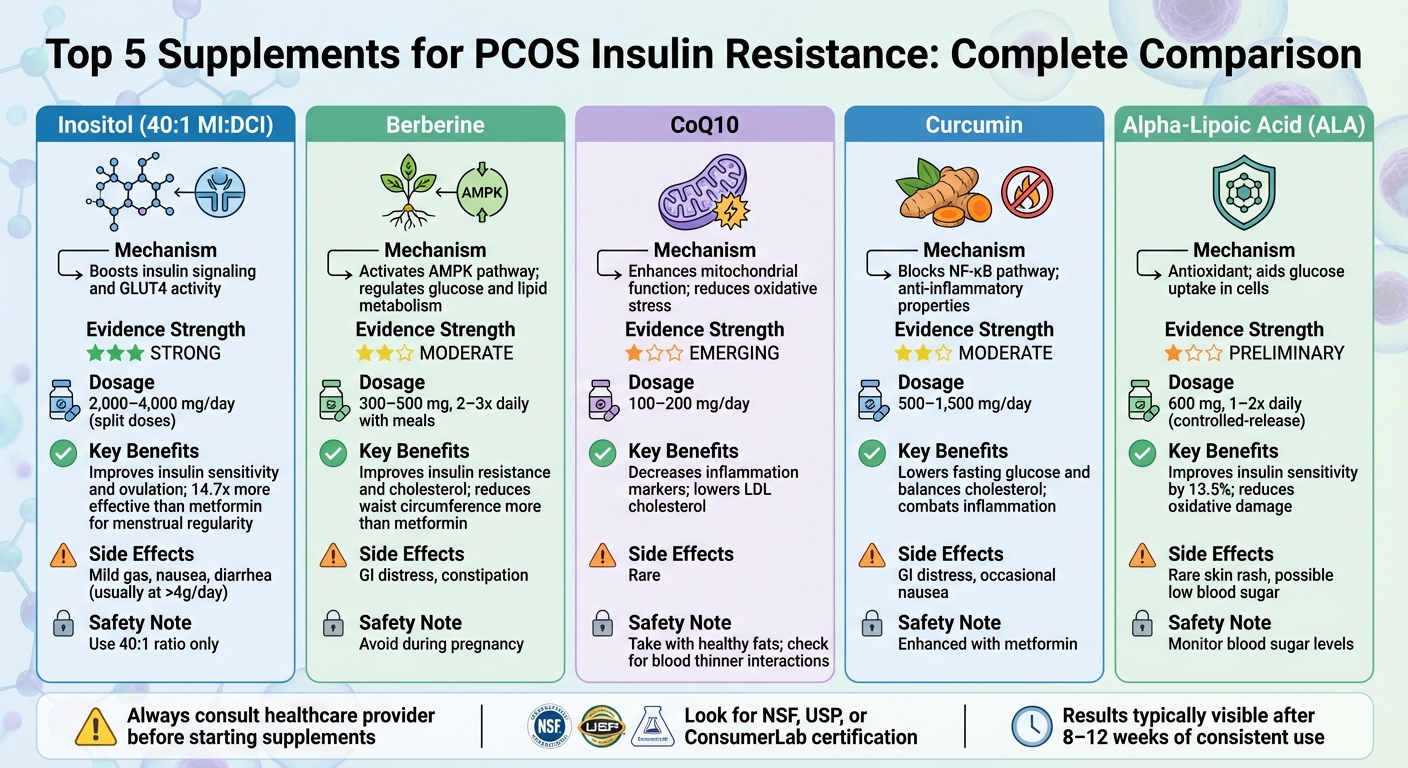
PCOS Supplements for Insulin Resistance: Dosage, Benefits, and Side Effects Comparison
Supplement Comparison Table
Here’s a snapshot of how five supplements stack up when it comes to managing insulin resistance in PCOS. This table outlines their mechanisms, evidence, recommended dosages, and potential side effects.
| Supplement | Mechanism | Evidence Strength | Dosage | Side Effects |
|---|---|---|---|---|
| Inositol (40:1 MI:DCI) | Boosts insulin signaling and GLUT4 activity | Strong; improves insulin sensitivity and ovulation | 2,000–4,000 mg/day (split doses) | Mild gas, nausea, diarrhea (usually at >4g/day) |
| Berberine | Activates the AMPK pathway; regulates glucose and lipid metabolism | Moderate; improves insulin resistance and cholesterol | 300–500 mg (2–3x daily with meals) | GI distress, constipation |
| CoQ10 | Enhances mitochondrial function; reduces oxidative stress | Emerging; decreases inflammation markers | 100–200 mg/day | Rare |
| Curcumin | Blocks the NF-κB pathway; anti-inflammatory properties | Moderate; lowers fasting glucose and balances cholesterol | 500–1,500 mg/day | GI distress, occasional nausea |
| Alpha-Lipoic Acid (ALA) | Antioxidant; aids glucose uptake in cells | Preliminary; improves insulin sensitivity by 13.5% | 600 mg (1–2x daily, controlled-release) | Rare skin rash, possible low blood sugar |
Among these, inositol and berberine stand out for their strong backing in addressing PCOS-related metabolic issues. Meanwhile, alpha-lipoic acid and CoQ10 focus on reducing oxidative stress, and curcumin targets inflammation through its impact on the NF-κB pathway.
When choosing supplements, opt for those certified by trusted third-party organizations like NSF, USP, or ConsumerLab. Keep in mind that the FDA doesn’t regulate supplements for effectiveness. For inositol, look for products maintaining the 40:1 ratio of myo-inositol to D-chiro-inositol. High doses of D-chiro-inositol alone (e.g., 1,000 mg) can interfere with myo-inositol absorption and may even elevate testosterone levels.
Combining these supplements might offer complementary effects, but it’s crucial to consult a healthcare provider before mixing them - especially if you’re on prescription medications for insulin resistance. This approach highlights how supplements can play a key role in managing insulin resistance as part of a broader PCOS treatment plan.
Conclusion
Main Points to Remember
A meta-analysis of 25 randomized controlled trials involving 1,636 women with PCOS highlighted that supplements can significantly improve fasting insulin levels and HOMA-IR scores when compared to placebos. Among the supplements studied, inositol and berberine showed the strongest potential for addressing metabolic issues, while CoQ10, curcumin, and alpha-lipoic acid were noted for reducing oxidative stress and inflammation. This reinforces the importance of combining supplements with other interventions.
It's essential to understand that supplements are not a substitute for lifestyle changes. For example, achieving a modest weight loss of 5–10% can restore ovulation and regulate menstrual cycles in individuals with PCOS who are overweight. This makes lifestyle adjustments a cornerstone of any treatment plan.
Professional guidance is key. Supplements like berberine can interact with other medications, and nutrients such as Vitamin D should be dosed based on personalized bloodwork rather than one-size-fits-all advice. Angela Grassi, MS, RDN, LDN, and Founder of The PCOS Nutrition Center, emphasizes:
"It's crucial for people to consult with healthcare professionals before incorporating supplements into their routine to ensure personalized and safe management of their condition".
For those who need additional support, prescription treatments can complement lifestyle and supplement strategies. Services like Oana Health offer tailored, prescription-based options for managing insulin resistance, including Oral Metformin ER for $22/month and combination therapies designed to address the underlying metabolic challenges of PCOS.
With this knowledge, you can take practical steps toward better management of your condition.
Your Next Steps
Start by scheduling a consultation with a healthcare provider familiar with PCOS. It's important to establish a baseline by testing markers like fasting glucose, fasting insulin, lipid profiles, and Vitamin D levels. This data will help track your progress over time.
Create a 90-day plan. Many supplements require consistent use for 8–12 weeks to show measurable improvements in hormonal or metabolic markers. After 12 weeks, re-test your labs to evaluate the effectiveness of your regimen and make adjustments if needed.
If you're considering prescription-based treatments, Oana Health offers convenient, science-backed therapies delivered directly to your door with free shipping. Their licensed professionals review your health history to recommend personalized options, such as Metformin & Spironolactone for $32/month or Oral GLP-1 & Metformin for $199/month. Addressing insulin resistance at its core can help correct metabolic imbalances and support long-term improvements.
FAQs
Which supplement should I start with for PCOS insulin resistance?
Inositol is often considered a solid first step for addressing PCOS-related insulin resistance. Research supports its use as an initial option, showing it can improve insulin sensitivity, particularly in the earlier phases. Its effectiveness and safety have made it a widely recommended choice among experts.
Can I take these supplements with metformin or GLP-1 meds?
Yes, certain supplements for PCOS, such as berberine and inositol, can often be used alongside medications like metformin or GLP-1 receptor agonists. However, it’s absolutely essential to consult with a healthcare provider before combining treatments. They can help ensure the supplements are safe for your specific situation and check for any possible interactions. Always follow professional medical guidance when managing PCOS.
How can I tell if the supplements are working?
To determine if supplements are working, keep an eye on key indicators of insulin resistance. These include lower fasting blood glucose levels and improved insulin sensitivity. You might also notice relief from symptoms like more regular menstrual cycles or fewer androgen-related problems, such as acne or unwanted facial hair.