
Adverse Event Patterns in Hormonal Drug Use
Hormonal therapies, widely used for contraception and managing conditions like PCOS, come with both benefits and risks. While effective, their use is often discontinued due to side effects - 64.6% of women stop oral contraceptives because of adverse effects. Common issues include nausea, headaches, and mood changes, while serious risks involve blood clots, stroke, and cancer. However, newer formulations with lower hormone doses aim to reduce these risks. Key points include:
- Cardiovascular Risks: Combination therapies double the risk of blood clots and increase stroke and heart attack risks, especially in the first year.
- Cancer Risks: Estrogen-progestogen therapies raise breast cancer risk but lower colorectal cancer risk.
- Minor Side Effects: Breakthrough bleeding, nausea, and headaches are common but often improve within 3-5 months.
- Individualized Treatment: Screening for risk factors like age, smoking, and obesity is crucial to minimize complications.
Modern advancements, including alternative delivery methods like patches and rings, provide more options tailored to patient needs. However, balancing benefits against risks remains critical.
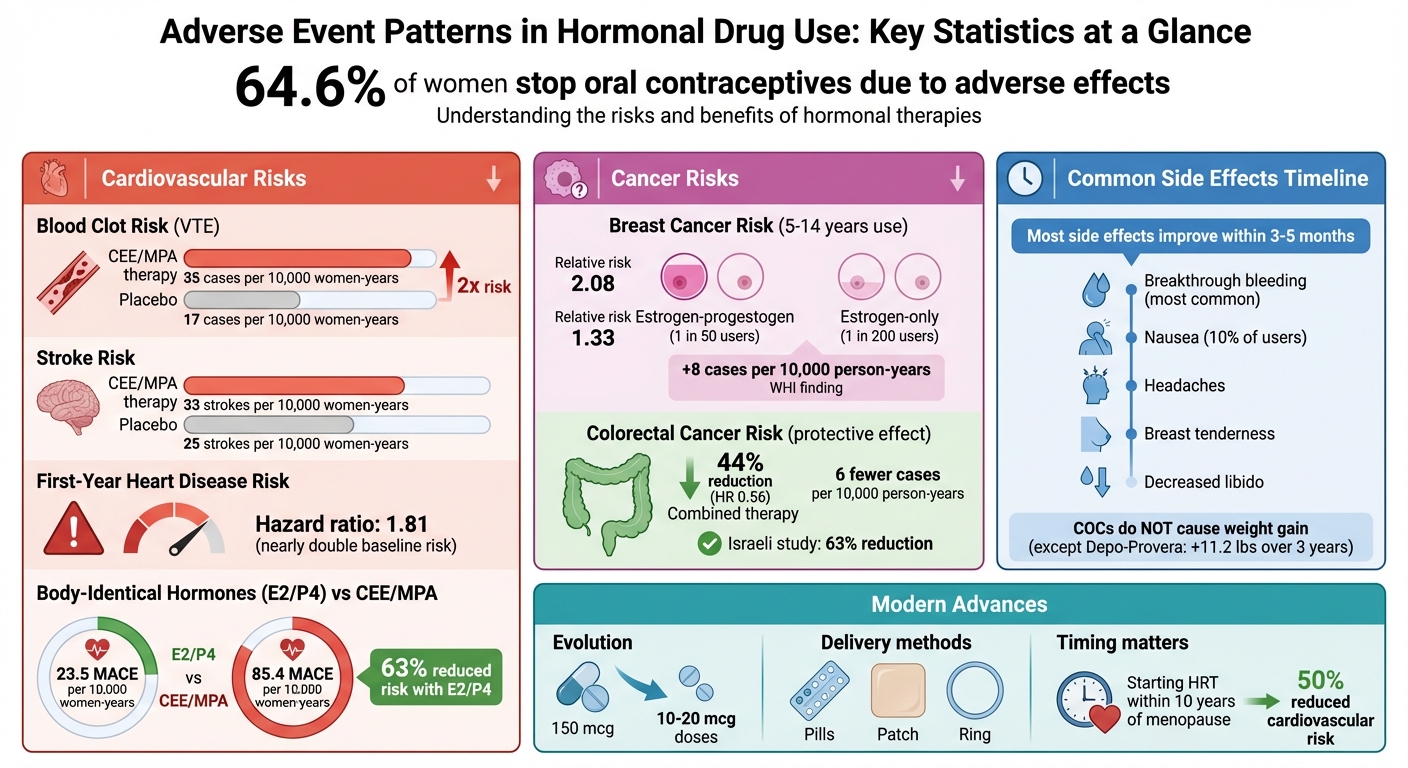
Cardiovascular and Cancer Risks of Hormonal Therapy: Key Statistics
Three common side effects after starting on hormone replacement therapy and how to fix them
Cardiovascular Risks in Hormonal Drug Use
Hormonal therapies carry notable cardiovascular risks, including conditions like venous thromboembolism (VTE), stroke, and myocardial infarction. The specific risks can vary depending on the formulation and dosage used.
Blood Clots and Stroke Risks
Data from the Women’s Health Initiative (WHI) reveal that women taking a combination of 0.625 mg conjugated equine estrogens (CEE) and 2.5 mg medroxyprogesterone acetate (MPA) had 35 cases of VTE per 10,000 women-years, compared to just 17 per 10,000 in the placebo group. This represents a doubling of blood clot risk. Stroke rates also increased, with 33 strokes per 10,000 women-years in the therapy group versus 25 per 10,000 in the placebo group.
The risk of coronary heart disease (CHD) was particularly elevated during the first year of therapy, with a hazard ratio of 1.81 - nearly double the baseline risk. Over time, this risk declined but still remained elevated, with an overall hazard ratio of 1.24 after the first year. For deep vein thrombosis, the rates were 26 per 10,000 women-years for CEE/MPA users, compared to 13 per 10,000 for placebo. Pulmonary embolism rates showed a similar pattern, with 18 per 10,000 for those on therapy versus 8 per 10,000 for the placebo group. Hormonal therapies are generally contraindicated for individuals with a history of cardiovascular events.
How Dosage and Progestin Type Affect Risk
The cardiovascular risks of hormonal therapies are influenced by the specific formulation, particularly the type of progestin used. According to real-world data, women using oral 17β-estradiol combined with micronized progesterone (E2/P4) experienced a significantly lower rate of major adverse cardiovascular events (MACE) - 23.5 per 10,000 women-years - compared to 85.4 per 10,000 women-years for those on CEE/MPA. This translates to a hazard ratio of 0.37, indicating a 63% reduced risk with body-identical hormones.
Clinical guidelines emphasize using the lowest effective estrogen dose for the shortest duration. Available formulations include conjugated estrogens in doses of 0.3 mg, 0.45 mg, and 0.625 mg, paired with medroxyprogesterone acetate at doses of 1.5 mg, 2.5 mg, or 5.0 mg. To minimize the risk of thromboembolism, estrogen-containing therapies should be stopped at least 4 to 6 weeks before major surgeries or during extended periods of immobilization.
Up next, we’ll explore the cancer risks associated with hormonal therapies to provide a broader understanding of their safety profile.
Cancer Risks Associated with Hormonal Therapies
Hormonal therapies don’t just affect cardiovascular health - they also play a big role in cancer risks. The impact varies depending on the type of cancer, the specific hormonal formulation, and how long the therapy is used.
Breast Cancer Risks
Most menopausal hormone therapies are linked to a higher risk of breast cancer, especially those combining estrogen and progestogen. Women using estrogen-progestogen therapy for 5–14 years face a relative risk of 2.08, compared to 1.33 for those on estrogen-only therapy. The Women's Health Initiative (WHI) study found that combined therapy users experienced 8 additional invasive breast cancer cases per 10,000 person-years.
To put it in perspective, starting daily estrogen-progestogen therapy at age 50 for five years raises breast cancer risk by about 1 in 50 users. Estrogen-only therapy, on the other hand, increases the risk by approximately 1 in 200 users. Using progestogen daily poses a greater risk than intermittent use over similar timeframes.
What’s more, the risk doesn’t vanish after stopping therapy - it can linger for over a decade, with the level of risk tied to how long the therapy was used. This is particularly true for estrogen-receptor–positive tumors and is more noticeable in lean women compared to those with obesity.
Interestingly, while hormonal therapies raise the risk for breast cancer, they may offer protection against other types of cancer.
Lower Colorectal Cancer Risk
Hormonal therapies have been associated with a reduced risk of colorectal cancer. According to the WHI, combined estrogen-progestogen therapy cut colorectal cancer risk by 44% (hazard ratio 0.56), which equals 6 fewer cases per 10,000 person-years. Another study from Israel reported an even more dramatic 63% reduction in colorectal cancer risk among oral hormone therapy users.
"Short-term use of estrogen plus progestin was associated with a decreased risk of colorectal cancer. However, colorectal cancers in women who took estrogen plus progestin were diagnosed at a more advanced stage than those in women who took placebo." - Women's Health Initiative Investigators
This protective effect is most noticeable in current or recent users and those who have undergone longer therapy durations. Additionally, follow-up data from the WHI revealed that women using estrogen-only therapy after a hysterectomy not only had a lower risk of invasive breast cancer (hazard ratio 0.78) but also reduced breast cancer mortality (hazard ratio 0.60) over a span of 20.7 years.
However, the potential benefits for colorectal cancer must be carefully weighed against the heightened risks of breast cancer and cardiovascular issues when considering hormonal therapy. Balancing these factors is key to making informed treatment decisions.
sbb-itb-6dba428
Common Minor Side Effects in Hormonal Drug Use
While serious risks like blood clots and cancer often dominate discussions around hormonal drugs, it’s the minor side effects that most patients deal with daily. These seemingly smaller issues can play a big role in whether someone sticks with their treatment and how satisfied they feel overall.
Side Effects and Patient Experience
For users of combined oral contraceptives (COCs), the most common minor side effects include breakthrough bleeding, nausea, headaches, abdominal cramping, breast tenderness, increased vaginal discharge, and decreased libido. Among these, breakthrough bleeding tends to be the most frequently reported, especially during the first few months of use.
The good news? Many of these side effects, like breakthrough bleeding, nausea, and headaches, usually improve or go away entirely within three to five months of continued use. For instance, about 10% of COC users report new headaches, while nausea can often be managed by simply taking the pill at night.
A common worry among patients is weight gain. However, studies have found that combined hormonal methods (like pills, patches, or rings) are not associated with weight gain. The one exception is Depo-Provera, an injectable contraceptive, where users gained an average of 11.2 pounds over three years.
Side Effect Differences by Therapy Type
Different hormonal therapies come with their own unique side effect profiles. For example, users of the contraceptive patch (Ortho Evra) report higher rates of breast tenderness and nausea compared to those on COCs. On the other hand, women using the vaginal ring (Nuvaring) tend to experience more vaginal discharge but fewer issues with acne and nausea compared to COC users.
| Side Effect | More Frequent With | Less Frequent With |
|---|---|---|
| Breakthrough Bleeding | Low-dose COCs (≤20 mcg estrogen), progestin-only pills | Higher-dose COCs, vaginal ring, patch |
| Nausea | Contraceptive patch, emergency contraceptives | Vaginal ring |
| Acne | Progestin-only methods (pills, implants, injections) | COCs, vaginal ring |
| Breast Tenderness | Contraceptive patch | Low-dose COCs (≤20 mcg), vaginal ring |
| Weight Gain | Depo-Provera (injectable) | COCs, patch, ring, progestin-only pills |
Progestin-only methods, such as pills, implants, and injections, are more likely to cause acne, oily skin, and hirsutism (unwanted hair growth) than combined methods. For example, about 6% of Depo-Provera users report new facial hair growth after six months. On the flip side, women with pre-existing acne often see improvements with certain COCs. In fact, 70% of patients with baseline acne reported complete clearing after six months on a COC containing 20 mcg of ethinyl estradiol and 0.15 mg of desogestrel.
Recognizing these differences between therapies can help tailor treatments to reduce side effects, making it easier for patients to stay on track with their chosen method.
Reducing Risks and Changes Over Time
Hormonal therapy has evolved significantly, transitioning from high-dose formulations (up to 150 mcg) to lower doses (10–20 mcg) that maintain effectiveness while minimizing risks. This change stems from research aimed at reducing side effects. Beyond dose adjustments, newer types of estrogen, such as estradiol valerate and estetrol, have been introduced, offering safety comparable to traditional ethinyl estradiol. Additionally, delivery options now include transdermal patches and vaginal rings, moving beyond oral pills to provide patients with more choices tailored to their preferences and lifestyles. These advancements have improved how clinicians assess and manage patient risks.
Identifying and Managing High-Risk Patients
Before prescribing hormonal therapies, clinicians rely on U.S. Medical Eligibility Criteria (USMEC) guidelines to evaluate individual risk factors. These guidelines classify patients from "no restriction" to "unacceptable health risk". For example, screening blood pressure is critical before initiating combined hormonal contraceptives, as skipping this step can elevate the risk of heart attack and stroke. Other factors like smoking (especially among women over 35), obesity (BMI ≥30 kg/m²), a history of blood clots, and migraines with aura are also considered to customize treatment plans. Notably, combined oral contraceptive (COC) users with obesity face a 5–8 times higher risk of blood clots compared to non-users, and women over 35 who smoke 15 or more cigarettes daily face particularly high health risks.
Benefits of Lower Hormone Doses
Modern formulations have struck a balance between effectiveness and reduced cardiovascular risks, especially when tailored to individual needs. For example, transdermal patches or vaginal rings are effective alternatives for patients who have undergone bariatric surgery and may not absorb oral pills efficiently.
Timing also plays a crucial role in menopausal hormone therapy (MHT). Women who start hormone replacement therapy (HRT) within 10 years of menopause onset or before age 60 may see substantial health benefits, including up to a 50% reduction in cardiovascular disease risk, a 35% lower risk of Alzheimer's disease, and a 50–60% reduction in bone fractures. This "timing hypothesis" has shifted clinical practice from generalized warnings to more precise, evidence-based recommendations.
In November 2025, the FDA took a significant step by requesting the removal of Boxed Warnings related to cardiovascular disease, breast cancer, and dementia from certain MHT products. This decision reflects updated evidence on the risks for younger, symptomatic patients. As FDA Commissioner Marty Makary, M.D., M.P.H., explained:
"Tragically, tens of millions of women have been denied the life-changing and long-term health benefits of hormone replacement therapy because of a medical dogma rooted in a distortion of risk."
This regulatory update highlights the growing understanding of modern hormonal therapies and their refined risk profiles for patients.
Conclusion
Hormonal therapies have made significant strides, but safety concerns - ranging from temporary issues like breakthrough bleeding and nausea to more serious risks like venous thromboembolism (VTE) and stroke - continue to influence their use and adherence. In fact, about 64.6% of women who stopped using oral contraceptives cited adverse effects as their main reason, directly impacting treatment outcomes.
These challenges highlight the importance of personalized treatment approaches. Using medical eligibility criteria to screen patients and carefully monitoring potential drug interactions can help improve safety and effectiveness. As Dr. Nancy Grossman Barr explains:
"Adverse effects of hormonal contraceptives usually diminish to the point of acceptance with continued use of the same method. Reassurance that symptoms will likely resolve within three to five months is often the only treatment required".
In response to these safety concerns, there’s a noticeable trend toward developing therapies with lower hormone doses and alternative estrogen formulations, such as estetrol. New delivery methods are also emerging, thanks to years of research aimed at improving safety and user experience. However, challenges persist, particularly in understanding how small hormonal changes translate into clinical risks. The relationship between hormone levels and outcomes for combined oral contraceptives remains poorly defined.
Future research will need to dig deeper - validating biomarkers, exploring the roles of race and genetics, and evaluating long-term outcomes of newer formulations. These efforts are essential for creating safer, more effective hormonal therapies.
FAQs
What are the key cardiovascular risks linked to hormonal therapies?
Hormonal therapies, especially those that combine estrogen and progestin, have been linked to an increased risk of certain cardiovascular problems. These include stroke, deep vein thrombosis (DVT), pulmonary embolism (PE), and heart attack (myocardial infarction). The extent of this risk can depend on factors like age, smoking habits, and existing health conditions.
If you’re using or considering hormonal therapies, it’s crucial to talk with a licensed healthcare provider. They can help assess your individual risks and develop a treatment plan that prioritizes both safety and effectiveness.
How do hormonal therapies affect the risks of breast and colorectal cancer?
Hormonal therapies, especially menopausal hormone therapy, can affect cancer risks in different ways depending on the type of treatment used. For instance, combined estrogen-progestin therapy has been associated with an increased risk of breast cancer. On the other hand, estrogen-only therapy has shown a potential to slightly lower the risk of colorectal cancer in certain cases.
Beyond cancer risks, these therapies can also have an impact on other aspects of health. Estrogen-only treatments, for example, may help reduce the chances of fractures and diabetes. However, they can also raise the risk of gallbladder disease and stroke. It's crucial to have a detailed conversation with your healthcare provider to weigh these risks and benefits and determine the most suitable option for your specific health needs.
Why are lower hormone doses often used in modern hormonal drug formulations?
Modern hormone formulations now use lower doses to maintain effective treatment while reducing the risk of side effects. Studies indicate that these reduced doses enhance safety and make the treatment easier to tolerate, significantly lowering the chances of severe or dangerous reactions.
This strategy is especially valuable in combination therapies, where achieving the right balance between effectiveness and patient safety is essential. By fine-tuning hormone levels, patients can gain the desired therapeutic outcomes with fewer negative effects, leading to a more comfortable and positive treatment journey.