
Monophasic Oral Contraceptives for PCOS Management
Monophasic oral contraceptives (OCPs) are a common and effective treatment for managing Polycystic Ovary Syndrome (PCOS). These pills provide a consistent dose of hormones, helping to regulate menstrual cycles, reduce acne, and decrease unwanted hair growth. They also lower androgen levels and protect against endometrial cancer. While effective, they come with potential risks like blood clots and mild side effects. Careful screening and personalized treatment plans are essential for safe use.
Key Benefits:
- Hormonal Balance: Suppresses androgen production and increases sex hormone-binding globulin (SHBG).
- Symptom Relief: Reduces acne and hirsutism; regulates menstrual cycles.
- Cancer Protection: Lowers endometrial cancer risk.
Considerations:
- Side Effects: Nausea, mood changes, breakthrough bleeding.
- Risks: Increased risk of blood clots, stroke, and hypertension in some users.
- Who Should Avoid: Smokers over 35, those with a history of blood clots, or certain medical conditions.
Monophasic OCPs are a reliable option for PCOS management, particularly for women not planning pregnancy. Pairing them with other treatments, like metformin or spironolactone, can enhance results. Always consult a healthcare provider to determine the best approach for your needs.
PCOS Symptoms That Monophasic OCPs Can Improve
Monophasic OCPs not only help balance hormones but also provide relief from some of the most troublesome PCOS symptoms. By delivering consistent hormone levels, they address both visible and internal effects.
Reducing Excess Hair Growth and Acne
Hirsutism (excess hair growth) affects 5% to 15% of women, and acne impacts 6% to 55% of women, particularly those with PCOS. These symptoms are tied to elevated androgen levels, a common feature of the condition. Monophasic OCPs work by suppressing luteinizing hormone (LH) secretion, which decreases ovarian androgen production. Additionally, certain progestins in these pills block 5α-reductase, an enzyme that converts testosterone into the stronger androgen dihydrotestosterone (DHT). Fourth-generation progestins, like drospirenone and cyproterone acetate, go even further by acting as androgen receptor blockers, reducing androgen activity in the body.
Clinical evidence supports these effects. For example, one study found that a combination of cyproterone acetate (2 mg) and ethinyl estradiol (0.35 mg) improved hirsutism in 83% of patients after just three months. Another study reported that chlormadinone acetate (2 mg) paired with ethinyl estradiol (0.03 mg) reduced acne prevalence from 46.5% to 14.9% after 13 cycles. However, it typically takes at least six months of treatment to see noticeable improvements in hirsutism.
"The application of combined hormonal contraception in the treatment of acne vulgaris and hirsutism improves the cosmetic situation and should be considered as an effective option." - Radosław Słopień et al., Poznan University of Medical Sciences
These improvements in skin and hair symptoms are a key advantage for those managing PCOS.
Regulating Menstrual Cycles
In addition to addressing skin concerns, monophasic OCPs play a vital role in regulating menstrual cycles, which are often irregular in PCOS due to unpredictable ovulation. By suppressing gonadotropin-releasing hormone (GnRH) and the LH surge, these pills prevent erratic ovulation and establish regular cycles. The consistent estrogen dose stabilizes the endometrial lining, reducing breakthrough bleeding and ensuring predictable withdrawal bleeding during the placebo phase. This regimen also prevents prolonged estrogen exposure without progesterone’s balancing effect, reducing the risk of endometrial overgrowth.
"The estradiol component of the drug potentiates the effect of progestin by suppressing the FSH surge... and also improves menstrual cycle control since it prevents breakthrough bleeding by maintaining endometrial proliferation." - Seda Hanife Oguz and Bulent Okan Yildiz, Hacettepe University School of Medicine
These benefits make monophasic OCPs a cornerstone in managing both the physical and hormonal challenges of PCOS.
Research Evidence on Monophasic OCPs for PCOS
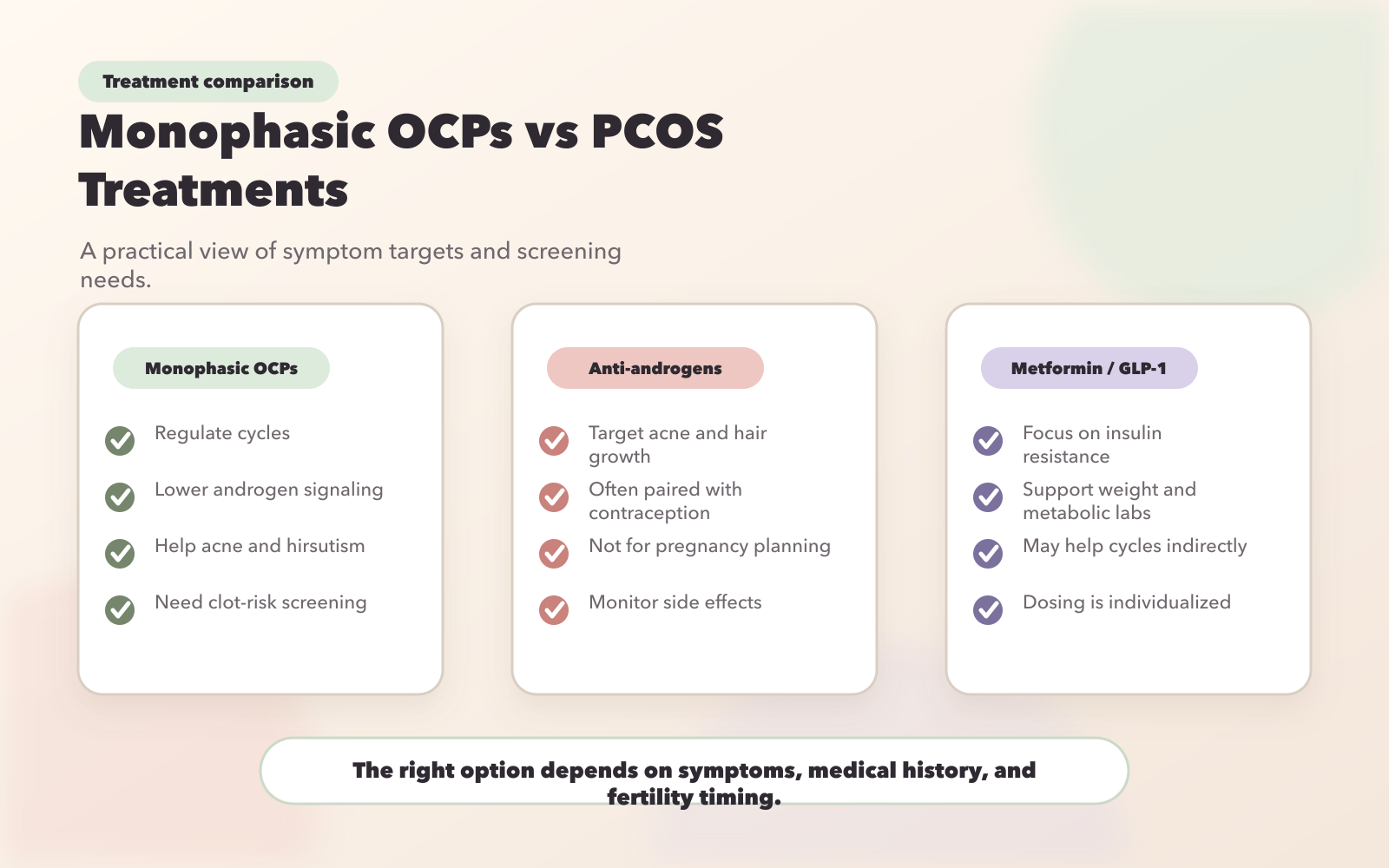
Monophasic OCPs vs Other PCOS Treatments: Clinical Outcomes Comparison
Research continues to highlight the effectiveness of monophasic oral contraceptives (OCPs) in managing symptoms of polycystic ovary syndrome (PCOS), building on their established role in treatment.
Results from Clinical Trials
Clinical trials have provided clear evidence of symptom improvement with monophasic OCPs. For example, a 12-month study reported that women taking ethinyl estradiol combined with cyproterone acetate experienced a 35% reduction in hirsutism scores, while those using ethinyl estradiol with drospirenone saw an 18% decrease. Additionally, this combination reduced testosterone levels by an average of 0.38 nmol/L more than conventional OCPs (95% CI 0.33–0.43).
Longer studies reinforce these findings. In a two-year trial, hirsutism scores dropped significantly, from 11.8 ± 0.6 at the start to 4.7 ± 0.6 post-treatment, approaching the control group's level of 3.6. Another study, spanning an average of 34.2 months, found that 85.1% of participants reported improvement in hirsutism, 82.7% in menstrual irregularities, and 79.3% in acne.
"Treatment is very effective, 2 years for best results. The OCs tested are equally efficacious." - Arnaldo Porcile, M.D.
These findings provide a solid foundation for broader research reviews.
Findings from Research Reviews
Meta-analyses offer additional insights into the benefits of OCPs for PCOS management. Among women with a BMI between 25 and 30 kg/m², OCPs were more effective than metformin in reducing hirsutism, with a mean difference of 1.92 (95% CI 1.21 to 2.64). Combining OCPs with metformin further improved outcomes, showing a mean difference of 0.54 (95% CI 0.20 to 0.89) compared to OCPs alone.
The type of progestin in OCPs also matters. Cyproterone acetate formulations increased sex hormone-binding globulin (SHBG) levels by an average of 142.91 nmol/L, compared to 99.53 nmol/L with desogestrel. Fourth-generation OCPs showed metabolic advantages, with a lower BMI reduction of 1.17 kg/m² (95% CI 0.33 to 2.02) compared to third-generation options. Regarding safety, metformin was linked to a significantly higher risk of severe gastrointestinal side effects, with an odds ratio of 6.42 (95% CI 2.98 to 13.84) compared to OCPs.
How Monophasic OCPs Compare to Other Treatments
Direct comparisons between treatments highlight the advantages of monophasic OCPs across various measures.
| Treatment Comparison | Outcome Measure | Statistical Result (95% CI) | Winner |
|---|---|---|---|
| Metformin vs. OCP (BMI 25–30) | Hirsutism Score | 1.92 [1.21 to 2.64] | OCP |
| OCP vs. OCP + Metformin | Hirsutism Score | 0.54 [0.20 to 0.89] | Combination |
| EE/CPA vs. Conventional OCP | Testosterone Reduction | 0.38 nmol/L [0.33 to 0.43] | EE/CPA |
| 4th Gen vs. 3rd Gen OCP | BMI Reduction | 1.17 kg/m² [0.33 to 2.02] | 4th Gen |
| Metformin vs. OCP | Severe GI Side Effects | OR 6.42 [2.98 to 13.84] | OCP (safer) |
The data shows that monophasic OCPs are highly effective on their own. However, combining them with other treatments, like metformin, or selecting specific progestin formulations can enhance their impact on PCOS symptoms.
sbb-itb-6dba428
Safety and Side Effects of Monophasic OCPs
Common Side Effects and Health Risks
When starting monophasic oral contraceptive pills (OCPs), many women experience mild side effects during the first two to three cycles. These typically include nausea, breakthrough bleeding, breast tenderness, headaches, abdominal cramps, bloating, and mood changes like depression or nervousness. Most of these issues improve as the body adjusts.
Breakthrough bleeding, while frustrating, is relatively common. It occurs in 18.86% of monophasic cycles, compared to just 6.45% with triphasic formulations. The good news is that this tends to subside after the initial months of use.
There are, however, more serious risks to consider. Monophasic OCPs are linked to an increased risk of venous thromboembolism (VTE). Women using combined oral contraceptives (COCs) face a relative risk of about 3.5 times higher than non-users. This translates to an incidence rate of 8–10 events per 10,000 woman-years, compared to 5–10 events in the general population. Additionally, COC users face a 1.7-fold higher risk of ischemic stroke and a 1.6-fold higher risk of myocardial infarction.
Blood pressure changes are another concern. Around 4% to 5% of healthy women may develop hypertension, while 9% to 16% of women with pre-existing high blood pressure could see their condition worsen. Monophasic pills may also affect glucose metabolism within the first six months, which could require insulin adjustments for diabetic patients.
Interestingly, there are some protective effects. COC use has been associated with a 50% reduction in endometrial cancer risk and a 27% decrease in ovarian cancer risk. However, users of ethinyl estradiol pills face a slightly increased risk of breast cancer, ranging from 1.19 to 1.33 times higher.
| Side Effect Category | Symptoms / Risks |
|---|---|
| Common Minor | Nausea, breakthrough bleeding, breast tenderness, headache, weight changes, mood swings |
| Serious Cardiovascular | Deep vein thrombosis (DVT), pulmonary embolism, myocardial infarction (MI), stroke, hypertension |
| Metabolic/Other | Reduced carbohydrate tolerance, gallbladder disease, hepatic adenomas, chloasma |
For those using formulations with drospirenone, potassium levels should be monitored, especially if there are conditions that increase the risk of hyperkalemia or if medications like ACE inhibitors or NSAIDs are involved. Knowing these risks helps ensure that the treatment is appropriate for each individual.
Who Should Use Monophasic OCPs for PCOS
Monophasic OCPs are often the first choice for women with PCOS who are not planning a pregnancy. These pills help regulate menstrual cycles and address symptoms of hyperandrogenism, such as hirsutism and acne.
Before starting treatment, it’s essential to screen for factors like smoking status, BMI, blood pressure, and family history of VTE. A baseline oral glucose tolerance test (75 g) is recommended, particularly for those with obesity, and should be repeated periodically. To minimize risks, guidelines suggest using the lowest effective dose - 20 to 30 μg of ethinyl estradiol.
Certain women should avoid monophasic OCPs entirely. These include those aged 35 or older who smoke 15 or more cigarettes daily, individuals with a history of VTE or stroke, those with hypertension (≥160/100 mm Hg), women with migraines accompanied by aura, those with longstanding diabetes or complications, and breastfeeding women in the first six weeks postpartum.
| Contraindication Type | Specific Conditions |
|---|---|
| Absolute (Must Avoid) | Smoking (≥35 years old, ≥15 cigarettes/day), History of VTE/Stroke, Migraine with aura, Hypertension (≥160/100), Diabetes with complications |
| Relative (Use Caution) | Smoking (≥35 years old, <15 cigarettes/day), Controlled hypertension, Dyslipidemia, Migraine without aura |
For women with PCOS, the condition itself poses a prothrombotic risk, increasing the likelihood of VTE by 1.5 to 2 times even before starting OCPs. This makes careful risk assessment crucial.
"Individual risk assessment is the key in order to avoid unfavorable outcomes related to COC use in women with PCOS." - Seda Hanife Oguz and Bulent Okan Yildiz, Division of Endocrinology and Metabolism, Hacettepe University
A minimum of six months of treatment is generally needed to evaluate the effectiveness of OCPs in reducing hirsutism.
Getting PCOS Treatment Through Oana Health
Considering the complexities of OCP safety, personalized care is essential. Oana Health offers telehealth consultations to help determine if monophasic OCPs are right for you. Their licensed professionals assess your medical history, symptoms, and risk factors, ensuring a tailored approach to PCOS management.
In addition to OCPs, Oana Health provides supplemental treatments for specific PCOS symptoms. For instance, Spironolactone is available for $14/month to address hirsutism and acne, while Eflornithine costs $69/month for reducing unwanted facial hair. Both options include free home delivery, saving you trips to the pharmacy.
Telehealth consultations also allow for regular monitoring, timely adjustments to medication, and proactive side effect management. This ongoing care ensures that your treatment plan remains effective and safe over time.
Summary
Monophasic oral contraceptives (OCPs) are a trusted first-line option for managing PCOS symptoms in women who aren’t planning to conceive. These contraceptives work in two key ways: they suppress luteinizing hormone to cut down ovarian androgen production and boost sex hormone–binding globulin levels, which lowers free testosterone. This combination helps regulate menstrual cycles, reduce hirsutism, and improve acne while also offering crucial protection for the endometrium.
Clinical studies back up their effectiveness. One long-term study revealed that 85.1% of women with PCOS saw improvements in hirsutism, 82.7% experienced more regular menstrual cycles, and 79.3% reported reduced acne. Formulations containing anti-androgenic progestins like drospirenone or cyproterone acetate showed particularly strong results, cutting hirsutism scores from 12.31 to 6.31 over six months.
While effective, safety is a key consideration. OCP use is associated with a higher risk of venous thromboembolism compared to nonusers, though the absolute risk remains relatively low for healthy, young women. To reduce potential metabolic risks, international guidelines recommend low-dose formulations with 20 to 30 μg of ethinyl estradiol. Managing risks in PCOS medications is essential, especially for patients with cardiovascular concerns. These insights underscore the importance of tailoring treatments to individual needs.
Oana Health takes a personalized approach to PCOS care through telehealth. Their plans include monophasic oral contraceptives and additional targeted treatments like Spironolactone for hirsutism ($14/month) and Eflornithine for facial hair ($69/month), all delivered directly to your home. This comprehensive strategy reflects clinical recommendations, focusing on individualized care and continuous monitoring to deliver the best outcomes for PCOS management.
FAQs
Which monophasic pill is best for PCOS symptoms?
The best monophasic pill for managing PCOS symptoms is a combined oral contraceptive that includes drospirenone (3 mg) and ethinyl estradiol. This combination can help address issues like hyperandrogenism, regulate menstrual cycles, and even reduce acne. However, it’s important to consult with a licensed healthcare provider to find the treatment that’s right for your unique situation.
How long until acne or facial hair improves on OCPs?
It usually takes 2 to 3 months of using oral contraceptives to see changes in acne or facial hair. However, the timeline can differ based on how each person responds to the treatment.
What clot warning signs mean I should seek urgent care?
If you notice symptoms like sudden chest pain, difficulty breathing, swelling in one leg, or a sudden, intense headache, seek urgent medical care right away. These could be warning signs of a blood clot, which may be associated with oral contraceptive use. Acting quickly is critical.